Italian Chicken Soup
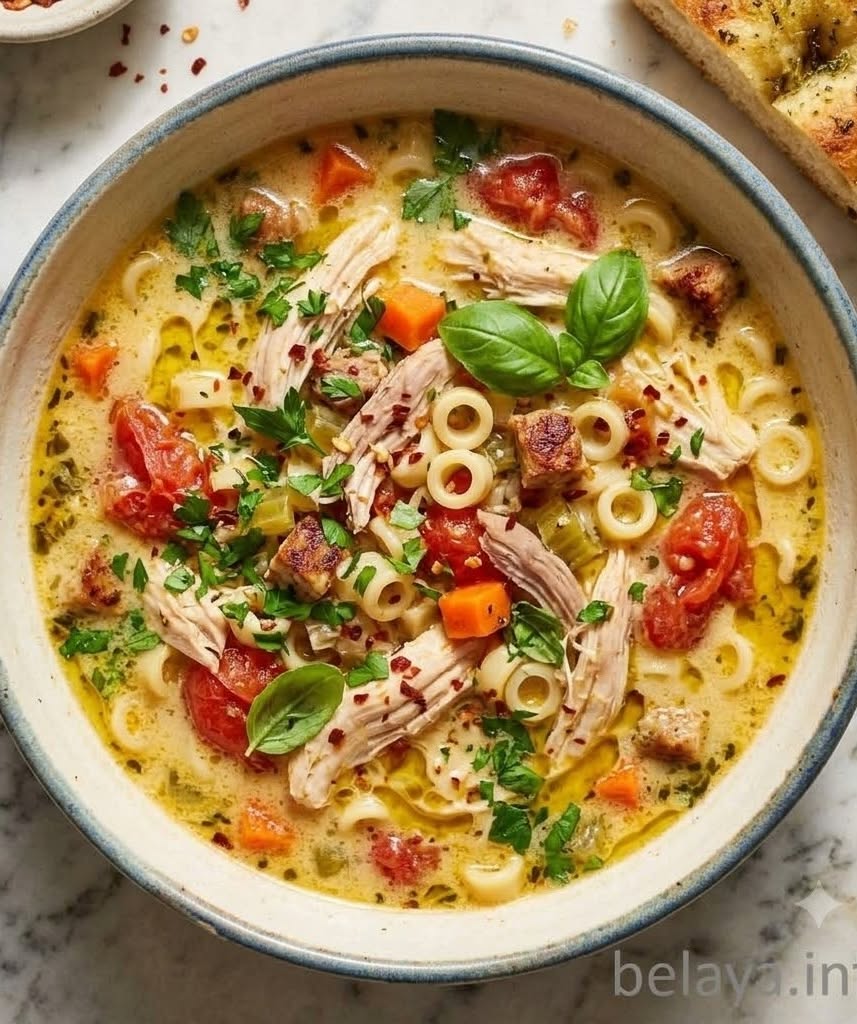
Italian Chicken Soup is the kind of comforting, soul-warming dish that brings simple pantry ingredients together in the most satisfying way.
Tender chicken, aromatic vegetables, and herbs simmer slowly in a rich tomato-infused broth, creating layers of flavor that feel both hearty and familiar.
Finished with al dente ditalini and a touch of cream, this soup strikes a beautiful balance between rustic Italian comfort and cozy, home-cooked warmth—perfect for chilly evenings, family dinners, or anytime you crave a nourishing bowl that feels like it was made with care.
Why People Will Love Italian Chicken Soup Recipe:
Comforting yet vibrant flavor – The combination of tomato-rich broth, tender chicken, aromatic herbs, and a touch of cream creates a soup that feels cozy while still tasting fresh and lively.
Perfect balance of textures – Al dente ditalini pasta, juicy chicken cubes, and soft simmered vegetables make every spoonful satisfying and interesting.
Simple ingredients, big payoff – Made with everyday pantry staples, this soup delivers rich, slow-simmered flavor without complicated steps or hard-to-find ingredients.
Creamy without being heavy – The heavy cream adds smoothness and depth while allowing the tomatoes and herbs to remain the star.
Family-friendly with gentle heat – The jalapeño adds subtle warmth that enhances flavor without overpowering, making it easy to adjust for all ages.
Great for make-ahead meals – The flavors deepen as it sits, making leftovers even more delicious the next day.
One-pot comfort for busy days – Aside from cooking the pasta, the soup comes together easily in one pot, perfect for weeknight dinners.
Versatile and customizable – Easily adapted with different pasta shapes, vegetables, or spice levels to suit personal taste.
Pairs beautifully with bread – Served with warm rolls or crusty bread, it becomes a complete, deeply satisfying meal.
Key Ingredients:
Ditalini pasta – Small, tube-shaped pasta that soaks up the broth beautifully while staying tender yet firm, giving the soup body and a classic Italian feel.
Cooked chicken – Cubed, tender chicken adds hearty protein and makes the soup filling without weighing it down.
Chicken broth – The savory foundation that ties all the ingredients together, delivering warmth and depth in every spoonful.
Petite diced tomatoes – Provide gentle acidity and natural sweetness, balancing the cream and enhancing the overall richness of the soup.
Heavy cream – Adds a velvety finish that softens the tomatoes and herbs, creating a smooth, comforting texture.
Onion and celery – The aromatic base that builds flavor from the start, giving the soup a subtle sweetness and savory backbone.
Orange bell pepper – Brings a mild sweetness and vibrant color that brightens the soup without overpowering it.
Jalapeño – Adds a gentle, adjustable heat that enhances depth and keeps the flavors lively.
Dried oregano and basil – Classic Italian herbs that infuse the broth with earthy, familiar warmth.
Canola oil – A neutral cooking oil that allows the vegetables and herbs to shine without altering their natural flavors.
Expert Tips:
Cook the pasta separately and keep it al dente – This prevents the pasta from absorbing too much broth and turning mushy, especially if you plan to store leftovers.
Rinse pasta only if holding it for later – Rinsing stops carryover cooking and keeps the pasta from sticking, but skip rinsing if you’re adding it immediately to the soup.
Sauté vegetables until lightly golden – Let the onions and celery soften fully and develop a hint of color to build a deeper, more rounded flavor base.
Bloom the dried herbs – Stir oregano and basil into the hot broth early so their oils release and infuse the soup more thoroughly.
Use low-sodium broth for better control – This allows you to season gradually and avoid an overly salty soup after simmering.
Add cream at the end over low heat – Introducing cream after simmering prevents curdling and keeps the texture smooth and silky.
Taste after simmering, not before – The flavors concentrate as the soup cooks, so final seasoning should always be adjusted at the end.
Adjust heat gently with jalapeño – Removing seeds keeps the spice mild; add seeds or a pinch of red pepper flakes for extra warmth if desired.
Let the soup rest before serving – Allowing it to sit for 5–10 minutes helps the flavors meld and creates a more cohesive taste.
Store pasta and soup separately for leftovers – This keeps both components fresh and preserves the soup’s ideal texture when reheated.
Italian Chicken Soup
Ingredients:
½ Box 8 Oz Ditalini Pasta
2 cups Cooked Chicken Cubed
4 cups Chicken Broth
1 tbsp Canola Oil
½ White Onion Peeled And Cubed
1 Orange Pepper Deveined,Seeded And Diced
1 Whole Jalapeno Seeded And Diced
2 Stalks Celery Diced
2 cans 15oz Petite Cut Tomatoes
1 cup Water
1 cup Heavy Cream
1 tsp Dry Oregano
1 tsp Dry Basil
Salt And Pepper
Instructions:
Cook pasta( al dente) following the directions on the back of the box.
Rinse the cooked pasta with cold water. Set aside
Heat oil to medium-high. Add onions, celery, green pepper, and jalapeno. Sauté until tender.
Add the cubed chicken, chicken broth, water, tomatoes with juice, and the sautéed vegetables. Stir in the herbs.
Taste test. Add salt and pepper to taste. Increase heat to a boil.
Reduce heat and cook on simmer for 20 minutes. Stir in cooked pasta. Add and stir in heavy cream.
Ladle soup in soup bowls. Serve with hot rolls.
Enjoy!
Important Recipe When Making Notes:
Pasta quantity matters – Using half a box of ditalini keeps the soup brothy rather than overly thick. Adding more pasta will quickly turn it into a stew-like consistency.
Always simmer before adding cream – Simmering the soup first allows the tomatoes and herbs to fully develop flavor; cream should be added last to maintain a smooth texture.
Temperature control is key – Once the cream is added, keep the heat low to prevent separation or scorching.
Chicken should be fully cooked before adding – This recipe is designed for cooked chicken; adding raw chicken will change cooking times and texture.
Tomatoes define the flavor balance – Petite diced tomatoes are ideal because they soften easily and blend into the broth without overpowering acidity.
Vegetables should be evenly diced – Uniform cuts ensure everything cooks at the same rate and creates a consistent mouthfeel.
Soup thickens as it sits – The pasta will continue to absorb liquid, so add extra broth when reheating if needed.
Spice level is adjustable – Jalapeño adds depth more than heat; control spiciness by adjusting seeds or quantity.
Season gradually – Salt should be added in stages, especially if using store-bought broth and canned tomatoes.
Best enjoyed fresh or next day – The flavors deepen overnight, but texture is best within 48 hours when stored properly.
How to Enjoy Italian Chicken Soup After Cooking
Let the soup rest briefly before serving
Allow the soup to sit for 5–10 minutes off the heat. This resting time helps the flavors settle and meld, resulting in a smoother, more cohesive taste.
Stir gently before ladling
Give the soup a gentle stir to evenly distribute the pasta, chicken, and vegetables so every bowl has a balanced mix of ingredients.
Serve hot, not boiling
The soup is best enjoyed hot but not piping hot, especially with the cream added. Slightly lower temperatures allow the herbs and tomato notes to shine.
Finish with simple garnishes
A drizzle of extra virgin olive oil, freshly cracked black pepper, or a sprinkle of chopped parsley adds freshness and depth without overpowering the soup.
Pair with warm bread
Serve alongside hot dinner rolls, crusty Italian bread, or garlic toast to soak up the rich, flavorful broth.
Enjoy as a complete meal
Thanks to the pasta, chicken, and vegetables, this soup is satisfying on its own and doesn’t require additional side dishes.
Enhance with optional toppings
Freshly grated Parmesan, Pecorino Romano, or a pinch of red pepper flakes can be added at the table for extra richness or heat.
Best for cozy, relaxed dining
This soup shines during quiet family dinners, chilly evenings, or casual gatherings where comfort food is the focus.
Reheat gently for leftovers
Warm leftovers slowly over low heat, adding a splash of broth or water to loosen the soup if it has thickened.
Even better the next day
The flavors deepen overnight, making next-day bowls especially rich and comforting.
Nutrition Information:
For this Italian Chicken Soup
(Values are approximate and based on 1 serving, assuming 6 servings total.)
Calories: 380–420 kcal | Total Fat: 19–22 g | Saturated Fat: 10–12 g | Monounsaturated Fat: 5–6 g | Polyunsaturated Fat: 2–3 g | Cholesterol: 85–95 mg | Sodium: 700–900 mg (depending on broth and added salt) | Total Carbohydrates: 32–36 g | Dietary Fiber: 4–5 g | Sugars: 7–9 g | Protein: 22–25 g
Frequently Asked Questions:
Can I use raw chicken instead of cooked chicken?
Yes, but the cooking method will need to change. If using raw chicken, add it after sautéing the vegetables and simmer until fully cooked before adding the pasta and cream. Keep in mind that this may slightly alter the texture and flavor compared to using pre-cooked chicken.
Will the pasta get mushy if stored in the soup?
Over time, yes. Pasta continues to absorb liquid as it sits. For best texture, store the pasta separately from the soup and combine only when reheating or serving.
Can I make this soup ahead of time?
Absolutely. The soup base can be made 1–2 days in advance without the pasta and cream. Add freshly cooked pasta and stir in the cream when reheating for the best flavor and texture.
How spicy is this soup with jalapeño added?
The heat is mild and subtle when the seeds are removed. If you prefer more spice, you can leave some seeds in or add red pepper flakes. For a completely mild version, the jalapeño can be omitted.
Can I substitute the heavy cream with a lighter option?
Yes. Half-and-half or evaporated milk can be used for a lighter soup, though the final texture will be less rich. Add dairy slowly over low heat to prevent curdling.
Why is the pasta cooked separately instead of in the soup?
Cooking the pasta separately prevents it from absorbing too much liquid and becoming mushy. This keeps the soup brothy and allows better control over texture, especially for leftovers.
When is the best time to add the cream?
Cream should always be added at the end, after the soup has finished simmering. Adding it too early or over high heat can cause separation and affect the soup’s smooth texture.
How long should the soup simmer for the best flavor?
A gentle simmer of about 20 minutes allows the vegetables to soften fully and the herbs to release their flavor without overcooking the chicken or dulling the tomatoes.
How can I prevent the soup from tasting too acidic?
Using petite diced tomatoes, simmering properly, and adding cream at the end helps balance acidity. If needed, a small pinch of sugar or extra cream can mellow sharp tomato notes.
What’s the best way to season this soup correctly?
Season lightly at first, especially if using store-bought broth. Taste again after simmering and adjust salt and pepper at the end, once flavors have fully developed.