Sicilian Sunday Gravy
Sicilian Sunday Gravy is a slow-simmered Italian-American red sauce made with seared pork, Italian sausage, meatballs, tomatoes, garlic, onion, herbs, and a deep tomato base.
This is more than just a pasta sauce. It is a rich, slow-cooked family meal where the meats gently simmer for hours, releasing flavor into the tomatoes until the sauce becomes hearty, savory, and full of depth.
It is the kind of recipe that belongs on a Sunday table — warm pasta, tender meats, grated Pecorino Romano, creamy ricotta, and a pot of sauce that tastes like patience, tradition, and home.
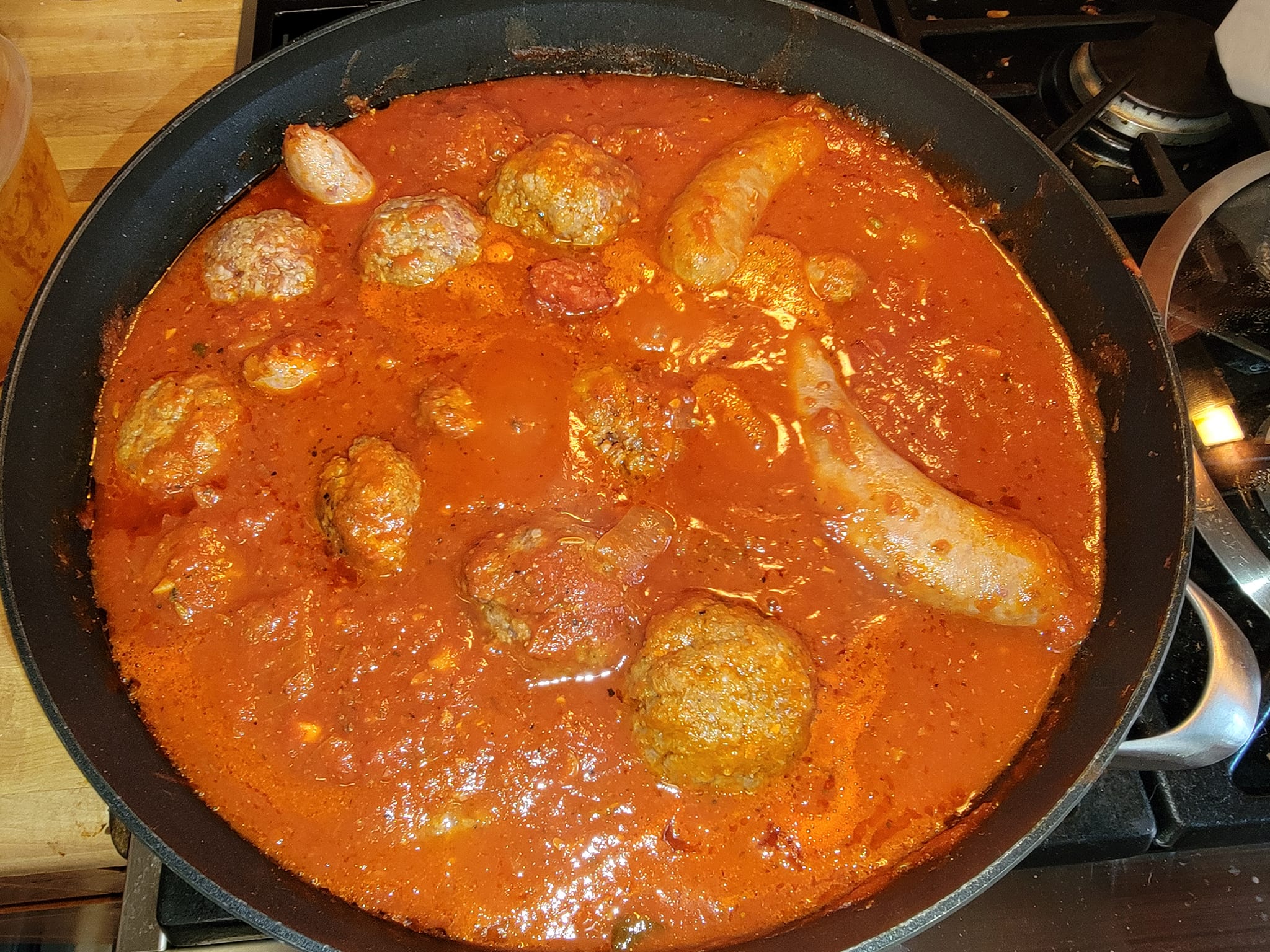
Why People Will Love Sicilian Sunday Gravy Recipe
It is rich, hearty, and deeply comforting.
The pork adds bold savory flavor to the sauce.
Italian sausage brings spice, richness, and aroma.
Meatballs make the dish feel generous and family-style.
Tomato paste gives the sauce deep, concentrated flavor.
Garlic, onion, parsley, and bay leaves build classic Italian flavor.
Slow simmering makes the meats tender and the sauce rich.
The sauce becomes thicker, darker, and more flavorful over time.
It is perfect for Sunday dinners, holidays, and family gatherings.
It serves beautifully with pasta, Pecorino Romano, and ricotta.
Leftovers taste even better the next day.
Every bite feels warm, rustic, meaty, saucy, and full of tradition.
Key Ingredients
Pork:
Pork loin, chops, ribs, or neck bones give the sauce deep flavor as they simmer. Bone-in cuts can add even more richness.
Italian Sausage:
Italian sausage brings seasoning, fat, and bold flavor. Hot sausage adds heat, sweet sausage keeps the sauce milder, and using both creates balance.
Meatballs:
Meatballs make the gravy hearty and complete. They absorb the sauce while also adding their own savory flavor.
Olive Oil:
Olive oil helps sear the pork and begins the flavor base of the sauce.
Onion:
Onion adds sweetness and depth as it softens into the sauce.
Garlic:
Thinly sliced garlic gives the gravy a warm, classic Italian aroma.
Red Chili Flakes:
A small pinch adds gentle background heat without overpowering the tomatoes and meats.
Tomato Paste:
Tomato paste adds concentrated richness and gives the sauce a deeper color and flavor.
Whole Peeled or Crushed Tomatoes:
Tomatoes form the body of the gravy. Whole tomatoes create a rustic texture, while crushed tomatoes give a smoother sauce.
Bay Leaves and Parsley:
Bay leaves add subtle depth, while parsley gives the sauce a fresh herbal note.
Pasta:
Pasta carries the sauce and turns the gravy into a full meal.
Pecorino Romano and Ricotta:
Pecorino adds salty sharpness, while ricotta adds creamy richness when served on top.
Expert Tips
Sear the pork well before simmering for deeper flavor.
Use a heavy pot or Dutch oven to prevent scorching.
Cook the tomato paste briefly before adding tomatoes to develop richness.
Break whole tomatoes apart for a rustic sauce, or blend for a smoother texture.
Simmer gently on low heat, not at a hard boil.
Stir every 20 minutes so the sauce does not stick to the bottom.
Use bone-in pork if you want a deeper, old-fashioned flavor.
Taste the sauce near the end before adding more salt.
Remove bay leaves and bones before serving.
Let the sauce rest briefly before serving so the flavors settle.
Toss pasta with a small amount of sauce first before plating.
Serve the meats separately on a platter for a traditional family-style meal.
Sicilian Sunday Gravy
Ingredients:
2 tablespoons extra virgin olive oil
2-3 lbs pork loin, pork chops, ribs, and/or neck bones
Kosher salt and black pepper to taste
1 small yellow or sweet onion, finely diced
5 cloves garlic, very thinly sliced
Pinch of red chili flakes
3 tablespoons tomato paste
2 (28-ounce) cans whole peeled tomatoes or crushed tomatoes
2 bay leaves
1 tablespoon finely minced Italian parsley
Pinch of sugar (optional)
1 ½ lbs Italian sausage (hot, sweet, or both)
1 batch homemade Italian meatballs or 16-20 store-bought meatballs (cooked)
Pasta for serving
Grated Pecorino Romano cheese for serving
Ricotta cheese for serving
Instructions:
Sear the Pork:
Heat the olive oil in a large pot or Dutch oven over high heat. Season the pork on all sides with salt and pepper, then sear until browned on all sides. Remove the pork and set it aside.
Cook the Vegetables:
Lower the heat to medium. Add the diced onion and sauté for about 5 minutes, until softened. Add the garlic and red chili flakes, cooking for another 2 minutes.
Make the Sauce Base:
Stir in the tomato paste and cook for 1-2 minutes. Add the canned tomatoes (whole or crushed), bay leaves, and parsley. Season with salt and pepper, then add 1 can of water (using the empty tomato can). Stir everything together. If using whole tomatoes, break them apart with the back of a spoon, or use an immersion blender for a smoother sauce.
Simmer the Sauce:
Bring the sauce to a boil, then reduce the heat to low. Add the seared pork, sausage, and meatballs. Simmer gently on the lowest heat for about 3 hours, stirring every 20 minutes. The pork should be tender and fall apart easily.
Finish the Sauce:
Taste the sauce and adjust the seasoning with more salt if needed. Remove the bay leaves and any bones from the pork. Use a slotted spoon to transfer the meats to a large platter.
Serve:
Cook your pasta until al dente, then toss with a little of the sauce. Transfer the remaining sauce to a gravy boat or serving dish. Serve the pasta with the meats and sauce on the side. Offer grated Pecorino Romano and ricotta cheese for topping.
Important Notes When Making Sicilian Sunday Gravy
Sunday gravy needs time to develop its best flavor.
Low and slow simmering is important.
The sauce should bubble gently, not boil aggressively.
Pork should become tender enough to pull apart easily.
Sausage and meatballs should be fully cooked through before serving.
Bone-in pork adds flavor, but bones must be removed before serving.
A pinch of sugar is optional and should only be used if the tomatoes taste too acidic.
The sauce may thicken as it simmers.
Add a little water if the sauce becomes too thick.
Leftovers should be cooled and stored in the refrigerator.
How to Enjoy Sicilian Sunday Gravy After Cooking
After the Sicilian Sunday Gravy finishes simmering, remove the bay leaves and any bones from the pork. Transfer the pork, sausage, and meatballs to a large serving platter so everyone can choose their favorite pieces.
Cook the pasta until al dente, then toss it with a small amount of sauce before serving. This helps the pasta absorb flavor instead of sitting plain under the gravy.
Serve the pasta in warm bowls or on large plates. Spoon extra sauce over the top and finish with grated Pecorino Romano cheese. Add a spoonful of ricotta if you want a creamy, rich contrast against the deep tomato sauce.
Serve the meats on the side or directly over the pasta. Add crusty Italian bread, garlic bread, roasted vegetables, or a simple green salad to complete the meal.
This dish is best enjoyed slowly, family-style, with extra sauce at the table. It is hearty, generous, and comforting — the kind of meal that brings people together.
Leftovers can be refrigerated and reheated gently. The sauce often tastes even richer the next day because the meats and tomatoes have more time to blend.
Nutrition Information
Approximate nutrition per serving, based on 12 servings, including sauce and meats but not pasta, ricotta, or extra cheese:
Calories: 610 kcal | Total Fat: 39 g | Saturated Fat: 13 g | Monounsaturated Fat: 17 g | Polyunsaturated Fat: 4 g | Cholesterol: 135 mg | Sodium: 980–1,650 mg depending on sausage, meatballs, canned tomatoes, added salt, and cheese served on top | Total Carbohydrates: 14 g | Dietary Fiber: 3 g | Sugars: 7 g | Protein: 48 g
Additional estimate:
Calcium: 90–180 mg | Potassium: 850–1,300 mg | Iron: 4–7 mg | Vitamin A: 500–1,100 IU | Vitamin C: 18–35 mg
Frequently Asked Questions:
Can I use different meats in this recipe?
Yes! While the traditional recipe calls for pork loin, sausage, and meatballs, you can substitute other meats like beef, veal, or lamb.
The key is using a variety of meats for a rich, complex flavor.
You can also mix and match depending on what you prefer or have on hand.
What kind of pasta is best to serve with Sicilian Sunday Gravy?
Traditionally, long pasta like spaghetti or rigatoni works well because it holds the sauce nicely.
However, you can use any pasta shape you prefer, such as penne or fettuccine.
Just make sure to cook the pasta al dente and toss it with a little of the gravy before serving.
Can I make this gravy ahead of time?
Absolutely! In fact, the gravy tastes even better the next day as the flavors continue to meld.
You can make it ahead of time and store it in the refrigerator for up to 3 days, or freeze it for up to 3 months.
Just reheat it slowly when ready to serve.
Can I use store-bought meatballs?
Yes, you can use store-bought meatballs if you’re short on time, though homemade meatballs will add extra flavor and authenticity to the dish.
If you use store-bought, make sure to cook them before adding them to the sauce.
How can I adjust the heat in this recipe?
If you prefer a spicier sauce, you can increase the amount of red chili flakes.
For a milder sauce, simply reduce the amount of chili flakes or omit them altogether.
Additionally, you can adjust the heat level of the sausage, opting for hot, sweet, or a mix of both to control the spice.
Can I use different types of tomatoes for the sauce?
Yes, you can use either whole peeled tomatoes or crushed tomatoes for the sauce.
If you use whole peeled tomatoes, you may want to crush them with a spoon or use an immersion blender for a smoother texture.
Both options will work, but whole tomatoes provide a chunkier sauce, while crushed tomatoes create a more uniform consistency.
Can I make this recipe without pork?
Yes! If you prefer not to use pork, you can substitute it with beef or chicken.
For example, beef short ribs or chicken thighs can be used in place of the pork loin and neck bones.
The key to the dish is the slow simmering of meat to create a rich and flavorful sauce, so any hearty meat option will work.
How do I prevent the sauce from burning during the long simmering process?
To avoid burning, make sure to cook the gravy on low heat and stir it occasionally.
If you’re using a Dutch oven or large pot, it’s important to keep the heat low and let the sauce simmer gently.
If necessary, add a little extra water or broth to prevent it from becoming too thick and sticking to the bottom.
How do I know when the pork is done cooking?
The pork is done when it becomes tender and easily shreds with a fork.
This usually takes about 3 hours of simmering in the sauce.
If you’re using a tougher cut like neck bones, it might take a little longer.
The goal is to have the pork fall apart and infuse the sauce with flavor.
Can I make this sauce in a slow cooker or pressure cooker?
Yes, you can adapt this recipe for a slow cooker or pressure cooker.
For a slow cooker, brown the meats first, then transfer them to the slow cooker with the sauce ingredients and cook on low for 6-8 hours.
For a pressure cooker, you can cook the meats in a shorter time (around 1.5 to 2 hours), but be sure to let the flavors meld after cooking by letting the sauce rest before serving.