Simple Pork Posole with Whole Red Chile Pods
Simple Pork Posole with Whole Red Chile Pods is a deeply comforting Southwestern and New Mexico–inspired stew built around just a few essential ingredients: tender pork, blooming hominy, garlic, dried red chile pods, salt, and a savory pork-rich broth. Instead of relying on heavy garnishes or complicated seasonings, this version allows the flavor of the pork, corn, and chile to remain at the center of the bowl.
The magic happens during the long, gentle cooking process. Dried posole kernels gradually swell and “bloom,” pork becomes tender enough to pull apart, and whole red chile pods slowly release their earthy, slightly sweet flavor into the broth. The result is rustic, simple, and deeply satisfying rather than heavily sauced.
One of the most distinctive parts of this preparation is leaving the softened chile pods whole. Their tender interior can be enjoyed directly while the tougher skin is discarded, giving the meal a traditional, hands-on quality. Served with homemade flour tortillas—or sopapillas for the next-day meal—this is the kind of food that feels especially meaningful when shared around the table.
Why People Will Love Simple Pork Posole with Whole Red Chile Pods Recipe
The ingredient list is short, but the finished flavor is surprisingly deep.
Slow-cooked pork gives the broth natural richness.
Hominy adds a distinctive chewy-tender texture that ordinary corn cannot provide.
Dried red chile pods contribute earthy flavor rather than just heat.
Long cooking allows the chile flavor to gradually infuse the broth.
Garlic strengthens the savory character without overwhelming the pork.
The broth remains relatively light instead of becoming a heavy tomato sauce.
Pork and hominy create an especially satisfying combination.
The hominy absorbs some of the pork and chile flavor while cooking.
Whole chile pods provide a unique traditional eating experience.
The heat level can remain mild when hotter red chile sauce is served separately.
Each person can customize the bowl without changing the base pot.
The recipe works beautifully in a pressure cooker.
It can also be made slowly on the stovetop.
The dish becomes even better after resting.
Leftovers often develop a richer flavor overnight.
Homemade flour tortillas are perfect for soaking up the broth.
Sopapillas provide a delicious contrast alongside leftovers.
It is naturally hearty without requiring cream, cheese, or excessive toppings.
The simplicity allows the quality of the pork and chile to stand out.
Key Ingredients
Dried Posole / Hominy:
Posole is the foundation of the dish. When dried kernels are simmered until fully tender, they expand and open into soft, chewy “flowers” with a distinctive corn flavor. Dried posole gives the most traditional texture, although canned hominy is a useful shortcut.
Pork Chops:
Pork gives the broth richness while also providing tender pieces of meat throughout the stew. Bone-in chops are especially useful because the bone contributes additional body and flavor during cooking.
Whole Dried New Mexico Red Chile Pods:
These provide earthy, slightly fruity and mildly sweet chile flavor. Keeping them whole allows the broth to remain relatively clear while still becoming infused with chile.
Garlic:
Garlic brings savory depth and works naturally with both pork and red chile.
Salt:
Because the recipe is deliberately simple, proper seasoning is important. Salt should enhance the pork, hominy, and chile rather than dominate them.
Water:
Water is more appropriate than an overly flavored stock when you want the pork and chile to create the broth naturally.
Optional Red Chile Sauce:
Serving additional chile sauce separately is an excellent way to accommodate people who prefer different heat levels.
Expert Tips
Use dried posole when you have time; its texture and corn flavor are significantly deeper than canned hominy.
Soak dried posole overnight to shorten the cooking time.
Rinse the posole thoroughly before cooking.
Keep pork pieces relatively uniform so they become tender at the same rate.
Bone-in pork provides more flavor than completely boneless meat.
Do not remove every bit of pork fat before cooking; a modest amount improves the broth.
Skim excessive surface fat only after cooking if desired.
Remove the stems from the chile pods before adding them.
Shake out most of the seeds if you prefer a milder broth.
Avoid burning or heavily charring the dried chile pods because burnt chile becomes bitter.
Keep the pods whole if you want the traditional preparation described in this recipe.
Use enough water to keep the hominy submerged throughout cooking.
Add hot water rather than cold water if the liquid level becomes low during stovetop cooking.
Simmer gently rather than boiling aggressively.
Check dried posole for tenderness rather than relying only on cooking time.
Fully cooked posole should be plump, tender and beginning to open at the ends.
Allow pressure to release naturally when using a pressure cooker; this helps the pork remain tender.
If using canned hominy, add it toward the end so it does not become overly soft.
Taste the broth before adding extra salt.
Serve stronger red chile sauce separately rather than making the entire pot overly spicy.
Simple Pork Posole with Whole Red Chile Pods
Ingredients
For the Posole
– 1 cup dried posole/hominy, rinsed well
or about 3 cups canned hominy, drained and rinsed
– 2 thick-cut pork chops, preferably bone-in, about 1½–2 pounds total
– 6–8 dried New Mexico red chile pods
– 4–5 cloves garlic, minced or lightly crushed
– 1 teaspoon salt, plus more to taste
– ½ teaspoon black pepper
– ½ teaspoon ground cumin, optional
– 1 teaspoon Mexican oregano, optional
– 6–8 cups water, or enough to generously cover everything
– 1 teaspoon chicken or pork bouillon, optional
Optional Red Chile Sauce for Serving
– 5–6 dried New Mexico red chile pods
– 2 cloves garlic
– ¼ teaspoon ground cumin
– ½ teaspoon Mexican oregano
– Salt, to taste
– 1–1½ cups hot water or broth
Instructions
Prepare the Pork
Cut the pork chops into approximately ¾-inch chunks.
You can leave a few pieces attached to the bone while cooking because the bone will contribute additional flavor to the broth.
Prepare the Posole
If using dried posole, rinse it thoroughly under cold water.
For a shorter cooking time, soak it overnight, then drain before cooking.
If using canned hominy, do not add it at the beginning because it is already cooked. Add it during the final 30–40 minutes instead.
Prepare the Whole Chile Pods
Wipe the dried red chile pods clean.
Remove the stems. For a milder broth, shake out most of the seeds. For more chile flavor and heat, leave some behind.
Keep the pods whole rather than blending them. This matches the simple preparation described in your post.
Combine Everything
Place the dried posole in a large pot or pressure cooker.
Add the pork chunks, garlic, salt, pepper, cumin and oregano if using.
Place the whole red chile pods into the pot.
Pour in enough water to cover everything generously, usually about 6–8 cups.
Pressure Cooker Method
Lock the lid in place and cook at high pressure for about 35–45 minutes if the posole was soaked.
For unsoaked dried posole, cook approximately 50–60 minutes.
Allow the pressure to release naturally for about 15 minutes before carefully opening the cooker.
Check the hominy. It should be swollen, tender and beginning to open or “bloom.”
If it is still firm, pressure-cook for another 10–15 minutes.
Stovetop Method
Bring everything to a boil.
Reduce the heat to a gentle simmer and partially cover the pot.
Cook approximately 2½–3½ hours, stirring occasionally and adding additional hot water as necessary.
Continue cooking until the posole is completely tender and the pork pulls apart easily.
If Using Canned Hominy
Cook the pork, chile pods and seasonings for about 1½–2 hours, until the pork becomes tender.
Add the drained canned hominy and simmer another 30–40 minutes.
Finish the Posole
Taste the broth and adjust the salt.
Use a spoon or fork to break some of the pork into larger shredded pieces while leaving other pieces chunky.
The finished broth should be savory, lightly red from the chile pods and rich from the pork, while remaining relatively thin rather than becoming a thick chile sauce.
Eating the Whole Chile Pods
One distinctive part of the version you described is leaving the softened chile pods whole.
After simmering for several hours, the pods become very soft. Traditionally in this family-style preparation, you can take a chile pod from the bowl and gently scrape or suck the softened chile flesh from the inside, then discard the tougher skin.
The flavor is surprisingly sweet, earthy and much gentler than eating a raw or freshly dried chile.
Optional Red Chile Sauce
If different people prefer different levels of chile, serving stronger red chile separately is a very good approach.
Remove the stems and seeds from the dried chile pods.
Place them in a saucepan, cover with water and simmer for about 10 minutes.
Turn off the heat and let them soften for another 10–15 minutes.
Blend the softened chiles with garlic, cumin, oregano, salt and about 1 cup of the soaking liquid until very smooth.
Strain if you want a silky sauce.
Simmer the sauce for another 10–15 minutes, then place it on the table so everyone can add as much as they like.
How I Would Serve It
Keep this version simple, consistent with the description you provided.
Serve a large bowl of hot posole with plenty of pork, hominy, broth and one or two softened red chile pods.
The best accompaniment would be fresh homemade flour tortillas, served warm for dipping into the broth.
For the next-day meal you mentioned, warm sopapillas would also be excellent on the side.
I would not add shredded lettuce, cheese, sour cream, avocado or salad-style toppings to this particular version. The appeal here is the straightforward combination of pork, hominy, garlic, chile and broth.
What the Finished Posole Should Look Like
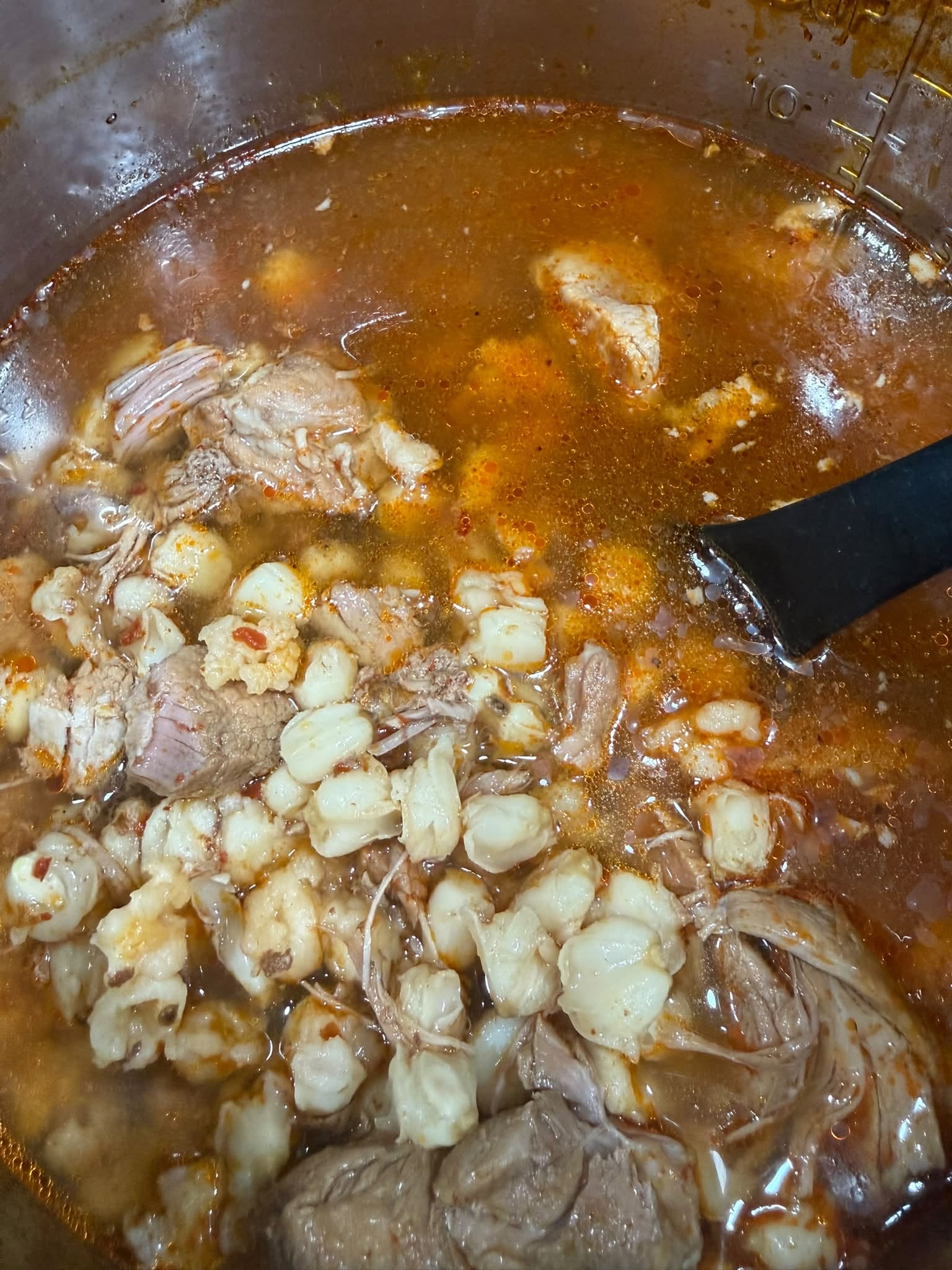
Your photo is actually a very good reference for this style: a relatively clear reddish-brown pork broth, large tender pieces of pork, lots of swollen white hominy, and a light layer of flavorful pork and chile oil on the surface.
It should taste porky, earthy, garlicky and gently chile-forward, rather than like a heavily seasoned tomato stew.
Important Notes When Making Simple Pork Posole with Whole Red Chile Pods
Dried posole and canned hominy require very different cooking times.
Do not cook canned hominy for several hours from the beginning; it can become excessively soft.
Unsoaked dried posole may require significantly longer cooking.
Older dried hominy can sometimes take longer to soften.
The stew should remain brothy rather than becoming thick like chili.
Whole chile pods will soften considerably during cooking.
The tender flesh inside the chile can be eaten, while the tougher exterior skin can be discarded.
Chile heat varies naturally from batch to batch.
New Mexico red chile can range from mild to quite hot.
Pork should reach at least 145°F / 63°C, followed by a brief rest, for food safety; however, this recipe cooks it far longer so that it becomes tender enough to pull apart.
Pressure cooker timing depends on whether the posole was soaked.
Never overfill a pressure cooker, especially when cooking grains or dried corn products that expand.
Natural pressure release is preferable for this type of stew.
The broth may become slightly gelatinous after refrigeration because of the pork.
That is normal and it will liquefy again when reheated.
Refrigerate leftovers promptly after the meal.
Homemade tortillas, sopapillas, and extra chile sauce will change the final nutrition considerably.
How to Enjoy Simple Pork Posole with Whole Red Chile Pods After Cooking
Allow the finished posole to rest for about 10 minutes after cooking. This gives the broth time to settle and allows the flavors of the pork, garlic, chile, and hominy to become more integrated.
Ladle the posole into deep bowls, making sure each serving contains plenty of pork, hominy, broth, and at least one softened chile pod if desired.
Taste the broth before adding anything else. This particular style is meant to be appreciated for its simplicity.
Serve warm homemade flour tortillas on the side. Tear pieces from the tortilla and dip them directly into the broth or use them to scoop up pieces of pork and hominy.
If you have a whole chile pod in your bowl, carefully open it or gently draw out the softened chile flesh. Enjoy the tender interior and discard the tougher skin.
For people who want more chile flavor, place homemade red chile sauce on the table and let everyone add it individually.
Keep additional toppings minimal if you want to preserve the character of this version. It does not need shredded cheese, sour cream, lettuce, or other heavy garnishes.
For leftovers, reheat the posole slowly over medium-low heat. Add a little water if the hominy has absorbed too much broth overnight.
Sopapillas make an excellent side for the next-day meal, especially when you want something warm and slightly crisp alongside the savory stew.
Nutrition Information
Approximate nutrition is based on 6 servings, using about 1¾ pounds bone-in pork chops, 1 cup dried posole, 6–8 dried red chile pods, garlic, salt, and water. Homemade tortillas, sopapillas, additional red chile sauce, and optional bouillon are not included.
Calories: 390 kcal | Total Fat: 18 g | Saturated Fat: 6 g | Monounsaturated Fat: 7.5 g | Polyunsaturated Fat: 2.5 g | Cholesterol: 80–95 mg | Sodium: 650–900 mg depending on added salt and whether bouillon is used | Total Carbohydrates: 30–33 g | Dietary Fiber: 5–6 g | Sugars: 3–4 g | Protein: 28–31 g
Additional estimate:
Potassium: 650–800 mg | Calcium: 45–70 mg | Iron: 2.5–3.5 mg | Magnesium: 55–75 mg | Vitamin A: 2,500–4,000 IU | Vitamin C: 10–20 mg | Vitamin B6: 0.6–0.9 mg | Vitamin B12: 0.8–1.3 mcg | Zinc: 3–4.5 mg | Phosphorus: 280–360 mg
The exact nutrition will vary significantly depending on the pork chops’ fat content, how much visible fat is removed after cooking, whether dried or canned hominy is used, and how much salt or bouillon is added.
Frequently Asked Questions:
What is the difference between posole and hominy?
Hominy is corn that has been treated through nixtamalization, which removes the hull and changes its texture and flavor. “Posole” can refer both to the prepared hominy kernels and to the finished stew made with them.
What do whole red chile pods add to the soup?
They slowly release earthy, fruity, and slightly sweet chile flavors into the broth without turning it into a thick red chile sauce.
Is this posole supposed to be very spicy?
No. The base can remain mild to moderately spicy. A stronger red chile sauce can be served separately so everyone controls their own heat level.
Why are there so few toppings in this version?
This recipe intentionally follows a simpler family-style preparation where pork, hominy, chile, and broth are the main focus rather than a large assortment of garnishes.
What is the best accompaniment for this posole?
Warm homemade flour tortillas are particularly good because they can be torn into pieces and dipped into the flavorful broth. Sopapillas are also excellent, especially with leftovers.
Why is my dried posole still hard after cooking?
It may need additional time, particularly if it was not soaked beforehand or if the dried kernels are older. Continue cooking until the kernels are fully tender and beginning to bloom.
Can I use canned hominy instead of dried posole?
Yes. Drain and rinse it first, then add it during the final 30–40 minutes rather than cooking it for the entire duration.
Can I make this without a pressure cooker?
Absolutely. A heavy pot on the stovetop works very well; expect approximately 2½–3½ hours of gentle simmering with dried posole.
Why does my broth taste bitter?
The dried chile may have been scorched, or overly bitter seeds or membranes may have remained. Use good-quality dried pods and avoid burning them.
Can I make the posole a day ahead?
Yes. Posole is particularly good the following day because the pork, chile, garlic, and corn flavors have more time to blend. Reheat gently and add a little water if the broth has thickened.