Mexican Pork Curry
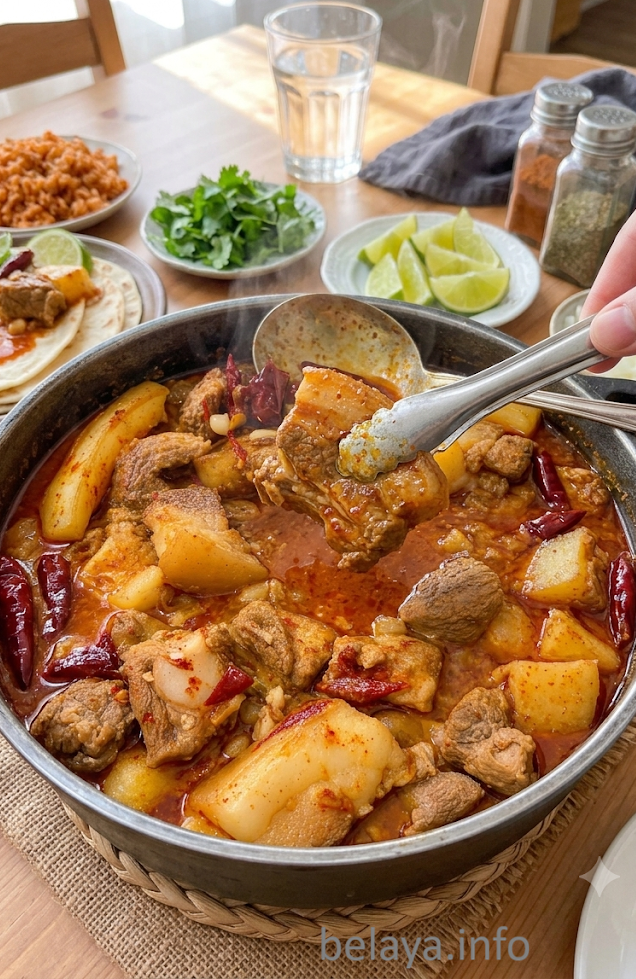
Mexican Pork Curry is a bold, slow-simmered fusion dish that combines tender pork shoulder, hearty potatoes, dried red chiles, tomato, warm Mexican spices, and aromatic curry seasonings in a rich, deeply flavored sauce. The pork cooks slowly until it becomes fork-tender, while the potatoes absorb the spicy, savory cooking liquid and become soft and creamy around the edges.
What gives this dish unusual depth is the combination of two flavor traditions. Cumin, oregano, smoked paprika, dried chiles, tomato, cilantro, and lime give the stew its Mexican-inspired character, while curry powder, cinnamon, cloves, and the optional coconut milk or peanut butter contribute warmth, complexity, and a subtle curry-style richness.
The result is a hearty one-pot meal with layers of savory, smoky, spicy, tangy, and slightly sweet flavors. Served with warm tortillas, Mexican rice, beans, or simply enjoyed from a bowl, this Mexican Pork Curry is especially satisfying when you want something warming, substantial, and different from an ordinary pork stew.
Why People Will Love Mexican Pork Curry Recipe
Pork shoulder becomes exceptionally tender after slow simmering.
Large potato pieces absorb the flavorful red sauce.
Dried red chiles provide deep chile flavor as well as heat.
Curry powder adds warmth and aromatic complexity.
Ground cumin reinforces the earthy Mexican-inspired character.
Oregano gives the sauce a savory herbal backbone.
Smoked paprika introduces gentle smokiness.
Cayenne allows the heat level to be customized.
Cinnamon adds warmth without making the dish taste sweet.
A small amount of cloves contributes depth and complexity.
Cocoa powder gives the sauce subtle bitterness and richness.
Tomato paste creates concentrated savory flavor.
Apple cider vinegar adds brightness and prevents the stew from tasting too heavy.
Balsamic vinegar contributes mild sweetness and acidity.
Browning the pork creates deeper roasted flavors.
The potatoes make the stew filling enough to serve as a complete meal.
The sauce becomes naturally thicker as the potatoes cook.
Fresh cilantro gives the finished dish a brighter flavor.
Lime juice provides a fresh contrast to the rich pork.
Optional coconut milk makes the sauce smoother and rounder.
Optional peanut butter adds body and a subtle nutty richness.
The recipe can be made milder or hotter very easily.
It reheats beautifully and can taste even more integrated the next day.
It pairs equally well with tortillas or rice.
The entire dish can be made in one heavy pot.
Key Ingredients
Pork Shoulder or Pork Butt:
This is the ideal cut for long cooking because it contains enough connective tissue and fat to stay juicy. Slow simmering transforms the tough collagen into gelatin, producing tender pieces of pork and giving the sauce more body.
Potatoes:
Potatoes make the dish substantial while absorbing the seasoned broth. Large chunks or wedges work especially well because they stay intact during the long cooking time.
Dried Red Chiles:
Whole dried chiles add concentrated chile flavor and visual character to the stew. Depending on the variety, they can contribute anything from mild fruitiness to intense heat.
Curry Powder:
Curry powder gives the stew its fusion identity. It contributes a complex blend of earthy, warm, and aromatic spices that complement pork surprisingly well.
Cumin and Oregano:
These two seasonings help bring the curry base toward a Mexican-inspired flavor profile. Cumin provides earthiness while oregano contributes an herbal note.
Tomato Paste:
Tomato paste adds concentrated umami, slight sweetness, color, and acidity while also helping the sauce thicken.
Apple Cider and Balsamic Vinegars:
Acidity is especially important in a rich pork dish. Apple cider vinegar adds sharp brightness, while balsamic contributes softer acidity and a hint of sweetness.
Cinnamon, Cloves, and Cocoa Powder:
Used in small amounts, these ingredients deepen the sauce without dominating it. They create subtle complexity similar to the way warm spices are sometimes layered into rich chile-based sauces.
Chicken Broth and Bouillon:
These provide the main liquid foundation and reinforce the savory flavor of the pork and potatoes.
Fresh Cilantro and Lime:
Both are best added near serving time. They bring freshness and acidity that balance the slow-cooked richness.
Expert Tips
Choose pork shoulder or pork butt rather than pork tenderloin for long cooking.
Leave some marbling on the pork because it provides moisture and flavor.
Trim only very thick exterior pieces of fat.
Cut the pork into roughly equal 1½-inch pieces so they become tender at the same rate.
Pat the pork completely dry before browning.
Brown in batches rather than overcrowding the pot.
Let the pork sit against the hot surface long enough to develop a crust before turning it.
Do not rush the browning stage; it creates important flavor.
Cook the tomato paste briefly before adding liquid to remove its raw taste.
Bloom the spices for only 30–60 seconds.
Stir continuously while blooming because ground spices can burn quickly.
Deglaze thoroughly after browning.
Scrape the flavorful browned bits from the bottom of the pot into the sauce.
Add enough liquid to mostly cover the pork, but do not turn the stew into soup.
Maintain a gentle simmer rather than a hard boil.
Add the potatoes only after the pork has begun to soften.
Keep potato pieces relatively large so they do not completely dissolve.
Use waxy or all-purpose potatoes if you want pieces that hold their shape particularly well.
Taste the dried chiles before deciding how much cayenne to add.
Start with less heat; you can always add more later.
If using coconut milk, add it near the end.
If using peanut butter, whisk it with a little hot broth before stirring it into the pot.
Simmer uncovered at the end if the sauce needs additional thickening.
Finish with cilantro only after cooking to preserve its fresh flavor.
Serve with lime wedges rather than adding a large quantity of lime directly to the whole pot.
Mexican Pork Curry
Ingredients
For the Pork
– 3 pounds pork shoulder or pork butt, cut into 1½-inch chunks
– 1½ teaspoons salt
– 1 teaspoon black pepper
– 2 tablespoons olive oil
For the Flavor Base
– 1 medium yellow onion, finely chopped
– 4 garlic cloves, minced
– 2 tablespoons tomato paste
– 2 tablespoons apple cider vinegar
– 1 tablespoon balsamic vinegar
For the Spices
– 1½ tablespoons curry powder
– 1 teaspoon ground cumin
– 1 teaspoon dried oregano
– ½ teaspoon smoked paprika
– ½ teaspoon cayenne pepper, or to taste
– ½ teaspoon ground cinnamon
– ¼ teaspoon ground cloves
– ¼ teaspoon unsweetened cocoa powder
For the Sauce and Stew
– 2 cups chicken broth
– 1 tablespoon chicken bouillon or 1 bouillon cube
– 1 cup water, as needed
– 2 pounds potatoes, peeled and cut into large chunks or wedges
– 6–8 dried red chiles, such as dried árbol or similar mild-to-hot whole red chiles
– 2 tablespoons chopped fresh cilantro, plus more for garnish
Optional for a Slightly Richer Curry Finish
– ¼ cup coconut milk
or
– 1 tablespoon peanut butter
For Serving
– Warm corn or flour tortillas
– Mexican rice
– Lime wedges
– Fresh cilantro
– Sliced jalapeños, optional
Instructions
1. Prepare the Pork
Pat the pork dry with paper towels.
Season it with the salt and black pepper.
2. Brown the Pork
Heat the olive oil in a large heavy pot or Dutch oven over medium-high heat.
Add the pork in batches and brown it well on all sides.
Do not overcrowd the pot.
Transfer the browned pork to a plate and set aside.
3. Cook the Aromatics
Reduce the heat to medium.
Add the chopped onion to the same pot and cook for about 4–5 minutes, until softened and lightly golden.
Add the garlic and cook for about 30 seconds, just until fragrant.
Stir in the tomato paste and cook for 1 minute.
4. Bloom the Spices
Add:
– curry powder
– cumin
– oregano
– smoked paprika
– cayenne
– cinnamon
– cloves
– cocoa powder
Stir constantly for about 30 seconds to 1 minute, until the spices become aromatic.
5. Deglaze the Pot
Pour in the apple cider vinegar and balsamic vinegar.
Stir well, scraping up any browned bits from the bottom of the pot.
These bits add a lot of flavor to the finished dish.
6. Build the Stew
Return the browned pork to the pot.
Add the chicken broth, bouillon, and enough water to mostly cover the pork.
Stir in the dried red chiles.
Bring everything to a gentle boil.
7. Simmer the Pork
Reduce the heat to low.
Cover and simmer for about 1 hour 15 minutes to 1 hour 30 minutes, stirring occasionally, until the pork begins to turn tender.
8. Add the Potatoes
Add the potato chunks to the pot and stir gently.
If needed, add a little more water so there is enough liquid for the potatoes to cook.
Cover and continue simmering for another 30–40 minutes, or until:
– the pork is very tender
– the potatoes are cooked through
– the sauce has thickened slightly
9. Finish the Sauce
If you want a slightly richer curry-style finish, stir in the coconut milk or peanut butter during the last 10 minutes of cooking.
This step is optional, but it can round out the sauce nicely.
Taste and adjust with more salt, black pepper, or cayenne if needed.
Stir in the chopped cilantro.
10. Serve
Serve hot, garnished with extra fresh cilantro.
Pair with warm tortillas, Mexican rice, beans, or simply enjoy it as a stew.
A squeeze of lime just before eating brightens the whole dish.
Important Notes When Making Mexican Pork Curry
This is a Mexican-inspired fusion curry, not a traditional Mexican dish.
The curry powder and optional coconut milk or peanut butter give it a cross-cultural flavor profile.
Pork shoulder benefits from long, gentle cooking.
Do not judge tenderness strictly by cooking time; the pork should yield easily when pierced with a fork.
Pork whole cuts are safe at 145°F / 63°C with a rest, but pork shoulder in a braise is usually cooked well beyond that temperature to become tender.
Dried chile heat varies considerably by variety.
Chile de árbol can be especially spicy.
Use fewer whole chiles if you prefer moderate heat.
Do not burn the spices while blooming them.
Burned curry powder or cumin can make the entire sauce bitter.
Chicken bouillon is often very high in sodium.
Taste before adding additional salt at the end.
Potatoes absorb salt and seasoning while they cook.
The sauce naturally thickens as the potatoes release starch.
If the stew becomes too thick, add a little hot water or broth.
If it is too thin, simmer uncovered for 10–15 minutes.
Coconut milk will make the sauce softer and creamier.
Peanut butter creates a thicker and slightly nuttier result.
Use one optional addition rather than both if you want the Mexican chile flavors to remain prominent.
Refrigerate leftovers promptly after serving.
How to Enjoy Mexican Pork Curry After Cooking
Allow the Mexican Pork Curry to rest for about 10 minutes after cooking. This gives the sauce time to settle and thicken slightly around the pork and potatoes.
Serve the curry in wide, shallow bowls so each portion gets plenty of pork, potato, dried chile, and sauce.
Spoon some of the red sauce generously over the pork.
Finish with freshly chopped cilantro.
Serve lime wedges alongside and squeeze a little lime juice over each bowl just before eating. The acidity makes the rich pork taste noticeably brighter.
Warm corn tortillas are especially good for scooping up tender pieces of pork and potatoes.
Flour tortillas also work well if you prefer something softer and more substantial.
Mexican rice is an excellent accompaniment because it absorbs the spicy sauce.
Pinto beans, black beans, or refried beans can turn the dish into a larger meal.
For extra heat, serve fresh jalapeño slices, hot salsa, or additional dried chile separately.
If the curry is particularly spicy, avocado, crema, or a little sour cream can provide a cooling contrast.
Leftovers can be reheated gently on the stovetop with a small splash of broth or water. The sauce may be thicker the next day because the potatoes continue absorbing liquid.
Nutrition Information
Approximate nutrition is based on 6 generous servings, using 3 pounds pork shoulder, 2 pounds potatoes, 2 tablespoons olive oil, broth, vegetables, tomato paste, and seasonings. The optional coconut milk or peanut butter and serving accompaniments such as tortillas, rice, beans, avocado, or crema are not included.
Calories: 720–780 kcal | Total Fat: 43–48 g | Saturated Fat: 14–17 g | Monounsaturated Fat: 20–23 g | Polyunsaturated Fat: 4–6 g | Cholesterol: 145–165 mg | Sodium: 950–1,300 mg depending on the chicken broth, bouillon, and added salt | Total Carbohydrates: 32–36 g | Dietary Fiber: 4–6 g | Sugars: 5–7 g | Protein: 43–48 g
Additional estimate:
Potassium: 1,150–1,400 mg | Calcium: 70–100 mg | Iron: 4–5.5 mg | Magnesium: 70–95 mg | Vitamin A: 900–1,400 IU | Vitamin C: 25–40 mg | Vitamin B6: 1–1.4 mg | Vitamin B12: 1.5–2.5 mcg | Zinc: 5–7 mg | Phosphorus: 450–600 mg
If ¼ cup coconut milk is added, expect roughly another 15–25 calories and 1.5–2.5 grams of fat per serving, depending on the coconut milk.
If 1 tablespoon peanut butter is used instead, the increase is approximately 15–20 calories per serving.
The largest nutritional variables are the amount of visible pork fat trimmed away, how much rendered fat remains in the stew, the sodium level of the broth and bouillon, and the size of each serving.
Frequently Asked Questions:
Is Mexican Pork Curry a traditional Mexican dish?
Not exactly. This version is a fusion recipe combining Mexican-inspired ingredients such as pork, dried chiles, cumin, oregano, tomato, cilantro, and lime with curry-style spices and optional coconut milk or peanut butter.
What does Mexican Pork Curry taste like?
It is savory, smoky, earthy, spicy, slightly tangy, and warmly aromatic. The pork provides richness while the tomato, vinegar, chiles, and lime prevent the sauce from becoming overly heavy.
How spicy is this recipe?
It can range from moderately spicy to very hot depending on the dried chiles and quantity of cayenne. Chile de árbol will make it considerably hotter than many milder dried red chiles.
What should I serve with Mexican Pork Curry?
Warm tortillas, Mexican rice, beans, avocado, lime wedges, and a fresh salad all complement the rich stew.
Can I make this recipe a day ahead?
Yes. Braised pork dishes often taste excellent the following day because the spices and sauce have more time to blend. Refrigerate it properly and reheat gently before serving.
Why is my pork still tough after 90 minutes?
Pork shoulder becomes tender only after its connective tissue has had enough time to break down. Continue simmering gently for another 20–30 minutes and test again rather than increasing the heat dramatically.
Why did my potatoes fall apart?
They may have been cut too small, added too early, or cooked at too vigorous a boil. Use larger chunks and add them only after the pork has already simmered for about 75–90 minutes.
How can I make the sauce thicker?
Remove the lid and simmer the stew for 10–15 minutes. You can also gently mash one or two potato pieces into the sauce to thicken it naturally.
Should I use coconut milk or peanut butter?
Use coconut milk if you want a smoother, creamier curry-style sauce. Use peanut butter if you want a thicker sauce with a subtle nutty undertone. Both are optional.
How can I reduce the heat without losing the chile flavor?
Use milder dried red chiles, reduce or omit the cayenne, and remove the chile seeds and pale inner membranes. You can then add extra cumin, oregano, smoked paprika, or tomato paste to maintain depth without adding more heat.