Homemade Almond Biscotti
Homemade Almond Biscotti are classic twice-baked Italian cookies known for their crisp, dry texture, toasted almond flavor, and delicate aroma of vanilla and almond extract. Unlike soft cookies, biscotti are intentionally baked until firm and crunchy, making them perfect for dipping into coffee, espresso, tea, or hot chocolate.
The beauty of this recipe comes from its simplicity. Whole almonds provide richness and natural nuttiness, while a modest amount of butter gives the biscotti a slightly more tender bite than completely fat-free traditional versions. Vanilla and almond extracts reinforce the flavor without overpowering the toasted nuts.
The two-stage baking method is what gives biscotti their distinctive character. The dough is first baked as a log, sliced while still slightly warm, and then baked again until the individual cookies become beautifully dry and crisp. Once cooled, they develop the satisfying crunch that makes biscotti such a timeless companion to a warm drink.
Why People Will Love Homemade Almond Biscotti Recipe
The biscotti have a wonderfully crisp texture that is perfect for dipping.
Whole almonds provide natural crunch in every slice.
Almond extract strengthens the nutty flavor without requiring extra ingredients.
Vanilla adds warmth and balances the stronger almond notes.
The cookies are sweet without being excessively sugary.
They pair exceptionally well with coffee and espresso.
The second bake creates the classic dry texture that helps biscotti keep well.
They stay fresh much longer than many soft cookies.
The recipe uses simple pantry ingredients.
The dough does not require complicated shaping.
Each biscotti looks rustic and homemade.
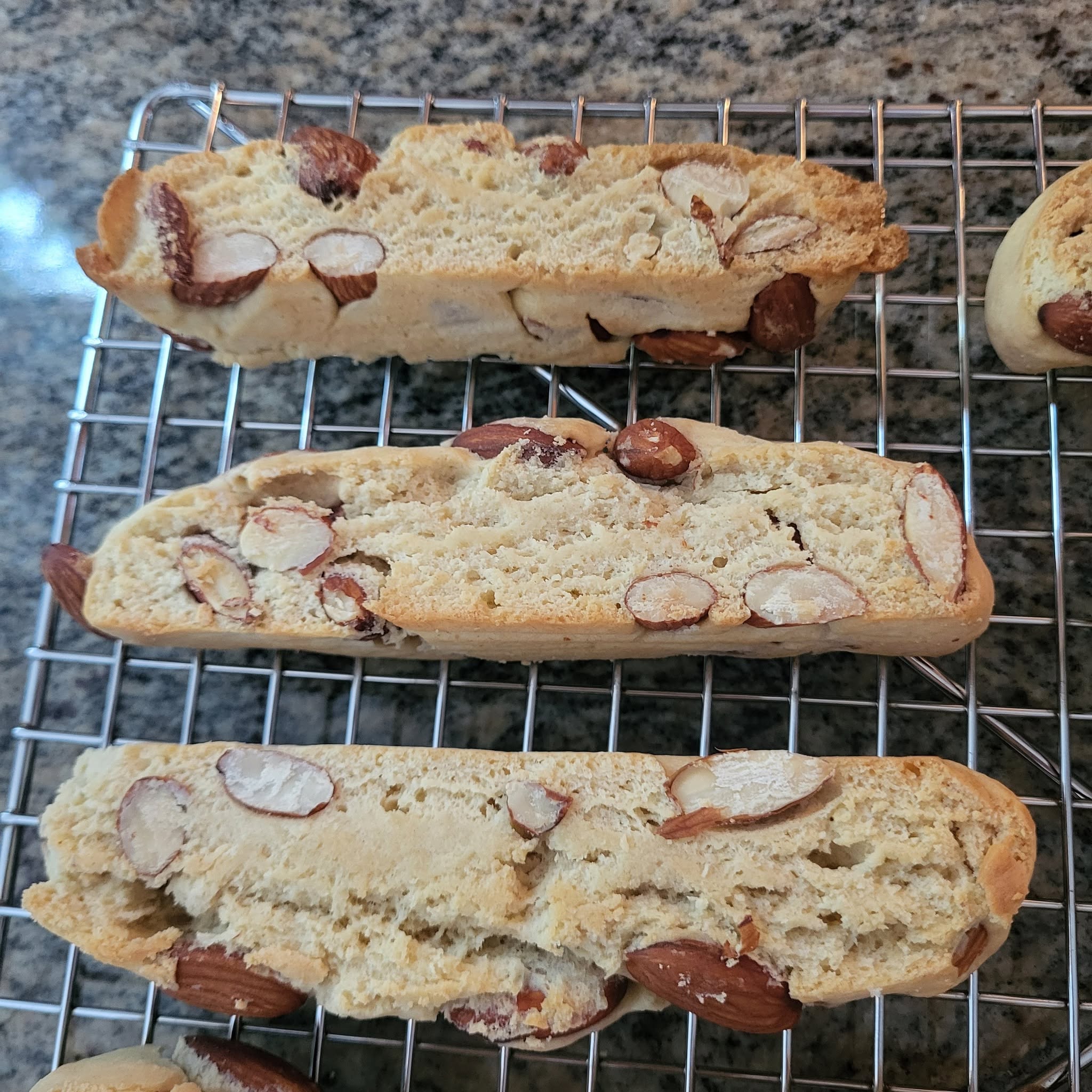
Whole almonds create attractive slices when the logs are cut.
The butter gives the biscotti a slightly richer and more tender texture.
They are easy to customize with chocolate, citrus zest, or spices.
They make an excellent homemade gift.
They can be prepared ahead for holidays or entertaining.
Their firm texture makes them relatively easy to transport.
They work equally well as a breakfast treat or dessert.
They are delicious plain but can also be dipped in melted chocolate.
The almond flavor becomes even more noticeable as the biscotti cool.
Key Ingredients
Whole Almonds:
Almonds are the defining ingredient of this recipe. Using whole almonds with their skins gives the biscotti deeper nutty flavor, visible texture, and a satisfying crunch.
All-Purpose Flour:
Flour provides the structure needed for the biscotti logs to hold their shape during the first bake and withstand slicing before the second bake.
Granulated Sugar:
Sugar provides sweetness while also encouraging light browning and crispness during baking.
Unsalted Butter:
Butter adds richness and makes the biscotti slightly less hard than very traditional versions made without added fat.
Eggs:
Eggs bind the dough together and provide enough moisture and structure to hold the almonds in place.
Almond Extract:
A small amount of almond extract intensifies the natural almond flavor dramatically, so only a little is needed.
Vanilla Extract:
Vanilla rounds out the flavor and softens the sharper almond aroma.
Baking Powder and Baking Soda:
The combination gives the dough a small amount of lift so the biscotti are crisp but not excessively dense.
Expert Tips
Measure flour accurately, preferably with a kitchen scale.
Avoid packing flour into measuring cups because too much flour can make biscotti excessively hard.
Use softened butter rather than melted butter.
Bring eggs to room temperature for easier mixing.
Use good-quality almond extract because its flavor is prominent.
Whole almonds can be lightly toasted beforehand for even deeper flavor.
Let toasted almonds cool completely before adding them to the dough.
Do not overmix once the dough comes together.
If the dough feels sticky, lightly flour your hands rather than adding large amounts of extra flour.
Shape the logs as evenly as possible so the biscotti bake uniformly.
Leave space between logs because they expand slightly during baking.
Do not slice the logs immediately after removing them from the oven.
Resting for 10–15 minutes reduces cracking.
Do not let the logs cool completely before slicing, or they may become too hard and brittle.
Use a sharp serrated knife.
Cut with a gentle sawing motion instead of pressing straight down through the almonds.
Slice diagonally for longer, more traditional-looking biscotti.
Keep slices similar in thickness for even drying.
Flip them during the second bake so both sides become crisp.
Remember that biscotti continue to harden as they cool.
For slightly softer biscotti, shorten the second bake.
For very crisp dipping biscotti, bake a few minutes longer at a low-to-moderate heat.
Homemade Almond Biscotti
Ingredients
2 cups (250 g) all-purpose flour
¾ cup (150 g) granulated sugar
½ teaspoon baking soda
1 teaspoon baking powder
½ teaspoon salt
2 large eggs
¼ cup (60 g) unsalted butter, softened
1 teaspoon vanilla extract
½ teaspoon almond extract
1 cup (145 g) whole almonds, preferably with the skins on
Instructions
Preheat the Oven
Preheat the oven to 350°F / 175°C.
Line a large baking sheet with parchment paper or a silicone baking mat.
Combine the Dry Ingredients
In a large mixing bowl, whisk together the flour, granulated sugar, baking soda, baking powder, and salt.
Mix until the dry ingredients are evenly distributed.
Make the Biscotti Dough
Add the eggs, softened butter, vanilla extract, and almond extract to the dry ingredients.
Stir with a wooden spoon or sturdy spatula until a thick dough begins to form.
Fold in the whole almonds, making sure they are distributed evenly throughout the dough.
Shape the Dough
Lightly flour your hands and work surface if the dough feels sticky.
Divide the dough into two equal portions.
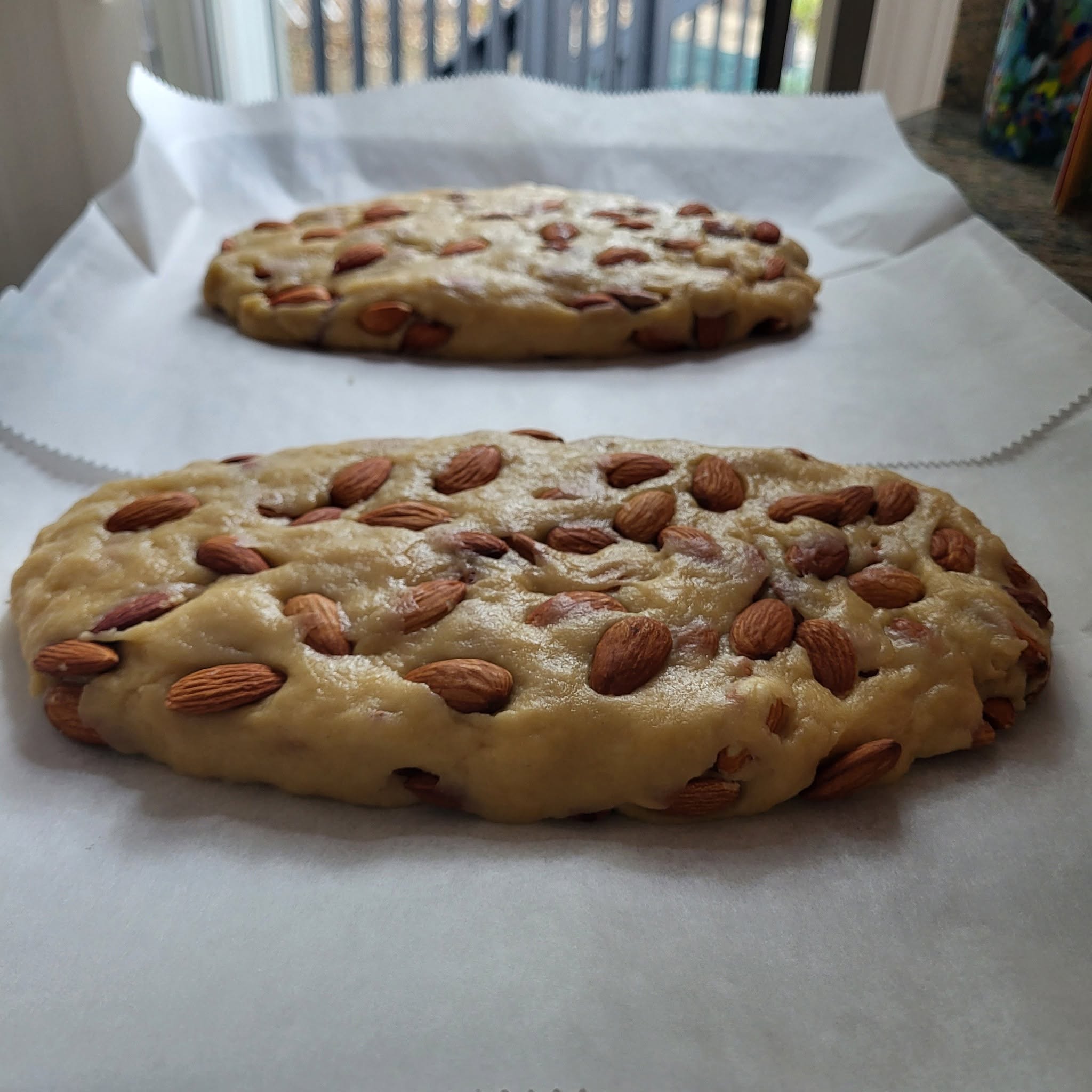
Shape each portion into a log approximately 12 inches / 30 cm long and 2 inches / 5 cm wide.
Transfer the logs to the prepared baking sheet, leaving enough space between them to allow for slight spreading.
For larger biscotti, you may shape the entire batch into one long log instead.
First Bake
Bake for approximately 25–30 minutes, or until the logs are lightly golden around the edges and firm in the center.
Remove from the oven and let them cool on the baking sheet for about 10–15 minutes.
The logs should be cool enough to handle but still slightly warm when sliced.
Slice the Biscotti
Transfer the baked logs to a cutting board.
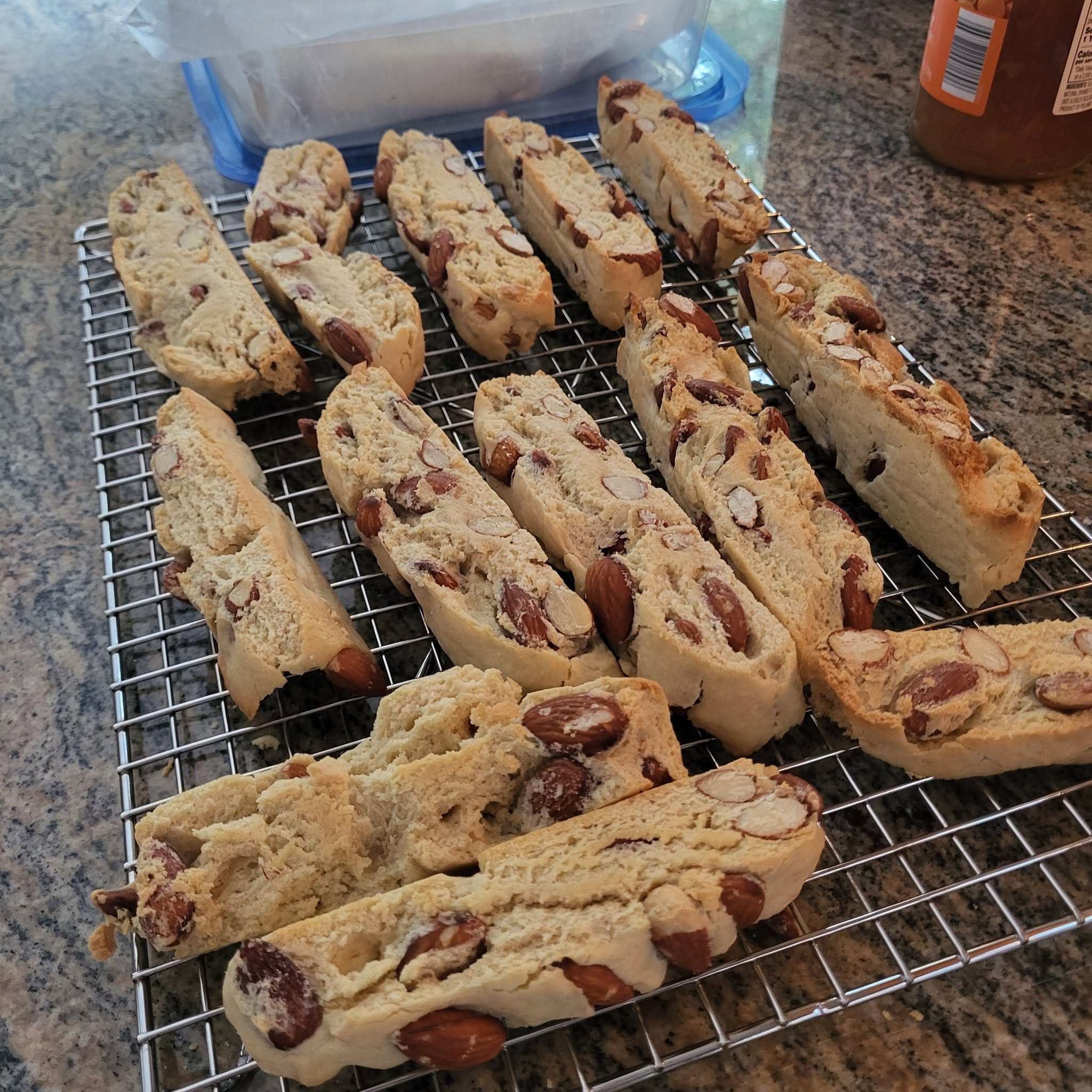
Using a sharp serrated knife, carefully cut them diagonally into slices about ½ inch / 1.25 cm thick.
Use a gentle sawing motion to avoid cracking the biscotti around the almonds.
Second Bake
Arrange the biscotti slices cut-side down on the baking sheet.
Return them to the oven and bake for 10–12 minutes.
Flip each biscotti over and bake for another 8–10 minutes, or until both sides are golden, dry, and crisp.
Cool Completely
Transfer the finished biscotti to a wire rack.
Allow them to cool completely. They will become firmer and crunchier as they cool.
Store
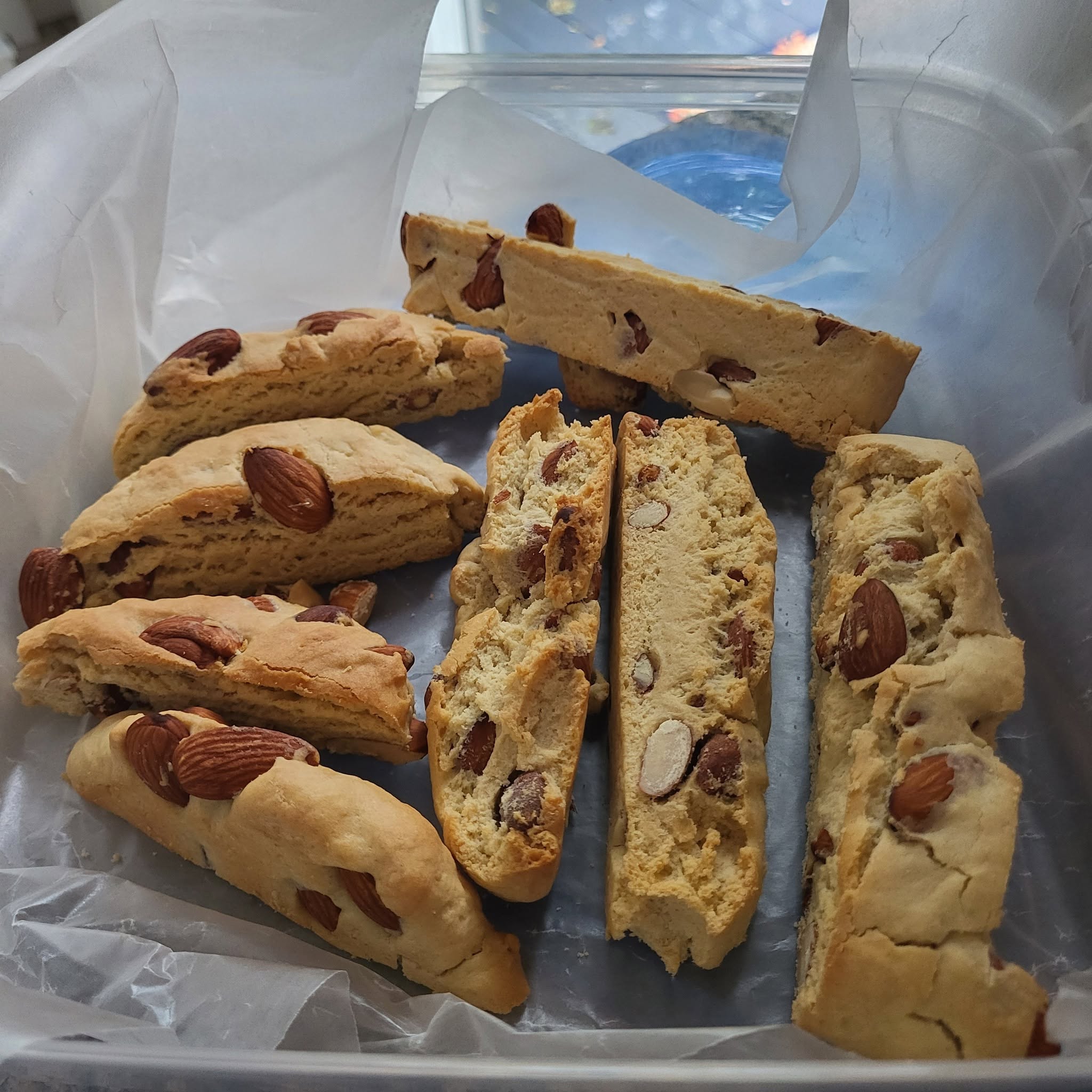
Once completely cooled, place the biscotti in an airtight container.
Store at room temperature for up to 2 weeks.
Important Notes When Making Homemade Almond Biscotti
Biscotti are meant to be noticeably firmer and drier than ordinary cookies.
Their final texture should not be judged while they are still hot.
They become significantly crisper during cooling.
The first bake sets the structure; the second bake removes additional moisture.
Overbaking during the first stage can make slicing difficult.
Underbaking the first log can cause slices to collapse.
Whole almonds can make slicing slightly challenging, so a good serrated knife is important.
Some small cracks around almonds are normal.
Baking time varies depending on log thickness and slice thickness.
One large log may require a different baking time than two smaller logs.
Keep an eye on the biscotti during the final few minutes of the second bake.
Almond extract is strong, so increasing it substantially can make the flavor artificial or overpowering.
Make sure biscotti are completely cool before storing.
Warm biscotti trapped in an airtight container can create condensation and soften.
Store away from humidity to preserve their crunch.
Almonds are a tree-nut allergen.
How to Enjoy Biscotti After Baking
Allow the biscotti to cool completely on a wire rack before serving. Their signature crispness develops most fully after cooling.
The classic way to enjoy almond biscotti is with a cup of espresso or strong coffee. Dip one end briefly into the coffee to soften the cookie while keeping the rest crisp.
They are also excellent with cappuccino, latte, black tea, chai, or hot chocolate.
For dessert, serve two or three biscotti alongside a scoop of vanilla, coffee, or chocolate ice cream.
You can also drizzle or dip one end of each cooled biscotti in melted dark chocolate for a richer version.
White chocolate pairs especially well with almond and vanilla if you prefer a sweeter finish.
For an Italian-style dessert experience, serve the biscotti with a small glass of dessert wine.
Crumbled biscotti can also be used as a crunchy topping for yogurt, pudding, panna cotta, or ice cream.
Because they keep well, biscotti are excellent for cookie boxes, gifts, brunch tables, and make-ahead desserts.
Nutrition Information
Approximate nutrition is based on the recipe producing about 20 medium biscotti.
Calories: 145 kcal | Total Fat: 6.5 g | Saturated Fat: 2 g | Monounsaturated Fat: 3.1 g | Polyunsaturated Fat: 1.1 g | Cholesterol: 25 mg | Sodium: 110–130 mg depending on the salt, baking soda, and baking powder brands | Total Carbohydrates: 18–19 g | Dietary Fiber: 1.3 g | Sugars: 7.5–8 g | Protein: 3.4 g
Additional estimate:
Potassium: 85–110 mg | Calcium: 30–40 mg | Iron: 0.8–1.1 mg | Magnesium: 25–35 mg | Vitamin E: 1.5–2 mg | Folate: 15–25 mcg | Phosphorus: 55–75 mg
Exact nutrition depends heavily on the number and thickness of the biscotti slices. Larger biscotti will naturally contain more calories per piece.
Frequently Asked Questions:
Why are biscotti baked twice?
The first bake cooks and sets the dough into firm logs. The second bake dries the individual slices, creating the crisp texture that distinguishes biscotti from ordinary cookies.
Are almond biscotti supposed to be very hard?
They should be crisp and firm, but not unpleasantly rock-hard. The final texture depends largely on how long they are baked during the second stage.
What is the best drink to serve with almond biscotti?
Espresso is the classic pairing, but regular coffee, cappuccino, tea, hot chocolate, or dessert wine all work beautifully.
Can I add chocolate to this recipe?
Yes. You can add chocolate chips to the dough or dip the cooled biscotti in melted dark, milk, or white chocolate.
How long do homemade biscotti stay fresh?
When completely cooled and stored in an airtight container in a dry place, they can remain good for approximately 2 weeks.
Why did my biscotti crumble when I sliced them?
The logs may have been too hot, too cool, or the knife may not have been sharp enough. Let them rest for about 10–15 minutes and slice gently with a serrated knife.
Why are my biscotti still soft after the second bake?
They may need a little more drying time. Remember that they also become noticeably firmer after cooling completely.
Can I toast the almonds before adding them?
Yes. Lightly toasting the almonds enhances their nutty flavor. Allow them to cool before mixing them into the dough.
Can I make one large biscotti log instead of two?
Yes. A single log works, but it may need a slightly longer first bake because it will generally be larger and thicker.
How can I make biscotti less hard?
Slice them slightly thicker and shorten the second bake by a few minutes. This preserves a little more moisture while still giving the exterior a crisp finish.