Fettuccine with Lobster in Homemade Marinara Sauce
Fettuccine with Lobster in Homemade Marinara Sauce is an elegant seafood pasta that combines sweet, tender lobster meat with silky fettuccine, bright tomato sauce, aromatic garlic and shallot, fresh vegetables, white wine, and parsley. It has the richness expected from a special-occasion pasta while remaining lighter and fresher than a cream-based lobster sauce.
The most important feature of this dish is balance. Lobster has a naturally delicate sweetness, so the marinara should complement rather than overpower it. White wine provides acidity, zucchini and yellow pepper contribute freshness and subtle sweetness, while garlic and shallot create a savory aromatic foundation.
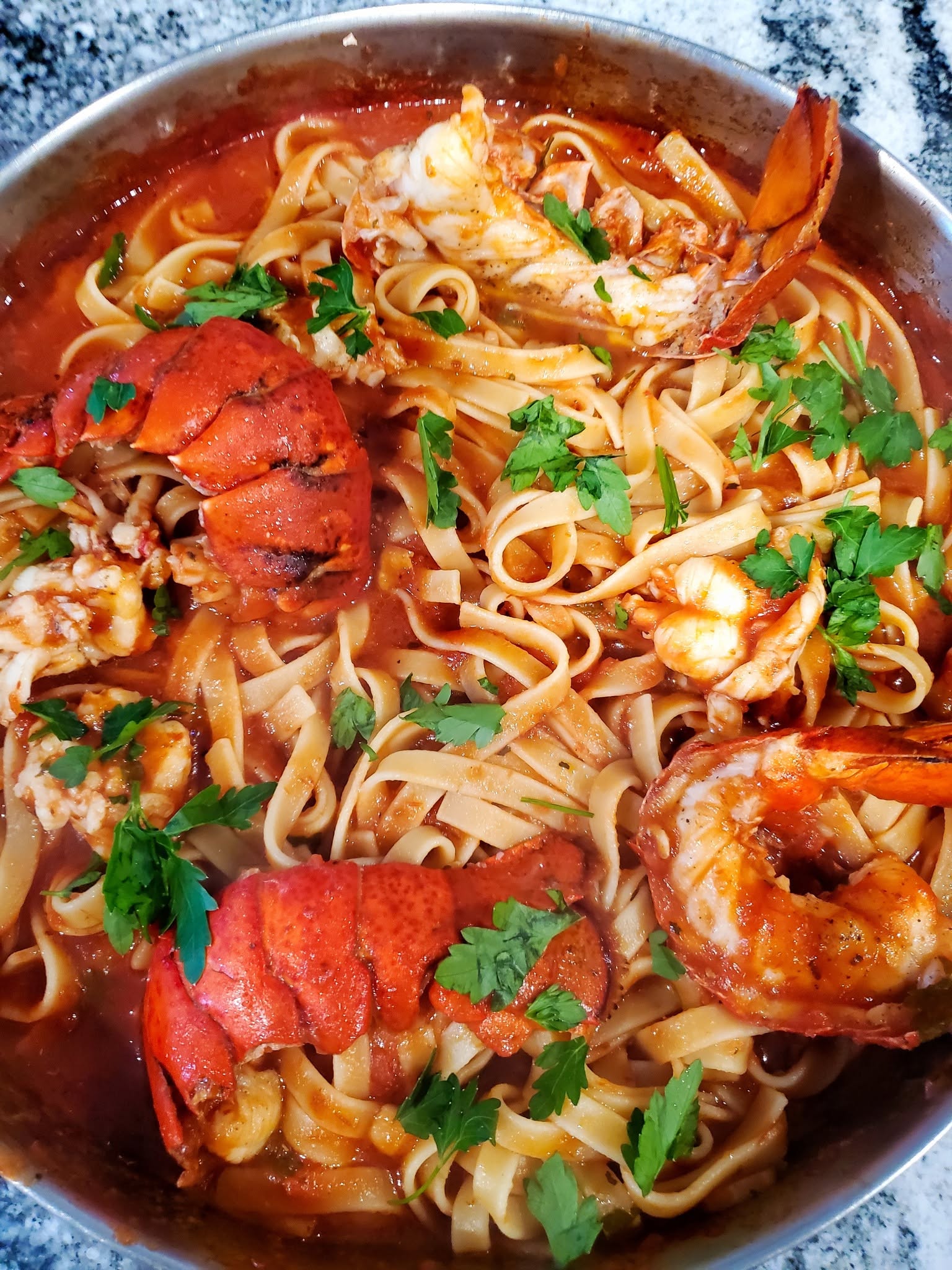
When finished correctly, the fettuccine should be thoroughly coated rather than drowned in sauce, and the lobster should remain juicy and tender. Fresh parsley added at the end gives the entire dish a clean, vibrant finish and makes the red sauce and lobster visually striking.
Why People Will Love Fettuccine with Lobster in Homemade Marinara Sauce Recipe
Lobster immediately makes the pasta feel luxurious and special.
The natural sweetness of lobster pairs beautifully with tomato sauce.
Fettuccine provides a broad surface that holds marinara exceptionally well.
White wine adds acidity and complexity without making the sauce heavy.
Garlic gives the sauce a classic savory foundation.
Shallot contributes a softer, sweeter flavor than ordinary onion.
Zucchini adds freshness without competing with the lobster.
Yellow bell pepper brings gentle sweetness and additional color.
Marinara keeps the dish brighter and lighter than cream-based lobster pasta.
Fresh parsley adds freshness to every serving.
Large pieces of lobster provide an impressive presentation.
The recipe works beautifully for holidays, date nights, and celebrations.
It can be prepared with whole lobster or conveniently with cooked lobster meat.
Reserved pasta water helps create a restaurant-style sauce.
The recipe does not require a large number of complicated ingredients.
The seafood remains the centerpiece rather than being hidden under excessive seasoning.
A little red pepper can easily transform it into a spicy lobster pasta.
It is substantial enough to serve as a complete main course.
The red sauce, golden pasta, green parsley, and lobster shells create beautiful color contrast.
Despite its impressive appearance, most of the cooking technique is straightforward.
Key Ingredients
Lobster:
Lobster is the centerpiece of the recipe. Its naturally sweet, delicate meat works best when cooked gently and added near the end so that it does not become tough.
Fettuccine:
The wide, flat shape of fettuccine gives the marinara plenty of surface area to cling to. Its substantial texture also stands up well to large pieces of lobster.
Marinara Sauce:
A good marinara should taste bright and tomato-forward rather than overly sweet. Since the sauce surrounds such a delicate seafood, quality matters considerably.
Dry White Wine:
White wine adds acidity and subtle complexity. It helps balance the natural sweetness of the lobster and tomatoes while also lifting flavor from the bottom of the pan.
Shallot:
Shallot provides mild sweetness and aromatic depth without dominating the lobster.
Garlic:
Garlic reinforces the savory quality of the tomato sauce, but it should be cooked gently to avoid bitterness.
Zucchini and Yellow Bell Pepper:
These vegetables add sweetness, color, and a lighter element to the pasta while blending naturally into the marinara.
Flat-Leaf Parsley:
Fresh parsley is particularly important at the end because it cuts through the richness of the pasta and gives the dish a clean herbal finish.
Expert Tips
If using whole lobster, avoid overcooking it during the initial boil because it will be warmed again in the sauce.
Remove the lobster meat as soon as it is cool enough to handle.
Keep the lobster pieces relatively large so they remain noticeable in the finished pasta.
Reserve some attractive tail or claw pieces for the top of the serving platter.
Pat thawed frozen lobster meat dry before adding it to the sauce.
Use a dry white wine such as Sauvignon Blanc, Pinot Grigio, or an unoaked Chardonnay.
Do not use heavily sweet wine.
Let the wine reduce before adding the marinara so the flavor becomes concentrated.
Cook the shallot before adding garlic because garlic cooks much faster.
Do not allow garlic to become dark brown.
Cut zucchini and pepper into fairly small pieces so they integrate naturally into the sauce.
Cook the vegetables until tender but not completely mushy.
Salt the pasta water generously, but remember that this will contribute salt to the final dish.
Cook the fettuccine about one minute short of fully done.
Finish the pasta in the sauce so it absorbs more flavor.
Always reserve pasta water before draining.
Add pasta water a little at a time rather than pouring in a large amount.
The starch in pasta water helps marinara cling to the fettuccine.
Add lobster only near the end.
Once lobster is added, keep the heat low.
Avoid aggressively boiling lobster in tomato sauce.
Add parsley after the majority of cooking is complete.
Finish with a little extra-virgin olive oil if the sauce needs additional richness.
If adding lemon, use only enough to brighten the seafood rather than making the tomato sauce sour.
Fettuccine with Lobster in Homemade Marinara Sauce
Ingredients
For the Lobster Pasta
4 small lobsters, about 1½ pounds (625 g) each
or about 1⅓ pounds (625 g) cooked lobster meat, thawed if frozen
12½ ounces (350 g) fettuccine
1 tablespoon olive oil
1 large shallot, finely chopped
2 cloves garlic, minced
1 small zucchini, diced or thinly sliced
1 yellow bell pepper, diced or thinly sliced
2 tablespoons (30 ml) dry white wine
1⅔ cups (400 ml) homemade or good-quality marinara sauce
Freshly ground black pepper, to taste
Salt, as needed
2–3 tablespoons chopped fresh flat-leaf parsley
½–1 cup reserved pasta water, as needed
Optional for Serving
Extra fresh parsley
Extra-virgin olive oil
Crushed red pepper flakes
Lemon wedges
Instructions
Cook the Lobster
If using live lobster, bring a large pot of well-salted water to a boil.
Carefully add the lobsters and cook until the shells turn bright red and the meat is just cooked through, generally about 10–15 minutes depending on size.
Remove the lobsters and allow them to cool until comfortable to handle.
Separate the tails and claws, remove the meat, and cut it into large bite-sized pieces.
For a presentation similar to the photo, you can leave a few tail pieces partially inside the shell for serving.
If using already cooked lobster meat, simply cut it into large chunks and keep refrigerated until needed.
Cook the Pasta
Bring a large pot of salted water to a boil.
Cook the fettuccine until just al dente, according to package directions.
Before draining, reserve about 1 cup of pasta water.
Drain the pasta and set aside briefly.
Sauté the Aromatics
While the pasta cooks, heat the olive oil in a large skillet or sauté pan over medium heat.
Add the finely chopped shallot and cook for about 2 minutes, until softened.
Add the garlic and cook for another 30–60 seconds, just until fragrant.
Avoid browning the garlic.
Cook the Vegetables
Add the zucchini and yellow bell pepper.
Cook for approximately 4–5 minutes, stirring occasionally, until the vegetables are tender but still retain some texture.
Deglaze with White Wine
Pour in the white wine.
Increase the heat slightly and cook for about 2–3 minutes, allowing the alcohol to cook off and the wine to reduce.
Scrape the bottom of the pan gently to release any flavorful browned bits.
Add the Marinara Sauce
Pour in the marinara sauce and stir well.
Reduce the heat to medium-low and simmer gently for about 5–8 minutes.
Season with freshly ground black pepper.
Taste before adding salt, since both the pasta water and marinara sauce may already be seasoned.
Combine the Pasta and Sauce
Add the drained fettuccine directly to the skillet.
Toss gently until the noodles are evenly coated with the marinara sauce.
Add a splash of reserved pasta water as needed to loosen the sauce and help it cling to the fettuccine.
Add the Lobster
Reduce the heat to low.
Gently fold the lobster meat into the pasta.
Cook for only 1–2 minutes, just long enough to heat the lobster through.
Avoid prolonged simmering at this stage, as lobster can become tough and rubbery when overcooked.
Finish the Dish
Sprinkle in the chopped flat-leaf parsley and gently toss once more.
Taste and adjust with additional black pepper or salt if necessary.
Serve
Transfer the fettuccine to a large serving platter or individual pasta bowls.
Arrange the larger lobster pieces or tails over the pasta for a presentation similar to the photo.
Spoon additional marinara sauce over the lobster and pasta.
Finish with fresh parsley and, if desired, a light drizzle of extra-virgin olive oil.
Serve immediately.
What the Finished Dish Should Be Like
The finished fettuccine should be coated in a rich, bright tomato marinara sauce rather than swimming in liquid.
The lobster should remain juicy and tender, with large pieces visible throughout the pasta.
The zucchini and yellow pepper should soften into the sauce while still contributing subtle sweetness and texture.
The white wine should not dominate the dish; instead, it should add a light acidity that balances the sweet lobster and tomato sauce.
Fresh parsley at the end provides the bright green contrast seen in the photo and keeps the rich seafood pasta tasting fresh.
Important Notes When Making Fettuccine with Lobster in Homemade Marinara Sauce
Lobster meat becomes tough quickly when overcooked.
Already cooked lobster should only be reheated gently.
The final lobster temperature should reach approximately 145°F / 63°C.
Fresh whole lobster cooking time varies substantially according to size.
Four whole 1½-pound lobsters will not yield 2½ kg of edible lobster meat because the shells make up a large portion of their weight.
The alternative listed quantity of 625 g lobster meat provides a generous amount of seafood for this pasta.
Marinara sauce varies greatly in salt, sugar, and acidity.
Taste the sauce before adding additional salt.
White wine does not necessarily lose every trace of alcohol during a brief reduction.
Additional broth can replace the wine if alcohol is being avoided.
Do not rinse cooked pasta after draining.
Pasta should go into the sauce while still hot.
Reserve more pasta water than you think you need.
The sauce should coat the noodles rather than pool heavily underneath them.
Parmesan is generally unnecessary here because strong cheese can mask delicate lobster flavor.
Fresh parsley should be added just before serving for the best color.
Seafood pasta is best eaten immediately rather than held warm for a long period.
How to Enjoy Fettuccine with Lobster in Homemade Marinara Sauce After Cooking
Serve the pasta immediately after the lobster has been warmed through. This is when both the fettuccine and seafood have their best texture.
Use shallow pasta bowls or a large serving platter so the lobster pieces remain visible rather than disappearing beneath the noodles.
Twirl portions of fettuccine onto each plate and arrange larger lobster pieces on top.
Spoon a little additional marinara around the pasta rather than completely covering the lobster.
Finish with plenty of freshly chopped flat-leaf parsley.
A small drizzle of high-quality extra-virgin olive oil adds aroma and richness without making the dish heavy.
For those who enjoy heat, crushed red pepper flakes can be offered at the table.
A squeeze of fresh lemon can also be delicious, but use it sparingly so it brightens rather than overwhelms the marinara.
Serve the pasta with crusty Italian bread or garlic bread to capture any sauce left in the bowl.
A simple arugula, mixed-green, or fennel salad dressed with lemon makes an excellent side because its acidity balances the rich lobster and pasta.
For wine pairing, a crisp dry white wine works particularly well with the sweet lobster and tomato sauce.
Nutrition Information
Approximate nutrition is based on 4 generous servings, using 625 g cooked lobster meat, 350 g dry fettuccine, 400 ml marinara sauce, 1 tablespoon olive oil, vegetables, and white wine. Optional extra olive oil and bread are not included.
Calories: 570 kcal | Total Fat: 8 g | Saturated Fat: 1.3 g | Monounsaturated Fat: 3.6 g | Polyunsaturated Fat: 1.2 g | Cholesterol: 230–260 mg | Sodium: 900–1,200 mg depending on the lobster, marinara sauce, pasta water, and added salt | Total Carbohydrates: 77–81 g | Dietary Fiber: 6–7 g | Sugars: 9–11 g | Protein: 43–47 g
Additional estimate:
Potassium: 900–1,100 mg | Calcium: 160–220 mg | Iron: 4–5.5 mg | Magnesium: 85–110 mg | Vitamin A: 900–1,400 IU | Vitamin C: 35–50 mg | Vitamin B12: 2.5–4 mcg | Zinc: 4–6 mg | Phosphorus: 450–600 mg | Selenium: 65–90 mcg
Frequently Asked Questions:
Why does lobster work so well with marinara sauce?
Lobster has a naturally sweet flavor that contrasts beautifully with the acidity of tomatoes. A relatively simple marinara enhances that sweetness without hiding the seafood.
What type of pasta works best with lobster marinara?
Fettuccine is excellent because its broad surface holds the sauce well. Linguine, spaghetti, tagliatelle, or bucatini can also be used.
Should Parmesan be served with lobster pasta?
It can be, but it is not necessary. Strong cheese can overwhelm delicate lobster, so fresh parsley, olive oil, lemon, or chile are often better finishing ingredients.
What wine pairs well with the finished dish?
Pinot Grigio, Sauvignon Blanc, Vermentino, or another crisp dry white wine works particularly well with lobster and tomato.
Can I make this dish spicy?
Yes. Add crushed red pepper flakes when sautéing the garlic or finish the pasta with Calabrian chile for a stronger Mediterranean chile flavor.
Why did my lobster become rubbery?
It was most likely overcooked. If the lobster is already cooked, add it only during the final 1–2 minutes so it is warmed rather than simmered.
Why is my marinara not sticking to the fettuccine?
The pasta may have been rinsed or the sauce may need more emulsification. Toss the hot pasta directly with the sauce and add a small amount of starchy pasta water.
Can I use frozen lobster meat?
Yes. Thaw it completely in the refrigerator, drain it well, pat it dry, and add it near the end of cooking.
Can I make the marinara ahead of time?
Yes. The sauce can be prepared in advance, but cook the pasta and add the lobster shortly before serving for the best texture.
What should I do if the sauce becomes too thick?
Add reserved pasta water a few tablespoons at a time while tossing the fettuccine until the sauce becomes glossy and coats the noodles smoothly.