Homemade Salsa Quebrada
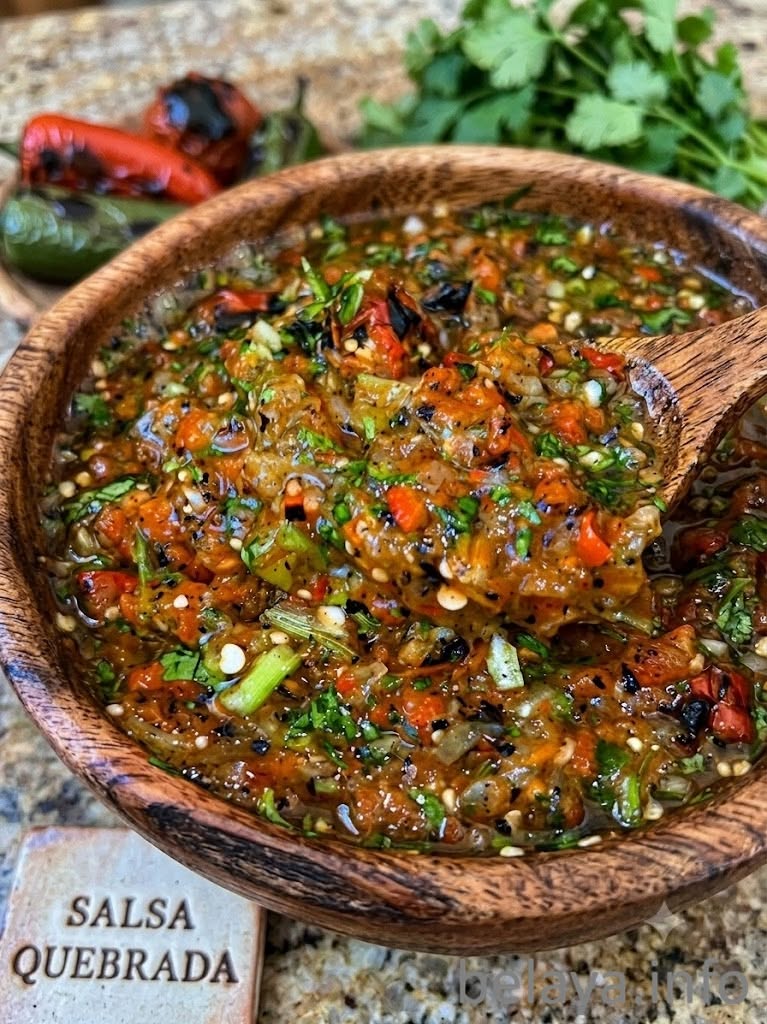
Homemade Salsa Quebrada is a rustic Mexican-style salsa made with fire-roasted tomatoes, serrano peppers, jalapeño, onion, garlic, cilantro, and fresh lime. Its defining quality is its texture: rather than being blended completely smooth, the ingredients are crushed just enough to create a chunky, uneven consistency that feels fresh and homemade.
Roasting the vegetables develops natural sweetness while creating lightly charred edges that add smoky depth. Serranos bring a clean, sharp heat, jalapeño adds a greener chile flavor, and fresh cilantro and lime brighten the richer roasted ingredients.
This salsa is simple but extremely versatile. It works beautifully with tacos, carne asada, grilled chicken, quesadillas, eggs, tostadas, burritos, or warm tortilla chips.
Why People Will Love Homemade Salsa Quebrada Recipe
The rustic, chunky texture gives it a true homemade character.
Roasted tomatoes develop deeper sweetness and richer flavor.
Lightly charred vegetables create a subtle smoky finish.
Serrano peppers provide a bright, clean chile heat.
Jalapeño adds fresh green pepper flavor.
Roasted garlic becomes mellow, slightly sweet, and savory.
White onion adds both sweetness and sharpness.
Fresh cilantro keeps the salsa vibrant and refreshing.
Lime juice adds acidity and balances the roasted vegetables.
It can easily be made mild, medium, or very spicy.
The recipe requires only a handful of inexpensive ingredients.
It can be prepared in a traditional molcajete or quickly in a blender.
It tastes excellent at room temperature or chilled.
It pairs with an enormous range of Mexican and Tex-Mex foods.
Key Ingredients
Roma Tomatoes:
Roma tomatoes form the body of the salsa. Their lower moisture content and meaty texture make them ideal for roasting and crushing without creating an overly watery result.
Serrano Peppers:
Serranos bring sharper, brighter heat than jalapeños. They also contribute a fresh chile flavor that remains noticeable even after roasting.
Jalapeño Pepper:
Jalapeño adds moderate heat and a slightly grassy, vegetal flavor that complements the serranos.
White Onion:
Roasting the onion softens its sharpness and develops a mild sweetness that balances the peppers.
Garlic:
Roasting garlic in its skin protects it from burning and transforms its raw bite into a sweeter, richer flavor.
Fresh Cilantro:
Cilantro is added after roasting so its fresh herbal character remains vivid.
Fresh Lime Juice:
Lime juice is optional but highly useful for adding brightness and balancing the sweetness of the roasted tomatoes.
Kosher Salt:
Salt is especially important in a simple salsa because it brings out the natural sweetness, acidity, and chile flavor of the vegetables.
Expert Tips
Choose ripe, firm Roma tomatoes for the best balance of sweetness and structure.
Use a heavy cast-iron skillet or comal for better charring.
Let the vegetables sit against the hot pan long enough to develop dark spots before turning them.
Do not completely burn the vegetables; aim for blistered and charred areas rather than an entirely black surface.
Roast the garlic with its peel on to protect the cloves from scorching.
Remove garlic earlier than the tomatoes if it becomes soft first.
For the best texture, crush the garlic and chiles before adding the tomatoes.
Add the tomatoes gradually when working in a molcajete.
If using a blender, use short pulses rather than continuous blending.
Start with less salt and adjust after the salsa rests.
Add cilantro only after the roasted ingredients have cooled slightly.
Use lime sparingly so it brightens rather than dominates the salsa.
For stronger smoky flavor, char more of the tomato and chile skins.
For a thinner salsa, add water gradually rather than all at once.
Let the salsa rest before serving so the flavors become more integrated.
Homemade Salsa Quebrada
Ingredients
5 medium ripe Roma tomatoes
2 serrano peppers
1 jalapeño pepper
¼ medium white onion
2 large garlic cloves, unpeeled
¼ cup fresh cilantro, roughly chopped
½ teaspoon kosher salt, or to taste
1 tablespoon fresh lime juice, optional
1–2 teaspoons vegetable or olive oil, optional
1–3 tablespoons water, only if needed
Instructions
Roast the Tomatoes and Chiles:
Heat a dry cast-iron skillet, comal, or heavy pan over medium-high heat.
Add the tomatoes, serrano peppers, jalapeño, onion, and unpeeled garlic cloves.
Roast for about 8–12 minutes, turning occasionally, until the vegetables become softened and develop dark blistered or lightly charred spots.
Remove the garlic once it is soft and lightly browned, then peel away the skin.
Crush the Salsa:
Place the roasted garlic and salt in a molcajete and grind them into a paste.
Add the roasted chiles and crush until broken down but still slightly textured.
Add the roasted onion and tomatoes a little at a time, crushing everything together until you have a rustic, chunky salsa.
If using a blender or food processor instead, add all the roasted ingredients and pulse only 3–5 times. Avoid blending continuously—the salsa should remain slightly chunky.
Add the Fresh Ingredients:
Stir in the chopped cilantro and fresh lime juice, if using.
Taste and adjust the salt.
Adjust the Consistency:
If the salsa is thicker than you prefer, stir in 1 tablespoon of water at a time until it reaches the desired consistency.
For a slightly smoother, richer texture, you can stir in 1–2 teaspoons of oil.
Rest the Salsa:
Allow the salsa to sit for about 10–15 minutes before serving so the roasted vegetables, chiles, cilantro, and salt can blend together.
Serve:
Serve fresh at room temperature or slightly chilled with tacos, grilled meats, quesadillas, tostadas, eggs, burritos, or tortilla chips.
For a Smokier Version
Roast the tomatoes and chiles until several areas of their skins are deeply charred. The darker roasted spots will give the salsa a stronger smoky flavor.
For a Milder Salsa
Use:
1 jalapeño
1 serrano
Remove the pale membranes and seeds before roasting if you want even less heat.
For a Hotter Salsa
Use:
3–4 serrano peppers, or
1 additional jalapeño
You can also add a small chile de árbol for a sharper heat.
Tips:
The defining feature of Salsa Quebrada is its texture. Do not purée it completely smooth. Whether using a molcajete, blender, or food processor, leave visible pieces of roasted tomato, onion, and chile for the characteristic rustic finish.
Storage
Transfer the salsa to an airtight container and refrigerate. For the best freshness and flavor, use it within about 3–4 days.
Important Notes When Making Homemade Salsa Quebrada
The defining feature of Salsa Quebrada is its coarse, broken texture.
It should not resemble a completely smooth restaurant-style salsa.
Serrano peppers are generally hotter than jalapeños.
Chile heat varies considerably from pepper to pepper.
Removing the inner membranes reduces heat more effectively than removing seeds alone.
Roasting peppers does not eliminate their heat.
Dark charred spots add desirable smoky flavor, but fully burnt vegetables can make the salsa bitter.
Fresh cilantro should not be cooked with the vegetables.
The salsa may release some liquid as it rests.
Stir it before serving if separation occurs.
Oil is optional and should be used sparingly.
The salsa usually tastes better after resting for 10–30 minutes.
Refrigerated salsa may taste less aromatic when very cold.
Allow it to sit briefly at room temperature before serving for fuller flavor.
Store leftovers in a clean airtight container in the refrigerator.
How to Enjoy Homemade Salsa Quebrada After Making It
After the salsa has rested for 10–15 minutes, stir it gently and taste once more for salt, lime, and heat.
Serve it at room temperature if you want the roasted tomato, garlic, and chile aromas to be most noticeable.
For tacos, spoon a small amount directly over carne asada, carnitas, grilled chicken, barbacoa, or roasted vegetables. Its chunky texture works especially well because it sits on top rather than running off.
Serve it alongside quesadillas, tostadas, burritos, or grilled meats as a fresh condiment.
For breakfast, add it to scrambled eggs, huevos rancheros, breakfast tacos, or potatoes.
It is also excellent served simply with warm tortilla chips, especially when paired with guacamole, beans, or queso.
For a stronger smoky experience, serve the salsa with grilled or charred meats. The roasted flavors reinforce one another beautifully.
If refrigerated, take the salsa out about 10–15 minutes before eating, stir well, and adjust with a squeeze of fresh lime if the flavors need brightening.
Nutrition Information
Approximate nutrition per serving, based on about 6 servings and using 1 teaspoon of optional oil:
Calories: 42 kcal | Total Fat: 1.2 g | Saturated Fat: 0.2 g | Monounsaturated Fat: 0.7 g | Polyunsaturated Fat: 0.2 g | Cholesterol: 0 mg | Sodium: 190–280 mg depending on added salt | Total Carbohydrates: 8 g | Dietary Fiber: 2.2 g | Sugars: 4.3 g | Protein: 1.5 g
Additional estimate:
Potassium: 320–420 mg | Calcium: 20–30 mg | Iron: 0.7–1 mg | Vitamin A: 900–1,300 IU | Vitamin C: 25–40 mg
Frequently Asked Questions:
What does Salsa Quebrada taste like?
It tastes roasted, fresh, slightly smoky, moderately spicy, and tangy, with a noticeable contrast between sweet tomatoes and sharp chiles.
What makes Salsa Quebrada different from regular blended salsa?
Its texture is much more rustic. The ingredients are crushed or pulsed rather than completely puréed, leaving visible pieces of tomato, chile, and onion.
Is Salsa Quebrada very spicy?
This version is moderately spicy because it uses two serranos and one jalapeño. The heat can easily be reduced or increased.
What foods go best with Salsa Quebrada?
Tacos, carne asada, grilled chicken, eggs, burritos, quesadillas, tostadas, nachos, and tortilla chips all pair beautifully with it.
How long does homemade Salsa Quebrada last?
For the best freshness, keep it refrigerated in an airtight container and use it within about 3–4 days.
How do I make Salsa Quebrada smokier?
Roast the tomatoes, peppers, and onion a little longer so they develop more dark blistered and charred areas, but avoid burning them completely.
Can I make this salsa without a molcajete?
Yes. A food processor or blender works well. Use only a few short pulses so the salsa stays coarse.
How can I make the salsa less spicy?
Use only one serrano and one jalapeño, and remove some of the pale inner membranes before roasting.
What should I do if the salsa is too thick?
Add water 1 tablespoon at a time until it reaches the consistency you prefer.
Why did my salsa turn bitter?
The vegetables may have been burned rather than lightly charred, or the garlic may have scorched. Aim for dark roasted spots while keeping most of the vegetables soft and flavorful.