Sour Cabbage Rolls with Meat, Rice & Bacon – Traditional Sarma
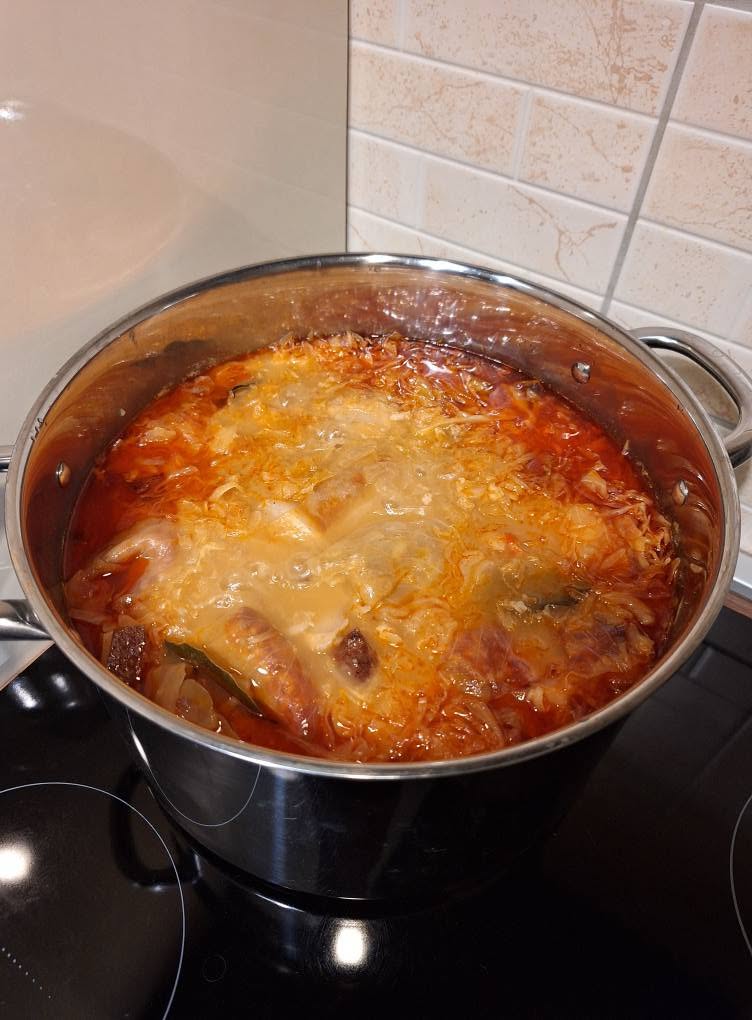
Traditional Sarma is a deeply comforting cold-weather dish made by wrapping seasoned ground meat and rice inside fermented cabbage leaves, then slow-cooking the rolls for several hours with shredded sour cabbage, smoked bacon, bay leaves, and paprika. It is the kind of food designed for a large family pot rather than a quick weeknight dinner.
What gives Sarma its distinctive character is the combination of sour fermented cabbage, rich pork and beef, smoky bacon, sweet paprika, and long, gentle cooking. As the rolls simmer, the uncooked rice absorbs the savory cooking liquid while the meat releases its juices into the surrounding cabbage and broth. The paprika roux gradually thickens and enriches everything.
Sarma is particularly famous for becoming even better after resting. By the second or third day, the acidity of the cabbage, smoke from the bacon, spices, and meat flavors have had more time to blend. Served with creamy mashed potatoes or crusty bread, it is hearty, rustic, tangy, smoky, and exceptionally satisfying.
Why People Will Love Sour Cabbage Rolls with Meat, Rice & Bacon – Traditional Sarma Recipe
Fermented cabbage gives the dish a distinctive tangy flavor that ordinary cabbage rolls cannot duplicate.
The combination of ground pork and beef makes the filling rich and juicy.
Uncooked rice absorbs the seasoned broth as the rolls slowly cook.
Smoked bacon infuses both the broth and cabbage with deep savory flavor.
Sweet paprika adds warmth, color, and subtle natural sweetness.
Smoked paprika reinforces the bacon’s smoky character.
Bay leaves slowly perfume the entire pot.
The paprika roux gives the cooking liquid more body and richness.
Hot paprika paste can easily be added for people who enjoy more heat.
Long cooking transforms the cabbage leaves until exceptionally tender.
The shredded sour cabbage underneath and over the rolls absorbs all of the meat juices.
It is ideal for cooking in a large batch.
Sarma reheats exceptionally well.
Many people actually prefer the flavor on the second or third day.
Mashed potatoes provide a creamy contrast to the sour, smoky cabbage.
Crusty bread is perfect for soaking up the paprika-rich broth.
It is filling enough to serve as a complete winter meal.
The recipe has the nostalgic, slow-cooked quality associated with traditional family food.
Key Ingredients
Fermented Sour Cabbage Leaves:
These are the defining ingredient in Sarma. Fermentation gives the leaves acidity, saltiness, and a depth of flavor that develops even further during the long cooking process.
Ground Pork:
Pork contributes richness and fat to the filling, helping prevent the meat mixture from becoming dry during several hours of cooking.
Ground Beef:
Beef adds a deeper savory flavor and slightly firmer texture that balances the richness of pork.
Uncooked White Rice:
The rice cooks inside the cabbage rolls, absorbing meat juices and flavored broth. This makes the filling tender and helps bind everything together naturally.
Smoked Bacon:
Bacon is layered between the Sarma rather than mixed directly into every roll. As it cooks, its rendered fat and smoke permeate the surrounding cabbage and broth.
Sweet Paprika:
Sweet paprika is one of the dominant seasonings, providing deep red color, gentle sweetness, and characteristic Central and Southeastern European flavor.
Smoked Paprika:
A smaller amount of smoked paprika adds additional depth without overpowering the natural sourness of the fermented cabbage.
Onion and Garlic:
Finely chopped onion and garlic season the meat from within and contribute sweetness and savory aroma as the filling cooks.
Bay Leaves:
A few leaves are enough to give the entire pot a subtle herbal aroma during the long simmer.
Hot Paprika Paste:
Optional but excellent for people who enjoy spicy Sarma. It adds both concentrated pepper flavor and heat rather than simply making the dish hot.
Expert Tips
Choose large, flexible sour cabbage leaves with as few tears as possible.
Save small or damaged leaves instead of discarding them; they are perfect for shredding and layering in the pot.
If the cabbage is extremely salty, rinse it briefly rather than soaking it for a long time.
Trim the thick central rib instead of removing the whole center of the leaf.
Use meat containing some fat; very lean meat can produce dry Sarma.
Combine pork and beef for better flavor and texture than using only very lean beef.
Add the rice uncooked so it absorbs the broth while simmering.
Mix the filling gently rather than kneading it.
Leave some room inside each roll for the rice to expand.
Make the rolls similar in size so they finish cooking at approximately the same time.
Arrange them closely in the pot so they are less likely to unravel.
Place smoked bacon between different rolls for more even flavor distribution.
Remove the roux from direct heat before adding paprika because paprika burns easily.
Maintain only a very gentle simmer throughout the long cooking period.
Add hot water, rather than cold water, whenever additional liquid is needed.
Avoid stirring the rolls with a spoon; gently shake the pot instead.
Make Sarma one day before serving when possible because the flavor improves after resting.
Sour Cabbage Rolls with Meat, Rice & Bacon – Traditional Sarma
Ingredients
For the Sarma Rolls
14–16 large sour cabbage leaves, preferably from a whole fermented cabbage
1½ pounds ground pork
1 pound ground beef
1 cup uncooked white rice
1 medium yellow onion, very finely diced
4 garlic cloves, minced
2 teaspoons sweet paprika
1 teaspoon smoked paprika
1½ teaspoons kosher salt, or to taste
1 teaspoon freshly ground black pepper
2 tablespoons neutral oil
For Layering the Pot
4–5 cups shredded sour cabbage or sauerkraut
8 ounces smoked bacon, cut into thick pieces
3–4 bay leaves
1–2 tablespoons hot paprika paste, optional
Water, as needed to cover
For the Roux
4 tablespoons neutral oil or rendered pork fat
3 tablespoons all-purpose flour
1½ tablespoons sweet paprika
½ teaspoon smoked paprika, optional
1 cup water or cooking liquid
Optional Additional Seasoning
½ teaspoon ground black pepper
½ teaspoon hot paprika or cayenne
1 tablespoon tomato paste, optional
Salt, only if needed
For Serving
Mashed potatoes
Crusty bread
Sour cream, optional
Instructions
Prepare the Sour Cabbage Leaves
Carefully separate 14–16 large leaves from the fermented cabbage.
If the cabbage is extremely salty or sour, rinse the leaves briefly under cold water and pat them dry.
Trim down the thick central rib at the base of each leaf so the cabbage can be rolled more easily without tearing.
Set aside any small or damaged leaves and finely shred them for layering in the pot.
Make the Meat and Rice Filling
Place the ground pork and ground beef in a large bowl.
Add the uncooked rice, finely diced onion, minced garlic, sweet paprika, smoked paprika, salt, black pepper, and oil.
Mix gently with your hands until everything is evenly distributed.
Avoid squeezing or kneading the mixture excessively, which can make the finished filling dense.
The rice goes into the filling uncooked because it will slowly absorb the seasoned cooking liquid while the sarma simmers.
Roll the Sarma
Place one cabbage leaf on a work surface with the thicker stem end facing you.
Put approximately 3–4 tablespoons of filling near the lower third of the leaf.
Fold the bottom of the leaf over the filling.
Fold one side inward, then roll the cabbage firmly toward the top.
Tuck the remaining side inward to seal the roll.
The rolls should be snug but not overly tight because the rice expands as it cooks.
Repeat until you have about 14–16 sarma rolls.
Make the Paprika Roux
Heat the oil in a skillet over medium-low heat.
Add the flour and cook for about 2–3 minutes, stirring continuously, until smooth and lightly golden.
Remove the skillet briefly from the heat.
Stir in the sweet paprika and smoked paprika.
Do not fry the paprika for too long because it can burn quickly and become bitter.
Gradually whisk in about 1 cup water until you have a smooth, pourable roux.
Build the Pot
Spread about half of the shredded sour cabbage across the bottom of a large heavy pot.
Pour the paprika roux over the cabbage and gently spread it around.
Arrange the sarma rolls closely together in a single layer.
If necessary, make a second layer.
Place pieces of smoked bacon between the cabbage rolls.
Tuck the bay leaves between the rolls.
If you like a spicier sarma, distribute a spoonful or two of hot paprika paste throughout the pot.
Cover everything with the remaining shredded sour cabbage.
Add the Liquid
Pour in enough water to just cover the cabbage.
Do not flood the pot with excessive water; more can always be added during cooking.
Bring the liquid slowly toward a gentle simmer.
Slow-Cook the Sarma
Once the liquid begins simmering, reduce the heat to very low.
Cover partially and cook for approximately 4–5 hours.
The liquid should barely bubble rather than boil vigorously.
Check the pot occasionally and add a little hot water whenever the liquid drops below the top layer of cabbage.
Avoid aggressively stirring the pot because the cabbage rolls can break apart.
Instead, gently shake the pot from side to side if you need to redistribute the liquid.
Taste and Adjust
After the sarma has cooked for a few hours, taste the broth.
Add extra black pepper, sweet paprika, hot paprika paste, or salt if necessary.
Be conservative with salt at the beginning because fermented cabbage and smoked bacon can already be quite salty.
Continue cooking until the cabbage leaves are extremely tender, the rice is fully cooked, and the meat filling is cooked through.
The center of the meat filling should reach at least 160°F / 71°C.
Rest Before Serving
Remove the pot from the heat and let the sarma rest for approximately 20–30 minutes.
Like many slow-cooked cabbage dishes, the flavor improves considerably after resting.
It is even better reheated the next day.
Mashed Potatoes for Serving
Ingredients
2 pounds potatoes, peeled and cut into chunks
4 tablespoons butter
½–¾ cup warm milk
Salt, to taste
Instructions
Boil the potatoes in salted water until completely tender.
Drain thoroughly.
Mash with butter and gradually add warm milk until creamy.
Season with salt to taste.
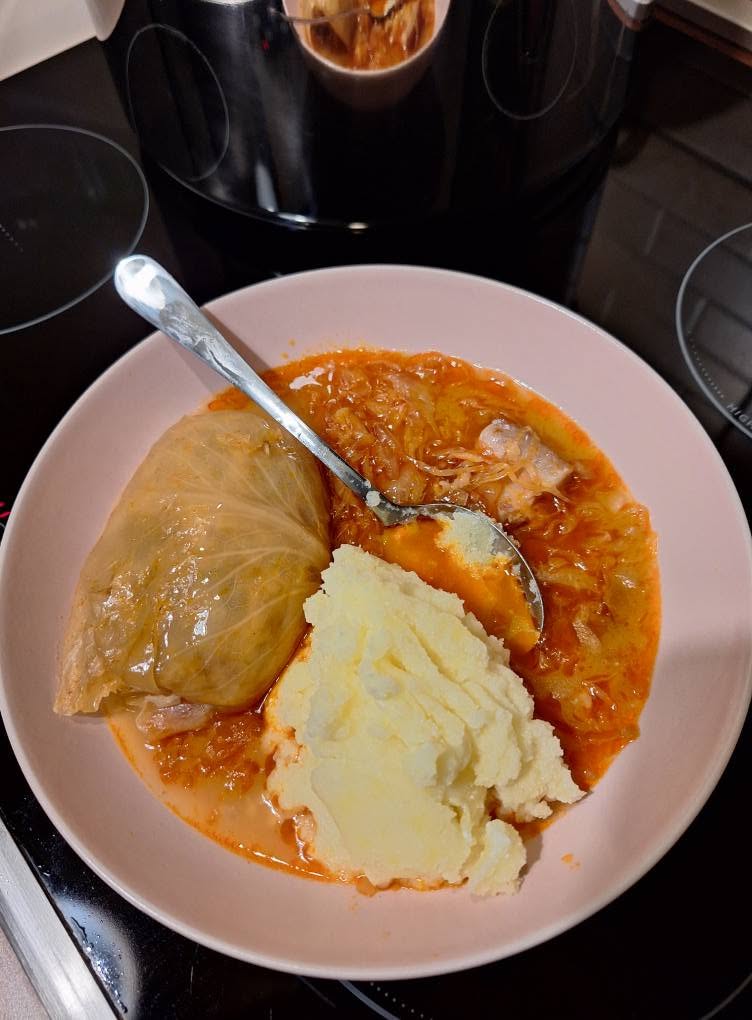
Serve a generous scoop beside the sarma and spoon some of the paprika-sauerkraut broth over the potatoes.
How to Serve
Place 1–2 cabbage rolls into a shallow bowl.
Add plenty of the cooked shredded sour cabbage and a little broth from the pot.
Serve with a generous mound of mashed potatoes, as shown in your photo.
A piece of crusty bread is also excellent for soaking up the deeply flavored broth.
If you prefer, add a small spoonful of sour cream on the side.
Flavor Profile
The finished Sarma should be deeply savory, sour, smoky, slightly sweet from the paprika, and intensely comforting.
The fermented cabbage provides its distinctive tang, while the long cooking softens the leaves and allows them to absorb flavor from the pork, beef, bacon, paprika, and bay leaves.
The bacon adds a smoky richness to the broth, while the rice absorbs the juices from the meat and cabbage as it cooks.
The mashed potatoes are especially useful because their mild creaminess balances the acidity and saltiness of the sauerkraut.
Important Notes When Making Sour Cabbage Rolls with Meat, Rice & Bacon – Traditional Sarma
Fermented cabbage and smoked bacon can both contain substantial amounts of salt.
Taste the cabbage before deciding how much additional salt to use in the filling.
Different fermented cabbages vary dramatically in acidity.
Rinsing reduces both saltiness and sourness, so rinse only when necessary.
The rice must have enough liquid available to cook completely.
Do not pack the meat mixture too tightly inside the leaves.
Paprika can become bitter if burned.
Add paprika to the roux over low heat or briefly off the burner.
The liquid should just cover the Sarma; excessive water can dilute the flavor.
Check the pot occasionally during the 4–5 hour cooking period.
The meat filling should reach at least 160°F / 71°C internally.
The cabbage should be extremely tender by the time the Sarma is finished.
Long cooking should be performed at low heat rather than a rapid boil.
The cooking liquid naturally becomes richer as bacon fat, meat juices, cabbage, and roux combine.
Hot paprika paste should be added gradually because brands vary significantly in heat.
Sarma should be cooled and refrigerated promptly if being kept for later meals.
Reheat gently so the cabbage rolls stay intact.
How to Enjoy Sour Cabbage Rolls with Meat, Rice & Bacon – Traditional Sarma After Cooking
Allow the finished Sarma to rest for approximately 20–30 minutes before serving. The broth thickens slightly during this time, and the rolls become easier to lift from the pot without breaking.
Place 1–2 Sarma rolls in a wide shallow bowl or deep plate.
Spoon some of the tender shredded sour cabbage around the rolls. This cabbage has absorbed the pork, beef, bacon, paprika, and bay leaf flavors during the long simmer and is an important part of the dish rather than simply a cooking bed.
Add a little of the paprika-rich cooking broth over the cabbage rolls.
Serve a generous portion of creamy mashed potatoes alongside. The mild, buttery potatoes balance the acidity and saltiness of the fermented cabbage particularly well.
You can also spoon a little of the Sarma broth over the mashed potatoes so they absorb the smoky paprika flavor.
Crusty bread is another traditional-style companion and is especially useful for soaking up the remaining broth.
For extra richness, add a small spoonful of sour cream on the side. Its cool tang complements the smoky meat without covering the cabbage flavor.
If you prefer hotter food, serve additional hot paprika paste separately rather than making the entire pot extremely spicy.
Sarma is particularly good after being refrigerated overnight and slowly reheated the following day. The rolls become even more flavorful as the meat, cabbage, bacon, and spices continue to mingle.
Nutrition Information
Approximate nutrition per serving, based on about 8 generous servings of approximately 2 Sarma rolls with shredded cabbage and mashed potatoes, excluding crusty bread and optional sour cream:
Calories: 865 kcal | Total Fat: 48 g | Saturated Fat: 17 g | Monounsaturated Fat: 20 g | Polyunsaturated Fat: 7 g | Cholesterol: 125 mg | Sodium: 1,800–2,400 mg depending on the fermented cabbage, bacon, and added salt | Total Carbohydrates: 66 g | Dietary Fiber: 7 g | Sugars: 5 g | Protein: 43 g
Additional estimate:
Potassium: 1,250–1,550 mg | Calcium: 130–180 mg | Iron: 4.5–6 mg | Magnesium: 75–105 mg | Vitamin A: 1,400–2,000 IU | Vitamin C: 25–40 mg | Vitamin B12: 2–3 mcg | Zinc: 6–8 mg
Frequently Asked Questions
What does traditional Sarma taste like?
Sarma is deeply savory, tangy, smoky, and mildly sweet from paprika. Fermented cabbage provides pronounced acidity, while pork, beef, bacon, and the long cooking process give the broth considerable richness.
Why is Sarma often better the next day?
Resting allows the cabbage, meat juices, bacon, paprika, garlic, and bay leaves to continue exchanging flavors. After reheating, the dish often tastes more integrated and complex than it did immediately after cooking.
What should I serve with Sarma?
Mashed potatoes are an excellent accompaniment because they balance the sour cabbage. Crusty bread, sour cream, boiled potatoes, or simple roasted potatoes also work well.
Is Sarma supposed to be spicy?
Not necessarily. Sweet paprika is normally more important than heat. Hot paprika or hot pepper paste can be added if you prefer a spicy version.
Can Sarma be served without a side dish?
Absolutely. Each roll already contains meat, rice, and cabbage, so Sarma can be eaten on its own. A little shredded cabbage and broth from the pot is enough to make it a complete, substantial meal.
Why is the rice added uncooked to the meat filling?
The rice slowly cooks inside the cabbage roll, absorbing flavorful liquid released by the meat and surrounding broth. Precooking it can make the final rice overly soft after several hours of simmering.
Why do my Sarma rolls sometimes split open while cooking?
They may have been overfilled or rolled too tightly. The rice expands during cooking, so leave some space inside each roll and arrange them snugly in the pot to help maintain their shape.
Should I rinse fermented cabbage before making Sarma?
Only if it tastes excessively salty or sour. Brief rinsing is usually enough. Soaking for too long can remove much of the characteristic fermented flavor.
Why is paprika added to the roux after the flour has cooked?
Paprika burns very quickly and becomes bitter when exposed to excessive heat. Cooking the flour first and adding paprika afterward allows its flavor and color to bloom without scorching.
Can I prepare Sarma several days ahead?
Yes. Sarma is particularly suitable for make-ahead cooking and is traditionally associated with large batches that are reheated over several days. Cool the cooked rolls promptly, refrigerate them covered with some cooking liquid, and reheat portions gently until thoroughly hot.