Salsa de Chiles Gueros
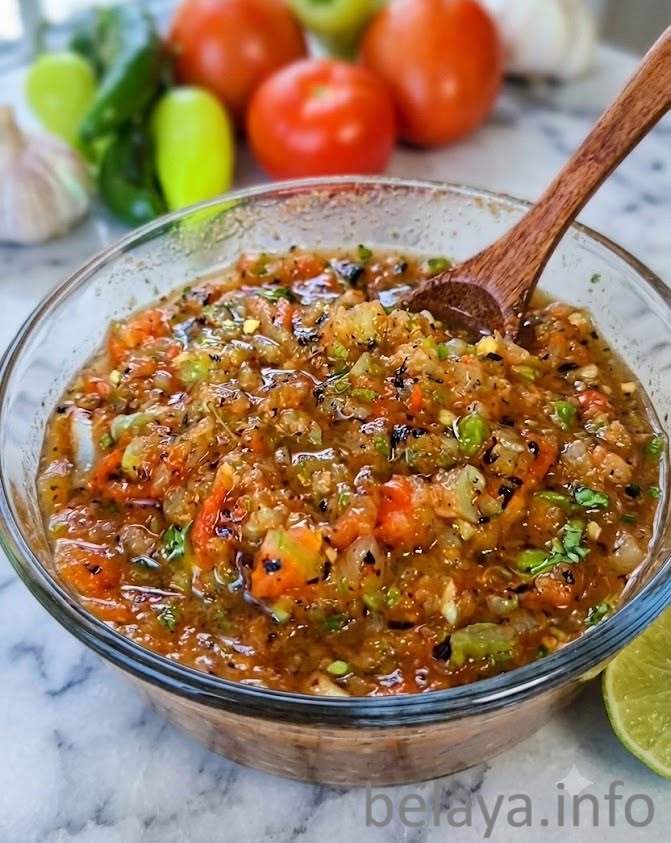
Salsa de Chiles Güeros is a deeply roasted Mexican salsa that brings together tart tomatillos, fruity chile güeros, fiery serranos, sweet onion, roasted garlic, and fresh cilantro. Rather than relying on raw ingredients, nearly every component is exposed to intense heat first, creating layers of char, sweetness, acidity, and gentle smokiness.
What makes this salsa especially interesting is the combination of two different chile personalities. Chile güeros contribute a bright, slightly fruity pepper flavor with moderate heat, while serranos deliver a sharper, fresher chile bite. Roasted tomatillos provide the juicy, tangy backbone that ties everything together.
Grinding the roasted ingredients in a molcajete creates a rustic texture that cannot be completely duplicated in a blender. The salsa remains slightly chunky, juicy, and irregular, allowing you to taste individual pieces of roasted chile, tomatillo, onion, and garlic in every spoonful.
Why People Will Love Salsa de Chiles Gueros Recipe
Roasted tomatillos create a naturally tangy and slightly sweet base.
Chile güeros provide fruity chile flavor rather than only heat.
Serrano peppers add a brighter, sharper level of spiciness.
Fire-charred peppers introduce subtle smoky notes.
Roasted garlic becomes sweeter and less pungent than raw garlic.
Broiled onion develops caramelized edges and natural sweetness.
The salsa contains no added oil, keeping it fresh and light.
Fresh cilantro adds herbal brightness after the roasted ingredients are ground.
The molcajete method creates an appealing rustic texture.
The recipe contains only a handful of simple ingredients.
Its acidity makes it excellent with rich meats and fried foods.
It pairs equally well with tacos, carne asada, chicken, seafood, and eggs.
The heat can easily be adjusted by changing the amount of serrano.
The roasted flavor makes it more complex than a basic raw salsa.
It works both as a table salsa and as a finishing sauce.
It can be prepared in advance and chilled.
A blender can be used when a molcajete is not available.
Key Ingredients
Tomatillos:
Tomatillos provide the main body of the salsa. Their natural tartness gives the finished salsa a bright acidity that balances roasted chiles and garlic.
Chile Güeros:
These pale yellow-green peppers contribute fruity, vegetal flavor and moderate chile heat. Charring them softens their flesh while creating smoky, roasted notes.
Serrano Chiles:
Serranos provide the stronger heat in the salsa. Roasting slightly mellows their raw sharpness while preserving their distinctive fresh chile character.
White Onion:
White onion is especially well suited to Mexican salsa. Broiling softens its harsh raw flavor and develops subtle sweetness around the charred edges.
Garlic:
Roasting garlic in its skin protects it from burning while allowing the interior to become soft, sweet, and aromatic.
Fresh Cilantro:
Cilantro is folded in at the end rather than heavily roasted, providing fresh herbal contrast to the smoky vegetables.
Kosher Salt:
Salt enhances the natural sweetness, acidity, and chile flavors. Because salsa flavors become more integrated after resting, final seasoning should always be adjusted after grinding.
Expert Tips
Choose tomatillos that are firm, bright green, and completely fill their papery husks.
Rinse tomatillos well after removing the husks because their surfaces naturally feel sticky.
Dry the vegetables before broiling so they blister rather than steam.
Arrange the ingredients in a single layer for more even charring.
Rotate the tomatillos and peppers halfway through broiling.
Aim for scattered dark blistering rather than completely burning the vegetables.
Keep the garlic cloves inside their skins while broiling to protect them from scorching.
Turn chile güeros frequently when charring over an open flame.
Let charred peppers cool before peeling to make them easier to handle.
Remove most of the loose blackened skin but do not obsessively scrub the peppers clean; a little char adds flavor.
Add serranos gradually if you are uncertain about the desired heat level.
Grind garlic and salt first because the coarse salt helps create friction in the molcajete.
Add ingredients progressively rather than placing everything into the molcajete at once.
Add tomatillos last because they contain the most liquid.
Fold cilantro in after grinding to preserve its fresh flavor.
Allow the salsa to rest for about 10–15 minutes before making the final salt adjustment
Salsa de Chiles Gueros
Ingredients
For the Salsa
550 g tomatillos, husks removed, about 1¼ pounds or 10–12 medium tomatillos
155 g whole chile güero peppers, about 4–6 peppers
65 g white onion, cut into large chunks, about ½ medium onion
35 g garlic cloves, left in their skins, about 1 small head or 8–10 cloves
25 g whole serrano chiles, about 2–3 peppers
20 g water, about 1½ tablespoons
9 g fresh cilantro, thinly sliced, about ½ cup loosely packed
5 g Diamond Crystal kosher salt, about 1 teaspoon, or to taste
Yield
About 3 cups salsa
Instructions
Broil the Tomatillos and Aromatics
Preheat the broiler to high.
Arrange the tomatillos, garlic cloves in their skins, serrano chiles, and onion pieces on a baking sheet.
Place under the broiler and cook until the vegetables are softened and well blistered with dark charred spots.
Turn everything halfway through so the vegetables roast evenly on all sides.
Char the Chile Güeros
Place the whole chile güeros directly over a gas flame or another high-heat cooking surface.
Turn them frequently until the skins are evenly blistered and charred and the peppers have softened.
Transfer them to a plate and let them cool until comfortable to handle.
Peel away the loose charred skin, remove the stems, and discard the seeds.
Prepare the Roasted Ingredients
Remove the stems from the roasted serrano chiles.
Peel the roasted garlic cloves and discard their papery skins.
Keep all of the roasted ingredients nearby for grinding.
Grind the Salsa in a Molcajete
Add the roasted garlic to the molcajete along with the water and a small pinch of salt.
Grind until the garlic reaches your preferred texture.
Add the serrano chiles and roasted onion, then continue grinding and crushing until they are well incorporated.
Add the roasted chile güeros and work them into the mixture.
Finally, add the roasted tomatillos a few at a time.
Mash and grind until the salsa reaches the consistency you prefer, whether slightly chunky and rustic or more thoroughly blended.
Finish and Season
Taste the salsa and add the remaining kosher salt as needed.
Gently fold in the fresh cilantro rather than grinding it completely into the salsa.
Transfer to a serving bowl and serve immediately, or refrigerate until ready to use.
Blender Option
If you do not have a molcajete, place the roasted ingredients in a blender and pulse briefly until combined.
Avoid blending continuously if you want to preserve some texture.
The flavor will still be excellent, although the finished salsa will be smoother and less rustic than a traditional molcajete-ground version.
Important Notes When Making Salsa de Chiles Gueros
Chile güero can refer to several pale-colored Mexican chile varieties, so their heat levels may vary considerably.
Serrano peppers can also vary in intensity from one batch to another.
Much of a chile’s capsaicin is concentrated in the pale membranes inside the pepper.
Removing seeds alone does not remove all of the heat.
Wear gloves when handling large quantities of hot peppers if your skin is sensitive.
Avoid touching your eyes or face while preparing serranos.
Charred does not mean completely burned; excessively burned vegetables can make salsa bitter.
Roasting tomatillos may cause them to release a substantial amount of juice. Keep those juices because they contain flavor.
The salsa naturally becomes slightly thicker after refrigeration.
Cilantro should ideally be added after the roasted mixture has cooled slightly.
A molcajete creates a coarse texture, while a blender produces a more uniform salsa.
When using a blender, pulse rather than continuously puréeing if you want a rustic texture.
This salsa contains no added acid other than the natural acidity of tomatillos, so keep it refrigerated rather than treating it as shelf-stable canned salsa.
Always use clean utensils when serving from a refrigerated batch.
Taste again after chilling because cold temperatures can make salt and chile heat seem slightly less intense.
How to Salsa de Chiles Gueros After Making It
After grinding the salsa, allow it to rest for about 10–15 minutes. This short resting period lets the roasted chile, garlic, onion, and tomatillo flavors combine more completely.
Serve it at room temperature when possible. Salsa straight from the refrigerator can taste muted, while slightly warmer salsa reveals more of its roasted aroma.
For tacos, spoon it over carne asada, carnitas, pollo asado, grilled shrimp, or fish tacos. The tomatillo acidity is especially good at balancing fatty meats.
Use it as a table salsa with warm corn tortilla chips. Its rustic molcajete texture makes it particularly enjoyable for dipping.
For breakfast, spoon it over huevos rancheros, scrambled eggs, breakfast tacos, chilaquiles, or fried potatoes.
It also works beautifully with grilled meats. Serve alongside steak, pork chops, chicken thighs, or grilled sausages as a bright counterpoint to smoky flavors.
For seafood, try it over grilled shrimp, white fish, ceviche-style tostadas, or seafood tacos.
A spoonful can also transform simple rice and beans, quesadillas, tostadas, roasted vegetables, or avocado toast.
For the best flavor combination, pair the salsa with warm corn tortillas, grilled protein, diced onion, fresh cilantro, and a squeeze of lime.
Nutrition Information
Approximate nutrition per 2-tablespoon serving, based on a yield of about 3 cups or approximately 24 servings:
Calories: 15 kcal | Total Fat: 0.2 g | Saturated Fat: 0.03 g | Monounsaturated Fat: 0.03 g | Polyunsaturated Fat: 0.08 g | Cholesterol: 0 mg | Sodium: 80–100 mg depending on added salt | Total Carbohydrates: 2.3 g | Dietary Fiber: 0.6 g | Sugars: 1.3 g | Protein: 0.5 g
Additional estimate:
Potassium: 90–120 mg | Calcium: 8–12 mg | Iron: 0.3–0.5 mg | Vitamin A: 150–250 IU | Vitamin C: 8–13 mg | Folate: 8–12 mcg
Note: Nutrition will vary according to the exact type of chile güero, the size and ripeness of the tomatillos, the amount of salt added, and the final serving size.
Frequently Asked Questions:
What does Salsa de Chiles Güeros taste like?
It is tangy, roasted, slightly smoky, moderately spicy, and subtly fruity, with fresh cilantro providing a bright finish.
How spicy is this salsa?
The heat can range from medium to fairly hot depending on the chile güeros and serranos. Using fewer serranos produces a noticeably milder salsa.
What foods go best with Salsa de Chiles Güeros?
It pairs especially well with tacos, carne asada, carnitas, grilled chicken, seafood, eggs, quesadillas, beans, and tortilla chips.
Is Salsa de Chiles Güeros the same as salsa verde?
Not exactly. Both may use tomatillos, but this version emphasizes roasted chile güeros along with serranos, creating a different chile flavor and roasted character.
Is this salsa better warm or cold?
It can be enjoyed either way, but room temperature generally provides the fullest roasted aroma and chile flavor.
Why are the tomatillos broiled before grinding?
Broiling softens their tart raw flavor, develops sweetness, and introduces roasted notes that give the salsa greater complexity.
Why should the chile güeros be peeled after charring?
The heavily blistered outer skin can become papery or bitter. Removing most of it leaves tender roasted pepper flesh while retaining the smoky flavor.
Why do I grind the garlic first in the molcajete?
Garlic is easier to turn into a smooth paste when the molcajete is relatively dry. That paste then distributes evenly throughout the rest of the salsa.
Can I make this salsa without a molcajete?
Yes. Use a blender or food processor and pulse in short bursts. Avoid fully puréeing if you want a texture closer to the molcajete version.
How can I adjust the salsa if it is too spicy?
Add additional roasted tomatillo or roasted onion to dilute the heat. You can also serve it with avocado, crema, or another rich ingredient to soften the perception of spiciness.