One Pot Beef And Macaroni Soup
One Pot Beef and Macaroni Soup is the kind of meal that brings together comfort, simplicity, and deep, satisfying flavor in a single bowl.
Combining tender ground beef, wholesome vegetables, hearty pasta, and a rich tomato-based broth, this soup feels like a perfect cross between a classic beef stew and a cozy pasta dish. Every spoonful is warm, filling, and packed with familiar, comforting flavors.
What makes this recipe especially appealing is its practicality. Everything cooks in one pot, allowing the ingredients to blend naturally while saving time and cleanup. As the soup simmers, the pasta absorbs the savory broth, the vegetables soften, and the beef adds richness, creating a well-balanced dish that is both nourishing and satisfying. It’s an ideal choice for busy weeknights or when you want a homemade meal that feels hearty, wholesome, and deeply comforting.
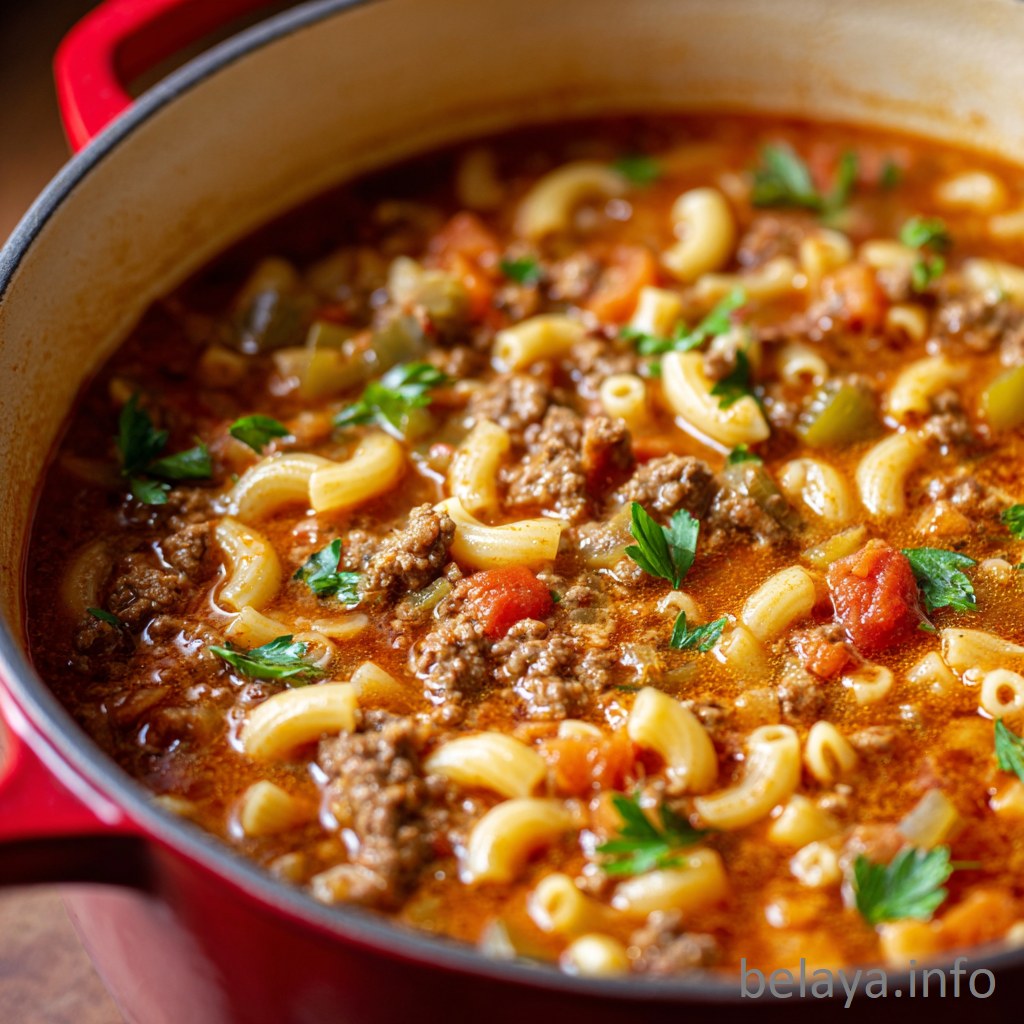
Why People Will Love One Pot Beef and Macaroni Soup
Deeply comforting and satisfying
This soup brings together the richness of ground beef, the heartiness of pasta, and the warmth of a tomato-based broth. It feels like a complete meal in one bowl—filling, cozy, and perfect for cold days or when you need something nourishing.
A complete, balanced meal in one pot
With protein from the beef, vegetables for freshness, and pasta for energy, this recipe covers all the bases. There’s no need for multiple dishes or sides—it’s a well-rounded meal on its own.
Incredible flavor from simple ingredients
Everyday pantry staples like tomatoes, broth, garlic, and Italian seasoning come together to create a rich, layered flavor. As everything cooks in one pot, the ingredients blend naturally, making the soup taste deeper and more developed.
Convenient and easy cleanup
Everything cooks in a single pot, which means less time spent washing dishes. This makes it ideal for busy weeknights or when you want a homemade meal without the extra cleanup.
Perfect texture combination
The soup offers a satisfying mix of textures—tender vegetables, juicy crumbled beef, and perfectly cooked pasta that absorbs the flavorful broth without becoming too soft.
Quick enough for weeknight cooking
Despite its rich flavor, this recipe comes together relatively quickly. It delivers the taste of a slow-simmered soup in a much shorter time, making it practical for everyday cooking.
Family-friendly and crowd-pleasing
The flavors are mild, familiar, and comforting, making it a dish that both kids and adults will enjoy. It’s a great option for family dinners or casual gatherings.
Highly customizable
You can easily adapt the recipe by adding more vegetables, switching to different pasta shapes, or adjusting the seasoning. It’s flexible enough to suit different tastes and dietary preferences.
Even better as leftovers
The flavors continue to develop as the soup sits, making it just as delicious—if not better—the next day. It reheats well and is perfect for meal prep or packed lunches.
A cozy, homemade feel
This soup has a classic, home-cooked quality that feels comforting and familiar. It’s the kind of recipe that fills the kitchen with warmth and makes any meal feel a little more special.
Key Ingredients
Lean Ground Beef
Ground beef provides the savory foundation of the soup. As it cooks, it releases rich, meaty flavor into the broth, creating depth and body. Using lean beef helps keep the soup hearty without becoming overly greasy.
Carrots, Onion, and Celery (Aromatic Base)
This classic trio forms the backbone of flavor. The carrots add natural sweetness, the onion brings depth and slight sharpness, and the celery contributes a subtle earthiness. Together, they create a balanced and aromatic base that enhances the entire soup.
Italian Seasoning and Garlic
These ingredients bring warmth and complexity. Italian seasoning adds herbal notes, while garlic provides a savory, aromatic richness that ties the flavors together and gives the soup its comforting character.
Beef Broth
The broth serves as the liquid base, carrying all the flavors throughout the dish. A low-sodium beef broth allows better control over seasoning while still delivering a deep, savory taste.
Diced Tomatoes and Tomato Sauce
These ingredients create a rich tomato backbone for the soup. The diced tomatoes add texture and slight acidity, while the tomato sauce thickens the broth and gives it a smooth, hearty consistency.
Whole Wheat Macaroni Pasta
The pasta adds substance and turns the soup into a complete meal. As it cooks in the broth, it absorbs the surrounding flavors, becoming tender and flavorful while helping to slightly thicken the soup.
Spices (Paprika, Black Pepper, Red Pepper Flakes)
These seasonings add subtle warmth and depth. Paprika contributes a mild smokiness, black pepper adds gentle heat, and red pepper flakes provide a slight kick that enhances the overall flavor without overpowering the dish.
Expert Tips:
Build flavor from the start with proper sautéing
Take time to sauté the carrots, onion, and celery until they begin to soften and release their aroma. This step creates a flavorful base (similar to a mirepoix) that enhances the depth of the entire soup.
Brown the beef lightly, not fully
Cook the ground beef just until it’s lightly browned rather than fully cooked. It will continue cooking in the broth, allowing it to stay tender and absorb the surrounding flavors instead of becoming dry.
Season in layers for better balance
Add seasoning at different stages—some with the vegetables, some with the beef, and adjust again at the end. This layering technique ensures the flavor is evenly distributed and more complex.
Use low-sodium broth for better control
Starting with low-sodium beef broth allows you to adjust the salt level at the end. This prevents the soup from becoming overly salty, especially since the pasta will absorb some of the liquid.
Cook the pasta just until al dente
Pasta continues to soften as it sits in the hot soup. Cooking it to al dente (slightly firm) prevents it from becoming mushy, especially if you plan to have leftovers.
Stir frequently once pasta is added
Macaroni tends to sink and stick to the bottom of the pot. Stirring regularly during the final cooking stage helps prevent sticking and ensures even cooking.
Adjust the consistency to your preference
The pasta will absorb liquid as it cooks. If the soup becomes too thick, add a bit more broth or water to loosen it to your desired consistency.
Enhance flavor with a finishing touch
Just before serving, consider adding a sprinkle of fresh herbs (like parsley) or a small amount of grated Parmesan cheese. These finishing touches add brightness and depth.
Let the soup rest briefly before serving
Allowing the soup to sit for 5–10 minutes after cooking helps the flavors settle and the broth slightly thicken, resulting in a more cohesive dish.
Store pasta separately for best leftovers (optional tip)
If you plan to store leftovers, consider cooking the pasta separately and adding it when serving. This prevents the pasta from absorbing too much liquid and becoming overly soft over time.
One Pot Beef And Macaroni Soup
Ingredients
1 tablespoon canola oil
3 large carrots peeled and finely chopped
1 medium onion finely chopped
1 rib celery finely chopped
2 teaspoons Italian seasoning
1 teaspoon minced garlic
1 teaspoon salt
1/4 teaspoon paprika
1/4 teaspoon black pepper
1 pinch red pepper flakes
1 lb lean ground beef
5 cups low sodium beef broth
798 ml canned diced tomatoes (28 oz) 1 large can
1 1/2 cups whole wheat macaroni pasta, uncooked
1 cup tomato sauce
Instructions
Heat a large pot over medium high heat and add canola oil. When oil is hot, add carrots, onion, and celery, cook and stir until vegetables have softened slightly, about 3-4 minutes.
Add Italian seasoning, garlic, salt, paprika, pepper and pepper flakes and cook 1 minute.
Add ground beef, stirring to crumble, and cook until lightly browned, about 2-3 minutes.
Add broth and tomatoes and bring to a boil. Cover and cook for 5-10 minutes until carrots have softened.
Stir in pasta and tomato sauce. Cover and cook, stirring often (be careful because the macaroni can stick to the bottom!) until pasta is al dente, about 7-8 minutes. Serve.
Tips:
Don’t drain the canned tomato. The liquid is used as part of the base for the soup.
Play around with consistency. I’ll admit, my version of tomato macaroni soup is more like stoup, but if you prefer a thinner soup, simply add more beef broth to thin it out.
If you prefer another pasta shape, feel free to use a different one—although it will no longer be tomato macaroni soup. Any short pasta shape will work!
Important Notes When Making One Pot Beef and Macaroni Soup
Pasta will continue to absorb liquid over time
As the soup sits, the macaroni keeps absorbing the broth, which can make the soup thicker or even slightly dry the next day. When reheating, you may need to add extra broth or water to restore the desired consistency.
Cut vegetables small for even cooking
Finely chopping the carrots, onion, and celery ensures they cook quickly and evenly. Larger pieces may remain firm while the rest of the soup is ready, affecting the overall texture.
Stir frequently after adding pasta
Macaroni has a tendency to settle at the bottom of the pot and stick. Regular stirring during the final cooking stage helps prevent sticking and ensures the pasta cooks evenly.
Do not overcook the pasta
Overcooked pasta can become soft and lose its structure, especially since it continues to soften in the hot broth. Aim for al dente texture to keep the soup balanced.
Use lean ground beef to control grease
Lean ground beef keeps the soup rich without becoming overly oily. If using higher-fat beef, you may want to drain excess grease after browning to maintain a cleaner flavor.
The soup thickens naturally
As the pasta cooks and releases starch, the broth will naturally thicken. This is part of the recipe’s appeal, giving it a slightly hearty, stew-like consistency without needing additional thickeners.
Taste and adjust seasoning at the end
Because the broth reduces slightly and the pasta absorbs flavors, seasoning may change during cooking. Always taste the soup before serving and adjust salt, pepper, or spices as needed.
Customize vegetables and pasta easily
This recipe is flexible—you can add vegetables like zucchini, spinach, or bell peppers, or switch to different small pasta shapes. Just keep cooking times in mind so everything cooks evenly.
Best served fresh, but great for leftovers
The soup is at its best right after cooking, when the pasta has the perfect texture. However, the flavor deepens over time, making leftovers very enjoyable with a slight adjustment in liquid.
A one-pot dish that benefits from proper heat control
Keeping the heat at a steady simmer (not a rolling boil) helps prevent overcooking the pasta and keeps the ingredients tender and well-balanced.
How to Enjoy One Pot Beef and Macaroni Soup After Cooking
Let the soup rest briefly before serving
After cooking, allow the soup to sit for about 5–10 minutes. This helps the flavors settle and allows the broth to thicken slightly as the pasta absorbs some of the liquid, creating a more cohesive and comforting texture.
Stir and check consistency
Before serving, give the soup a gentle stir. If it has thickened more than you like, add a small amount of warm broth or water to loosen it to your preferred consistency.
Serve while warm and hearty
This soup is best enjoyed hot, when the pasta is tender, the broth is rich, and the aroma is at its peak. Ladle it into bowls and make sure each serving has a good balance of beef, vegetables, and pasta.
Add simple finishing touches
Enhance the flavor just before serving with:
- A sprinkle of fresh parsley or basil
- Grated Parmesan cheese for richness
- A dash of black pepper or red pepper flakes for extra warmth
Pair with complementary sides
While the soup is a complete meal, it pairs beautifully with:
- Crusty bread or garlic bread for dipping
- A fresh green salad with a light vinaigrette
- Roasted vegetables for added texture and balance
Customize each bowl to taste
Let everyone adjust their own serving with toppings like extra cheese, herbs, or a drizzle of olive oil. This makes the meal more interactive and tailored to individual preferences.
Enjoy leftovers the right way
When reheating, the pasta may have absorbed much of the broth. Add extra broth or water, heat gently on the stovetop or in the microwave, and stir well to restore the soup’s original texture.
Use leftovers creatively
Thicker leftover soup can be transformed into:
- A hearty pasta bowl with extra cheese
- A filling for stuffed peppers
- A base for a baked casserole with added cheese on top
Store properly for freshness
Keep leftovers in an airtight container in the refrigerator for up to 3–4 days. For longer storage, freeze the soup without the pasta if possible, then add freshly cooked pasta when reheating.
Nutrition Information
Yields: 5–6 servings
Calories: 300–340 kcal | Total Fat: 11–14 g | Saturated Fat: 3–4 g | Monounsaturated Fat: 5–6 g | Polyunsaturated Fat: 1–1.5 g | Cholesterol: 45–60 mg | Sodium: 650–850 mg (depending on broth and added salt) | Total Carbohydrates: 28–34 g | Dietary Fiber: 4–6 g | Sugars: 6–8 g | Protein: 20–24 g
Frequently Asked Questions:
Can I use a different type of pasta instead of macaroni?
Yes, you can use a different type of pasta if you prefer.
Any short pasta shape would work well in this soup, such as penne, rotini, or fusilli.
Just keep in mind that the cooking time may vary slightly depending on the pasta shape you choose.
Do I need to drain the canned tomatoes before adding them to the soup?
No, you don’t need to drain the canned tomatoes.
The liquid from the canned tomatoes is used as part of the base for the soup, so it should be included along with the tomatoes.
Can I make this soup ahead of time?
Yes, you can make this soup ahead of time and store it in the refrigerator for a few days.
Simply reheat it on the stove or in the microwave before serving.
You may need to add a little extra beef broth when reheating if the soup has thickened.
How can I adjust the consistency of the soup?
If you prefer a thinner soup, you can add more beef broth to thin it out to your liking.
Alternatively, if you prefer a thicker soup, you can reduce the amount of broth used in the recipe.
Can I freeze this soup?
Yes, you can freeze this soup for later.
Allow the soup to cool completely before transferring it to a freezer-safe container or freezer bags.
It can be stored in the freezer for up to 3 months.
When ready to eat, thaw the soup overnight in the refrigerator and reheat it on the stove or in the microwave until heated through.
Can I use a different type of oil instead of canola oil?
Yes, you can substitute canola oil with other cooking oils like olive oil, vegetable oil, or even melted butter, depending on your preference.
Is it okay to use regular beef broth instead of low-sodium beef broth?
Yes, you can use regular beef broth if you prefer.
Just be mindful of the sodium content, especially if you’re watching your salt intake.
Can I use ground turkey or chicken instead of ground beef?
Absolutely! Ground turkey or chicken can be used as a leaner alternative to ground beef in this recipe, maintaining the delicious flavor while reducing the fat content.
How long can I store leftovers of this soup?
Leftovers can be stored in an airtight container in the refrigerator for up to 3-4 days. Make sure to cool the soup completely before refrigerating it.
Can I make this soup vegetarian-friendly?
Yes, you can omit the ground beef and use vegetable broth instead of beef broth to make a vegetarian version of this soup.
You can also add more vegetables or substitute the beef with plant-based protein alternatives.
What can I serve with this soup to make it a complete meal?
This soup pairs well with a side of crusty bread, garlic breadsticks, or a simple green salad to make it a hearty and satisfying meal.
Can I freeze this soup for later?
Yes, you can freeze this soup for later consumption.
Allow it to cool completely before transferring it to freezer-safe containers or bags.
It can be stored in the freezer for up to 3 months.
How can I adjust the spiciness of the soup?
If you prefer a spicier soup, you can increase the amount of red pepper flakes or add a dash of hot sauce to your taste.
Conversely, if you prefer a milder flavor, you can omit the red pepper flakes altogether.
Is it necessary to cover the pot while cooking the soup?
Covering the pot helps to retain moisture and cook the ingredients evenly.
However, if you prefer a thicker soup consistency, you can leave the pot uncovered during the cooking process to allow some of the liquid to evaporate.
Can I add additional vegetables to this soup?
Absolutely! Feel free to customize this recipe by adding your favorite vegetables such as bell peppers, zucchini, or spinach to enhance the nutritional content and flavor of the soup.
Adjust the cooking time accordingly based on the vegetables you choose to add.