Italian Sunday Sauce
Italian Sunday Sauce is more than just a tomato sauce—it is a cherished tradition in many Italian and Italian-American families.
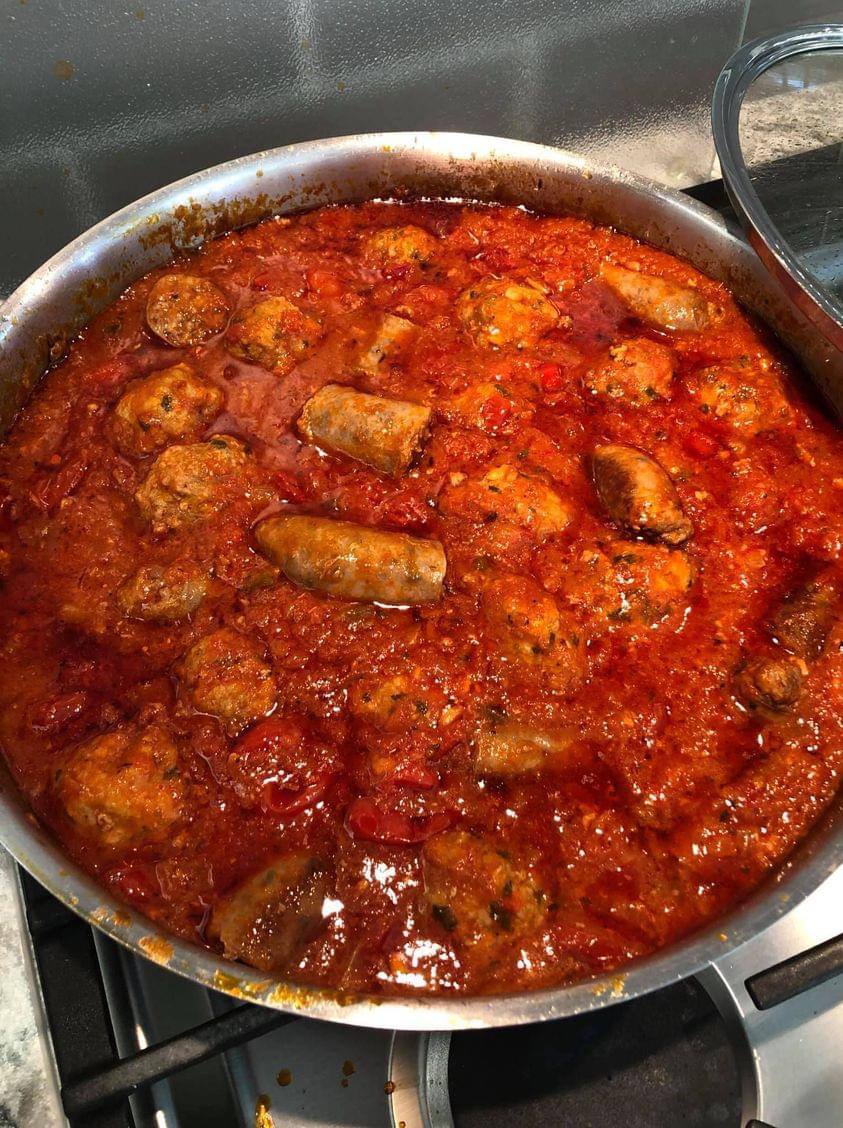
Slowly simmered for hours, this rich, deeply flavored sauce combines tender cuts of beef, savory Italian sausage, garlic, basil, and tomatoes into a comforting meal that fills the kitchen with irresistible aromas. The long cooking time allows the meat to gently braise in the tomato sauce, releasing its flavor and creating a sauce that becomes richer and more complex with every passing hour.
Historically, Sunday Sauce was prepared as a special weekend meal when families had the time to cook slowly and gather around the table together. The sauce simmers patiently while conversations flow, and by the time it is served over pasta, it has developed layers of deep, rustic flavor.
The tender meat can be mixed into the pasta or served alongside it, making the dish both hearty and satisfying. Italian Sunday Sauce is not just food—it is a celebration of patience, tradition, and the joy of sharing a meal with loved ones.
Why People Will Love Italian Sunday Sauce
Deep, slow-developed flavor
One of the greatest pleasures of Italian Sunday Sauce is the depth of flavor created by hours of gentle simmering. As the beef and sausage cook slowly in the tomato sauce, they release their natural richness into the sauce, creating a layered, complex taste that simply cannot be achieved with quick-cooked pasta sauces.
A true comfort food experience
This dish embodies the essence of comfort food. The tender braised beef, savory sausage, and rich tomato sauce served over warm spaghetti create a hearty and satisfying meal that feels warm, nostalgic, and deeply comforting.
A recipe rooted in tradition and family gatherings
Italian Sunday Sauce carries a strong cultural tradition. Historically prepared on weekends, it symbolizes family meals where everyone gathers around the table. Cooking this dish often feels like participating in a long-standing culinary tradition that celebrates patience, love, and togetherness.
Incredibly rich and hearty
With slow-cooked beef chuck, flavorful Italian sausage, and a robust tomato base, this sauce is far more substantial than a typical pasta sauce. It transforms a simple bowl of spaghetti into a filling, restaurant-quality meal.
Beautiful balance of flavors
The sweetness of tomatoes, the richness of meat, the aromatic garlic, and the freshness of basil all come together to create a well-balanced sauce. The small touch of sugar helps soften the acidity of the tomatoes, resulting in a smooth, harmonious flavor profile.
Perfect for feeding a crowd
This recipe produces a generous amount of sauce, making it ideal for large family meals, gatherings, or special weekend dinners. It’s the type of dish that can easily bring people together around the table.
Even better the next day
Like many slow-cooked sauces, Italian Sunday Sauce becomes even more flavorful after resting overnight. The ingredients continue to meld together, making leftovers incredibly delicious.
Versatile beyond spaghetti
While traditionally served with spaghetti, this sauce can be enjoyed in many ways—over rigatoni, pappardelle, polenta, or even used as a rich filling for baked pasta dishes like lasagna.
A rewarding cooking process
Making Sunday Sauce is not just about the final dish—it’s about the cooking journey. The slow simmer, the aroma filling the kitchen, and the anticipation of a rich meal make the entire experience deeply satisfying for home cooks.
Key Ingredients
Beef Chuck Roast
Beef chuck is ideal for long, slow cooking because it becomes incredibly tender as it braises in the sauce. During the several hours of simmering, the connective tissue breaks down and the meat releases deep, savory flavor into the tomato base, enriching the sauce with a natural richness.
Italian Sausage
Italian sausage adds another layer of complexity to the sauce. Whether you choose sweet or hot sausage, it brings a balance of seasoning, herbs, and fat that enhances the overall depth of flavor. As the sausage cooks in the sauce, it infuses the tomatoes with its savory, slightly spiced character.
Whole Peeled Tomatoes (San Marzano preferred)
High-quality whole peeled tomatoes form the foundation of the sauce. San Marzano tomatoes are especially prized because of their natural sweetness, low acidity, and smooth texture. When broken down during cooking, they create a rich and balanced tomato base that carries the flavors of the meat and aromatics.
Tomato Paste
Tomato paste provides concentrated tomato flavor and helps deepen the color and richness of the sauce. When cooked briefly in olive oil before the tomatoes are added, it caramelizes slightly and develops a more complex, robust taste.
Garlic
Fresh garlic contributes an aromatic backbone to the sauce. When gently sautéed in olive oil, it releases a warm, savory fragrance that forms the base of many traditional Italian sauces.
Fresh Basil
Basil brings brightness and a subtle herbal freshness that balances the richness of the meat and tomatoes. Added during simmering, it infuses the sauce with a delicate aromatic note that enhances the overall flavor.
Olive Oil
Good-quality olive oil is essential for building flavor from the very beginning. It helps sear the meats and sauté the aromatics, while also contributing a subtle fruity richness that rounds out the sauce.
Sugar, Salt, and Black Pepper
These simple seasonings play an important balancing role. Sugar helps mellow the natural acidity of the tomatoes, while salt and freshly ground black pepper highlight and harmonize the deep flavors of the sauce.
Expert Tips:
Sear the meat deeply for maximum flavor
One of the most important steps is properly browning the beef chuck and sausage before simmering. Allow the meat to develop a rich golden-brown crust without rushing the process. This caramelization creates complex savory compounds that will enrich the entire sauce during the long simmer.
Cook the tomato paste before adding tomatoes
Briefly cooking the tomato paste in olive oil before adding the canned tomatoes helps develop a deeper flavor. This step caramelizes the natural sugars in the paste, reducing its raw acidity and creating a richer, more balanced sauce.
Use whole peeled tomatoes and break them by hand
Whole tomatoes tend to have better texture and flavor than pre-crushed varieties. Crushing them gently with your hands or a spoon allows you to control the size of the tomato pieces and gives the sauce a more rustic, traditional texture.
Simmer low and slow for true depth of flavor
The hallmark of Sunday Sauce is patience. Keep the heat low and allow the sauce to gently simmer for several hours. This slow cooking process allows the meat to tenderize while gradually infusing the sauce with rich, layered flavors.
Stir occasionally but not constantly
Stirring the sauce occasionally prevents sticking and helps distribute flavors, but constant stirring is unnecessary. Letting the sauce simmer undisturbed allows the ingredients to cook naturally and develop a deeper taste.
Balance the acidity carefully
Tomatoes can sometimes be quite acidic. If the sauce tastes sharp or overly tangy, add sugar gradually—about ½ teaspoon at a time—until the flavor becomes balanced. Avoid adding too much sugar at once.
Use fresh herbs rather than dried when possible
Fresh basil provides a brighter, more aromatic flavor than dried herbs. Adding whole basil leaves during the simmering process allows the herb to gently infuse the sauce without overpowering it.
Let the sauce rest before serving
After cooking, allow the sauce to sit for about 10–15 minutes before serving. This resting period helps the flavors settle and slightly thickens the sauce.
Reserve some pasta water when cooking spaghetti
A small splash of starchy pasta water can be mixed into the sauce when combining it with pasta. This helps the sauce cling better to the noodles and creates a smoother, more cohesive dish.
Make extra for even better leftovers
Italian Sunday Sauce often tastes even better the next day because the flavors continue to meld. Preparing a large batch allows you to enjoy richer leftovers or freeze portions for future meals.
Italian Sunday Sauce
Ingredients:
2 pounds boneless beef chuck roast
4 tablespoons olive oil, divided
1 pound uncooked sweet or hot Italian sausage links
5 cloves garlic
3 to 4 large sprigs fresh basil
3 tablespoons tomato paste
2 (28-ounce) cans whole peeled tomatoes, preferably San Marzano
1 1/2 teaspoons kosher salt, plus more as needed
1 teaspoon granulated sugar, plus more as needed
1/4 teaspoon freshly ground black pepper, plus more as needed
Cooked spaghetti, for serving
Instructions:
Step 1:
Cut 2 pounds boneless beef chuck into 4 pieces.
Heat 1 tablespoon of the olive oil in a large heavy-bottomed pot over medium-high heat until shimmering.
Add the chuck and sear until golden-brown all over, 8 to 10 minutes total.
Transfer to a plate.
Step 2:
Reduce the heat to medium.
Add 1 tablespoon of the olive oil and 1 pound uncooked sweet or hot Italian sausage links to the pot.
Sear until golden-brown all over, about 5 minutes total.
Transfer to the plate with the chuck.
Step 3:
Remove the pot from heat and let cool slightly, about 2 minutes.
Meanwhile, finely chop 5 garlic cloves (about 2 tablespoons) and pick the leaves from 3 to 4 large fresh basil sprigs until you get 1/4 packed cup.
Step 4:
Return the pot to medium heat, add the remaining 2 tablespoons olive oil, and heat until shimmering.
Add the garlic and cook, stirring frequently, until light golden-brown, about 1 minute.
Step 5:
Add 3 tablespoons tomato paste and continue to cook, stirring frequently, until the tomato paste has darkened in color, about 1 minute.
Step 6:
Pour 2 (28-ounce) cans whole peeled tomatoes and their juices.
Fill half of one of the empty tomato cans with water and pour the water into the pot.
Using a wooden spoon or potato masher, break up the tomatoes into small bits.
Add the basil leaves and season with 1 1/2 teaspoons kosher salt, 1 teaspoon granulated sugar, and 1/4 teaspoon black pepper.
Step 7:
Increase heat to medium-high and bring the sauce to a rapid simmer.
Return the chuck, sausages, and any accumulated juices to the pot.
Reduce the heat to low and partially cover the pot.
Gently simmer, stirring occasionally, until the chuck is falling apart, 3 1/2 to 4 hours.
Step 8:
Transfer the chuck and sausages to a clean cutting board or plate.
Shred the chuck with two forks into bite-sized pieces and cut the sausages into thick slices on a slight diagonal; return both to the sauce. (Alternatively, leave the meat whole and transfer to a platter, and use the sauce to sauce the pasta, serving the meat on the side for individuals to add to their plate and shred or cut as they want.)
Step 9:
Taste and season the sauce with more kosher salt and black pepper as needed.
If the sauce tastes too tangy or acidic, add more granulated sugar 1/2 teaspoon at a time.
Serve the sauce over cooked spaghetti.
Important Notes When Making Italian Sunday Sauce
This sauce is meant to cook slowly for several hours
Italian Sunday Sauce is not a quick pasta sauce. Its character comes from long, gentle simmering that allows the beef and sausage to slowly braise in the tomato base. Rushing the cooking time can prevent the meat from becoming tender and the sauce from developing its full depth of flavor.
Choose a heavy-bottomed pot or Dutch oven
Because the sauce cooks for several hours, using a thick, heavy pot helps distribute heat evenly and prevents scorching on the bottom. Thin pots may cause the tomatoes to burn or stick during the long simmer.
The meat enriches the sauce, not just the meal
In traditional Sunday Sauce, the meat is not simply an addition—it is a major source of flavor for the sauce itself. As the beef chuck and sausage slowly cook, they release juices and fat that enrich the tomato sauce and create a deeper, more complex taste.
Partially covering the pot is important
Leaving the pot partially covered allows the sauce to reduce slowly while still maintaining enough moisture for the meat to braise properly. If the pot is fully covered, the sauce may remain too thin. If left fully uncovered, it may reduce too quickly.
Quality tomatoes make a major difference
Since tomatoes form the base of the sauce, using high-quality canned tomatoes—such as San Marzano varieties—can dramatically improve the final result. They tend to have a sweeter flavor and smoother texture compared to lower-quality canned tomatoes.
Taste and adjust seasoning toward the end
Because the sauce reduces during the long cooking process, the salt level can change as the liquid evaporates. It is best to adjust the seasoning near the end of cooking to avoid over-salting.
The sauce thickens naturally as it cooks
There is no need to add flour or thickeners. As the sauce simmers, the tomatoes break down and the liquid reduces naturally, creating a thick and rich consistency.
The dish improves after resting
Like many slow-cooked sauces, Italian Sunday Sauce often tastes even better after resting for a while or even the next day. The flavors continue to meld together, producing a deeper and more balanced taste.
You can serve the meat separately if desired
In many traditional Italian households, the pasta is served first with the sauce, and the braised meats are served afterward as a separate course. This makes the meal feel more abundant and celebratory.
Make a larger batch for future meals
Sunday Sauce freezes very well. Preparing a large pot allows you to store portions in the freezer, making it easy to enjoy a rich homemade pasta sauce on another day with minimal effort.
How to Enjoy Italian Sunday Sauce After Cooking
Let the sauce rest briefly before serving
After the sauce finishes simmering, allow it to rest for about 10–15 minutes. This resting time helps the flavors settle and allows the sauce to thicken slightly. The meat will also become easier to shred or slice, making the final dish more cohesive and enjoyable.
Prepare the pasta properly
Cook the spaghetti in well-salted boiling water until it reaches an al dente texture—tender but still slightly firm. Properly cooked pasta provides the perfect structure to hold the rich sauce. Avoid overcooking the pasta, as the sauce itself is already quite hearty.
Combine pasta and sauce for better flavor
Instead of simply pouring sauce over plain spaghetti, toss a portion of the pasta directly in the sauce before serving. This allows the noodles to absorb some of the sauce and ensures every strand is coated with flavor.
Serve the meat in the traditional way
Italian Sunday Sauce often includes a generous amount of braised meat. You can either:
Mix shredded beef and sliced sausage directly into the pasta sauce, or
Serve the meat on a separate platter so each person can add it to their plate as desired.
This approach reflects traditional Italian family-style dining.
Add simple finishing touches
A few finishing elements can elevate the dish even further:
- Freshly grated Parmigiano-Reggiano or Pecorino Romano cheese
- A drizzle of high-quality olive oil
- Fresh basil leaves for aroma and color
- Freshly cracked black pepper
Pair with classic Italian side dishes
Italian Sunday Sauce becomes even more satisfying when served with simple accompaniments, such as:
- Crusty Italian bread or garlic bread for dipping into the sauce
- A fresh green salad with a light vinaigrette to balance the richness
- Roasted vegetables such as zucchini or eggplant
Enjoy it as a slow, shared meal
Traditionally, Sunday Sauce is not just a quick dinner but a meal meant to be enjoyed slowly with family and friends. Serving the pasta and meat family-style at the table encourages conversation and creates a warm, relaxed dining experience.
Save leftovers for an even better meal later
The sauce often tastes even richer the next day as the flavors continue to develop. Store leftovers in an airtight container in the refrigerator and gently reheat them on the stovetop. The sauce can also be frozen in portions for future pasta dinners.
Use leftovers creatively
Leftover Sunday Sauce can be used in many ways beyond spaghetti:
- As a filling for lasagna or baked ziti
- Spoon it over polenta for a rustic Italian meal
- Use it as a sauce for meatball sandwiches or toasted bread
Nutrition Information:
YIELDS: 6 | SERVING SIZE: 1
Calories: 520–580 kcal | Total Fat: 28–32 g | Saturated Fat: 9–11 g | Monounsaturated Fat: 14–16 g | Polyunsaturated Fat: 2–3 g | Cholesterol: 95–110 mg | Sodium: 900–1100 mg (depending on sausage and added salt) | Total Carbohydrates: 28–32 g | Dietary Fiber: 4–5 g | Sugars: 8–10 g | Protein: 38–42 g
Frequently Asked Questions:
What makes Italian Sunday Sauce different from regular pasta sauce?
Italian Sunday Sauce is traditionally a slow-simmered tomato sauce cooked with large pieces of meat such as beef chuck and Italian sausage. Unlike quick pasta sauces, this sauce cooks for several hours, allowing the meat to braise and release rich flavors into the tomato base, creating a deeper and more complex taste.
Can I use different types of meat in this sauce?
Yes, Italian Sunday Sauce is very flexible. While beef chuck and Italian sausage are common choices, many traditional versions also include meatballs, pork ribs, or pork shoulder. Each type of meat adds its own flavor and richness to the sauce.
Why are San Marzano tomatoes often recommended for this recipe?
San Marzano tomatoes are prized for their natural sweetness, low acidity, and smooth texture. These qualities help create a well-balanced sauce that tastes rich and full without being overly acidic.
Can I make Italian Sunday Sauce ahead of time?
Absolutely. In fact, the sauce often tastes even better the next day because the flavors continue to develop as it rests. You can prepare the sauce a day in advance and gently reheat it before serving.
What pasta works best with Italian Sunday Sauce?
Spaghetti is the classic choice, but the sauce also pairs well with other sturdy pasta shapes such as rigatoni, pappardelle, or fettuccine. These pasta types hold the thick, rich sauce well and make each bite more satisfying.
Why is it important to sear the meat before simmering it in the sauce?
Searing the beef chuck and sausage creates a browned crust through a process called the Maillard reaction, which develops deeper savory flavors. This step adds complexity to the sauce and prevents the meat from tasting flat or boiled during the long simmer.
How can I prevent the sauce from burning during the long cooking time?
Use a heavy-bottomed pot or Dutch oven and keep the heat at a gentle simmer rather than a strong boil. Stir the sauce occasionally and scrape the bottom of the pot lightly to prevent the tomatoes from sticking and scorching.
What should I do if the sauce becomes too thick while simmering?
If the sauce reduces too much during cooking, simply add a small amount of water, tomato juice, or reserved pasta water. Add it gradually and stir well so the sauce maintains its rich consistency without becoming too thin.
How do I know when the beef chuck is fully cooked and ready to shred?
The beef is ready when it becomes fork-tender. After several hours of simmering, the meat should easily pull apart with two forks. At this stage, it has fully absorbed the flavors of the sauce and will blend beautifully back into it.
How can I balance the acidity of the tomatoes if the sauce tastes too sharp?
Tomato-based sauces can sometimes taste slightly acidic. If this happens, add a small amount of sugar (about ½ teaspoon at a time) and stir well. The sugar helps balance the acidity and creates a smoother, rounder flavor without making the sauce taste sweet.