Italian Sausage, Broccoli And Pasta
Italian Sausage, Broccoli and Pasta is a hearty, rustic pasta dish that brings together savory Italian sausage, tender-crisp broccoli, garlic, olive oil, butter, Pecorino Romano, and a lightly spicy pan sauce. Rather than relying on a heavy cream sauce, this recipe builds flavor from the browned sausage, chicken broth, olive oil, butter, and cheese.
The broccoli plays an important role beyond simply adding vegetables. Its fresh, slightly bitter character balances the richness of the sausage and Pecorino, while red pepper flakes add just enough heat to keep the dish lively. Scraping the browned sausage bits from the skillet into the broth creates an especially flavorful sauce.
Once the pasta is tossed directly with the sausage and broccoli mixture, the starch on the noodles helps everything come together. The result is a satisfying combination of savory sausage, garlicky vegetables, salty cheese, silky sauce, and a gentle chile warmth.
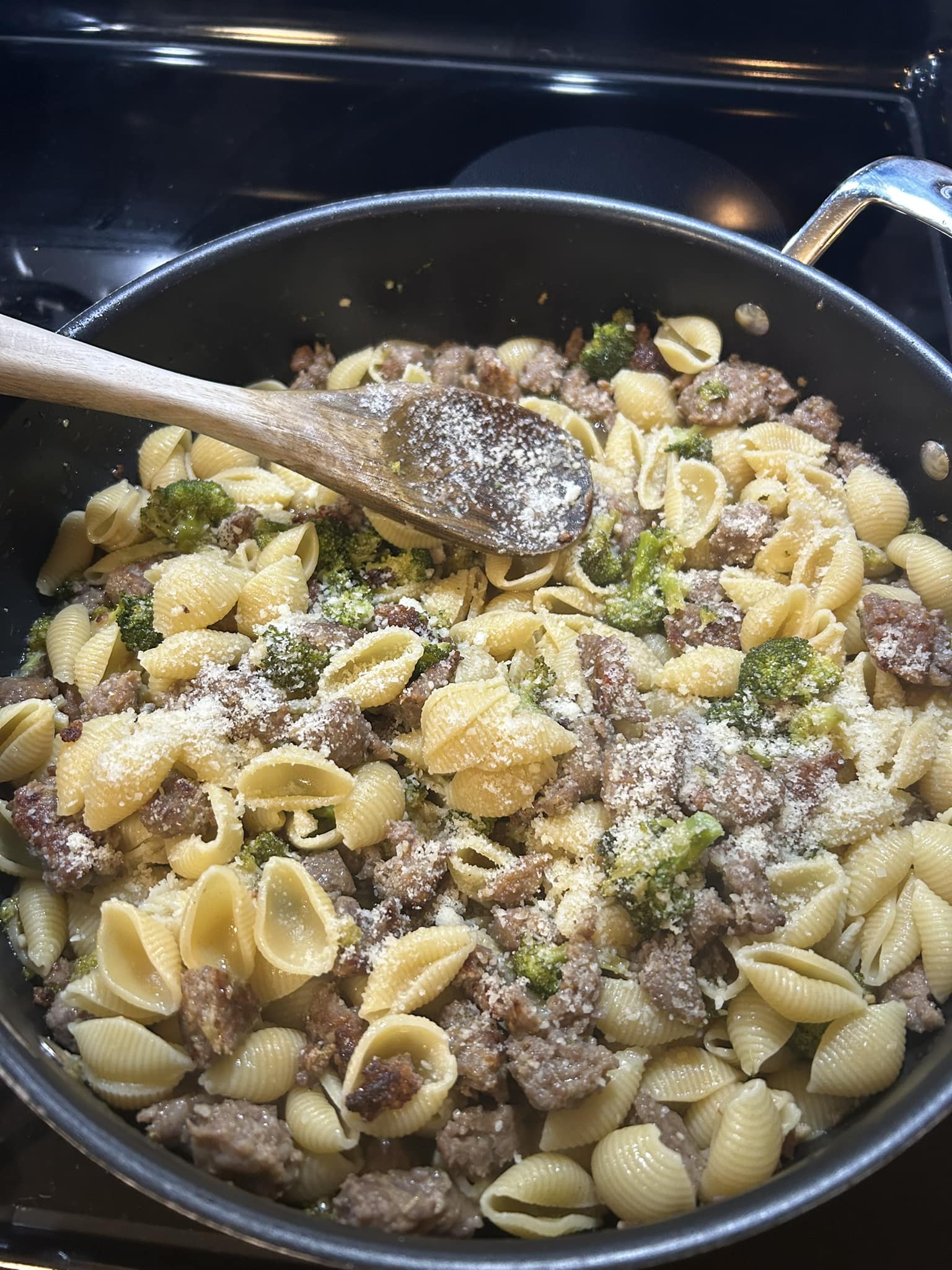
Why People Will Love Italian Sausage, Broccoli And Pasta Recipe
Italian sausage gives the pasta a rich, deeply savory flavor.
You can use sweet or spicy sausage depending on your preference.
Browning the sausage creates flavorful caramelized bits in the skillet.
Garlic adds an aromatic Italian-style foundation.
Broccoli gives the dish freshness and color.
The broccoli remains slightly crisp instead of becoming mushy.
Chicken broth transforms the browned pan juices into a light sauce.
Olive oil creates richness without making the dish excessively creamy.
Butter gives the finished sauce a silky texture.
Pecorino Romano adds sharp, salty, nutty flavor.
Red pepper flakes provide subtle warmth.
The sauce naturally coats the pasta instead of overwhelming it.
It is hearty enough to serve as a complete meal.
The recipe uses familiar, easy-to-find ingredients.
It can be prepared in roughly the time needed to cook the pasta.
Everything except the pasta is prepared in one skillet.
Leftovers reheat well.
The recipe is easy to customize with different pasta shapes or vegetables.
Key Ingredients
Pasta:
The pasta provides the foundation of the dish and absorbs the savory sausage and broccoli sauce. Short shapes such as rigatoni, penne, orecchiette, or farfalle are particularly good because they catch small pieces of sausage and cheese.
Italian Sausage:
Sweet or hot Italian sausage supplies most of the dish’s savory depth. Removing the casings and crumbling the sausage allows it to brown evenly and distribute throughout the pasta.
Broccoli:
Broccoli brings color, fiber, freshness, and a slightly earthy bitterness that balances the fatty sausage and cheese.
Extra-Virgin Olive Oil:
Olive oil is used both to brown the sausage and to form part of the sauce. Its fruity richness complements the garlic and Pecorino.
Garlic:
Fresh garlic adds an important aromatic layer. It only needs a short cooking time after the sausage has browned.
Chicken Broth:
Chicken broth loosens the browned bits from the skillet and creates the base of the light pan sauce.
Butter:
Butter rounds out the sauce, giving it a smoother mouthfeel and helping the sauce cling to the pasta.
Pecorino Romano:
Pecorino Romano is sharper and saltier than Parmesan. Its assertive flavor works particularly well with sausage, broccoli, and red pepper.
Red Pepper Flakes:
A modest amount introduces background heat without overpowering the other ingredients.
Expert Tips
Use a large pot so the pasta has enough room to cook evenly.
Salt the pasta water generously, but remember the sausage and Pecorino are already salty.
Reserve about 1 cup of pasta water before draining.
Cook the pasta just until al dente because it will soften slightly when tossed with the hot sauce.
Remove the sausage casings completely before cooking.
Break the sausage into small irregular pieces rather than very fine crumbs.
Let the sausage sit briefly against the hot skillet before stirring so it develops better browning.
Cook the sausage to at least 160°F / 71°C.
Lower the heat before adding garlic to prevent it from burning.
Cut the broccoli florets into relatively small, similar-sized pieces.
Keep the broccoli tender-crisp for the best texture.
Scrape the bottom of the skillet after adding broth to capture all the browned flavor.
Simmer the broth briefly so it becomes more concentrated.
Add pasta water a little at a time if the finished pasta seems dry.
Toss half the Pecorino directly into the pasta and reserve the rest for serving.
Serve immediately because the sauce becomes thicker as it cools.
Italian Sausage, Broccoli And Pasta
Ingredients:
1 pound pasta
5 tablespoons extra virgin olive oil, divided
1 pound sweet or spicy Italian sausage, removed from casings
3 garlic cloves, minced
1 cup chicken broth
1 pound broccoli florets
½ teaspoon salt
¼ teaspoon red pepper flakes
3 tablespoons unsalted butter
½ cup freshly grated pecorino Romano
Instructions:
Step 1:
Bring a large pot of salted water to a boil.
Add the pasta and cook according to package instructions.
Step 2:
Meanwhile, in a large skillet, heat 1 tablespoon of the olive oil over medium high heat.
Crumble the sausage into the skillet and cook, breaking apart with a spoon, until lightly browned, 5 to 6 minutes.
Step 3:
Reduce the heat to medium and add the garlic; cook for 1 minute more.
Step 4:
Add the remaining 4 tablespoons of olive oil, chicken broth, broccoli, salt and red pepper flakes.
Step 5:
Cook, stirring frequently and scraping the bottom of the pan to release the flavorful brown bits, until the broccoli is tender-crisp, 3 to 4 minutes.
Stir in the butter until melted and simmer for a few minutes to reduce and concentrate the sauce.
Step 6:
Drain the pasta well and place back in the pasta pot.
Add the sausage and broccoli mixture, along with half of the cheese, and toss to blend.
Taste and adjust seasoning.
Transfer to a serving platter or individual bowls and pass the remaining grated cheese at the table.
Important Notes When Making Italian Sausage, Broccoli And Pasta
Italian sausage can contain considerable sodium and fat.
Hot Italian sausage may already contain chile, so adjust the red pepper flakes accordingly.
Pecorino Romano is naturally salty; additional salt should be added cautiously.
Chicken broth can also contribute substantial sodium.
Low-sodium broth is useful if you want better control over seasoning.
Garlic burns quickly once minced, especially in a hot skillet.
Broccoli should not be boiled until very soft before combining with the pasta.
The final sauce is meant to be light and glossy rather than thick and creamy.
Pasta water can rescue a sauce that becomes too concentrated.
Do not rinse the cooked pasta because the surface starch helps sauce adhere.
Butter should be stirred in until completely emulsified with the broth and olive oil.
Freshly grated cheese melts much better than pre-grated cheese containing anti-caking agents.
Pecorino can be replaced partly with Parmesan for a milder flavor.
Refrigerate leftovers promptly.
When reheating, add a splash of broth or water because the pasta continues absorbing sauce.
How to Enjoy Italian Sausage, Broccoli And Pasta After Cooking
Serve the pasta immediately after it has been tossed with the sausage, broccoli, sauce, and first portion of Pecorino Romano.
Transfer it to a large warmed serving bowl or individual pasta bowls.
Sprinkle the remaining freshly grated Pecorino over each serving just before eating.
For extra heat, add a small pinch of red pepper flakes at the table.
A drizzle of good extra-virgin olive oil can add fresh aroma and richness.
Freshly ground black pepper also works especially well with the salty Pecorino.
Serve the pasta with crusty Italian bread, garlic bread, or focaccia to soak up any sauce remaining at the bottom of the bowl.
For a fresher contrast, pair it with an arugula salad, mixed greens, or a tomato salad dressed with lemon or red wine vinegar.
If serving leftovers, reheat gently in a skillet with a splash of chicken broth or water rather than microwaving until dry.
Nutrition Information
Approximate nutrition per serving, based on 6 servings:
Calories: 720 kcal | Total Fat: 37 g | Saturated Fat: 11 g | Monounsaturated Fat: 19 g | Polyunsaturated Fat: 4 g | Cholesterol: 70 mg | Sodium: 900–1,200 mg depending on the sausage, chicken broth, Pecorino, and added salt | Total Carbohydrates: 62 g | Dietary Fiber: 5 g | Sugars: 4 g | Protein: 28 g
Additional estimate:
Potassium: 650–850 mg | Calcium: 220–300 mg | Iron: 3–4.5 mg | Magnesium: 65–90 mg | Vitamin A: 900–1,400 IU | Vitamin C: 65–90 mg | Vitamin B12: 1–1.8 mcg | Folate: 90–130 mcg
Frequently Asked Questions:
What does Italian Sausage, Broccoli and Pasta taste like?
It is savory, garlicky, slightly spicy, and rich, with sharp Pecorino and fresh broccoli balancing the fattiness of the sausage.
Should I use sweet or spicy Italian sausage?
Either works. Sweet sausage produces a milder, more family-friendly dish, while hot sausage adds additional chile flavor.
What pasta shape works best?
Orecchiette, rigatoni, penne, shells, fusilli, and farfalle all work particularly well because they capture the pieces of sausage and broccoli.
What should I serve with this pasta?
A simple green salad, tomato salad, garlic bread, focaccia, or roasted vegetables are excellent accompaniments.
Can I substitute Parmesan for Pecorino Romano?
Yes. Parmesan is milder and slightly less salty. You can replace all of the Pecorino or use a combination of both cheeses.
Why should I reserve pasta water?
Pasta water contains starch that helps bind the fat, broth, and cheese into a smoother sauce. It is especially useful if the pasta becomes dry while tossing.
Why is my sausage steaming instead of browning?
The skillet may be overcrowded or not hot enough. Use a large skillet and allow the sausage to contact the hot surface without constant stirring.
How do I keep the broccoli bright and slightly crisp?
Cook it only for about 3–4 minutes in the broth and avoid overcooking it before the pasta is added.
Why does my sauce seem dry after adding the pasta?
The pasta quickly absorbs liquid. Add reserved pasta water or a little warm chicken broth, then toss until the sauce becomes glossy again.
Can I make this recipe ahead?
You can cook the sausage and broccoli mixture ahead, but the best texture comes from cooking the pasta fresh and combining everything shortly before serving.