Garlic Butter Shrimp and Crab Spaghetti with White Wine and Lemon
Garlic Butter Shrimp and Crab Spaghetti with White Wine and Lemon is an elegant seafood pasta built around plump shrimp, delicate lump crab, garlic, butter, extra-virgin olive oil, dry white wine, fresh lemon, and parsley. Rather than using a heavy cream sauce, this recipe creates a light, glossy coating from butter, olive oil, pasta water, wine, and the natural juices released by the seafood.
The key to the dish is balance. Butter gives the sauce richness, white wine contributes acidity and complexity, lemon adds freshness, and garlic provides aromatic depth. The shrimp offer a firm, juicy bite while the crab contributes a softer, naturally sweet seafood flavor.
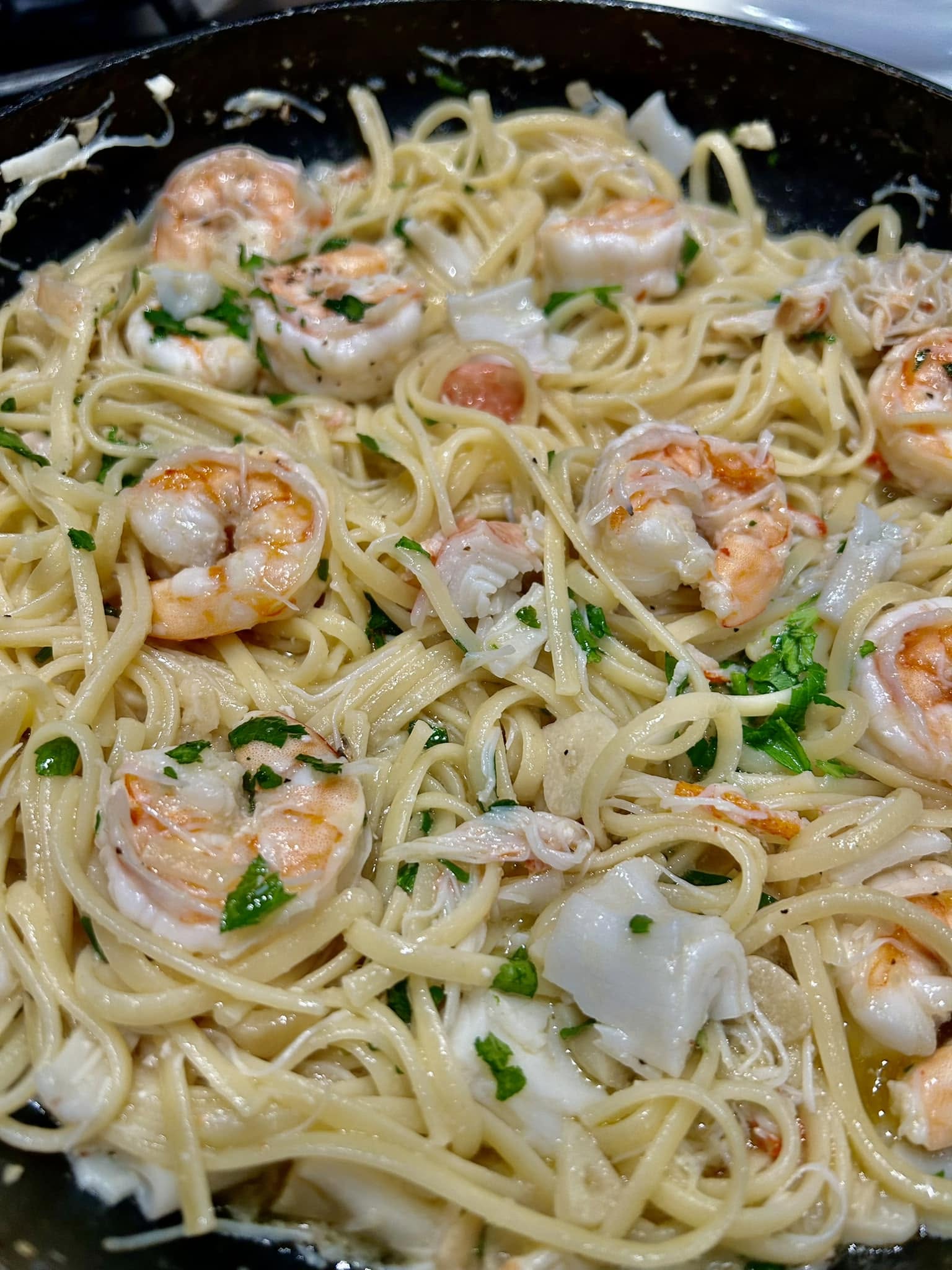
When finished correctly, the pasta should not be swimming in liquid. Instead, every strand should be lightly coated in a silky garlic-lemon sauce, with visible pieces of shrimp and crab throughout. It is sophisticated enough for a special dinner but straightforward enough to make at home.
Why People Will Love Garlic Butter Shrimp and Crab Spaghetti with White Wine and Lemon Recipe
Shrimp and crab give the pasta two distinct seafood textures and flavors.
The sauce is rich without relying on heavy cream.
Garlic perfumes the entire dish without overwhelming the seafood.
Butter creates a silky, luxurious finish.
Extra-virgin olive oil adds fruity richness.
White wine brings brightness and subtle complexity.
Fresh lemon cuts through the butter and keeps the pasta from feeling heavy.
Lemon zest adds intense citrus aroma without adding too much acidity.
Fresh parsley gives the dish color and freshness.
Red pepper flakes can add a gentle background heat.
Lump crab makes the pasta feel especially luxurious.
The shrimp cook in only a few minutes.
Reserved pasta water creates a naturally glossy sauce.
The recipe uses relatively few ingredients.
It can be prepared in roughly the time needed to cook the pasta.
There is no complicated cream sauce to prepare.
It works beautifully for date nights, holidays, or family dinners.
Leftovers can be transformed into a seafood pasta salad or reheated gently.
The flavors are clean enough that the seafood remains the star.
Key Ingredients
Shrimp:
Large shrimp provide the firmest and most satisfying texture. Cooking them separately and returning them to the skillet at the end helps prevent overcooking.
Lump Crab Meat:
Lump crab contributes delicate sweetness and a tender, flaky texture. It should be folded into the sauce gently so the larger pieces remain intact.
Spaghetti or Linguine:
Long pasta is particularly suitable because the strands become coated with the light butter-wine sauce. Linguine offers a slightly broader surface for holding the sauce.
Extra-Virgin Olive Oil:
Olive oil forms part of the sauce and helps sauté the shrimp and garlic. Its fruity flavor balances the richer butter.
Unsalted Butter:
Butter creates a silky mouthfeel and helps emulsify the wine, pasta water, olive oil, and seafood juices.
Garlic:
Fresh garlic is essential to the aromatic character of the dish. Thinly sliced garlic gives a gentler flavor, while finely minced garlic provides a stronger presence.
Dry White Wine:
Wine deglazes the skillet and captures the browned flavors left behind by the shrimp. Sauvignon Blanc, Pinot Grigio, or an unoaked Chardonnay are good choices.
Fresh Lemon:
Both lemon juice and zest are used. The juice contributes acidity while the zest adds fragrant citrus oils.
Fresh Parsley:
Parsley lightens the richness of the butter and gives the finished pasta a clean, fresh finish.
Expert Tips
Choose large or extra-large shrimp so they remain juicy during sautéing.
Pat the shrimp completely dry before cooking.
Season seafood lightly because crab and Parmesan can already contain sodium.
Make sure the skillet is hot before adding the shrimp.
Arrange shrimp in a single layer instead of overcrowding the pan.
Remove shrimp while they are just cooked rather than leaving them in the skillet.
Keep the garlic over moderate heat so it becomes fragrant without browning.
Burnt garlic can make the entire sauce bitter.
Use a dry white wine rather than a sweet wine.
Allow the wine to reduce before adding pasta water.
Reserve at least 1 cup of pasta water, even if you initially need only ½ cup.
Cook the pasta just to al dente because it continues cooking briefly in the sauce.
Toss the pasta vigorously to help the starch emulsify the butter and olive oil.
Add pasta water gradually rather than all at once.
Add crab near the end and stir very gently.
Add shrimp back only during the final minute.
Finish with parsley off the heat to preserve its fresh flavor and color.
Taste before adding Parmesan; some seafood pasta is better without cheese.
Garlic Butter Shrimp and Crab Spaghetti with White Wine and Lemon
Ingredients
For the Pasta and Seafood
12 ounces spaghetti or linguine
1 pound large shrimp, peeled and deveined
8 ounces lump crab meat, picked over for shells
3 tablespoons extra-virgin olive oil
3 tablespoons unsalted butter, divided
5 garlic cloves, thinly sliced or finely minced
½ teaspoon crushed red pepper flakes, optional
½ cup dry white wine
½ cup reserved pasta cooking water, plus more as needed
Juice of 1 medium lemon, about 2–3 tablespoons
1 teaspoon finely grated lemon zest
⅓ cup fresh flat-leaf parsley, chopped
½ teaspoon kosher salt, plus more for pasta water
¼ teaspoon freshly ground black pepper
2 tablespoons freshly grated Parmesan, optional
Instructions
Cook the Pasta
Bring a large pot of generously salted water to a boil.
Add the spaghetti and cook until just al dente, following the package directions.
Before draining, reserve about 1 cup of the pasta cooking water.
Drain the pasta and set aside. Do not rinse it.
Season the Shrimp
Pat the shrimp dry with paper towels.
Season lightly with salt and freshly ground black pepper.
Dry shrimp will sear more effectively and develop better flavor in the skillet.
Sauté the Shrimp
Heat the olive oil and 1 tablespoon butter in a large skillet over medium-high heat.
Add the shrimp in a single layer.
Cook for about 1½–2 minutes on the first side, then turn and cook for another 1–2 minutes, just until the shrimp become pink and opaque.
Transfer the shrimp to a plate so they do not overcook.
Cook the Garlic
Reduce the heat to medium.
Add another 1 tablespoon butter, followed by the garlic and optional crushed red pepper flakes.
Cook for about 30–60 seconds, stirring constantly, until the garlic becomes fragrant.
Do not allow the garlic to turn dark brown.
Deglaze with White Wine
Pour the white wine into the skillet.
Use a wooden spoon to scrape up any browned seafood and garlic bits from the bottom.
Simmer for about 2–3 minutes, or until the wine has reduced by roughly half.
Create the Light Sauce
Add about ½ cup reserved pasta water, lemon juice, and lemon zest.
Bring the mixture to a gentle simmer.
Add the remaining tablespoon of butter and swirl or stir until the sauce becomes glossy.
Add the Crab
Gently fold the lump crab meat into the sauce.
Cook for only 1–2 minutes, just until warmed through.
Avoid stirring aggressively so the crab remains in large pieces like those visible in your photo.
Toss with the Pasta
Add the drained spaghetti directly to the skillet.
Toss continuously over medium-low heat until the noodles are evenly coated with the garlic, wine, lemon, butter, and seafood juices.
If the pasta seems dry, add reserved pasta water a few tablespoons at a time.
Return the Shrimp
Add the cooked shrimp back to the skillet.
Toss gently for about 30–60 seconds, just long enough to warm them through.
Finish with Parsley
Remove the skillet from the heat.
Add the chopped fresh parsley and another small squeeze of lemon if desired.
Taste and adjust with salt, black pepper, or additional red pepper flakes.
If using Parmesan, add only a light amount so it does not overpower the delicate shrimp and crab.
How the Finished Dish Should Be
The pasta should be glossy rather than swimming in sauce. The garlic-butter-white-wine mixture should lightly coat each strand of spaghetti.
The shrimp should remain plump and tender, while the lump crab stays in visible pieces throughout the pasta.
The dominant flavors should be garlic, butter, olive oil, sweet seafood, dry white wine, bright lemon, and fresh parsley, with just a gentle background heat if red pepper flakes are added.
Important Notes When Making Garlic Butter Shrimp and Crab Spaghetti with White Wine and Lemon
Shrimp cook extremely quickly and become rubbery when overcooked.
A food-safe target for seafood is approximately 145°F / 63°C.
Lump crab meat is generally already cooked and needs only gentle reheating.
Always check crab meat carefully for small pieces of shell.
Do not aggressively stir the crab after adding it.
Dry white wine contributes flavor even though much of its alcohol cooks off during reduction.
If avoiding alcohol, substitute seafood stock or chicken broth with a small additional squeeze of lemon.
Do not rinse cooked pasta because its surface starch helps the sauce adhere.
Pasta water is an important ingredient rather than simply leftover cooking water.
The sauce should appear glossy, not oily.
If the sauce separates, vigorous tossing with a small amount of hot pasta water can help bring it back together.
Lemon juice should not dominate the seafood; start with less and adjust.
Parmesan is optional because strong cheese can cover delicate crab flavor.
Seafood pasta is best eaten immediately.
Reheat leftovers gently because both shrimp and crab can become tough.
How to Enjoy Garlic Butter Shrimp and Crab Spaghetti with White Wine and Lemon After Cooking
Serve the pasta immediately after the shrimp have been returned to the skillet and the fresh parsley has been added.
Use pasta tongs to twirl the spaghetti or linguine into warm shallow bowls.
Make sure each serving receives several whole shrimp along with visible pieces of lump crab.
Spoon any remaining garlic-butter sauce from the skillet over the pasta rather than leaving it behind.
Finish each bowl with additional chopped parsley and a little freshly grated lemon zest.
For extra brightness, serve lemon wedges on the side so each person can adjust the acidity.
If desired, add a small pinch of red pepper flakes for additional heat.
Crusty Italian bread or toasted baguette is excellent for soaking up the garlic, butter, wine, and seafood juices.
A simple arugula salad, mixed greens, asparagus, or roasted broccoli provides a fresh contrast to the rich pasta.
A chilled glass of dry white wine can complement the seafood and lemon flavors particularly well.
For the best experience, eat the pasta while it is hot and the sauce is still glossy.
Nutrition Information
Approximate nutrition per serving, based on 4 generous servings and excluding optional Parmesan:
Calories: 675 kcal | Total Fat: 22 g | Saturated Fat: 7 g | Monounsaturated Fat: 10 g | Polyunsaturated Fat: 2.5 g | Cholesterol: 220–250 mg | Sodium: 700–950 mg depending on the crab meat, pasta water, and added salt | Total Carbohydrates: 67 g | Dietary Fiber: 3 g | Sugars: 3 g | Protein: 46 g
Additional estimate:
Potassium: 650–800 mg | Calcium: 130–180 mg | Iron: 4–5 mg | Magnesium: 75–100 mg | Vitamin A: 700–1,000 IU | Vitamin C: 12–20 mg | Vitamin B12: 4–6 mcg | Selenium: 70–95 mcg | Zinc: 4–6 mg
Frequently Asked Questions:
What does Garlic Butter Shrimp and Crab Spaghetti taste like?
It is buttery, garlicky, lightly citrusy, savory, and naturally sweet from the seafood, with subtle acidity from white wine and lemon.
Is this pasta creamy?
It is silky and glossy rather than cream-based. Butter, olive oil, pasta water, and wine emulsify into a light sauce that coats the noodles.
What white wine works best?
Dry wines such as Pinot Grigio, Sauvignon Blanc, or an unoaked Chardonnay work especially well. Avoid sweet wines.
Should Parmesan be added to seafood pasta?
It is optional. A very small amount can add savoriness, but too much may overpower the delicate flavor of crab and shrimp.
What should I serve alongside this pasta?
Crusty bread, garlic bread, arugula salad, roasted asparagus, broccoli, or a simple tomato salad all pair beautifully.
Why should I cook the shrimp separately and remove them from the skillet?
Shrimp need much less cooking time than the sauce and pasta. Removing them temporarily prevents them from becoming dry or rubbery.
Why do I need reserved pasta water?
The water contains starch released by the pasta. This starch helps butter, olive oil, wine, and seafood juices combine into a smoother sauce that clings to the noodles.
Why is my garlic butter sauce oily instead of silky?
The fat may not have emulsified properly. Add a few tablespoons of hot pasta water and toss the pasta vigorously over low heat until the sauce becomes glossy.
Can I use imitation crab instead of lump crab?
Yes, but the flavor and texture will be noticeably different. Real lump crab provides a sweeter, more delicate seafood flavor and larger natural pieces.
Can I make this dish ahead of time?
The components can be prepared ahead, but the finished pasta is best made immediately before serving. Seafood and pasta both lose their ideal texture when repeatedly reheated.