Chimayo Style Posole
Chimayo-Style Posole is a deeply savory New Mexican stew built around pork, beef, posole, red chile, onion, garlic, and a generous amount of broth. Its character comes from the combination of slow-cooked meat and Chimayo or New Mexican red chile, which gives the broth an earthy, slightly sweet, distinctly chile-forward flavor rather than simple heat.
As the stew simmers, the pork and beef release richness into the broth while the posole absorbs the chile and meat flavors. The dried red chile contributes color, aroma, and warmth, while onion and garlic create the savory foundation underneath everything else.
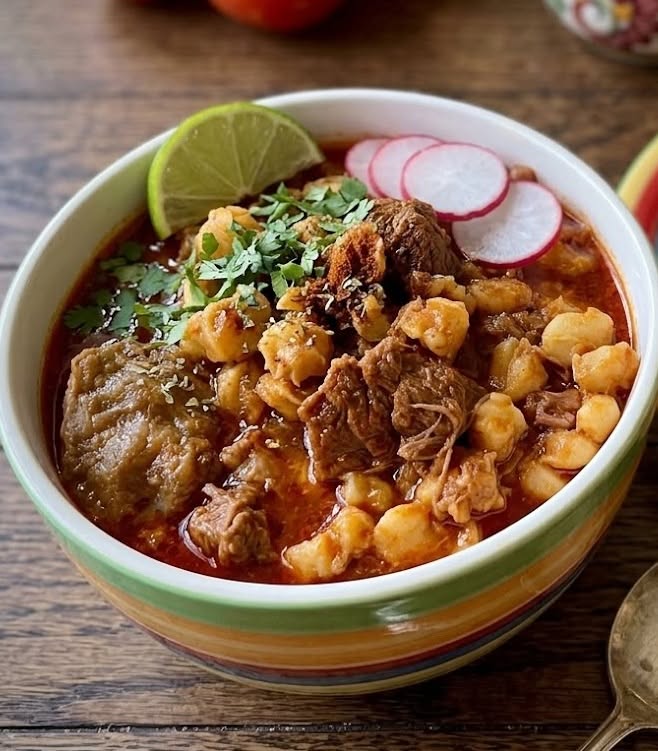
The finished dish should be brothy but substantial, with tender meat, plump posole, and a deep brick-red chile broth. A fresh Southwest pico made with roasted Hatch green chile is an especially good finishing touch because it adds brightness, acidity, and fresh chile flavor against the long-cooked stew.
Why People Will Love Chimayo Style Posole Recipe
It has a deep, slow-cooked flavor despite using a relatively short ingredient list.
Chimayo or New Mexican red chile gives the broth a distinctive earthy character.
Pork contributes richness and tenderness.
Beef adds a deeper savory note.
Posole gives the stew a satisfying chewy-tender texture.
Onion adds sweetness as it cooks.
Garlic strengthens the savory base.
Chicken broth creates a flavorful cooking liquid without overwhelming the chile.
The stew becomes more complex the longer it gently simmers.
Optional pig’s feet can add additional body and gelatin to the broth.
The red chile gives the dish beautiful color.
It is filling enough to serve as a complete meal.
The heat level can be adjusted depending on the chile pods used.
It works especially well for cold-weather meals.
It can be prepared in a large batch for family gatherings.
The flavor often improves after resting overnight.
Fresh Hatch chile pico adds a bright contrast.
It pairs beautifully with tortillas, lime, cabbage, radish, or avocado.
It has a rustic, comforting character without relying on cream or cheese.
Key Ingredients
Posole:
Posole is the heart of the dish, giving the stew its characteristic texture and substance. As it cooks, it absorbs the red chile broth while retaining a pleasantly firm, chewy bite.
Pork Chops:
Pork provides richness and mild sweetness that pair naturally with New Mexican red chile. Bone-in pieces can also contribute extra flavor to the broth.
Beef Steak:
Beef adds a darker, more robust meat flavor and gives the finished stew additional depth.
Chimayo or New Mexican Red Chile Pods:
These are the defining flavor ingredient. They provide earthy chile flavor, red color, gentle fruitiness, and varying levels of heat.
Onion and Garlic:
These aromatics form the foundation of the broth and become sweeter and more rounded during the long simmer.
Chicken Broth:
The broth creates the cooking medium and helps carry the flavor of the red chile, meat, and aromatics throughout the dish.
Pig’s Feet, Optional:
Pig’s feet add collagen and gelatin, which can make the broth richer and more silky. They also require longer cooking to become tender.
Roasted Hatch Chile Pico:
Used as a garnish, the pico adds freshness and a brighter chile flavor that contrasts beautifully with the slow-cooked red chile broth.
Expert Tips
Remove stems and seeds from the dried chile pods before using them.
Rinse dried chiles briefly to remove dust.
Toast the pods only lightly; burned dried chile becomes bitter very quickly.
Brown the pork and beef in batches if necessary to avoid steaming.
Keep any browned bits in the bottom of the pot because they add flavor.
Cook the onion until it begins to soften before adding too much liquid.
Mince the garlic finely so it distributes throughout the broth.
Blend the softened red chiles very smoothly for a more refined broth.
Strain the chile puree if you want a silkier texture.
Use low-sodium chicken broth if possible because six quarts is a large quantity.
Taste before adding the full tablespoon of salt.
Maintain a gentle simmer rather than a hard boil.
Stir occasionally so the posole does not settle and scorch.
Add more broth or water if the stew reduces too much.
Let the stew rest for 10–15 minutes before serving.
Fresh lime and roasted green chile garnish can dramatically brighten the finished bowl.
If using pig’s feet, give them enough time to become tender before serving.
Chimayo Style Posole
Ingredients:
4 pork chops, cut to ½ inch
1 pound beef steak, diced to ½ inch
6 pig’s feet (optional)
10 Chimayo chile pods (or New Mexican pods), stems and seeds removed, rinsed
1 medium onion, diced
4 cloves garlic, minced
6 quarts chicken broth
1-2 lb. package of posole
1 tablespoon salt (or to taste)
Instructions:
Step 1:
In a large pot, brown the pork chops and beef over medium heat, including the bones if available.
After that, add the chile pods and lightly toast them for enhanced flavor.
Then, stir in the diced onion and minced garlic.
Step 2:
Next, blend the red chile and salt together before adding them to the posole along with the chicken broth.
Step 3:
Bring the mixture to a boil over medium-high heat, then cover and reduce to low to medium heat, allowing it to simmer for 1 to 2 hours.
This slow cooking will meld the flavors beautifully, creating a rich and satisfying dish.
Step 4:
I serve it with a Southwest pico made from roasted Hatch chiles as a garnish.
Enjoy!
Important Notes When Making Chimayo Style Posole
The exact cooking time depends heavily on what type of posole you are using.
Dried posole may require soaking and considerably more than 1–2 hours of cooking.
Frozen or previously cooked posole will cook much faster.
If using dried posole, cook until the kernels are fully tender and opened rather than relying only on the clock.
Pig’s feet generally need a long simmer and may require more cooking time than the beef or pork chops.
Bone-in pork chops can contribute excellent flavor but may need to be trimmed or deboned before serving.
Whole cuts of pork and beef are safe at lower temperatures than ground meat, but in a stew like this they are usually cooked well beyond minimum temperatures until tender.
Do not burn the red chile pods while toasting them.
New Mexican chile can vary from mild to quite hot.
Chicken broth can contribute a great deal of sodium.
The full tablespoon of salt should be adjusted according to the broth used.
The stew thickens slightly as it sits.
It may taste even better the following day after the flavors have had time to blend.
Keep garnishes separate until serving.
Refrigerate leftovers promptly.
How to Enjoy Chimayo Style Posole After Cooking
Serve the posole very hot in deep bowls, making sure each portion includes plenty of meat, posole, and red chile broth.
Spoon roasted Hatch green chile pico over the top just before serving. The fresh green chile flavor creates an excellent contrast with the earthy red chile broth.
Add a squeeze of lime for brightness and acidity.
Thinly sliced cabbage or radish can provide a crisp, refreshing contrast to the tender meat and posole.
Fresh cilantro and finely diced onion can also be added at the table.
Serve warm corn tortillas or flour tortillas on the side for dipping into the broth.
Avocado adds creaminess without overpowering the chile.
If you enjoy more heat, serve additional red chile sauce or chopped roasted Hatch chile separately.
For leftovers, reheat slowly over medium-low heat and add a little water or broth if the stew has thickened overnight.
Nutrition Information
Approximate nutrition per serving, based on about 8 servings, using roughly 1½ pounds of prepared or frozen posole and excluding the optional pig’s feet and garnishes:
Calories: 430 kcal | Total Fat: 18 g | Saturated Fat: 6 g | Monounsaturated Fat: 7 g | Polyunsaturated Fat: 2 g | Cholesterol: 85–100 mg | Sodium: 1,200–1,800 mg depending heavily on the chicken broth and added salt | Total Carbohydrates: 29 g | Dietary Fiber: 5 g | Sugars: 4 g | Protein: 36 g
Additional estimate:
Potassium: 850–1,050 mg | Calcium: 70–100 mg | Iron: 4–5.5 mg | Magnesium: 55–75 mg | Vitamin A: 1,200–1,800 IU | Vitamin C: 12–20 mg | Vitamin B12: 2–3 mcg | Zinc: 5–7 mg
Frequently Asked Questions:
What does Chimayo-Style Posole taste like?
It is savory, earthy, meaty, and chile-forward, with the distinctive flavor of New Mexican red chile rather than the tomato-heavy flavor of many other stews.
Is Chimayo chile extremely spicy?
Not necessarily. New Mexican red chiles can range from mild to hot, so the heat depends on the specific pods used.
What should I serve with posole?
Warm tortillas, lime, cabbage, radish, cilantro, avocado, diced onion, and roasted Hatch chile pico all pair beautifully with it.
Are pig’s feet necessary?
No. They are optional. Their main contribution is extra richness, collagen, and body in the broth.
Does posole taste better the next day?
Often yes. After overnight refrigeration, the chile, meat, garlic, and broth flavors become more integrated.
Why is my posole still hard after two hours?
If you are using dried posole, it may simply need significantly more cooking time. Older kernels and hard water can also slow softening.
Should dried posole be soaked first?
Soaking is not always required, but an overnight soak can shorten cooking time and encourage more even tenderness.
Why should I toast the chile pods only briefly?
Light toasting deepens their aroma, but dried chiles burn easily. Burned chile can make the entire pot taste bitter.
How can I make the red chile broth smoother?
Blend the softened chiles very thoroughly with some broth, then pass the puree through a fine-mesh strainer before adding it to the pot.
How can I keep the stew from becoming too salty?
Use low-sodium or unsalted chicken broth, add only part of the tablespoon of salt initially, then taste and adjust near the end of cooking.