Capirotada… Extra Pecans And Raisins
Capirotada is more than just a dessert—it’s a deeply rooted Mexican tradition, often prepared during special seasons and family gatherings.
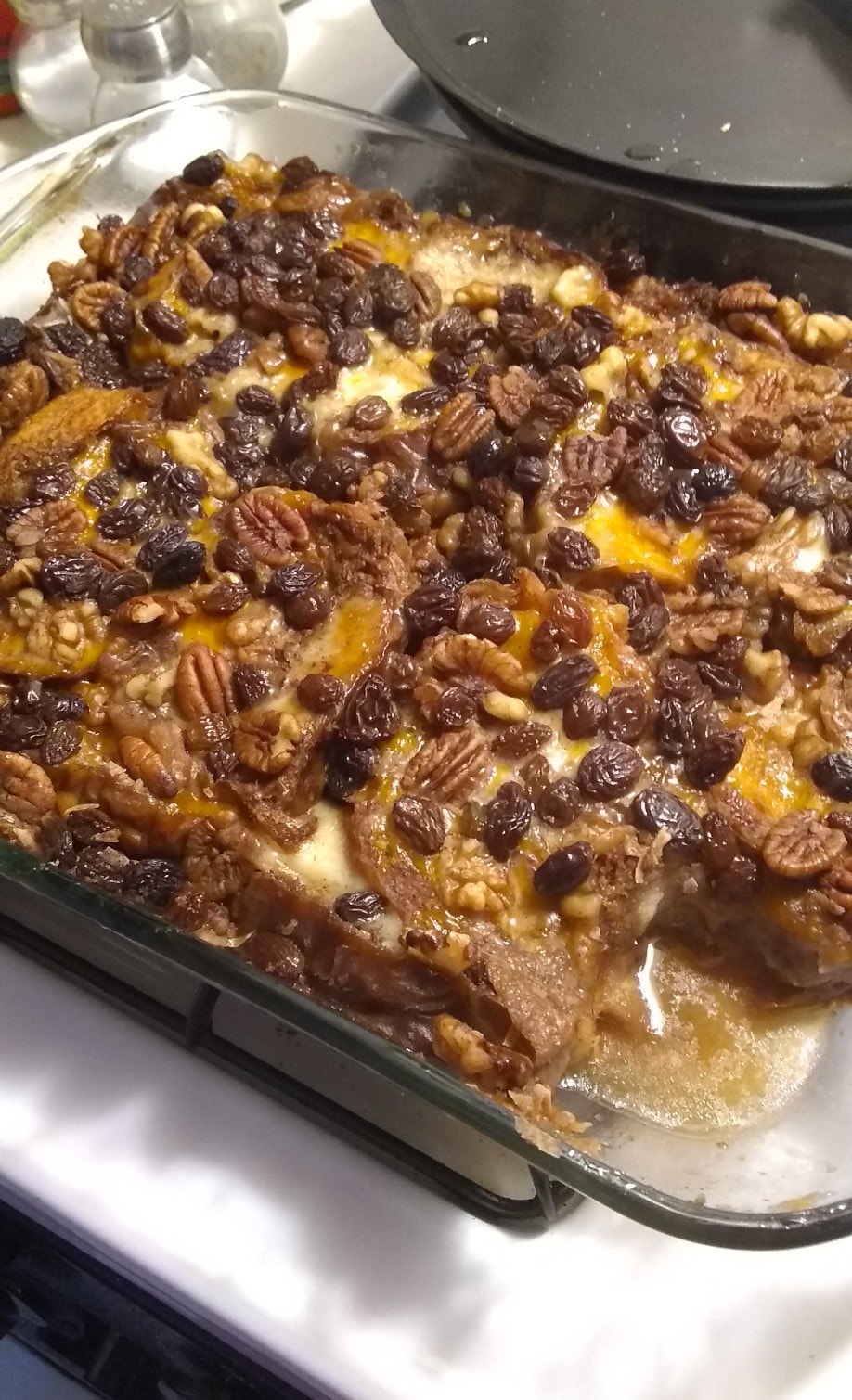
This version, rich with extra pecans and raisins, brings a beautiful balance of sweetness, warmth, and texture that feels both comforting and nostalgic. The syrup made from piloncillo and cinnamon seeps into the toasted bread, creating a soft, almost custard-like interior while still holding a slight bite.
What makes this dish truly unique is its contrast of flavors and textures—sweet and spiced syrup, chewy dried fruit, crunchy nuts, and pockets of melted cheese woven throughout. It’s a dessert that tells a story in every layer, combining humble ingredients into something soulful, satisfying, and unforgettable.
Why You’ll Love This Recipe:
Deep Cultural and Emotional Connection
Capirotada is not just a dessert—it carries tradition, history, and nostalgia. For many, it evokes memories of family gatherings and meaningful moments, making it emotionally comforting as well as delicious.
Unique Sweet-and-Savory Flavor Profile
Unlike typical desserts, this dish blends sweetness from piloncillo and raisins with subtle savory notes from melted cheese, creating a complex and intriguing taste experience.
Rich, Layered Texture in Every Bite
Soft, syrup-soaked bread contrasts beautifully with crunchy pecans and walnuts, chewy raisins, and lightly melted cheese—offering a satisfying mix of textures.
Warm, Spiced Aroma
The combination of cinnamon, vanilla, and caramel-like piloncillo creates an inviting aroma that fills the kitchen and enhances the overall experience.
Naturally Comforting and Hearty
This dish feels substantial and nourishing, making it perfect as both a dessert and a comforting treat during cooler days or special occasions.
Flexible and Customizable
You can easily adjust ingredients—add more nuts, swap dried fruits, or vary the cheese—allowing each version to reflect personal taste or family tradition.
Perfect Balance of Sweetness
The sweetness is deep and natural rather than overly sugary, thanks to piloncillo, which adds a rich, molasses-like depth.
Great for Sharing
Made in layers and served in portions, it’s ideal for gatherings, encouraging a communal, shared dining experience.
Even Better Over Time
As it rests, the flavors continue to meld, making leftovers just as delicious—sometimes even more flavorful the next day.
A Dessert That Feels Special and Different
It stands out from common desserts, offering something distinctive and memorable that surprises and delights anyone trying it for the first time.
Key Ingredients:
Piloncillo (The Soul of the Syrup)
Piloncillo is an unrefined Mexican cane sugar with a deep, molasses-like richness. When melted with cinnamon and vanilla, it creates a warm, caramelized syrup that gives capirotada its signature depth and earthy sweetness—far more complex than regular sugar.
Cinnamon Stick & Vanilla (Aromatic Warmth)
These ingredients infuse the syrup with comforting spice and subtle sweetness. Cinnamon adds warmth and tradition, while vanilla softens and rounds out the flavor, creating a fragrant, inviting base.
Toasted French Bread (The Structure & Texture)
The bread acts as the foundation, absorbing the syrup while maintaining a slight firmness. Toasting is essential—it prevents the dish from becoming mushy and allows the bread to hold its shape while soaking up flavor.
Mozzarella & Mild Cheddar (Unexpected Savory Contrast)
The addition of cheese is what makes capirotada unique. As it melts, it creates creamy, slightly salty pockets that balance the sweetness and add richness to every bite.
Raisins (Natural Sweetness & Chewiness)
Raisins plump up as they absorb the syrup, adding bursts of sweetness and a soft, chewy texture that contrasts beautifully with the bread and nuts.
Pecans & Walnuts (Crunch and Depth)
These nuts bring a toasty, buttery crunch that elevates the dish. Pecans add a natural sweetness, while walnuts contribute a slightly earthy bitterness, creating a balanced flavor profile.
Coconut Flakes (Subtle Tropical Note)
Coconut adds a light sweetness and delicate texture, enhancing the complexity of the dish without overpowering the traditional flavors.
Brown Sugar (Supporting Sweetness)
While piloncillo is the star, brown sugar reinforces the caramel notes and helps create a smooth, well-rounded syrup that coats every layer evenly.
Expert Tips:
Toast the Bread Thoroughly—Not Lightly
The bread should be well-toasted, almost dry and crisp. This is crucial because it prevents the dish from turning mushy and allows it to absorb the syrup slowly while maintaining structure.
Control the Syrup Consistency
When melting piloncillo, let it fully dissolve into a smooth, slightly thick syrup—not too watery. A properly reduced syrup ensures deep flavor and prevents the layers from becoming soggy.
Layer Thoughtfully for Even Flavor
Distribute raisins, nuts, coconut, and cheese evenly between layers. Avoid clumping ingredients in one area so every bite has a balanced mix of textures and flavors.
Don’t Overpour the Syrup at Once
Add the syrup gradually over layers instead of dumping it all at the top. This helps each layer absorb moisture evenly and prevents pooling at the bottom.
Use Cheese Strategically, Not Excessively
Cheese should enhance, not dominate. Add it in thin layers so it melts into subtle creamy pockets rather than overwhelming the sweet profile.
Balance Sweetness with Texture
If your piloncillo is very rich, consider slightly increasing nuts or bread ratio. This prevents the dessert from becoming overly sweet and keeps it pleasantly balanced.
Bake Until Just Set, Not Overdone
You’re not aiming for a dry casserole—look for a moist, cohesive texture where the top is lightly golden but the inside remains soft and syrupy.
Let It Rest Before Serving
Cooling allows the syrup to settle and the layers to firm up. This step improves both texture and flavor, making the dish easier to slice and more enjoyable to eat.
Enhance Aroma with a Final Touch
A light sprinkle of cinnamon or a few drops of vanilla after baking can refresh the aroma and elevate the final presentation.
Customize While Respecting Tradition
You can add ingredients like dried cranberries or swap nuts, but keep the core elements (piloncillo syrup, bread, cinnamon) to preserve the authentic character of capirotada.
Capirotada… Extra Pecans And Raisins
Ingredients:
Wet ingredients:
1 Piloncillo
1 cinnamon stick
1 table spoon of vanilla extract
4 tablespoons of brown sugar… Bring to a boil so the Piloncillo melts.. put aside and start layering..
Dry ingredients:
1 french bread cut and toasted
Mozzarella cheese
Cheddar (mild) cheese
Coconut flakes
Raisins
Walnuts
Pecans
Instructions:
And you just layer the bread with all the ingredients, and pour the wet ingredients, and bake for about 20 minutes
Then let it cool… it’s delicious
Important Notes When Making Capirotada… Extra Pecans And Raisins Recipe
This Is Not a Typical Bread Pudding
Capirotada has a more rustic, layered structure rather than a custard-based texture. The bread absorbs syrup but should still hold its shape—think moist and tender, not creamy or mushy.
Piloncillo Defines the Flavor
The depth of this dish comes from piloncillo. Substituting it with regular sugar will significantly reduce the complexity and traditional character of the recipe.
Syrup Absorption Happens Gradually
The bread continues to absorb syrup even after baking. This means the texture will change slightly as it cools—becoming more cohesive and flavorful over time.
Cheese Is Meant to Be Subtle
While unusual in desserts, the cheese should not dominate. Its role is to add contrast and richness, not to overpower the sweetness.
Balance Between Sweetness and Texture Is Essential
Too much syrup can make the dish overly sweet and soggy, while too little leaves it dry. The goal is a balanced soak that enhances flavor without overwhelming the structure.
Layering Affects the Final Experience
Uneven layering can lead to bites that are too sweet, too dry, or lacking texture. Careful distribution ensures every portion tastes complete.
Flavor Deepens After Resting
Like many traditional dishes, capirotada tastes even better after it sits. The spices, syrup, and ingredients meld together, creating a richer, more unified flavor.
Best Served Warm or Room Temperature
It doesn’t need to be piping hot. Slightly warm or even room temperature allows the flavors to shine and the texture to settle.
Storage Impacts Texture
When refrigerated, the bread may firm up slightly. Reheating gently with a bit of added moisture (like a splash of syrup or water) can restore softness.
A Dish Rooted in Tradition
Variations are common across regions and families. While you can customize, the essence of capirotada lies in its simplicity and the harmony of its core ingredients.
How to Enjoy Capirotada… Extra Pecans And Raisins Recipe After Cooking
Let It Cool Slightly Before Serving
After baking, allow the capirotada to rest for at least 10–15 minutes. This helps the syrup settle and the layers firm up, making it easier to serve while enhancing the flavor.
Serve Warm or at Room Temperature
This dish shines when it’s warm or slightly cooled—not overly hot. The flavors of piloncillo, cinnamon, and vanilla become more pronounced as the temperature settles.
Scoop, Don’t Slice (Rustic Style)
Unlike firm casseroles, capirotada is best served with a spoon. Scoop generous portions to capture all the layers—bread, syrup, nuts, raisins, and melted cheese—in each serving.
Enhance with Simple Garnishes
Add a light sprinkle of cinnamon, extra pecans, or a few coconut flakes on top for added texture and visual appeal. A small drizzle of leftover syrup can intensify the flavor.
Pair with the Right Drinks
Enjoy it with coffee, café de olla, or warm milk. The slightly bitter or creamy drinks balance the sweetness and richness beautifully.
Balance Sweetness with Portion Size
This is a rich dessert, so moderate portions allow you to fully appreciate its depth without overwhelming your palate.
Enjoy the Contrast of Textures
Take a moment to notice the combination—soft syrup-soaked bread, chewy raisins, crunchy nuts, and melted cheese. This contrast is what makes the dish unique.
Turn Leftovers into a New Experience
The next day, the flavors become deeper and more unified. Reheat gently or enjoy it cold for a denser, more cake-like texture.
Reheat Carefully to Preserve Moisture
Warm leftovers in the microwave or oven, covered, and add a small splash of water or syrup if needed to restore softness.
Serve It as a Comfort Dessert or Breakfast Treat
Capirotada is versatile—it can be enjoyed as a dessert after meals or even as a sweet, comforting breakfast alongside coffee.
Nutrition Information:
YIELDS: 12 | SERVING SIZE: 1
Calories: 350 kcal | Total Fat: 18g | Saturated Fat: 8g | Trans Fat: 0g | Cholesterol: 30mg | Sodium: 300mg | Total Carbohydrates: 40g | Dietary Fiber: 3g | Sugars: 20g | Protein: 9g
Frequently Asked Questions:
Can I substitute Piloncillo with another sweetener?
Yes, if Piloncillo is not available, you can use brown sugar or other sweeteners like maple syrup or honey.
The flavor may vary slightly, but it will still be delicious.
Can I use different types of bread for Capirotada?
Yes, you can use different types of bread such as brioche, challah, or even stale bread.
The choice of bread will affect the texture and taste of the final dish.
Can I adjust the amount of cheese and nuts in the recipe?
Absolutely! The amount of mozzarella cheese, cheddar cheese, walnuts, and pecans can be adjusted according to your personal preference.
Feel free to add more or less based on your taste.
Can I add other ingredients to the layering?
Yes, you can customize the recipe by adding other ingredients like dried fruits (such as cranberries or apricots), sliced almonds, or spices (such as nutmeg or allspice).
Experiment with flavors to make it your own.
Can I prepare Capirotada in advance?
Yes, you can prepare Capirotada ahead of time.
After baking, you can let it cool and store it in the refrigerator.
Warm it up before serving or enjoy it cold, according to your preference.
What is Piloncillo, and where can I find it?
Piloncillo is a type of unrefined cane sugar commonly used in Mexican cuisine.
It has a rich and complex flavor.
You can find Piloncillo in Latin American grocery stores or online.
If unavailable, you can substitute it with brown sugar.
Can I modify the types of cheese in the recipe?
Absolutely! While Mozzarella and Cheddar cheese are commonly used, you can substitute or combine them with other cheeses like Monterey Jack, Gouda, or Swiss, based on your preference.
Can I make Capirotada without nuts or coconut flakes?
Yes, you can omit the nuts and coconut flakes if you have dietary restrictions or personal preference.
The recipe will still be delicious with the other ingredients.
Can I prepare Capirotada in advance and reheat it?
Yes, Capirotada can be made ahead of time and reheated before serving.
It can be stored in the refrigerator and reheated in the oven or microwave.
The flavors may meld together even more after reheating.