Traditional Buñuelos
Traditional Buñuelos are thin, crisp Mexican fried pastries made from a simple dough of flour, egg, butter, vanilla, and warm water, rolled almost paper-thin and fried until golden, blistered, and delicate. Their beauty comes from contrast: the shell is light and shatteringly crisp, while the finishing sugar and warm piloncillo syrup provide deep sweetness and aromatic spice.
What makes this version especially memorable is the homemade syrup. Piloncillo is simmered with cinnamon, guava, anise, and orange peel, creating a warm, fruity, slightly caramel-like sauce that tastes far more complex than plain sugar syrup.
Buñuelos are especially associated with celebrations and holiday gatherings. Served warm or at room temperature with powdered or granulated sugar and a drizzle of fragrant piloncillo syrup, they make a rustic but elegant dessert that pairs beautifully with Mexican hot chocolate or coffee.
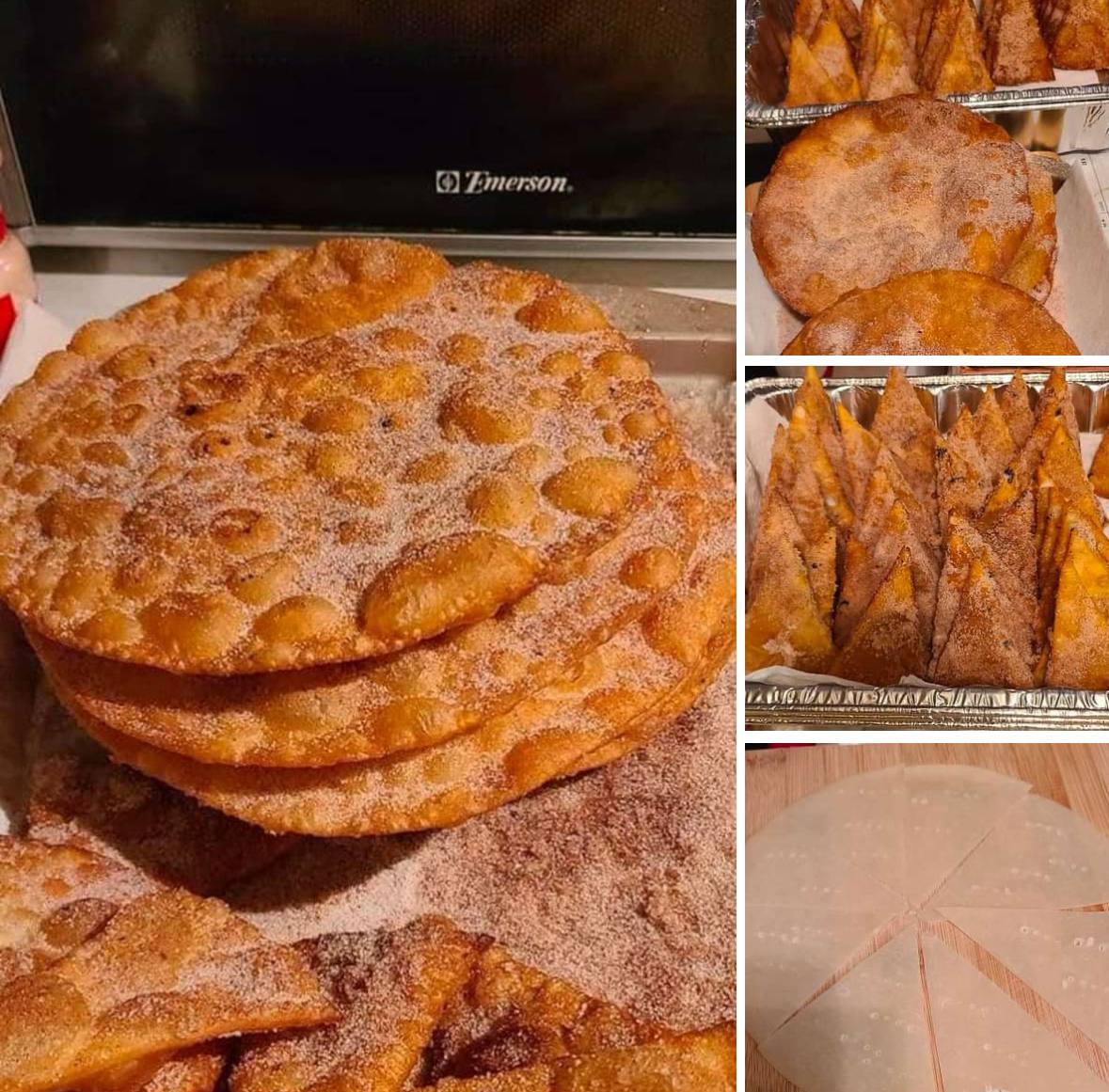
Why People Will Love Traditional Buñuelos Recipe
– The buñuelos become exceptionally thin and crispy.
– Their blistered surface gives every bite a delicate crunch.
– Piloncillo provides a deeper caramel-like sweetness than white sugar alone.
– Cinnamon gives the syrup warm aromatic flavor.
– Fresh guava contributes fruity sweetness and fragrance.
– Anise seed adds a subtle licorice-like note.
– Orange peel brightens the rich syrup with citrus aroma.
– Vanilla gently perfumes the fried dough.
– Butter adds richness without making the dough heavy.
– The dough contains only a small amount of sugar, allowing the topping to control the final sweetness.
– They can be eaten with just sugar or with syrup.
– The syrup can be made ahead of time.
– The uncoated fried buñuelos can stay crisp for later serving.
– They are beautiful enough for holiday dessert tables.
– Their large, thin shape makes them visually impressive.
– Each buñuelo can be broken into crisp pieces and shared.
– They pair exceptionally well with hot chocolate or coffee.
– The flavor can be adjusted by making the syrup lighter or thicker.
– Drying the rolled dough before frying can make it even crisper.
– They offer a wonderful combination of crisp pastry and warm spiced syrup.
Key Ingredients
All-Purpose Flour:
Flour provides the structure of the buñuelo dough. Because the dough is rolled extremely thin, it needs enough elasticity to stretch without tearing.
Egg:
The egg helps bind the dough and adds enough richness and structure to keep the thin pastry intact during rolling and frying.
Butter:
A small amount of melted butter tenderizes the dough and gives the finished buñuelos a richer flavor.
Warm Water:
Water hydrates the flour and allows the dough to become soft, smooth, and easy to stretch. It should be added gradually because different flours absorb moisture differently.
Piloncillo:
Piloncillo is the foundation of the syrup, bringing an earthy, molasses-like sweetness and deeper caramel notes than refined sugar.
Cinnamon:
Cinnamon gives the syrup its warm, comforting aroma and pairs naturally with piloncillo.
Guava:
Fresh guava contributes fruitiness and subtle acidity, preventing the syrup from tasting one-dimensionally sweet.
Anise Seed:
Anise gives the syrup a distinctive aromatic quality. Only a small amount is needed because its flavor is strong.
Orange Peel:
Orange peel adds fragrant citrus oils that brighten the dark sweetness of piloncillo.
Expert Tips
– Add the warm water gradually rather than pouring it in all at once.
– The dough should feel soft and pliable but not sticky.
– Knead only until smooth; excessive kneading can make the dough harder to roll.
– Rest the dough for the full 30 minutes so the gluten can relax.
– Keep unused dough balls covered so their surfaces do not dry out.
– Roll each piece as thin as possible without tearing it.
– A nearly translucent dough produces the crispiest buñuelos.
– Stretching over an inverted bowl can help create an even thinner center.
– Letting the rolled rounds air-dry briefly before frying can improve crispness.
– Keep the rounds separated so they do not stick together.
– Heat the frying oil to roughly 350–375°F / 175–190°C.
– Fry one buñuelo at a time if your pan is not large enough.
– The pastry cooks extremely quickly, so stay beside the pan.
– Use tongs to gently press or turn the dough if needed for even browning.
– Drain on paper towels or, even better, a wire rack.
– Sprinkle sugar while the buñuelos are still slightly warm if you want it to adhere.
– Add syrup only at serving time if you want to preserve maximum crispness.
– Simmer the piloncillo syrup longer for a thicker, more concentrated consistency.

Traditional Buñuelos
Ingredients:
Piloncillo Syrup for buñuelos:
3 ½ cups of water
1 large piloncillo stick (about 12 oz.)
1 stick of cinnamon
6 guayabas chopped or cut in quarters(guavas)
⅓ teaspoon anise seed
¼ of an orange peel
Mexican Buñuelos:
2 cups of all-purpose flour
1 teaspoon of baking powder
1 tablespoon of sugar
½ teaspoon of salt
1 egg
1 tablespoon of butter melted and already cool
About ¾ cup of warm water *
1 teaspoon of vanilla essence **
About 2 cups of vegetable oil to fry the Buñuelos
Sugar to sprinkle
Instructions:
Piloncillo Syrup for buñuelos
Place the 1 cup of water and the piloncillo in a medium-size saucepan. Heat over medium-high heat until the piloncillo dissolves and it looks like liquid caramel.
Carefully add the rest of the water, cinnamon stick, guavas, aniseed and orange peel and bring to a boil. Cook for about 6 minutes, stir and boil for 4 more minutes. Set aside to use as a topping for the buñuelos.
If you want a thicker consistency, simmer for a longer period of time until desired thickness. The syrup keeps well refrigerated for up to 1 week.
Serve warm or at room temperature.
Mexican Buñuelos
In a large bowl mix flour, baking powder, 1 Tablespoon of sugar and ½ teaspoon of salt.
Form a well in the center and add the egg, melted butter and vanilla. Mix until mixture resembles a coarse meal. Slowly add the water a tablespoon at a time, mixing and kneading until you have a soft and smooth dough. This will take less than 5 minutes. Cover the dough with a kitchen towel and let it rest for 30 minutes.
While the dough is resting prepare your working area with a rolling pin, a large dish with paper towel or open paper bags, extra flour for rolling the circles, a large frying pan with the vegetable oil ready for the moment you start frying the Buñuelos.
Divide the dough in 12 small balls and cover. Heat ¾ inch of oil the large frying pan.
Place one of the dough balls in your already floured working surface and stretch with your rolling pin. Roll out each ball to forma a circle as thin as possible without breaking the dough.
To give that extra stretching to the Buñuelo, place on the inverted bowl or clay pot covered with the pastry towel and pull the edges very gentle. The Buñuelo should be thin almost transparent. Before cooking, some people like to place all the already former buñuelos over a clean tablecloth, in a large table, making sure they don’t touch each other. This step will dry the dough, the buñuelos will be even crispier, and absorb less oil while cooking.
Fry the buñuelos in very hot oil until they are golden and crispy. This step will take a few seconds.
Place the buñuelos on a plate covered with paper towels to drain the excess oil. Serve warm or at room temperature and sprinkle with sugar. If you do not sprinkle the sugar right away they can still be nice and crispy for another day and just add the sugar at serving time. If you prefer to serve them warm, place them in your oven in a low setting for 5 minutes. Now, we need some hot chocolate to go along with the buñuelos.
Important Notes When Making Traditional Buñuelos
– The dough should be very thin before frying; thick dough produces a heavier, breadier buñuelo.
– The amount of water may vary slightly depending on humidity and flour.
– Hot sugar syrup can cause serious burns, so handle it carefully.
– Add the remaining water to dissolved piloncillo cautiously because the mixture is extremely hot.
– Do not allow the piloncillo syrup to boil dry.
– The guavas will soften and release flavor as the syrup cooks.
– Oil that is too cool will make the buñuelos absorb excess fat.
– Oil that is too hot can burn the pastry before it crisps evenly.
– Do not overcrowd the frying pan.
– Keep water away from hot frying oil.
– Buñuelos are naturally fragile after frying.
– Stack them only after they have cooled completely.
– Do not pour syrup over the whole batch in advance because the pastries will soften.
– Unsugared shells remain crisper during storage.
– Keep the syrup refrigerated and reheat gently when needed.
– This dessert is at its best when the crispy buñuelo and syrup are combined immediately before eating.
How to Enjoy Traditional Buñuelos After Cooking
Serve the buñuelos warm or at room temperature once the excess frying oil has drained away.
For the simplest presentation, sprinkle them generously with granulated sugar while they are still slightly warm.
For the full traditional-style experience, place one buñuelo on a plate and spoon warm piloncillo-guava syrup lightly across the surface.
Avoid soaking the entire pastry unless you specifically prefer a softer texture. A light drizzle preserves the contrast between crisp dough and syrup.
You can also serve the syrup in a small pitcher so everyone can add as much as they like.
A sprinkle of cinnamon sugar is excellent if you want additional warmth.
Serve with Mexican hot chocolate, café de olla, espresso, or strong coffee.
For a holiday dessert platter, break some buñuelos into large shards and arrange them around a bowl of warm syrup for dipping.
If reheating plain buñuelos, place them in a low oven for about 5 minutes to restore crispness before adding sugar or syrup.
Nutrition Information
Approximate nutrition per 1 buñuelo, assuming the recipe makes about 12 pieces and including a light sugar coating but not including the piloncillo syrup:
Calories: 190 kcal | Total Fat: 9 g | Saturated Fat: 2 g | Monounsaturated Fat: 3.5 g | Polyunsaturated Fat: 3 g | Cholesterol: 18–22 mg | Sodium: 100–130 mg | Total Carbohydrates: 24 g | Dietary Fiber: 0.8 g | Sugars: 4–5 g | Protein: 3 g
With approximately 1 tablespoon of piloncillo syrup, add roughly:
Calories: 45–60 kcal | Total Carbohydrates: 12–15 g | Sugars: 11–14 g
Additional estimate per plain buñuelo:
Potassium: 40–70 mg | Calcium: 10–20 mg | Iron: 1–1.5 mg | Magnesium: 7–12 mg
Note: The largest nutrition variable is frying-oil absorption. A thicker buñuelo or cooler frying oil can significantly increase the fat and calorie content. Syrup calories also depend on how much is served.
Frequently Asked Questions:
What do traditional Mexican buñuelos taste like?
They are crisp and lightly sweet with subtle vanilla and butter flavor. When served with piloncillo syrup, they become richly caramel-like with cinnamon, guava, anise, and orange notes.
Are buñuelos supposed to be soft or crispy?
This style should be very thin and crispy, with a fragile, blistered texture that breaks easily when bitten.
Do I have to serve them with piloncillo syrup?
No. They are also excellent with plain sugar or cinnamon sugar. The syrup simply creates a richer and more traditional-style presentation.
What drinks go best with buñuelos?
Mexican hot chocolate, café de olla, coffee, espresso, or warm spiced tea all pair particularly well.
How long do buñuelos stay crisp?
Unfilled and unsyruped buñuelos can remain crisp for a day or more when completely cooled and stored in a dry airtight container.
Why do I need to rest the dough for 30 minutes?
Resting allows the gluten to relax, making the dough much easier to roll and stretch extremely thin without shrinking back.
Why are my buñuelos greasy instead of crisp?
The frying oil was probably too cool, or the dough was too thick. Maintain roughly 350–375°F / 175–190°C and roll the dough very thin.
Why does drying the rolled dough help?
A short drying period removes some surface moisture, allowing the dough to crisp faster and potentially absorb less frying oil.
How do I know when a buñuelo is ready to remove from the oil?
It should be lightly to medium golden, crisp, and covered with small bubbles or blisters. Because the dough is very thin, this may happen within seconds.
Can I prepare the syrup and buñuelos ahead of time?
Yes. Make the syrup ahead and refrigerate it separately. Fry and completely cool the buñuelos, then store them dry and airtight. Reheat the syrup and combine the two only when serving.