Pork Roast In Red Chili With Rice And Beans
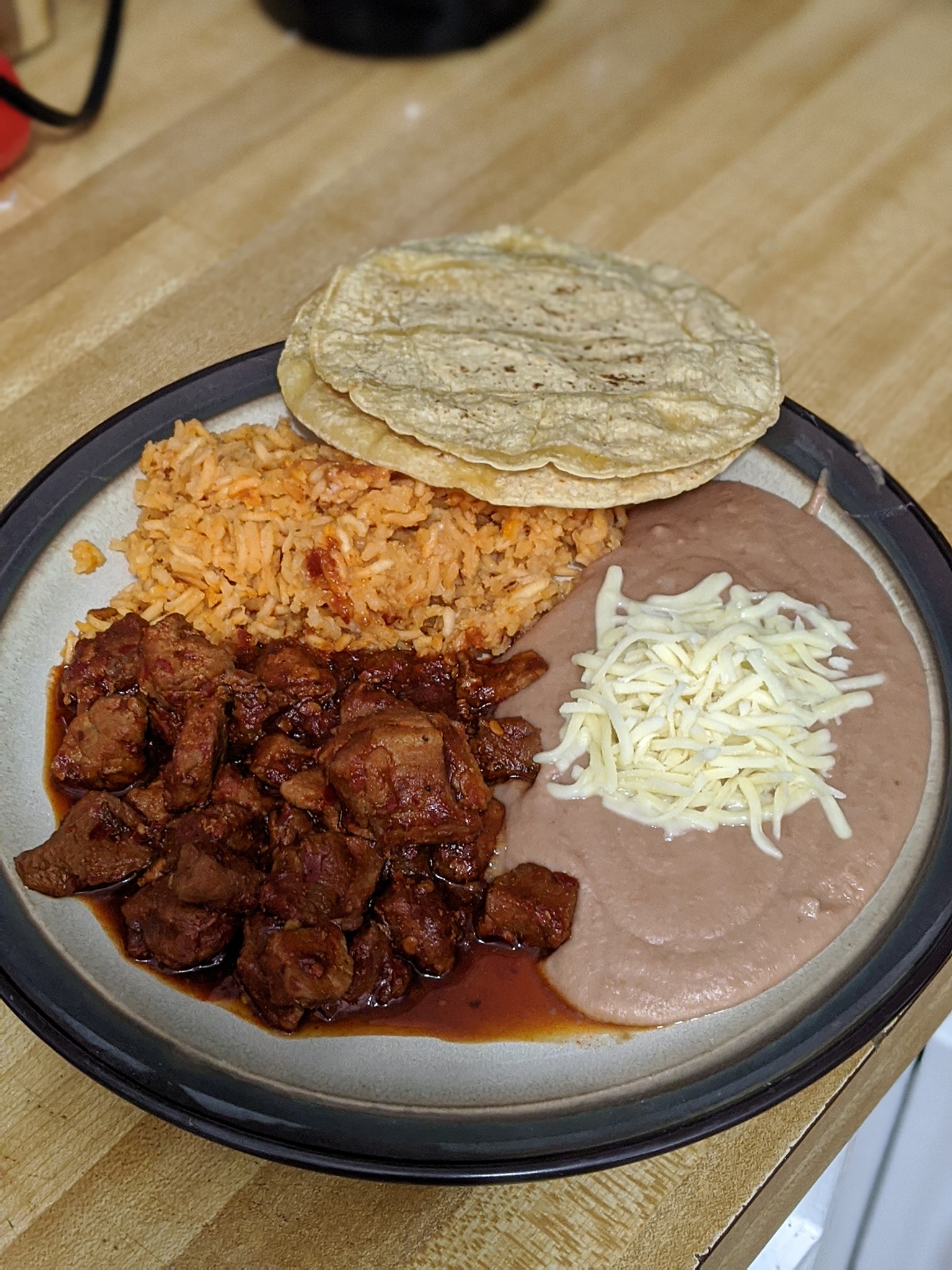
Pork Roast in Red Chile with Rice and Beans is a deeply comforting Mexican-style plate built around tender pork simmered in a bold guajillo–chile de árbol sauce, tomato-seasoned rice, and silky blended beans finished with Chihuahua cheese. Each part of the meal brings a different texture and flavor, but together they create a rich, satisfying combination.
The red chile sauce is the heart of the dish. Guajillo chiles provide deep red color, earthy sweetness, and mild fruity notes, while chile de árbol contributes sharper heat. As the seasoned pork slowly simmers in the sauce, it absorbs those chile and garlic flavors while the sauce becomes richer from the meat juices.
The tomato rice and creamy beans balance the spicy pork beautifully. Rice absorbs the red chile sauce, while the beans provide a mild, velvety contrast. Finished with melted Chihuahua cheese, the plate is hearty, rustic, and especially suited to a family-style dinner.
Why People Will Love Pork Roast In Red Chili With Rice And Beans Recipe
– The pork becomes tender and deeply flavored as it simmers in red chile sauce.
– Guajillo chiles provide rich color without overwhelming heat.
– Chile de árbol allows the spice level to be customized easily.
– The combination of pork stew meat and rib pieces gives the dish multiple textures.
– Pork ribs contribute additional richness to the sauce.
– Garlic enhances both the chile sauce and the meat.
– Adobo seasoning provides a savory, seasoned foundation.
– The chile sauce becomes richer as it cooks with the pork juices.
– Tomato-flavored rice absorbs the sauce beautifully.
– Frying the rice before adding water gives it a better texture and nuttier flavor.
– Tomato bouillon gives the rice a savory, deeply seasoned taste.
– Blended beans become especially smooth and creamy.
– Keeping the canned bean liquid adds flavor and helps create a silky consistency.
– Chihuahua cheese melts beautifully over the warm beans.
– Rice and beans balance the heat of the chile sauce.
– The meal is filling enough to serve as a complete dinner.
– The chile sauce can be made mild, medium, or hot.
– Leftover pork tastes excellent the next day.
– The components work well together but can also be used separately.
– Warm tortillas can turn the entire plate into an even more substantial meal.
Key Ingredients
Pork Stew Meat:
Cubed pork provides substantial pieces of tender meat that readily absorb the red chile sauce during simmering.
Pork Spare Ribs:
Small pieces of pork rib add extra richness and flavor. Bones and connective tissue contribute body to the sauce as they cook.
Guajillo Chiles:
Guajillos are the foundation of the red chile sauce. They provide an earthy, mildly sweet, slightly fruity chile flavor and a beautiful brick-red color.
Chile de Árbol:
These small chiles are much hotter than guajillos. A few add noticeable heat without requiring a large quantity.
Garlic:
Garlic deepens the chile sauce and reinforces the savory flavor of the pork.
Adobo Seasoning:
Adobo provides a blend of savory spices that complements pork particularly well.
Long-Grain White Rice:
Frying the rice before simmering helps the grains stay more separate and develops additional flavor.
Tomato Sauce and Tomato Bouillon:
These ingredients give the rice its reddish color and savory tomato flavor.
Beans:
Blending the beans with their cooking liquid creates a smooth, creamy side that contrasts beautifully with the spicy pork.
Chihuahua Cheese:
This mild, creamy Mexican cheese melts easily and gives the beans an indulgent finish.
Expert Tips
– Remove the guajillo stems before softening the chiles.
– Shake out most of the seeds if you prefer a smoother and milder sauce.
– Use chile de árbol carefully; even a few can significantly increase the heat.
– Soften dried chiles in hot water for about 15–20 minutes before blending for the smoothest sauce.
– Blend the chiles thoroughly with garlic and enough soaking liquid to create a pourable but concentrated sauce.
– For an especially smooth red chile sauce, strain it after blending.
– Brown the pork before adding the sauce to develop deeper flavor.
– Do not overcrowd the pan when browning pork.
– Leave some rendered pork fat in the pan because it adds richness to the sauce.
– Add the chile sauce only after the pork has developed some color.
– Simmer the pork gently rather than boiling aggressively.
– Pork ribs and stew meat become better as connective tissue softens during slow cooking.
– If the sauce becomes too thick, add a little broth or water.
– If it is too thin, simmer uncovered toward the end.
– Fry the dry rice until some grains become lightly golden before adding liquid.
– Stir the rice gently after adding water, then avoid repeatedly stirring while it cooks.
– Let finished rice rest covered for about 10 minutes before fluffing.
– When blending hot beans, allow steam to escape safely from the blender lid.
– Add Chihuahua cheese while the beans are hot so it melts naturally.
– Taste all three components before serving because bouillon, adobo, garlic salt, beans, and cheese can contribute substantial sodium.
Pork Roast In Red Chili With Rice And Beans
Ingredients:
Pork stew meat cubed
Costilla de puerco en trocitos (pork spare ribs) cut up into smaller pieces
Adobo
Garlic salt
Salt
Chile arbol
Chile guajillo
Garlic minced
1 large can of beans
2 cups rice
4 cups water
Consomate (knorr tomato bouillon)
1/2 can tomato sauce
Instructions:
Start by filling a blender with Chile guajillo (stems removed) and a few Chile arbol (this gives the spice so to your preference).
Add salt and some garlic cloves and water (not too much because you don’t want your sauce to come out to liquidy.
Let that sit to soften the peppers while you prepare the meat.
After prepping meat blend all ingredients together.
Fry pork on stove top with seasonings mentioned above.
After meat is almost all the way cooked I pour in the sauce I made and bring to a boil then lower heat to simmer and put top on it.
Cook until meat is completely cooked.
Rice
Rice is 2 cups of rice fried on stove top add 1/2 can tomato sauce and minced garlic while frying.
Add 4 cups of water and 2 heaping tablespoons of consomate (knorr tomato bouillon) and more according to your liking.
Bring to a boil and put top of and simmer until done.
Beans
Beans are add entire can (juice and all) to a pan with heated oil add salt and cook on low/medium until bubbling.
Once bubbling pour into blender and blender those beans and wala beautiful smooth beans!
Top with Chihuahua cheese.
Important Notes When Making Pork Roast In Red Chili With Rice And Beans
– Guajillo chiles are generally mild to moderately spicy, while chile de árbol is considerably hotter.
– The quantity of chile de árbol should be based on your preferred heat level.
– Dried chiles can occasionally taste bitter if burned during toasting or cooking.
– Do not use excessive blending water or the chile sauce may become watery.
– Pork stew meat and pork ribs benefit from longer cooking than is required merely for food safety.
– Whole pork cuts have a safe minimum temperature of 145°F / 63°C with a rest, but stew meat and ribs are usually cooked substantially longer until tender.
– Pork ribs should easily pull away from the bone when properly braised.
– Garlic salt, adobo, bouillon, canned beans, and Chihuahua cheese can all be salty.
– Add plain salt cautiously until the dish is nearly finished.
– Rice should simmer gently after coming to a boil.
– Opening the rice pot repeatedly releases steam and can affect texture.
– If the blended beans become too thick, loosen them with a little water or broth.
– If they become too thin, simmer gently until thickened.
– Be cautious when blending hot beans because steam pressure can build inside a sealed blender.
– Store pork, rice, and beans separately when possible for easier reheating.
How to Enjoy Pork Roast In Red Chili With Rice And Beans After Cooking
Serve the pork and red chile sauce while very hot, making sure each portion gets plenty of sauce.
Spoon the pork onto one side of the plate, allowing some chile sauce to spread underneath.
Add a generous serving of tomato rice beside the pork. The rice is excellent for absorbing extra red chile sauce.
Spoon the creamy blended beans onto the other side and top them with Chihuahua cheese while still hot.
Let the cheese soften or melt slightly before eating.
Warm flour or corn tortillas are excellent alongside the meal and can be used to scoop up pork, rice, and beans.
For freshness, add diced onion, cilantro, sliced radishes, or avocado.
A squeeze of lime can brighten the rich pork and chile flavors.
For additional heat, serve extra chile de árbol salsa separately instead of making the entire pot hotter.
When reheating leftovers, warm the pork slowly with a splash of broth or water, reheat the rice covered, and loosen the beans with a small amount of water if needed.
Nutrition Information
Because the original recipe does not specify exact amounts of pork, oil, beans, or cheese, this estimate assumes approximately 2 pounds total pork, one 28-ounce can of beans, 2 cups dry rice, a moderate amount of cooking oil, and Chihuahua cheese, divided into about 6 servings.
Calories: 780 kcal | Total Fat: 29 g | Saturated Fat: 10 g | Monounsaturated Fat: 12 g | Polyunsaturated Fat: 4 g | Cholesterol: 95–115 mg | Sodium: 1,500–2,100 mg depending on the adobo, garlic salt, bouillon, canned beans, and cheese | Total Carbohydrates: 83 g | Dietary Fiber: 10 g | Sugars: 6 g | Protein: 44–48 g
Additional estimate:
Potassium: 1,000–1,250 mg | Calcium: 180–260 mg | Iron: 5–7 mg | Magnesium: 85–115 mg | Vitamin A: 1,500–2,300 IU | Vitamin C: 10–20 mg | Vitamin B12: 1.5–2.5 mcg | Zinc: 5–7 mg
Note: Nutrition can vary considerably depending on the amount and fattiness of the pork ribs, quantity of oil used for frying, bean-can size, rice portion, and amount of Chihuahua cheese served.
Frequently Asked Questions:
What does Pork in Red Chile taste like?
It is savory, earthy, garlicky, and mildly sweet from the guajillo chiles, with adjustable heat from chile de árbol.
Is this dish very spicy?
It does not have to be. Guajillos are relatively mild; most of the intense heat comes from the chile de árbol.
Why use both pork stew meat and pork spare ribs?
Stew meat provides large tender pieces, while rib meat and bones contribute additional richness and body to the sauce.
Why are rice and beans such good sides for this pork?
Their mild flavors balance the chile heat, and both are excellent for absorbing the flavorful red sauce.
What else can I serve with this meal?
Warm tortillas, avocado, lime wedges, fresh cilantro, sliced onion, queso fresco, or a simple cabbage salad all work well.
Should I soak the dried chiles before blending them?
Yes. Softening guajillo and chile de árbol in hot water for about 15–20 minutes makes them easier to blend into a smooth sauce.
Why is my red chile sauce bitter?
The dried chiles may have been scorched, or too many seeds and membranes may have been blended into the sauce. Avoid burning dried chiles and remove most seeds if you want a smoother flavor.
How do I know when the pork is ready?
The pork should be fully cooked and tender enough to cut easily with a fork. Rib meat should begin pulling easily from the bone.
Why do I fry the rice before adding water?
Lightly frying the dry rice coats and toasts the grains, developing a subtle nutty flavor and helping them stay more distinct after cooking.
How can I make the blended beans smoother?
Blend them while warm with enough of their cooking liquid to keep the blades moving. If necessary, add a tablespoon or two of warm water until the beans reach a silky consistency.