Pasta And Peas In Red Sauce
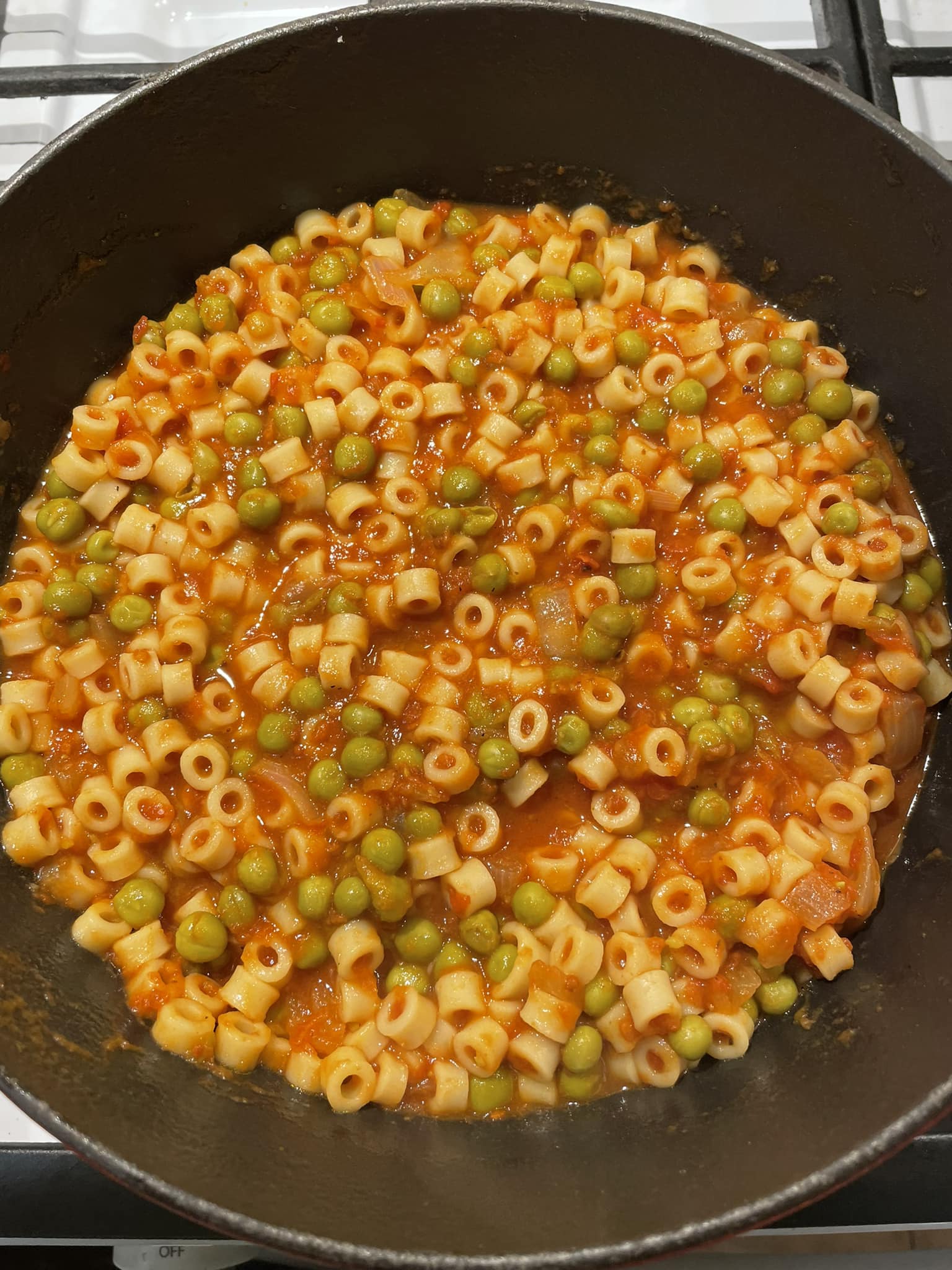
Pasta and Peas in Red Sauce is a humble, comforting Italian-style dish made with small pasta, sweet peas, rich tomato paste, olive oil, onion, red pepper flakes, and Pecorino Romano cheese.
This recipe is simple, but it has deep character. The tomato paste cooks slowly in olive oil until it becomes rich and concentrated, while the peas add sweetness and the cheese brings a salty, savory finish.
It is the kind of meal that feels old-fashioned, warm, and satisfying — a pantry-friendly dish that turns basic ingredients into something deeply comforting.
Why People Will Love Pasta And Peas In Red Sauce Recipe
It is simple, cozy, and made with everyday ingredients.
Ditalini or tubetti pasta gives the dish a classic small-pasta texture.
Tomato paste creates a rich, deep red sauce without needing many ingredients.
Olive oil gives the sauce body and smoothness.
Onion adds sweetness and a savory foundation.
Red pepper flakes bring gentle heat and warmth.
Frozen peas add color, sweetness, and freshness.
Pecorino Romano gives the pasta a salty, sharp, cheesy finish.
The pasta cooks directly in the sauce, absorbing flavor as it softens.
It is filling enough for a main dish.
It feels rustic, budget-friendly, and deeply homemade.
It can be made thicker like a pasta dish or looser like a brothy pasta bowl.
Key Ingredients
Ditalini or Tubetti:
Small pasta works best because it cooks evenly in the sauce and blends beautifully with the peas.
Extra Virgin Olive Oil:
Olive oil gives the sauce richness and helps carry the flavor of the onion, tomato paste, and red pepper flakes.
Onion:
The onion adds sweetness and depth. Cooking it until soft gives the sauce a gentle, savory base.
Crushed Red Pepper Flakes:
Red pepper flakes bring subtle heat and make the dish more lively without overpowering it.
Tomato Paste:
Tomato paste is the heart of the sauce. When cooked for several minutes, it becomes darker, richer, and more flavorful.
Frozen Peas:
Peas add sweetness, color, and a soft pop of freshness in every bite.
Pecorino Romano:
Pecorino Romano adds salty, sharp, nutty flavor and helps bring the sauce together at the end.
Expert Tips
Cook the onions until soft before adding the tomato paste.
Let the tomato paste cook for about 5 minutes to deepen its flavor.
Stir frequently after adding the pasta to prevent sticking.
Add extra water little by little if the pasta absorbs too much liquid.
Keep the pasta at a moderate simmer, not a hard boil.
Cook until the pasta is al dente and the sauce is thick but still loose enough to coat.
Add the cheese after removing the pot from the heat so it melts smoothly.
Taste before adding extra salt because Pecorino Romano is naturally salty.
Use freshly grated Pecorino Romano for the best texture and flavor.
Finish with a drizzle of olive oil for a richer, silkier bowl.
Add more red pepper flakes for extra heat.
Serve immediately because the pasta will continue absorbing sauce as it sits.
Pasta And Peas In Red Sauce
Ingredients:
1 pound ditalini or tubetti
1/2 cup extra virgin olive oil
1 large onion diced
1/2 teaspoon crushed red pepper flakes
1 6-ounce can tomato paste
4 cups water plus more to thin
1 teaspoon kosher salt plus more to taste
12 ounces frozen peas
3/4 cup Pecorino Romano grated
Instructions:
Heat a large pot or pan to medium heat and add the olive oil and onions. Cook the onions until soft (about 5-7 minutes), then add the red pepper flakes and cook for another 30 seconds.
Next, add the tomato paste and cook for 5 minutes, stirring frequently. Add the water and salt and bring to a boil.
Once boiling, add the pasta and peas and turn the heat down to medium. Cook the pasta at a moderate simmer until al dente. Make sure to stir frequently to avoid sticking and add more water if the pot begins to dry out.
When satisfied with the consistency and the pasta has reached al dente, remove the pot from the heat and mix in the cheese. Taste test and season with salt and pepper. If the pasta is at all dry, add extra water to loosen it up.
Serve in bowls with a drizzle of extra virgin olive oil and a generous amount of grated Pecorino Romano.
Enjoy!
Important Notes When Making Pasta And Peas In Red Sauce
This recipe thickens as it rests.
Add more water if the pasta becomes too dry.
The tomato paste should be cooked before adding water to avoid a raw tomato flavor.
Stirring often is important because small pasta can stick to the bottom.
Frozen peas can go directly into the pot; they do not need to be thawed first.
The final texture can be saucy, creamy, or slightly brothy depending on how much water you add.
Pecorino Romano is salty, so season carefully.
Leftovers may need extra water or broth when reheated.
This dish is best served hot, right after the cheese is mixed in.
Extra grated cheese on top makes the final bowl more flavorful.
How to Enjoy Pasta And Peas In Red Sauce After Cooking
After the pasta is cooked al dente and the Pecorino Romano has been mixed in, let the dish rest for 1 to 2 minutes. This helps the sauce settle and become creamy around the pasta.
Spoon the pasta into warm bowls while it is still hot. Make sure each bowl has plenty of peas, red sauce, and glossy olive oil flavor.
Finish with a drizzle of extra virgin olive oil and a generous sprinkle of grated Pecorino Romano. For extra warmth, add more crushed red pepper flakes or freshly cracked black pepper.
This dish is delicious on its own, but it also pairs well with garlic bread, a simple green salad, roasted vegetables, grilled chicken, Italian sausage, or crusty bread.
For leftovers, reheat gently with a splash of water or broth. Stir until the sauce loosens and becomes creamy again.
Nutrition Information
Approximate nutrition per serving, based on 6 servings:
Calories: 560 kcal | Total Fat: 22 g | Saturated Fat: 5 g | Monounsaturated Fat: 14 g | Polyunsaturated Fat: 2 g | Cholesterol: 12 mg | Sodium: 620–1,050 mg depending on added salt, Pecorino Romano, pasta brand, and final serving size | Total Carbohydrates: 73 g | Dietary Fiber: 7 g | Sugars: 8 g | Protein: 18 g
Additional estimate:
Calcium: 180–320 mg | Potassium: 520–850 mg | Iron: 4–6 mg | Vitamin A: 900–1,800 IU | Vitamin C: 18–35 mg
Frequently Asked Questions
Can I use a different type of pasta?
Yes, you can substitute ditalini or tubetti with other small pasta shapes like penne, rigatoni, or even spaghetti broken into shorter pieces.
Can I use fresh peas instead of frozen peas?
Yes, you can use fresh peas if they are in season.
Simply blanch them briefly before adding to the pasta during the cooking process.
What can I substitute for Pecorino Romano cheese?
You can substitute Pecorino Romano with Parmesan cheese if you prefer or if that’s what you have on hand.
The flavor will be slightly different but still delicious.
How do I prevent the pasta from sticking together?
Stir the pasta frequently while cooking to prevent it from sticking together.
Adding enough water during cooking and stirring occasionally will help maintain a good consistency.
Can I make this dish ahead of time?
Yes, you can prepare the pasta and peas in red sauce ahead of time and reheat gently before serving.
Add a little extra water or broth when reheating to loosen the sauce.
Is this dish suitable for vegetarians?
Yes, this dish is vegetarian as it does not contain any meat or meat-based broth.
It’s a hearty and satisfying vegetarian pasta dish.
How can I make this dish more spicy?
Increase the amount of crushed red pepper flakes or add a dash of hot sauce to the sauce mixture for added spice according to your taste preference.
Can I freeze leftovers of this dish?
Yes, you can freeze leftovers of pasta and peas in red sauce.
Store in an airtight container and thaw in the refrigerator before reheating.
What’s the best way to reheat this dish?
Reheat gently in a saucepan over low heat, adding a splash of water or broth to loosen the sauce as needed. Stir occasionally to ensure even heating.
What should I serve with this pasta dish?
This pasta and peas in red sauce is delicious on its own but pairs well with a side salad, garlic bread, or a simple vegetable side like roasted asparagus.