Italian Sausage, Peppers & Tomatoes
Italian Sausage, Peppers & Tomatoes is a rustic, deeply savory dish built around browned Italian sausage, sweet bell peppers, ripe plum tomatoes, garlic, basil, olive oil, and freshly grated cheese. The vegetables are cooked separately at first so each ingredient develops its own flavor before everything is combined into one rich, juicy pan.
The peppers become tender with lightly charred edges, while the tomatoes cook down just enough to create a fresh, chunky sauce. The sausage contributes not only meat and seasoning but also flavorful rendered juices that enrich the tomato base.
Finished with Parmesan or Pecorino Romano and fresh basil, the dish is hearty enough to serve on its own but versatile enough to pair with pasta, crusty bread, polenta, potatoes, or Italian rolls.
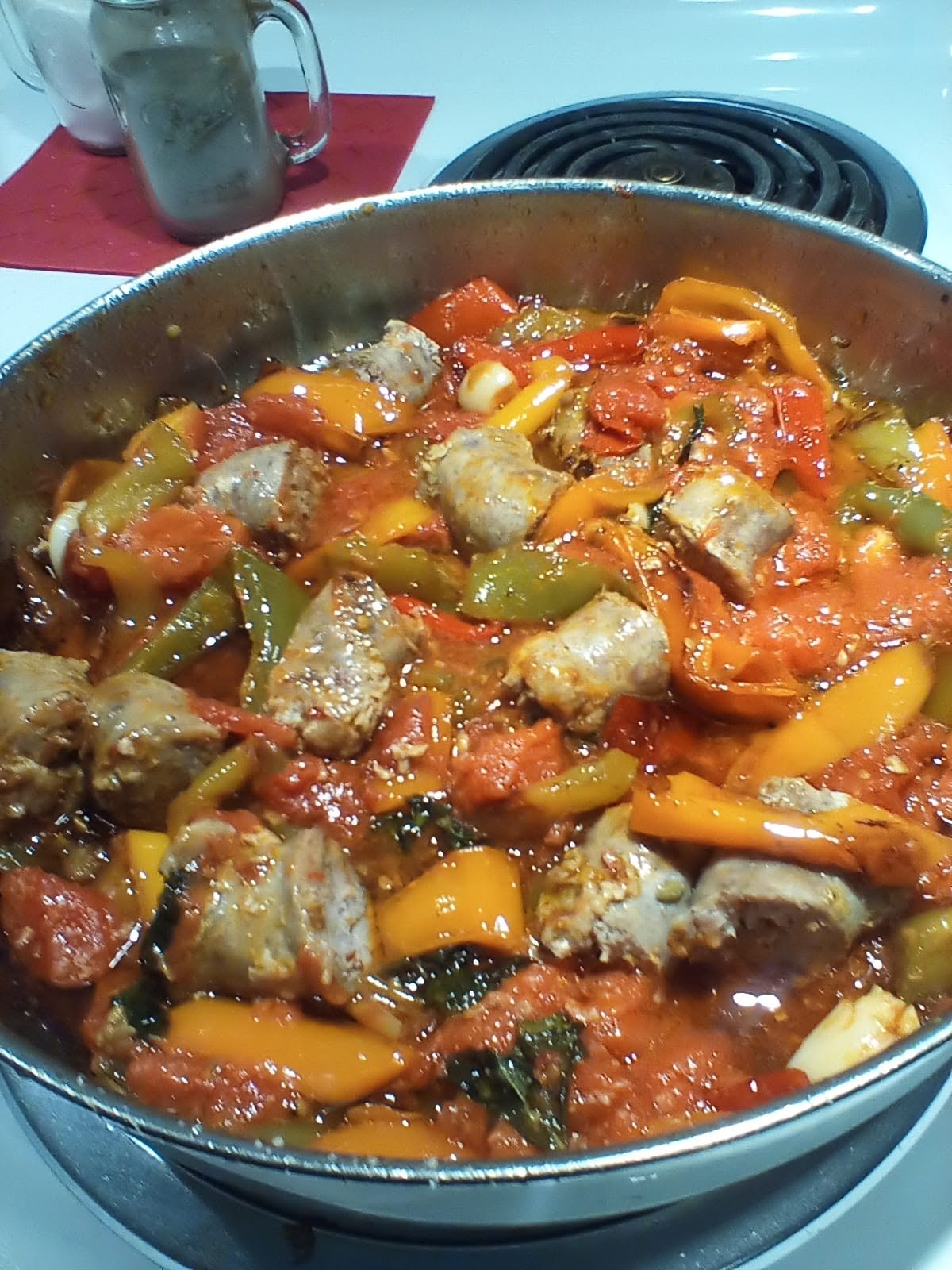
Why People Will Love Italian Sausage, Peppers & Tomatoes Recipe
Italian sausage gives the dish bold savory flavor with very little extra seasoning.
Browning the sausage creates deeper caramelized flavor.
Red, yellow, and green bell peppers provide sweetness, color, and texture.
Lightly charred pepper edges add subtle smokiness.
Plum tomatoes create a rustic, fresh-tasting sauce.
Garlic brings aromatic depth to both the peppers and tomatoes.
Fresh basil adds brightness and balances the richness of the sausage.
Olive oil gives the vegetables a silky texture and classic Mediterranean flavor.
A small amount of sugar can soften overly acidic tomatoes.
Parmesan adds nutty richness.
Pecorino Romano gives a sharper, saltier finish.
Mild or hot Italian sausage can be used depending on personal preference.
Red pepper flakes can easily increase the heat.
The dish tastes excellent immediately but improves after resting.
Leftovers often taste even richer the following day.
It works as a main course, pasta sauce, sandwich filling, or topping for polenta.
Crusty bread turns the flavorful tomato and sausage juices into part of the meal.
The recipe is simple enough for everyday cooking but flavorful enough for entertaining.
Key Ingredients
Italian Sausage:
The sausage provides most of the dish’s savory character. Mild Italian sausage keeps the flavor balanced and family-friendly, while hot Italian sausage adds a stronger chile presence.
Bell Peppers:
Using several colors creates different levels of sweetness and a more attractive finished dish. Green peppers are slightly more bitter and vegetal, while red and yellow peppers are naturally sweeter.
Plum Tomatoes:
Plum tomatoes have dense flesh and good tomato concentration, making them ideal for a rustic sauce that does not become excessively watery.
Fresh Garlic:
Garlic is used generously and ties together the sausage, tomatoes, peppers, and olive oil. Cooking it only briefly prevents bitterness.
Extra-Virgin Olive Oil:
Olive oil helps the vegetables brown, carries the garlic and basil flavors, and gives the sauce a richer mouthfeel.
Fresh Basil:
Basil brings sweet herbal freshness that is especially important in balancing fatty sausage and cooked tomatoes.
Parmesan or Pecorino Romano:
Parmesan gives a mellow nutty finish, while Pecorino Romano is saltier and more assertive. Using a mixture of both creates a particularly flavorful topping.
Expert Tips
Use a wide skillet so the peppers can brown instead of steaming.
Avoid stirring the peppers constantly; let them sit briefly against the hot pan.
Cut peppers into similarly sized strips so they cook evenly.
Add garlic near the end of sautéing to prevent burning.
Choose ripe plum tomatoes when fresh tomatoes are in season.
If using canned tomatoes, crush whole peeled tomatoes by hand for a rustic texture.
Taste the tomatoes before adding sugar.
Keep the tomato sauce somewhat juicy rather than reducing it too far.
Brown the sausage over medium heat so the outside develops color without burning.
Turn sausage links frequently for even browning.
Let the sausages rest briefly before slicing.
Add only some of the sausage drippings if the pan contains excessive grease.
Simmer everything together gently so the peppers continue to soften without falling apart.
Add most of the fresh basil toward the end.
Grate Parmesan or Pecorino freshly rather than using pre-shredded cheese.
Let the finished dish rest for 10–15 minutes so the flavors settle.
Reheat leftovers slowly over medium-low heat to preserve texture.
Italian Sausage, Peppers & Tomatoes
Ingredients
For the Peppers
2 tablespoons extra-virgin olive oil
1 large green bell pepper, cut into thick strips
1 large red bell pepper, cut into thick strips
1 large yellow or orange bell pepper, cut into thick strips
3 garlic cloves, thinly sliced or minced
2 tablespoons fresh basil, roughly torn
Salt and freshly ground black pepper, to taste
For the Tomatoes
2 tablespoons extra-virgin olive oil
3 garlic cloves, sliced or minced
6–8 ripe plum tomatoes, roughly chopped
or 1 large can whole peeled plum tomatoes, lightly crushed
2 tablespoons fresh basil, torn
½ teaspoon kosher salt, or to taste
¼ teaspoon freshly ground black pepper
½–1 teaspoon granulated sugar, only if needed to balance the acidity
For the Sausage
1½ pounds Italian sausage, mild or hot
1 tablespoon olive oil, if needed
¼ teaspoon crushed red pepper flakes, optional
To Finish
½ cup freshly grated Parmesan, Pecorino Romano, or a mixture of both
Additional fresh basil
Freshly ground black pepper
Extra-virgin olive oil, optional
Instructions
Cook the Peppers
Heat 2 tablespoons olive oil in a large skillet over medium-high heat.
Add the bell peppers in a relatively even layer.
Cook for about 6–8 minutes, stirring only occasionally so some of the peppers have time to develop lightly browned and charred edges.
Add the garlic during the final 1–2 minutes of cooking.
Season lightly with salt and black pepper.
Add the fresh basil, toss briefly, and transfer the peppers to a bowl.
Set aside.
Prepare the Tomato Sauce
Add another 2 tablespoons olive oil to a large skillet or sauté pan over medium heat.
Add the garlic and cook for about 30–60 seconds, just until fragrant.
Do not let the garlic become deeply browned.
Add the chopped or crushed plum tomatoes.
Season with salt, pepper, fresh basil, and a small amount of sugar if the tomatoes are particularly acidic.
Bring to a gentle simmer.
Cook for approximately 15–20 minutes, stirring occasionally, until the tomatoes soften and form a chunky, rustic sauce.
You want the sauce to remain juicy rather than reducing it until extremely thick.
Combine the Tomatoes and Peppers
Add the cooked peppers and any juices accumulated in their bowl to the tomato sauce.
Stir gently.
Reduce the heat to low and let the mixture simmer for another 5–10 minutes so the peppers can absorb some of the tomato and garlic flavor.
Brown the Sausage
While the peppers and tomatoes are simmering, heat a separate skillet over medium heat.
Add the Italian sausages.
If they are particularly lean, add about 1 tablespoon olive oil.
Brown the sausages well on all sides, turning periodically.
Cook until they are almost completely done.
The internal temperature should reach at least 160°F / 71°C for pork sausage.
Transfer them to a cutting board and allow them to rest for a few minutes.
Cut the sausages into large bite-size pieces.
Keep the Sausage Flavor
Do not discard the flavorful drippings from the sausage skillet.
Pour the sausage pieces and a few spoonfuls of the rendered juices directly into the pepper-and-tomato mixture.
If there are excessive amounts of grease, leave some behind rather than adding all of it.
Stir gently so the sausage remains in substantial pieces.
Simmer Everything Together
Cook the combined sausage, peppers, and tomatoes over low heat for another 10–15 minutes.
The sausage juices should blend into the tomato sauce while the peppers continue becoming tender.
Taste and adjust with salt, black pepper, additional basil, or crushed red pepper flakes.
Finish with Cheese
Turn off the heat.
Sprinkle freshly grated Parmesan or Pecorino Romano generously over the pan.
Gently stir a little of the cheese into the sauce while leaving some visible on top.
Finish with fresh basil and freshly ground black pepper.
Allow the dish to rest for 10–15 minutes before serving.
How to Serve
Serve the sausage and peppers in shallow bowls with plenty of the tomato-garlic sauce.
It is excellent with:
Crusty Italian bread for soaking up the sauce
Pasta such as rigatoni, penne, or spaghetti
Creamy polenta
Mashed potatoes
Roasted potatoes
Italian rolls for sausage-and-pepper sandwiches
Extra grated Parmesan or Pecorino
Flavor Profile
This dish should taste rich, garlicky, tomato-forward, slightly sweet, peppery, and deeply savory.
The peppers provide sweetness and light smokiness from their charred edges, while the plum tomatoes create a fresh, rustic sauce.
Italian sausage contributes both seasoning and rendered fat, which is why incorporating some of the sausage pan juices makes such a noticeable difference.
Fresh basil brightens everything, while grated cheese brings salty, nutty richness.
And just like the version you described, this dish becomes even better after it sits for a while. After resting—or after a night in the refrigerator—the sausage, peppers, tomatoes, garlic, and basil taste even more integrated.
Important Notes When Making Italian Sausage, Peppers & Tomatoes
Pork sausage should reach an internal temperature of at least 160°F / 71°C.
Sausage brands vary considerably in fat and salt content.
If the sausage releases a large amount of fat, do not add all of it to the sauce.
Fresh tomatoes can vary in acidity and sweetness.
Sugar is optional and should only balance acidity, not make the dish sweet.
Garlic burns quickly and becomes bitter if overcooked.
Bell peppers continue softening after they are mixed into the tomatoes.
Reduce the final simmer if you prefer firmer peppers.
Parmesan and Pecorino both add sodium, so taste before adding extra salt.
Hot Italian sausage plus red pepper flakes can make the dish quite spicy.
The sauce thickens slightly as it rests.
If it becomes too thick, add a small splash of water.
If it remains too thin, simmer uncovered for several minutes.
Fresh basil is best added late to preserve its aroma.
Refrigerate leftovers promptly after cooling.
How to Enjoy Italian Sausage, Peppers & Tomatoes After Cooking
Let the finished sausage, peppers, and tomatoes rest for about 10–15 minutes before serving. This allows the sauce to thicken slightly and the sausage juices to blend more fully with the tomatoes.
For a simple meal, spoon the mixture into shallow bowls and serve with thick slices of crusty Italian bread. The bread is perfect for soaking up the tomato, olive oil, cheese, and sausage juices.
For a pasta dinner, toss the mixture with rigatoni, penne, ziti, spaghetti, or paccheri. A small amount of reserved pasta water can help the sauce cling more evenly.
Creamy polenta is another excellent choice. Spoon the sausage and pepper mixture over hot polenta and finish with grated Parmesan.
It also works beautifully over mashed potatoes or roasted potatoes.
For sandwiches, spoon the mixture into toasted Italian rolls and add provolone or mozzarella. Broil briefly if you want the cheese melted.
A simple green salad, arugula salad, or sautéed greens provide freshness alongside the rich sausage.
Finish each serving with additional fresh basil, freshly grated cheese, and black pepper.
For the best bite, include a piece of sausage, a strip of pepper, a spoonful of tomato sauce, and a little grated cheese together.
Nutrition Information
Approximate nutrition per serving, based on about 6 servings and excluding bread, pasta, polenta, or potatoes:
Calories: 475 kcal | Total Fat: 36 g | Saturated Fat: 11 g | Monounsaturated Fat: 17 g | Polyunsaturated Fat: 5 g | Cholesterol: 75 mg | Sodium: 950–1,250 mg depending on the sausage and cheese | Total Carbohydrates: 16 g | Dietary Fiber: 4 g | Sugars: 9 g | Protein: 23 g
Additional estimate:
Potassium: 750–950 mg | Calcium: 170–230 mg | Iron: 2.5–3.5 mg | Vitamin A: 2,200–3,500 IU | Vitamin C: 100–150 mg | Vitamin B12: 1–1.5 mcg | Zinc: 3–4 mg
Frequently Asked Questions:
What does Italian Sausage, Peppers & Tomatoes taste like?
It is rich, savory, garlicky, tomato-forward, slightly sweet, and mildly smoky, with fresh basil and aged cheese adding brightness and depth.
What type of Italian sausage works best?
Mild Italian sausage is excellent for a balanced dish, while hot Italian sausage is ideal if you enjoy more heat. A combination of both also works well.
What can I serve with this dish besides pasta?
Crusty bread, polenta, mashed potatoes, roasted potatoes, risotto, or Italian rolls all pair beautifully.
Can I use canned tomatoes instead of fresh tomatoes?
Yes. Whole peeled canned plum tomatoes are an excellent substitute and often provide more consistent flavor when fresh tomatoes are out of season.
Does this dish taste better the next day?
Yes. After resting, the sausage juices, garlic, tomato, basil, and peppers become more integrated, creating an even deeper flavor.
Why should I cook the peppers separately first?
Cooking them separately allows them to char and caramelize rather than simply steaming inside the tomato sauce.
How do I prevent the peppers from becoming mushy?
Cook them until lightly browned but still somewhat firm, then keep the final combined simmer relatively short.
Should I use all of the sausage drippings?
Not necessarily. A few spoonfuls add excellent flavor, but too much can make the sauce greasy.
Why should the sausage rest before slicing?
Resting allows juices inside the sausage to redistribute, helping the pieces remain moist when cut.
Can I make this dish ahead of time?
Yes. It is an excellent make-ahead recipe. Cool it, refrigerate it, and reheat gently. Add a small splash of water if the sauce becomes too thick overnight.