Salsa Verde Asada
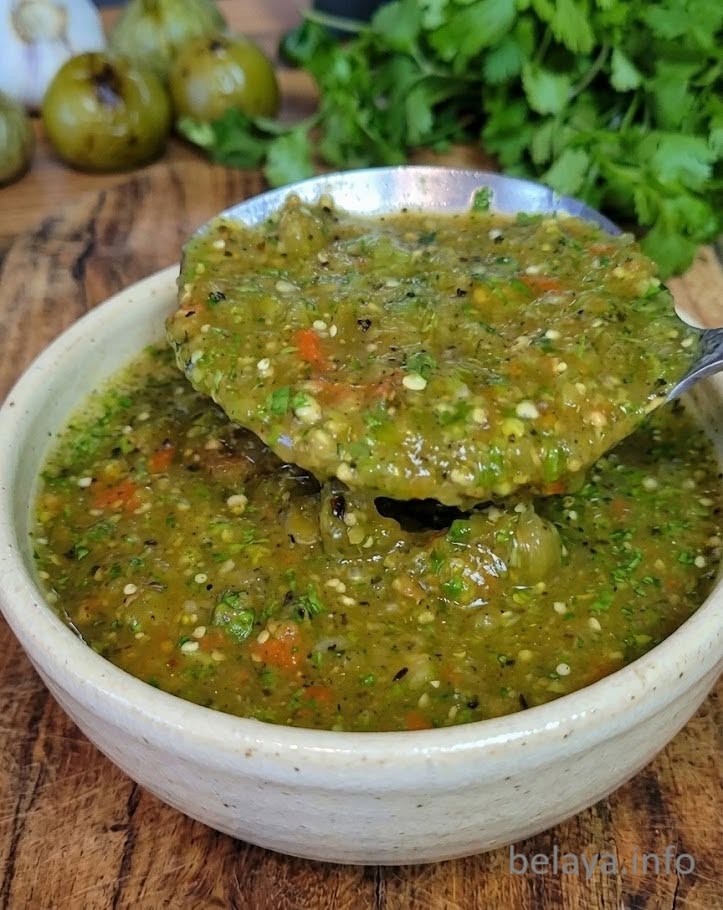
Salsa Verde Asada is a smoky, bright Mexican green salsa made by deeply roasting tomatillos, fresh green chiles, onion, and garlic before blending them with cilantro, lime juice, water, and salt. Unlike a raw salsa verde, this version gets much of its character from high-heat roasting, which softens the vegetables, concentrates their natural sweetness, and creates lightly charred edges.
Tomatillos provide the signature tart and slightly fruity foundation, while jalapeños or serranos bring fresh chile heat. Roasted onion contributes sweetness, garlic becomes mellow and almost creamy, and cilantro and lime restore freshness after the vegetables have been exposed to intense heat.
The finished salsa is tangy, smoky, herbaceous, savory, and moderately spicy. It is versatile enough for tacos, carne asada, grilled chicken, quesadillas, eggs, enchiladas, tostadas, and tortilla chips, making it an excellent everyday salsa to keep in the refrigerator.
Why People Will Love Salsa Verde Asada Recipe
Roasted tomatillos give the salsa a deep, tangy flavor that is more complex than a raw green salsa.
Charred jalapeños or serranos add both heat and smoky chile character.
Roasted onion becomes naturally sweeter and less sharp.
Garlic turns soft, mellow, and slightly sweet during roasting.
Fresh cilantro provides a bright herbal contrast to the roasted vegetables.
Lime juice cuts through the smoky flavors with clean acidity.
The salsa can easily be adjusted from mild to quite spicy.
Broiling gives the vegetables attractive blistering without requiring an outdoor grill.
Only a small amount of oil is needed.
The ingredient list is simple and inexpensive.
It can be made either rustic and chunky or completely smooth.
It pairs beautifully with grilled and roasted meats.
It is excellent as both a dipping salsa and a cooking sauce.
The recipe can be prepared ahead of time.
It contains no dairy and very little fat.
The optional green tomato can add another layer of acidity and fresh tomato flavor.
It tastes good warm, at room temperature, or chilled.
It is an easy way to bring roasted Mexican flavors to everyday meals.
Key Ingredients
Tomatillos:
Tomatillos form the main body of the salsa. Their tart, slightly citrusy flavor is what gives traditional salsa verde its distinctive brightness.
Jalapeños or Serrano Chiles:
Jalapeños provide moderate heat with a grassy green-chile flavor, while serranos are usually hotter and sharper. Either option works depending on how spicy you want the salsa.
White or Yellow Onion:
Roasting transforms the onion from sharp and pungent into sweeter, softer, caramelized pieces that give the salsa depth.
Garlic:
Leaving the garlic in its skins while roasting protects the cloves from direct heat. Once softened, the roasted garlic adds mellow savory sweetness instead of harsh raw garlic flavor.
Fresh Cilantro:
Cilantro is blended in after roasting, preserving its fresh, citrus-like herbal character and preventing the salsa from becoming overly heavy.
Fresh Lime Juice:
Lime brightens the roasted vegetables and sharpens the overall flavor. It is especially important because roasted ingredients can otherwise taste somewhat muted.
Green Tomato:
The optional green tomato is not necessary for a traditional-style salsa verde, but it can add body, acidity, and another fresh vegetal layer.
Expert Tips
Remove the sticky residue from the tomatillos by rinsing them thoroughly after removing the husks.
Dry the tomatillos before roasting so they blister rather than steam.
Arrange the vegetables in a single layer on the baking sheet.
Keep the garlic in its papery skin during broiling to prevent burning.
Turn the vegetables as they roast so several sides develop charred areas.
Remove individual ingredients when ready instead of forcing everything to roast for exactly the same time.
Tomatillos may release juices during roasting; include those flavorful juices in the blender.
Do not completely burn the vegetables because excessive blackening can make the salsa bitter.
For a milder salsa, use jalapeños and remove most of the pale inner membranes.
For a hotter salsa, choose serranos and leave more of the membranes intact.
Start with less water than you think you need and add more gradually.
Pulse the blender for a rustic salsa rather than running it continuously.
Add cilantro only during blending rather than roasting it.
Taste the salsa after it rests for 10–15 minutes before making final seasoning adjustments.
Add more lime if the salsa tastes flat rather than immediately adding more salt.
Chill the salsa for a few hours if you want the roasted flavors to become more integrated.
Salsa Verde Asada
Ingredients
For the Roasted Salsa Verde
2 whole jalapeño peppers, or 3 serrano chiles
5 large garlic cloves
1 medium white or yellow onion
5 whole tomatillos, husks removed
½ green tomato, optional
½ cup fresh cilantro, roughly chopped
¾ cup water
Juice of ½ lime
1 teaspoon salt, or adjust to taste
A small amount of olive oil or vegetable oil, for roasting
Instructions
Prepare the Broiler
Preheat the oven broiler to high.
Position the oven rack close to the broiler element, leaving enough space so the vegetables can char without touching the heat source.
Line a sturdy baking sheet with aluminum foil for easier cleanup.
Prepare the Chiles and Vegetables
Remove the stems from the jalapeños or serrano chiles.
For a milder salsa, remove some or all of the pale inner membranes and seeds before roasting.
Trim the top and root ends from the onion, then cut it into two large pieces.
Separate the garlic bulb into individual cloves, leaving the papery skins intact so the garlic can soften without burning.
Remove the husks from the tomatillos and rinse them well to remove their natural sticky coating.
If using the optional green tomato, leave it in a large piece for roasting.
Arrange for Roasting
Place the chiles, onion, garlic cloves, tomatillos, and optional green tomato on the prepared baking sheet.
Lightly drizzle the vegetables with a small amount of olive oil or vegetable oil.
Turn them gently so they receive a thin, even coating.
Broil Until Charred
Place the tray under the preheated broiler.
Broil for approximately 8–10 minutes, watching closely because the vegetables can char quickly.
Turn the ingredients as needed so they become softened and develop dark blistered spots on several sides.
Remove individual ingredients early if they finish charring before the others.
Cool and Peel
Remove the tray from the oven and allow the roasted vegetables to cool for about 5 minutes.
Peel the papery skins from the roasted garlic.
Remove most of the loose charred skin from the chiles, if desired.
Do not worry about removing every dark spot; a little char adds smoky flavor to the salsa.
Blend the Salsa
Place the roasted tomatillos, chiles, onion, garlic, optional green tomato, cilantro, water, lime juice, and salt into a blender.
Blend until the salsa reaches your preferred consistency.
For a rustic texture, pulse several times and leave it slightly chunky.
For a smoother salsa, blend a little longer.
Adjust the Flavor
Taste the salsa and add more salt or lime juice if needed.
If the salsa is too thick, blend in a small amount of additional water, one tablespoon at a time.
Rest and Serve
Transfer the salsa to a serving bowl and let it rest for about 10–15 minutes so the roasted flavors can blend.
Serve with tacos, grilled meats, quesadillas, eggs, tortilla chips, or your favorite Mexican dishes.
Important Notes When Making Salsa Verde Asada
Jalapeño and serrano heat levels can vary significantly from pepper to pepper.
The pale inner membranes contain much of the chile’s capsaicin.
Removing seeds alone does not necessarily make the salsa dramatically milder.
Wear food-safe gloves if you are sensitive to chile oils.
Avoid touching your eyes or face after preparing hot peppers.
The broiler works very quickly, so the vegetables should be watched closely.
Some black blistering is desirable; completely burned vegetables are not.
Garlic usually finishes faster than large pieces of onion or tomatillos.
The salsa becomes thinner when warm and may thicken slightly after refrigeration.
Add water conservatively because it is much easier to thin salsa than to thicken it again.
The optional green tomato changes the flavor slightly and is not essential.
Salt levels should be adjusted according to how the salsa will be served; salty tortilla chips may require a less salty salsa.
Fresh cilantro is best added after the roasted vegetables have cooled slightly.
Store the finished salsa covered in the refrigerator.
This fresh salsa should not be treated as a shelf-stable canned product unless a tested canning recipe is followed.
How to Enjoy Salsa Verde Asada After Cooking
Allow the freshly blended salsa to rest for about 10–15 minutes before serving. This gives the roasted tomatillo, chile, onion, and garlic flavors time to settle into each other.
For tacos, spoon the salsa generously over carne asada, carnitas, grilled chicken, barbacoa, pork, or shrimp. Its acidity works especially well with rich or fatty meats.
Serve it as a simple dipping salsa with warm tortilla chips. A slightly chunky texture is particularly enjoyable for dipping because small pieces of roasted vegetables remain noticeable.
For breakfast, spoon Salsa Verde Asada over huevos rancheros, scrambled eggs, fried eggs, breakfast tacos, or chilaquiles.
Use it with quesadillas, tostadas, burritos, or tortas when you want extra moisture and chile flavor without adding a heavy sauce.
It also makes an excellent accompaniment to grilled steak, chicken thighs, pork chops, or grilled vegetables.
For a quick Mexican-inspired bowl, combine rice, black or pinto beans, avocado, grilled meat, cilantro, and several spoonfuls of salsa.
You can also use the salsa as a base for enchiladas verdes. Thin it with a little chicken broth if necessary and simmer briefly before coating the tortillas.
For the brightest flavor, serve it at room temperature or allow refrigerated salsa to sit out briefly before eating.
Nutrition Information
Approximate nutrition per 2-tablespoon serving, assuming a yield of about 2 cups and using only a small amount of oil:
Calories: 18 kcal | Total Fat: 0.5 g | Saturated Fat: 0.1 g | Monounsaturated Fat: 0.3 g | Polyunsaturated Fat: 0.1 g | Cholesterol: 0 mg | Sodium: 130–160 mg depending on added salt | Total Carbohydrates: 3.3 g | Dietary Fiber: 0.8 g | Sugars: 1.7 g | Protein: 0.5 g
Additional estimate:
Potassium: 95–125 mg | Calcium: 10–15 mg | Iron: 0.3–0.5 mg | Vitamin A: 150–250 IU | Vitamin C: 8–12 mg | Folate: 10–15 mcg
Frequently Asked Questions:
What does Salsa Verde Asada taste like?
It is tangy, smoky, savory, herbaceous, and moderately spicy. Roasting gives the tomatillos and chiles a deeper flavor than a raw salsa verde.
Is Salsa Verde Asada very spicy?
It depends on the chiles. Jalapeños create a milder salsa, while serranos usually provide noticeably stronger heat.
What is the best food to serve with this salsa?
It is excellent with tacos, carne asada, grilled chicken, carnitas, eggs, quesadillas, tostadas, enchiladas, and tortilla chips.
Is roasted salsa verde different from regular salsa verde?
Yes. Raw or boiled salsa verde tastes brighter and fresher, while roasted salsa verde develops deeper, sweeter, smokier flavors from the charred vegetables.
Can I use this salsa as an enchilada sauce?
Yes. Add a little chicken or vegetable broth to thin it, then simmer briefly before using it to coat filled tortillas.
Why should I roast the tomatillos instead of boiling them?
Roasting concentrates their flavor and adds caramelized, smoky notes. Boiling produces a cleaner and brighter salsa but without the same charred character.
Why did my roasted salsa turn bitter?
The vegetables were probably burned too aggressively. Dark blistered spots are desirable, but completely blackened garlic, onion, or chile flesh can introduce bitterness.
How can I make the salsa less spicy after blending it?
Blend in additional roasted tomatillos, roasted onion, or avocado. These ingredients dilute the concentration of chile heat without making the salsa watery.
How can I make my Salsa Verde Asada thicker?
Use less water at the beginning or add another roasted tomatillo. If it is already blended, let it sit for a few minutes because it may naturally thicken slightly.
Can I prepare the salsa ahead of time?
Yes. It can be prepared several hours or a day ahead and refrigerated in a covered container. The roasted flavors often become more cohesive after resting overnight.