Seafood & Chicken Gumbo
Seafood & Chicken Gumbo is a rich, deeply layered Louisiana-inspired stew that brings together shrimp, tender chicken thighs, smoky sausage, okra, tomatoes, aromatic vegetables, Cajun seasoning, and a dark roux. The result is hearty, savory, smoky, slightly spicy, and full of contrasting textures.
The soul of this recipe is the roux. Cooking flour and oil until deeply browned creates a toasted, nutty foundation that gives the gumbo its distinctive depth and color. From there, onion, bell pepper, celery, okra, garlic, spices, tomatoes, broth, chicken, and sausage build a complex base before the shrimp is added right at the end.
Served over hot white rice and finished with parsley and green onions, this gumbo is especially satisfying for cool evenings, family dinners, or any occasion when you want a comforting one-pot meal with bold Southern flavors.
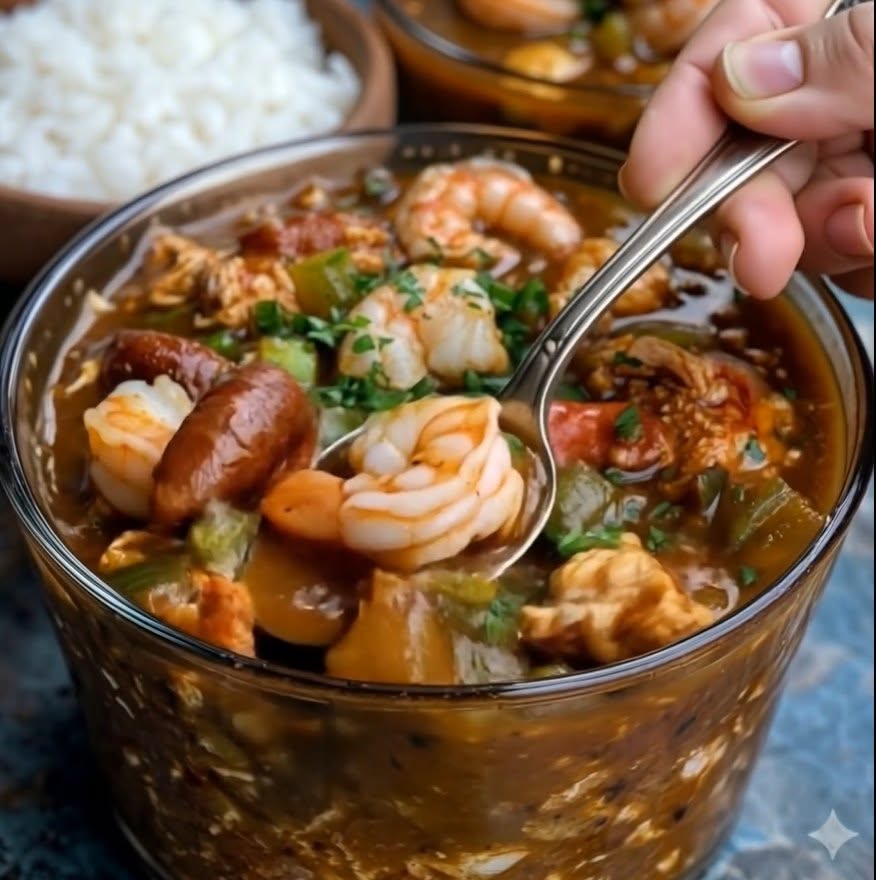
Why People Will Love Seafood & Chicken Gumbo Recipe
The dark roux gives the gumbo deep, toasted flavor.
Chicken thighs remain juicy and tender during simmering.
Shrimp adds sweetness and delicate seafood flavor.
Smoked sausage brings richness and smoky depth.
Okra gives the gumbo traditional body and texture.
Onion, celery, and green bell pepper form a classic aromatic base.
Cajun seasoning creates bold flavor without requiring many separate spices.
Smoked paprika reinforces the sausage’s smoky character.
Tomatoes add acidity, sweetness, and body.
Chicken or seafood stock makes the broth much more flavorful than water.
Fresh parsley brightens the long-cooked gumbo.
Green onions add a fresh, slightly sharp finish.
The recipe is hearty enough to serve as a complete meal.
White rice balances the concentrated gumbo flavors.
The spice level can easily be adjusted.
Gumbo tastes even better after the flavors have had time to rest.
It works well for meal preparation and leftovers.
Key Ingredients
Shrimp:
Shrimp gives the gumbo a sweet seafood flavor and tender texture. It should be added near the end because it cooks quickly.
Chicken Thighs:
Boneless chicken thighs are ideal because they stay juicy during simmering and contribute more flavor than very lean chicken breast.
Smoked Sausage:
Smoked sausage adds salt, spice, fat, and deep smoky flavor. Andouille-style sausage is especially good if available.
Okra:
Okra contributes earthy flavor and natural thickening. It also gives the gumbo a characteristic Southern texture.
The Roux:
The combination of vegetable oil and flour is cooked until dark brown. This develops the signature nutty, toasted flavor that distinguishes gumbo from an ordinary soup.
Onion, Celery, and Bell Pepper:
These vegetables create the aromatic backbone of the dish and are often referred to as the Louisiana “holy trinity.”
Cajun Seasoning:
This seasoning mixture usually brings paprika, garlic, herbs, pepper, and chile, creating a strong savory base.
Diced Tomatoes:
Tomatoes add acidity and body. This makes the recipe more closely aligned with tomato-including Creole-style gumbo variations.
Chicken or Seafood Broth:
Chicken broth creates a meatier base, while seafood stock emphasizes the shrimp and makes the gumbo taste more coastal.
Expert Tips
Use a heavy-bottomed Dutch oven for the roux.
Stir the roux continuously so the flour does not burn.
A dark roux develops flavor quickly near the end, so watch it closely.
If the roux smells burned rather than toasted, start again; burned roux can ruin the whole pot.
Have the vegetables chopped before beginning the roux.
Add the vegetables immediately once the roux reaches the desired color to slow further browning.
Use boneless chicken thighs instead of breasts for more forgiving cooking.
Slice sausage into similar-sized rounds so it distributes evenly.
If the sausage is very fatty, brown it separately and drain some excess grease first.
Add broth gradually to keep the roux smooth.
Use low-sodium stock if your Cajun seasoning and sausage are salty.
Taste before adding extra salt.
Simmer gently rather than boiling aggressively.
Add shrimp only during the final few minutes.
Remove the gumbo from the heat as soon as the shrimp are cooked.
Add parsley and green onion right before serving for maximum freshness.
Seafood & Chicken Gumbo
Ingredients
For the Gumbo
1 pound shrimp, peeled and deveined
1 pound boneless chicken thighs, cut into bite-sized pieces
8 ounces smoked sausage, sliced into rounds
1 cup fresh or frozen okra, sliced
1 green bell pepper, diced
2 celery stalks, diced
1 medium yellow onion, diced
3 garlic cloves, finely minced
1 (14-ounce) can diced tomatoes, with juices
4 cups chicken broth or seafood stock
⅓ cup vegetable oil
⅓ cup all-purpose flour
1 tablespoon Cajun seasoning
1 teaspoon smoked paprika
½ teaspoon dried thyme
1 bay leaf
Salt, to taste
Freshly ground black pepper, to taste
For Finishing
2 green onions, thinly sliced
2 tablespoons fresh parsley, finely chopped
For Serving
Cooked white rice
Instructions
Make the Roux
Heat the vegetable oil in a large, heavy-bottomed pot or Dutch oven over medium heat.
Gradually whisk in the flour until smooth.
Cook the mixture for about 15–20 minutes, stirring constantly, until the roux develops a deep brown color and a rich, toasted aroma.
Watch it carefully, especially toward the end, because a dark roux can burn quickly.
Cook the Vegetables
Add the diced onion, green bell pepper, celery, and sliced okra to the roux.
Stir well and cook for about 5–7 minutes, or until the vegetables begin to soften.
Add the Garlic and Seasonings
Stir in the minced garlic, Cajun seasoning, smoked paprika, and dried thyme.
Cook for about 1 minute, stirring continuously, until the spices become fragrant.
Build the Gumbo Base
Add the diced tomatoes and stir to combine.
Slowly pour in the chicken or seafood broth, stirring continuously so the roux blends smoothly into the liquid without forming lumps.
Add the bay leaf.
Add the Chicken and Sausage
Stir in the bite-sized chicken thighs and sliced smoked sausage.
Bring the gumbo to a gentle simmer.
Reduce the heat to medium-low, cover partially, and cook for about 25–30 minutes, or until the chicken is cooked through and tender.
Add the Shrimp
Add the peeled and deveined shrimp during the final few minutes of cooking.
Simmer for about 3–5 minutes, or just until the shrimp turn pink, opaque, and firm.
Avoid overcooking them, as they can become rubbery.
Season the Gumbo
Taste the gumbo and adjust with salt and freshly ground black pepper as needed.
Remove and discard the bay leaf.
Add the Fresh Herbs
Stir in the chopped parsley and green onions just before serving.
This keeps their flavor fresh and bright.
Serve
Spoon cooked white rice into serving bowls.
Ladle the hot Seafood & Chicken Gumbo generously over the rice.
Finish with additional green onions or parsley if desired, and serve immediately.
Important Notes When Making Seafood & Chicken Gumbo
A dark roux can go from perfect to burned very quickly.
Never leave the roux unattended while it is cooking.
Hot roux can cause severe burns, so stir carefully and avoid splashing.
Okra naturally releases mucilage, which helps thicken the gumbo.
Chicken should reach an internal temperature of at least 165°F / 74°C.
Shrimp should turn opaque and firm when cooked.
Overcooked shrimp become rubbery.
Smoked sausage and Cajun seasoning may already contain substantial sodium.
Tomatoes are included in some Louisiana gumbo traditions and omitted in others.
The gumbo will thicken slightly as it rests.
Rice should ideally be cooked separately so it does not absorb too much broth in storage.
Remove the bay leaf before serving.
If the gumbo becomes too thick, add a splash of broth.
If it is too thin, simmer uncovered for several minutes.
Refrigerate leftovers promptly after cooling.
Reheat gently to avoid overcooking the shrimp.
How to Enjoy Seafood & Chicken Gumbo After Cooking
Let the finished gumbo rest for about 10 minutes after removing it from the heat. This allows the roux-thickened broth to settle and the flavors to become more integrated.
Spoon hot cooked white rice into deep bowls.
Ladle the gumbo around and over the rice, making sure each serving contains chicken, sausage, shrimp, okra, vegetables, and plenty of broth.
Finish with chopped green onions and fresh parsley.
For extra heat, serve hot sauce at the table rather than making the entire pot overly spicy.
Crusty French bread is an excellent accompaniment for soaking up the remaining broth.
Cornbread also works well if you prefer a slightly sweeter side.
A simple green salad or cucumber salad can provide a fresh contrast to the richness of the gumbo.
For the best bite, combine a little rice, shrimp, chicken, sausage, okra, and broth together so you experience the full range of textures.
Nutrition Information
Approximate nutrition per serving, based on about 6 servings, including approximately ¾ cup cooked white rice per serving:
Calories: 585 kcal | Total Fat: 28 g | Saturated Fat: 7 g | Monounsaturated Fat: 10 g | Polyunsaturated Fat: 7 g | Cholesterol: 190 mg | Sodium: 1,050–1,400 mg depending on sausage, Cajun seasoning, broth, and added salt | Total Carbohydrates: 50 g | Dietary Fiber: 4 g | Sugars: 5 g | Protein: 36 g
Additional estimate:
Potassium: 700–900 mg | Calcium: 100–140 mg | Iron: 3–4.5 mg | Magnesium: 60–80 mg | Vitamin A: 1,000–1,500 IU | Vitamin C: 25–40 mg | Vitamin B12: 2–3 mcg | Selenium: 45–60 mcg
Frequently Asked Questions:
1. What does Seafood & Chicken Gumbo taste like?
It is deeply savory, smoky, slightly spicy, and rich, with sweetness from shrimp, earthiness from okra, and a nutty depth from the dark roux.
2. Is gumbo supposed to be very spicy?
Not necessarily. Gumbo should be flavorful first. Heat can be adjusted with Cajun seasoning, cayenne, or hot sauce.
3. What kind of sausage is best for gumbo?
Andouille sausage is a classic choice, but any flavorful smoked sausage can work.
4. What should I serve with gumbo?
White rice is the traditional-style accompaniment, while crusty bread, cornbread, or a simple salad also work well.
5. Does gumbo taste better the next day?
Yes. The roux, spices, sausage, chicken, and vegetables often taste more integrated after resting overnight.
1. How dark should the roux be?
For this gumbo, aim for a deep brown color similar to milk chocolate or slightly darker. The darker the roux, the deeper the flavor, although its thickening power decreases somewhat.
2. Why does my roux burn?
The heat may be too high or the roux may not be stirred frequently enough. Once it begins darkening quickly, reduce the heat and stir continuously.
3. Why should shrimp be added at the end?
Shrimp cooks in just a few minutes. Adding it too early causes it to become tough and rubbery.
4. Can I make gumbo without okra?
Yes. The roux will still provide body, though the flavor and texture will differ. Some versions use filé powder instead, typically added after cooking.
5. Can I prepare the gumbo ahead of time?
Yes. For the best shrimp texture, prepare the gumbo base with chicken and sausage ahead, then add fresh shrimp while reheating shortly before serving.