Smoked and Chopped Green Salsa
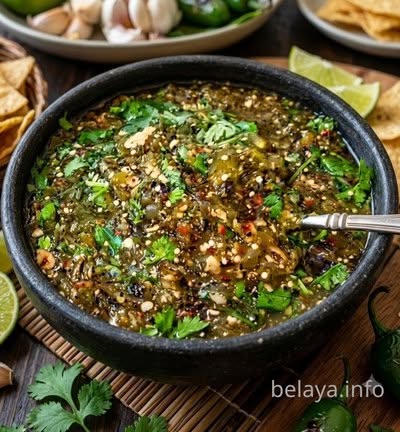
Smoked and Chopped Green Salsa is a bold, rustic salsa built around charred green tomatoes or tomatillos, serrano chiles, green habaneros, roasted onion, garlic, cilantro, and toasted corn tortilla.
Unlike a smooth blended salsa, this version keeps plenty of texture, allowing the roasted vegetables and chile pieces to remain visible and distinct.
What makes this salsa especially memorable is the combination of smoke, acidity, heat, and freshness. Serranos bring a sharp green-chile bite, while habaneros add a deeper, fruitier heat. The roasted tomatoes or tomatillos contribute tanginess and moisture, while the toasted tortilla gives the salsa additional body and a subtle corn flavor.
A small drizzle of avocado oil rounds everything out and gives the salsa a slightly richer mouthfeel. The result is intensely flavorful, spicy, smoky, and versatile enough to serve with tacos, grilled meat, eggs, quesadillas, or simply a basket of tortilla chips.
Why People Will Love Smoked and Chopped Green Salsa Recipe
– Roasting gives the vegetables deep smoky flavor.
– The salsa has a rustic texture rather than being completely smooth.
– Serrano chiles provide bright, fresh heat.
– Green habaneros add a fruity, powerful chile flavor.
– Tomatillos or green tomatoes give the salsa refreshing acidity.
– Roasted onion contributes natural sweetness.
– Garlic becomes mellow and slightly sweet after roasting.
– Fresh cilantro brings cooling herbal freshness.
– Toasted tortilla adds body without using commercial thickeners.
– The tortilla also contributes subtle roasted-corn flavor.
– Avocado oil softens some of the sharper chile notes.
– The salsa has multiple layers of heat rather than tasting simply “hot.”
– Its heat level can be easily adjusted.
– It contains no dairy or heavy ingredients.
– It works equally well as a dip, topping, or table salsa.
– It complements grilled and smoked meats especially well.
– It can transform simple eggs or potatoes into a much more flavorful meal.
– The ingredients are simple and inexpensive.
– It tastes very different from bottled green salsa.
– The flavor becomes even more cohesive after a short resting period.
Key Ingredients
Green Tomatoes or Tomatillos:
These provide the main body of the salsa. Tomatillos bring a naturally tart, slightly citrusy flavor, while green tomatoes tend to produce a somewhat milder and more tomato-like result.
Serrano Chiles:
Serranos give the salsa its sharp, clean green-chile character. Seven serranos create considerable heat, especially when their inner membranes remain intact.
Green Habanero Chiles:
Habaneros contribute more than heat—they have a distinctive fruity, almost floral quality that makes the salsa more complex.
Onion:
Roasting transforms the onion from sharp and raw into sweeter, softer, slightly caramelized pieces that balance the chiles.
Garlic:
Roasted garlic adds savory depth while becoming milder and sweeter than raw garlic.
Corn Tortilla:
The toasted tortilla is an unusual but valuable ingredient. It thickens the salsa naturally and reinforces the corn flavor that pairs so well with tacos and grilled meat.
Fresh Cilantro:
Cilantro provides brightness and freshness after the vegetables have been heavily roasted.
Avocado Oil:
A small drizzle adds richness and helps soften the edges of the intense chile heat without making the salsa oily.
Expert Tips
– Roast the vegetables until they develop dark blistered spots, not merely until they are warm.
– Do not burn the vegetables completely; heavy blackening can introduce bitterness.
– Roast garlic in its skin to protect it from burning.
– Remove the garlic earlier than the larger vegetables if it softens quickly.
– Toast the tortilla until crisp and well browned.
– Let the tortilla cool before crushing it into the salsa.
– Use a molcajete for the most rustic texture.
– If using a food processor, pulse rather than continuously blend.
– Add the tomatoes or tomatillos gradually so you can control texture.
– Keep some visible pieces of chile and onion for a handmade appearance.
– Remove some habanero membranes if you want to reduce the heat.
– Wear gloves when handling large amounts of habanero.
– Avoid touching your eyes or face after cutting hot chiles.
– Add cilantro only after the roasted ingredients have cooled slightly.
– Start with less salt and adjust after the salsa rests.
– Add water only if needed; roasted tomatoes usually release plenty of liquid.
– Add avocado oil at the end instead of using it to fry the vegetables.
– Let the salsa rest for 10–15 minutes before making final seasoning adjustments.
– For more smoke, roast the vegetables over charcoal or wood.
– For more acidity, a small squeeze of lime can be added at serving time.
Smoked and Chopped Green Salsa
Ingredients
– 8 medium green tomatoes or tomatillos, husked and rinsed if using tomatillos
– 1 medium white or yellow onion, cut into thick wedges
– 7 serrano chiles
– 2 green habanero chiles
– 2 garlic cloves, unpeeled
– 1 corn tortilla
– ½–1 teaspoon salt, or to taste
– ½ cup fresh cilantro, roughly chopped, or to taste
– 1–2 teaspoons avocado oil, or your preferred neutral oil
– 2–4 tablespoons water, only if needed
Instructions
Char the Vegetables
Heat a comal, cast-iron skillet, grill, or outdoor smoker over medium-high heat.
Place the green tomatoes or tomatillos, onion, serranos, habaneros, and unpeeled garlic directly on the hot surface.
Roast, turning occasionally, until the vegetables are softened and develop plenty of dark blistered and charred spots.
The tomatoes or tomatillos will usually need about 8–12 minutes, while the chiles and garlic may cook more quickly.
Toast the Tortilla
Place the corn tortilla on the same hot surface.
Toast until dry, crisp, and deeply browned in several spots.
Let it cool, then tear it into small pieces.
Peel the Garlic
Remove the roasted garlic from its skin.
For a milder salsa, remove some of the seeds and inner membranes from the serrano and habanero chiles.
For a very hot salsa, leave them intact.
Make a Rustic Chile Base
Place the roasted garlic, salt, serrano chiles, habaneros, and toasted tortilla pieces in a molcajete or food processor.
Crush or pulse until roughly broken down.
The mixture does not need to become completely smooth.
Add the Tomatoes and Onion
Add the roasted tomatoes or tomatillos and onion.
Mash them in gradually with a molcajete, or pulse briefly in a food processor.
Keep the salsa coarse and chunky rather than completely puréed.
Add the Cilantro
Fold in the chopped fresh cilantro.
Taste and adjust the salt.
If the salsa is thicker than desired, stir in 1–2 tablespoons water at a time until it reaches your preferred consistency.
Finish with Avocado Oil
Drizzle in the avocado oil and stir gently.
This adds a little richness and helps round out the smoky chile flavor.
Rest and Serve
Let the salsa rest for about 10–15 minutes before serving so the flavors can come together.
Serve with:
– Tortilla chips
– Tacos
– Grilled steak
– Carne asada
– Grilled chicken
– Eggs
– Quesadillas
– Burritos
– Roasted vegetables
What the Finished Salsa Should Be Like
The salsa should be rustic, smoky, chunky, and intensely green, with visible pieces of roasted chile, onion, cilantro, and tomato.
The serranos provide a sharp green-chile heat, while the habaneros bring a much stronger fruity heat. The toasted tortilla gives the salsa a little more body and a subtle roasted-corn flavor.
Important: With 7 serranos plus 2 habaneros, this is a very spicy salsa. For medium heat, I would reduce it to about 3–4 serranos and ½–1 habanero.
Important Notes When Making Smoked and Chopped Green Salsa
– This version is very spicy because it contains seven serranos and two habaneros.
– Habaneros can be dramatically hotter than serranos.
– Removing the seeds alone will not eliminate most of the heat; much of the capsaicin is concentrated in the pale inner membranes.
– For medium heat, use approximately 3–4 serranos and ½–1 habanero.
– Tomatillos and green tomatoes are not identical, although both work.
– Tomatillos usually produce a brighter, more tart salsa.
– If using tomatillos, remove the papery husks and wash away the sticky surface coating.
– Do not overprocess the salsa if you want the coarse texture shown in the recipe style.
– The toasted tortilla will continue absorbing liquid as the salsa rests.
– If the salsa becomes too thick, add a spoonful of water.
– If it becomes too thin, let it sit for several minutes before adding more tortilla.
– Salt perception can change after the salsa cools and rests.
– Fresh cilantro is best added near the end.
– This is a fresh salsa, not a shelf-stable canned product.
– Refrigerate leftovers promptly in a covered container.
How to Enjoy Smoked and Chopped Green Salsa After Cooking
Let the salsa rest for at least 10–15 minutes after mixing. This allows the roasted chile, onion, garlic, cilantro, and corn flavors to blend.
Serve it at room temperature or slightly chilled rather than ice-cold if you want the roasted flavors to remain most noticeable.
For the simplest presentation, place it in a molcajete or rustic serving bowl and serve with warm tortilla chips.
Spoon it generously over carne asada, grilled steak, or grilled chicken. The acidity and heat cut through rich meats especially well.
Use it as a taco salsa with beef, pork, chicken, or roasted vegetables.
It is also excellent with scrambled eggs, fried eggs, breakfast potatoes, or breakfast burritos.
For quesadillas, serve the salsa on the side so the tortilla stays crisp while each bite gets as much heat as desired.
A small spoonful can add a dramatic burst of flavor to beans, rice, or roasted potatoes.
For a fresher finish, serve it with avocado slices, queso fresco, or a little crema to balance the heat.
If the salsa becomes thicker after refrigeration, stir in a teaspoon or two of water before serving.
Nutrition Information
Approximate nutrition is based on about 12 servings of roughly ¼ cup each, using tomatillos or similar green tomatoes and approximately 1 teaspoon avocado oil.
Calories: 40 kcal | Total Fat: 1.2 g | Saturated Fat: 0.2 g | Monounsaturated Fat: 0.7 g | Polyunsaturated Fat: 0.2 g | Cholesterol: 0 mg | Sodium: 100–150 mg depending on added salt | Total Carbohydrates: 7 g | Dietary Fiber: 2 g | Sugars: 3 g | Protein: 1 g
Additional estimate:
Potassium: 220–300 mg | Calcium: 15–25 mg | Iron: 0.6–1 mg | Magnesium: 15–25 mg | Vitamin A: 250–450 IU | Vitamin C: 25–40 mg | Folate: 20–35 mcg
Frequently Asked Questions:
How spicy is Smoked and Chopped Green Salsa?
With seven serranos and two habaneros, it is very hot. The flavor is complex and fruity, but the heat will be significant for most people.
Can I make it with tomatillos instead of green tomatoes?
Yes. Tomatillos are an excellent choice and will give the salsa a brighter, tangier flavor.
Why is there a tortilla in the salsa?
The toasted tortilla thickens the salsa slightly while adding roasted corn flavor and a rustic texture.
What foods pair best with this salsa?
Tacos, carne asada, grilled chicken, eggs, quesadillas, beans, potatoes, burritos, and tortilla chips all work particularly well.
Does the salsa taste smoky if I use a skillet instead of a smoker?
Yes, as long as you char the vegetables properly. A charcoal grill or smoker adds more smoke, but a hot cast-iron skillet or comal still creates strong roasted flavor.
How can I make the salsa less spicy without losing its flavor?
Reduce the quantity of chiles rather than eliminating them completely. Try 3–4 serranos and ½–1 habanero, and remove some of the pale inner membranes.
Why did my salsa become bitter?
The vegetables, garlic, or tortilla may have been burned rather than simply charred. Dark blistered spots are desirable, but completely carbonized ingredients can create bitterness.
Why is my salsa too watery?
Roasted tomatoes or tomatillos can release considerable liquid. Let the salsa rest, add a little more crushed toasted tortilla, or drain off a small amount of excess liquid.
Can I use a blender instead of a molcajete?
Yes, but use the pulse function and stop while the salsa is still coarse. Continuous blending will create a smooth salsa and change the intended texture.
How long does this salsa keep?
For best flavor and freshness, refrigerate it in a covered container and use it within about 3–4 days. The cilantro will gradually lose freshness, and the chile flavors may intensify as it sits.