Farfalle with Italian Sausage, Broccoli Rabe, Garlic & Pecorino Romano
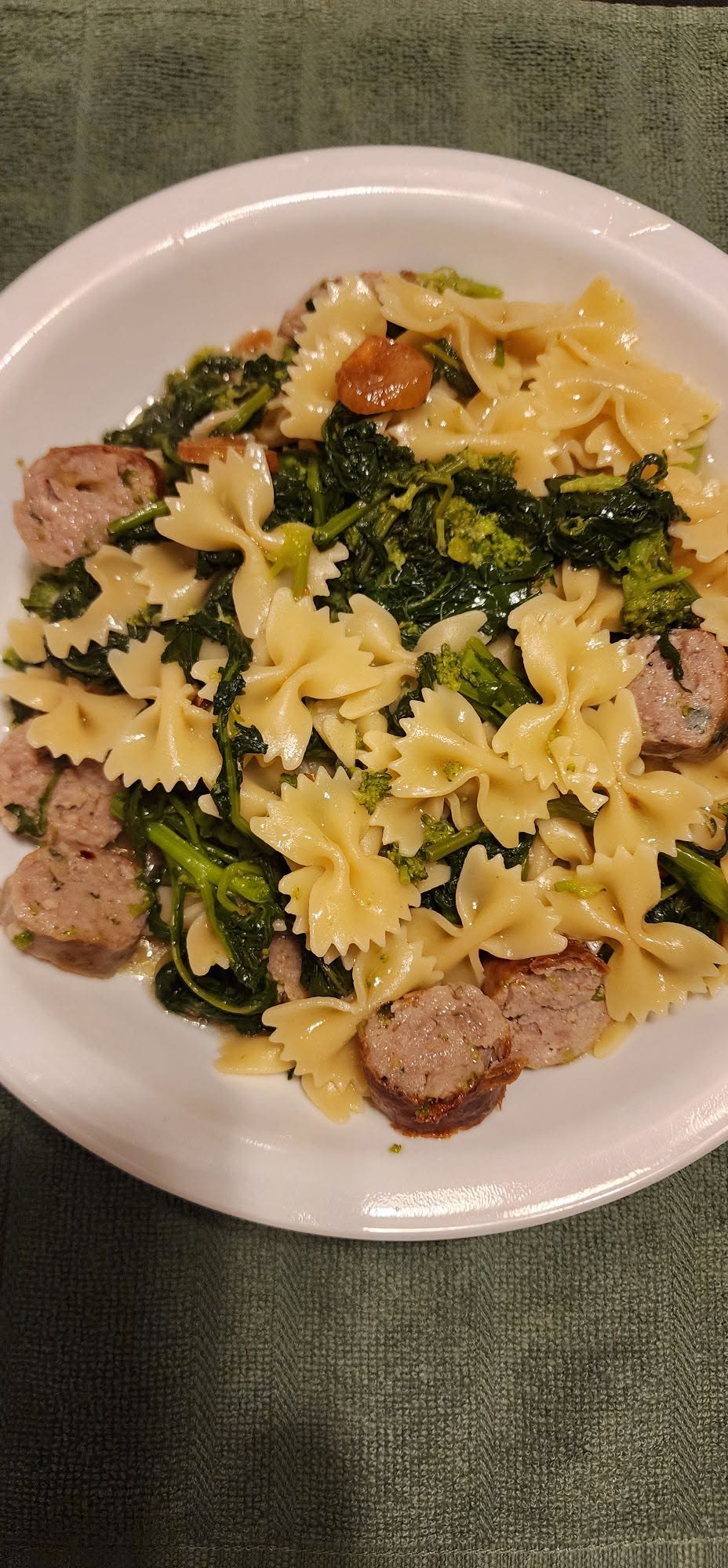
Farfalle with Italian Sausage, Broccoli Rabe, Garlic & Pecorino Romano is a rustic Italian-inspired pasta that brings together bold, uncomplicated flavors in a particularly satisfying way. Tender bow-tie pasta is tossed with browned slices of Italian sausage, slightly bitter broccoli rabe, golden garlic-infused olive oil, crushed red pepper, and sharp Pecorino Romano.
The beauty of this dish comes from contrast. Rich sausage and salty cheese are balanced by the pleasantly bitter greens, while toasted garlic and chile flakes give the pasta warmth and aromatic depth. Instead of relying on a heavy cream or tomato sauce, the dish uses olive oil, starchy pasta water, and Pecorino to create a light, glossy coating.
Cooking the garlic separately is an especially useful technique because it allows the slices to become gently golden without scorching. The flavored oil then becomes part of the sauce, carrying garlic through every bite while preserving the fresh character of the broccoli rabe.
Why People Will Love Farfalle with Italian Sausage, Broccoli Rabe, Garlic & Pecorino Romano Recipe
Italian sausage gives the pasta deep, savory flavor.
Air-frying the sausage produces browned edges without requiring another greasy skillet.
Broccoli rabe provides a pleasantly bitter contrast to the rich meat and cheese.
Garlic-infused olive oil gives every bite aromatic garlic flavor.
Lightly toasted garlic adds both flavor and texture.
Crushed red pepper contributes gentle warmth that complements the sausage.
Pecorino Romano adds a sharp, salty, deeply savory finish.
Farfalle holds the oil, cheese, and small pieces of greens particularly well.
Pasta water creates a silky coating without using cream.
The dish feels rich while remaining lighter than cream-based pasta.
It includes both protein and a generous amount of leafy greens.
The amount of spice can easily be adjusted.
Mild or hot Italian sausage can be used.
The broccoli rabe can be blanched first if you prefer less bitterness.
The recipe is elegant enough for guests but simple enough for a weeknight dinner.
Most of the components can be prepared simultaneously, keeping the overall cooking time reasonable.
Key Ingredients
Farfalle Pasta:
Farfalle, or bow-tie pasta, has folds and ridges that catch pieces of sausage, greens, garlic, and cheese. Its substantial texture also stands up well to hearty broccoli rabe.
Italian Sausage:
Sausage provides much of the dish’s savory character. Mild sausage creates a more balanced pasta, while hot Italian sausage adds another layer of chile heat.
Broccoli Rabe:
Also called rapini, broccoli rabe is known for its distinctive bitterness. That slight bitterness is important because it cuts through the richness of the sausage, olive oil, and Pecorino.
Fresh Garlic:
Thinly sliced garlic is gently cooked in olive oil until golden. This creates both tender toasted garlic pieces and a deeply aromatic infused oil.
Extra-Virgin Olive Oil:
Olive oil acts as the primary fat and essentially forms the base of the sauce. Combined with pasta water, it lightly coats the farfalle without making it heavy.
Pecorino Romano:
Made from sheep’s milk, Pecorino Romano is sharper and saltier than Parmesan. Its assertive flavor is especially well matched with sausage and bitter greens.
Crushed Red Pepper Flakes:
A modest amount adds warmth and livens up the earthy broccoli rabe.
Reserved Pasta Water:
The starch in pasta water helps olive oil and Pecorino combine into a more cohesive, glossy coating that clings to the pasta.
Expert Tips
Choose Italian sausage with good seasoning because its flavor carries through the entire dish.
Do not slice the sausage before air-frying; whole links generally stay juicier.
Allow the cooked sausage to rest briefly before slicing.
Cut the sausage into moderately thick rounds so it does not dry out when reheated with the pasta.
Slice garlic evenly so all pieces brown at approximately the same rate.
Cook garlic over medium-low heat rather than high heat.
Remove the garlic when it reaches pale golden brown; it will continue darkening in the hot oil.
If broccoli rabe tastes too bitter for you, blanch it for 1–2 minutes in salted water before sautéing.
Do not overcook broccoli rabe until completely soft; some texture makes the finished pasta more interesting.
Salt the pasta water generously, but season the finished dish cautiously.
Reserve at least 1 cup of pasta water before draining.
Add pasta water gradually rather than all at once.
Finish the pasta in the skillet so the farfalle absorbs some of the garlic and sausage flavor.
Lower the heat before adding Pecorino Romano.
Add the cheese gradually while tossing to prevent clumping.
Serve immediately because the pasta absorbs moisture and becomes drier as it sits.
Farfalle with Italian Sausage, Broccoli Rabe, Garlic & Pecorino Romano
This recipe is inspired by the dish in your photo: bow-tie pasta tossed with browned Italian sausage, tender broccoli rabe, lightly toasted garlic, olive oil, crushed red pepper, and plenty of Pecorino Romano.
The key technique is cooking the garlic separately in olive oil so it becomes golden and fragrant without burning, then using that infused oil to finish the broccoli rabe and pasta.
Ingredients
For the Pasta
12 ounces (340 g) farfalle pasta
Salt, for the pasta water
½–1 cup reserved pasta cooking water
For the Italian Sausage
1 pound Italian sausage links, mild or hot
1 teaspoon olive oil, optional
For the Broccoli Rabe
1 large bunch broccoli rabe, about 1 pound
3 tablespoons water
¼ cup extra-virgin olive oil
5–6 garlic cloves, thinly sliced
½ teaspoon crushed red pepper flakes, or to taste
½ teaspoon freshly ground black pepper
Salt, to taste
For Finishing
¾ cup finely grated Pecorino Romano cheese
1–2 tablespoons extra-virgin olive oil, if needed
Extra crushed red pepper flakes, optional
Extra Pecorino Romano, for serving
Instructions
Cook the Italian Sausage
Preheat the air fryer to 375°F (190°C).
Arrange the Italian sausage links in the basket in a single layer.
Air-fry for about 12–15 minutes, turning halfway through, until browned and fully cooked. The center should reach at least 160°F / 71°C for pork sausage.
Let the sausages rest for a few minutes, then slice them into thick rounds and set aside.
Prepare the Garlic Oil
Pour the ¼ cup olive oil into a small saucepan and add the thinly sliced garlic.
Place over medium-low heat and cook slowly until the garlic becomes lightly golden and fragrant, about 2–4 minutes.
Remove from the heat immediately once the garlic begins to brown. Set both the garlic and infused oil aside.
Prepare the Broccoli Rabe
Trim any tough ends from the broccoli rabe and cut the remaining stems and leaves into manageable pieces.
Place the broccoli rabe in a large sauté pan with about 3 tablespoons water.
Cover and cook over medium heat for about 3–5 minutes, until it begins to wilt and the stems start becoming tender.
Remove the lid and continue cooking until most of the water evaporates.
Pour in the reserved garlic-infused olive oil along with the toasted garlic.
Add the crushed red pepper flakes and black pepper.
Toss well and continue cooking for another 2–3 minutes.
Cook the Farfalle
Meanwhile, bring a large pot of generously salted water to a boil.
Add the farfalle and cook until al dente, following the package directions.
Before draining, reserve at least 1 cup of pasta water.
Drain the pasta.
Combine the Sausage and Broccoli Rabe
Add the sliced Italian sausage to the broccoli rabe mixture.
Toss over medium-low heat for about 1–2 minutes, allowing the sausage to warm and absorb some of the garlicky olive oil.
Add the Pasta
Transfer the cooked farfalle directly into the sauté pan.
Add about ¼ cup reserved pasta water and toss everything together.
Continue tossing for another 1–2 minutes, adding more pasta water a little at a time if the pasta seems dry.
The pasta water should combine with the olive oil and cheese to create a light, glossy coating rather than a heavy sauce.
Finish with Pecorino Romano
Reduce the heat to low or remove the pan from the burner.
Sprinkle in the Pecorino Romano gradually while tossing continuously.
Add another splash of pasta water if necessary to help the cheese melt smoothly and coat the farfalle.
Taste before adding salt because Pecorino Romano and Italian sausage are already quite salty.
Serve
Divide the pasta among warm bowls.
Finish with extra Pecorino Romano, freshly ground black pepper, and crushed red pepper flakes if desired.
Drizzle with a little extra-virgin olive oil just before serving.
Flavor Notes
This pasta is garlicky, savory, peppery, slightly bitter, salty, and rich without being creamy.
Broccoli rabe provides its characteristic pleasant bitterness, which balances the fatty Italian sausage beautifully. Toasted garlic gives the olive oil a deep aromatic flavor, while crushed red pepper adds warmth.
Pecorino Romano brings a sharp, salty finish, and the starchy pasta water helps turn the olive oil and cheese into a light sauce that clings naturally to the farfalle.
Important Notes When Making Farfalle with Italian Sausage, Broccoli Rabe, Garlic & Pecorino Romano
Pork Italian sausage should reach an internal temperature of at least 160°F / 71°C.
Air-fryer cooking times vary depending on sausage thickness and appliance model.
Broccoli rabe is naturally bitter; this is part of its characteristic flavor.
Blanching reduces bitterness but also slightly softens the vegetable.
Garlic can go from golden to burnt very quickly.
Burnt garlic tastes distinctly bitter and can affect the entire dish.
Pecorino Romano is naturally quite salty.
Italian sausage also contains substantial sodium.
Taste before adding additional salt at the end.
Pasta water should be reserved before draining the farfalle.
The sauce is not intended to be thick or creamy.
The ideal finish is lightly oily, glossy, and moist enough to coat the pasta.
If the pasta becomes dry, add pasta water rather than simply pouring in more oil.
Finely grated Pecorino melts more easily than coarse shreds.
Avoid adding Pecorino over aggressively high heat because it can become clumpy.
Leftovers will usually need a small splash of water when reheated.
How to Enjoy Farfalle with Italian Sausage, Broccoli Rabe, Garlic & Pecorino Romano After Cooking
Serve the farfalle immediately after the Pecorino has been incorporated and the pasta is still glossy.
Use warm shallow pasta bowls so the dish remains hot without trapping too much steam.
Make sure each serving contains a good balance of farfalle, sausage rounds, broccoli rabe, and golden garlic slices.
Finish each bowl with freshly grated Pecorino Romano. The fresh cheese on top gives a noticeably sharper flavor than the cheese already melted into the pasta.
For a little more heat, sprinkle additional crushed red pepper flakes over the finished dish.
A small drizzle of high-quality extra-virgin olive oil can add fresh fruity flavor, but only a little is needed because the pasta already contains garlic-infused oil.
Freshly ground black pepper is another simple finishing touch that works especially well with Pecorino.
Pair the pasta with a crisp green salad dressed with lemon or red wine vinegar. The acidity helps balance the richness of the sausage and cheese.
Crusty Italian bread or garlic bread also works well, particularly for soaking up any garlicky oil remaining at the bottom of the bowl.
For the ideal bite, combine a piece of farfalle, a slice of sausage, some broccoli rabe, and a little toasted garlic. This delivers the full combination of savory, bitter, spicy, salty, and aromatic flavors.
Nutrition Information
Approximate nutrition per serving, based on about 6 servings and assuming the optional finishing olive oil is used sparingly:
Calories: 610 kcal | Total Fat: 33 g | Saturated Fat: 11 g | Monounsaturated Fat: 15 g | Polyunsaturated Fat: 4 g | Cholesterol: 65 mg | Sodium: 850–1,100 mg depending on the sausage, Pecorino Romano, pasta water, and added salt | Total Carbohydrates: 51 g | Dietary Fiber: 5 g | Sugars: 3 g | Protein: 27 g
Additional estimate:
Potassium: 650–850 mg | Calcium: 280–360 mg | Iron: 3–4.5 mg | Vitamin A: 2,500–3,800 IU | Vitamin C: 30–45 mg | Folate: 100–140 mcg
Frequently Asked Questions:
What does this Farfalle with Italian Sausage and Broccoli Rabe taste like?
It is savory, garlicky, slightly spicy, pleasantly bitter, and salty, with rich sausage balanced by earthy greens and sharp Pecorino Romano.
Why does broccoli rabe work so well with Italian sausage?
Its natural bitterness cuts through the richness and fat of the sausage, creating a more balanced dish than using a milder vegetable alone.
Is Pecorino Romano better than Parmesan for this pasta?
Pecorino has a sharper, saltier flavor that pairs especially well with sausage and broccoli rabe. Parmesan can certainly be used if you prefer something milder.
What other pasta shapes can I use?
Orecchiette, rigatoni, penne, fusilli, shells, or even spaghetti can work. Orecchiette is particularly traditional with broccoli rabe.
What should I serve alongside this pasta?
A simple green salad, roasted peppers, grilled vegetables, crusty Italian bread, or a tomato salad makes an excellent accompaniment.
How can I make broccoli rabe less bitter?
Blanch it in salted boiling water for about 1–2 minutes, drain thoroughly, then continue with the sautéing step. This removes some bitterness while preserving its characteristic flavor.
Why cook the garlic separately instead of directly with the broccoli rabe?
Garlic burns more quickly than the greens cook. Preparing it gently in oil gives better control and also creates flavorful garlic-infused olive oil.
Why should I save the pasta water?
Its dissolved starch helps bind the olive oil and Pecorino to the pasta, creating a smooth, glossy coating rather than oily pasta with separate ingredients.
How can I prevent the Pecorino from clumping?
Lower or remove the pan from the heat, add finely grated cheese gradually, and toss continuously with small amounts of warm pasta water.
Can I prepare any part of this dish ahead of time?
Yes. The sausage can be cooked and sliced ahead, and the broccoli rabe can be cleaned and trimmed. For the best texture, cook the pasta and combine everything shortly before serving.