Penne Rigate Con Tonno Pomodorini Olive e Capperi
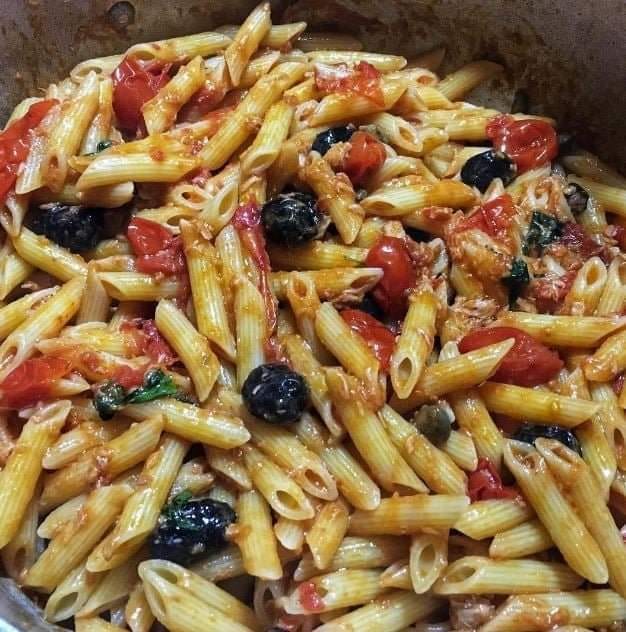
Penne Rigate con Tonno, Pomodorini, Olive e Capperi is a simple Mediterranean-style pasta built around tuna, sweet cherry tomatoes, briny black olives, capers, garlic, and extra-virgin olive oil. It uses only a handful of ingredients, yet each one contributes a strong and recognizable flavor.
The sauce is intentionally light rather than heavy. Fresh tomatoes soften and release their juices into the olive oil, while tuna adds savory richness and protein. Olives and capers bring salty, briny intensity, and a little starchy pasta water helps everything cling naturally to the ridged penne without the need for cream or a thick tomato sauce.
What makes this pasta especially appealing is its balance: sweet tomato, savory tuna, fruity olive oil, salty capers, earthy olives, and gentle garlic. It comes together quickly but still tastes layered and satisfying, making it equally suitable for a weeknight dinner or a relaxed Mediterranean-style lunch.
Why People Will Love Penne Rigate Con Tonno Pomodorini Olive e Capperi Recipe
– It comes together quickly with very little preparation.
– The ingredient list is short and uncomplicated.
– Tuna makes the pasta satisfying without requiring lengthy meat preparation.
– Fresh cherry tomatoes create a naturally light sauce.
– Pachino-style tomatoes provide sweetness and acidity.
– Black olives contribute deep, briny flavor.
– Capers add sharp, salty bursts that brighten the whole dish.
– Garlic perfumes the olive oil without creating a heavy garlic sauce.
– Extra-virgin olive oil gives the pasta a smooth, fruity richness.
– Pasta water naturally binds the sauce to the penne.
– Penne rigate’s ridges capture small pieces of tuna and tomato.
– There is no cream, so the dish feels lighter than many pasta sauces.
– It tastes good both freshly cooked and slightly warm.
– Most ingredients can be kept in the pantry.
– It is easy to increase or decrease the amount of tuna.
– The recipe naturally combines protein, carbohydrates, and vegetables.
– It has strong Mediterranean flavors without complicated seasoning.
– It can be prepared in about the time needed to cook the pasta.
– It works beautifully with a simple salad or vegetables.
– Leftovers can make an excellent next-day lunch.
Key Ingredients
Penne Rigate:
The ridged surface of penne rigate is especially useful in this recipe because it catches the tomato juices, olive oil, capers, and small flakes of tuna. Cooking it al dente keeps the dish from becoming overly soft after it is tossed in the pan.
Pachino or Cherry Tomatoes:
These tomatoes provide freshness, acidity, and natural sweetness. As they sauté, some collapse into the sauce while others remain partially intact for texture.
Tuna in Olive Oil:
Oil-packed tuna generally has a richer texture and fuller flavor than tuna packed in water. Draining it prevents the pasta from becoming excessively oily while still retaining some of its richness.
Black Olives:
Olives contribute salty, earthy, slightly fruity notes that pair naturally with tuna and tomatoes.
Capers:
A small amount of capers creates intense bursts of briny acidity. They are powerful enough that only a few teaspoons are necessary.
Garlic:
Garlic gently flavors the olive oil at the beginning of cooking. Removing the center germ can make its flavor somewhat less sharp.
Extra-Virgin Olive Oil:
Olive oil is the foundation of the sauce, carrying the garlic flavor and blending with tomato juices and pasta water.
Pasta Cooking Water:
This starchy water is one of the most important ingredients in the finished sauce. It helps emulsify the olive oil and tomato juices so they cling to the pasta.
Expert Tips
– Salt the pasta water moderately because tuna, olives, and capers are already salty.
– Cook the penne until al dente, especially because it will finish briefly in the sauce.
– Reserve at least 1 cup of pasta water before draining.
– Cut the garlic in half and remove the inner germ if you prefer a gentler garlic flavor.
– Keep the heat moderate when cooking garlic so it becomes fragrant without browning heavily.
– Burned garlic can make the entire sauce bitter.
– Cut tomatoes in half so they release their juices more quickly.
– Let some tomatoes soften completely while leaving others more intact.
– Drain the tuna well, but do not squeeze it completely dry.
– Add tuna gently so some attractive larger flakes remain.
– Drain oily capers before adding them.
– Taste olives and capers before adding extra salt.
– Add pasta water gradually rather than all at once.
– Toss the pasta vigorously in the skillet so the sauce emulsifies.
– If the pasta looks dry, add another tablespoon or two of pasta water.
– Finish with a small drizzle of good extra-virgin olive oil if desired.
– Fresh parsley can be added at the end for extra freshness, although it is not required.
– Serve immediately after tossing for the best texture.
Penne Rigate Con Tonno Pomodorini Olive e Capperi
Ingredients:
300 g penne rigate
15 Pachino tomatoes
150 g tuna in oil
2 teaspoons capers in oil
40 g pitted black olives
extra virgin olive oil
1 clove garlic
Instructions:
Boil the water for the pasta.
Add salt and throw in the penne.
In the meantime, heat a drizzle of oil in a pan, cut the garlic clove in half, remove the core and heat it with the oil, being careful not to burn it.
Cut the cherry tomatoes in half and add them to the pan.
Also add the drained tuna, the capers and the whole olives.
Sauté with half a ladle of the pasta cooking water and remove the garlic.
When the pasta is ready, drain it and sauté it in the pan with the sauce.
Important Notes When Making Penne Rigate Con Tonno Pomodorini Olive e Capperi
– Tuna, olives, and capers can all contain significant sodium.
– Do not automatically add additional salt to the sauce before tasting.
– Tuna in oil should generally be drained before use.
– The recipe works best with ripe, flavorful cherry tomatoes.
– If the tomatoes are very acidic, allowing them to cook a little longer will mellow their flavor.
– Do not cook garlic over very high heat.
– Garlic that turns dark brown may taste bitter.
– Capers should remain a seasoning rather than dominate the pasta.
– The sauce should be moist and glossy, not watery.
– Pasta water should be added in small amounts.
– Do not rinse the cooked pasta; the surface starch helps the sauce adhere.
– The pasta should finish cooking briefly in the skillet with the sauce.
– If reheating leftovers, add a small splash of water or olive oil.
– This dish is generally best fresh because tuna can become drier after repeated heating.
– Refrigerate leftovers promptly.
How to Enjoy Penne Rigate Con Tonno Pomodorini Olive e Capperi After Cooking
Serve the pasta immediately after tossing it with the sauce, while the penne is still al dente and the tomatoes are warm and juicy.
Spoon some of the tuna, olives, tomatoes, and capers over the top of each serving rather than leaving them at the bottom of the pan.
A small drizzle of good extra-virgin olive oil just before serving can emphasize the Mediterranean character of the dish.
Freshly cracked black pepper is an excellent finishing touch.
If you want more freshness, add chopped flat-leaf parsley or a few basil leaves.
A small amount of lemon zest can also brighten the tuna and olives without changing the basic character of the dish.
Serve with a simple arugula salad, grilled zucchini, roasted peppers, or other lightly prepared vegetables.
Crusty Italian bread can be useful for collecting any tomato and olive oil left on the plate.
This pasta can also be enjoyed slightly warm rather than piping hot, making it suitable for a relaxed lunch.
Nutrition Information
Approximate nutrition per serving, assuming the recipe makes 4 servings, using about 1 tablespoon of additional olive oil and drained oil-packed tuna:
Calories: 400 kcal | Total Fat: 9 g | Saturated Fat: 1.7 g | Monounsaturated Fat: 4.8 g | Polyunsaturated Fat: 1.8 g | Cholesterol: 15–20 mg | Sodium: 450–650 mg depending on the tuna, olives, capers, and pasta water salt | Total Carbohydrates: 59 g | Dietary Fiber: 3.5 g | Sugars: 4 g | Protein: 20–21 g
Additional estimate:
Potassium: 450–600 mg | Calcium: 45–70 mg | Iron: 2.5–3.5 mg | Magnesium: 50–70 mg | Vitamin A: 500–800 IU | Vitamin C: 12–20 mg | Vitamin B12: 1.5–2.5 mcg | Selenium: 35–50 mcg | Omega-3 fatty acids: approximately 0.3–0.6 g
Note: Nutrition will vary according to the brand and oil content of the tuna, amount of olive oil used, type of olives and capers, exact quantity of tomatoes, and how much salt the pasta absorbs.
Frequently Asked Questions
What does Penne with Tuna, Tomatoes, Olives, and Capers taste like?
It is savory, fresh, slightly sweet, and distinctly briny. Tomatoes provide acidity and sweetness while tuna, olives, and capers create the deeper Mediterranean flavors.
Is this pasta supposed to have a lot of sauce?
No. It is designed to have a light, glossy coating made from tomato juices, olive oil, and starchy pasta water rather than a large quantity of traditional tomato sauce.
Why do tuna and capers work well together?
Tuna is rich and savory, while capers are sharp and acidic. Their contrast prevents the pasta from tasting flat or overly oily.
Can this pasta be eaten cold?
It can be eaten at room temperature or slightly chilled, although its texture and aroma are generally best when freshly prepared and warm.
What should I serve with this pasta?
A green salad, grilled vegetables, roasted peppers, zucchini, or crusty bread are excellent accompaniments.
Why should I reserve pasta cooking water?
The water contains starch released by the pasta. When tossed with olive oil and tomato juices, it helps create a cohesive sauce that clings to the penne.
Should I completely break up the tuna?
No. Fold it in gently and leave some larger flakes intact. This gives the finished pasta a more appealing texture.
Why remove the garlic before adding the pasta?
The garlic is primarily used to perfume the olive oil. Removing it prevents large pieces from overpowering the more delicate tuna and tomato flavors.
What should I do if the pasta becomes dry while tossing?
Add reserved pasta water one or two tablespoons at a time and continue tossing until the sauce becomes glossy again.
Can I use tuna packed in water instead of oil?
Yes. Drain it well and consider adding a little extra good-quality olive oil to the sauce because water-packed tuna is usually leaner and less rich.