Paccheri al Tonno
Paccheri al Tonno is a simple but deeply satisfying Italian pasta dish built around wide, tube-shaped paccheri, tender tuna, tomato passata, garlic, parsley, olive oil, and a touch of red pepper heat. It proves that a short ingredient list can still create a sauce with remarkable depth when each component is handled carefully.
The paccheri are especially well suited to this recipe because their broad surface and hollow centers catch the tomato-tuna sauce beautifully. Finishing the pasta directly in the skillet allows the starch from the pasta water to blend with the olive oil and tomato, creating a glossy sauce that clings naturally rather than sitting separately in the bowl.
The result is savory, tomato-rich, slightly spicy, fresh from parsley, and satisfying without feeling overly heavy. It is an excellent choice for a quick weeknight dinner while still having the character of a traditional Italian pasta dish.
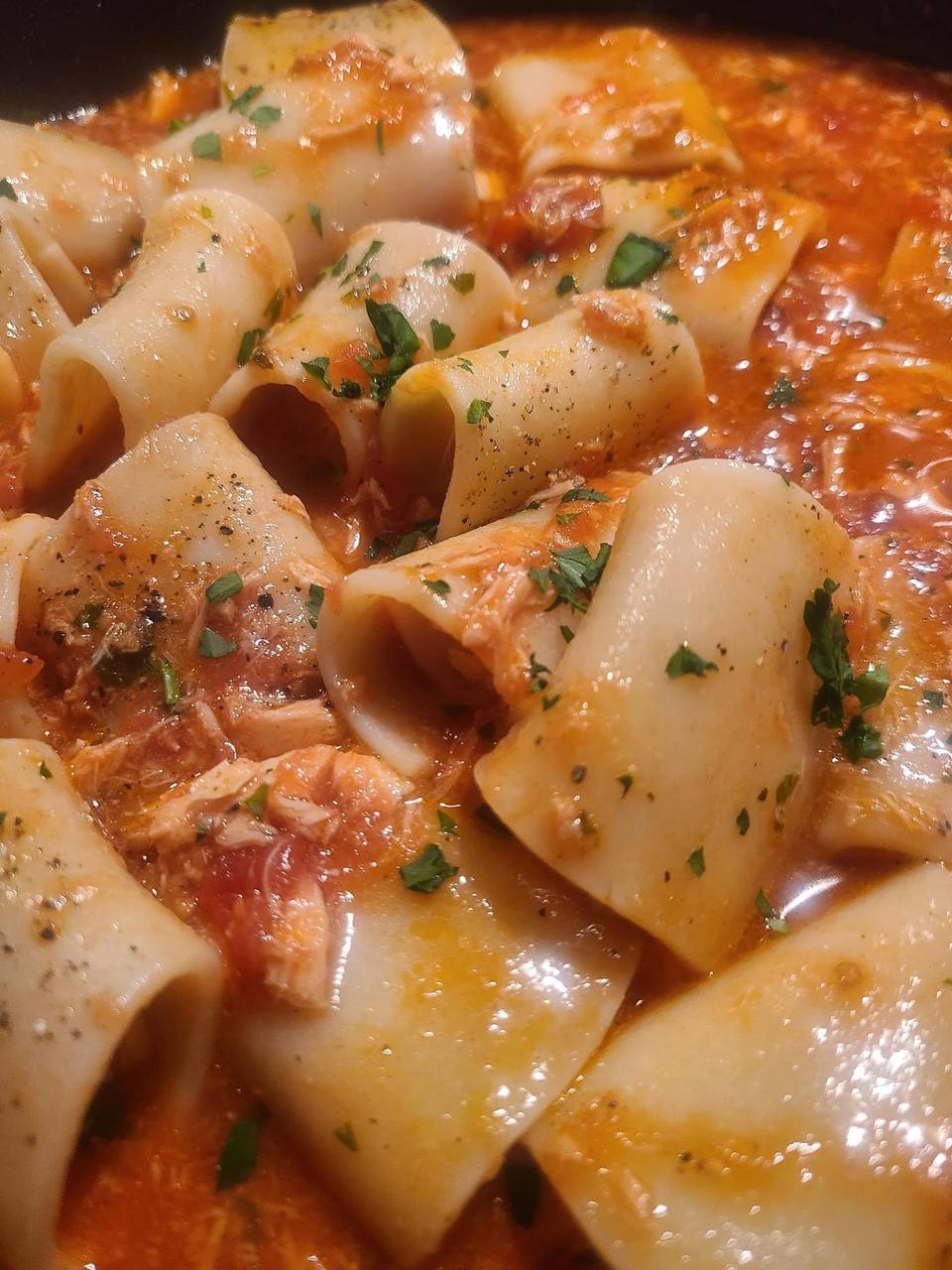
Why People Will Love Paccheri al Tonno Recipe
Paccheri have a wonderfully substantial, chewy texture.
Their large tubular shape holds plenty of tuna and tomato sauce.
Tuna in olive oil adds richness without requiring long cooking.
Passata creates a smooth, velvety tomato base.
Garlic gives the sauce a simple but essential aromatic foundation.
Red pepper flakes add gentle warmth without overwhelming the tuna.
Fresh parsley brings brightness and freshness to the finished pasta.
The recipe uses only a handful of ingredients.
It can be prepared in roughly the time needed to cook the pasta.
Finishing the pasta in the sauce creates restaurant-style texture.
Pasta water naturally helps emulsify the sauce.
The dish is flavorful without relying on cream or heavy cheese.
It works equally well for casual dinners or a more elegant meal.
Pantry-friendly ingredients make it practical for last-minute cooking.
The tuna provides protein, making the pasta more satisfying than a simple tomato sauce.
The heat can easily be adjusted for different tastes.
Key Ingredients
Paccheri:
Paccheri are large, smooth pasta tubes with enough surface area to carry a generous amount of sauce. Artisan or bronze-cut pasta is especially useful because its rougher surface helps the sauce cling.
Tuna in Olive Oil:
Oil-packed tuna generally has a richer flavor and softer texture than water-packed tuna. It blends naturally into the tomato sauce without becoming dry.
Tomato Passata:
Passata creates a smooth tomato sauce without large chunks. Sweet San Marzano-style tomatoes are an excellent choice because their natural sweetness balances the tuna and chile.
Extra-Virgin Olive Oil:
Olive oil forms the aromatic base for the garlic, red pepper, and parsley stems while adding richness to the finished sauce.
Garlic:
A single clove provides enough aromatic flavor to enhance the tuna and tomato without dominating the dish.
Fresh Parsley:
Parsley is used both during cooking and at the end. The stems help perfume the oil, while fresh leaves bring color and brightness.
Red Pepper Flakes:
A small amount adds warmth and makes the tomato sauce taste livelier.
Pasta Water:
The starchy cooking water is an important finishing ingredient because it helps loosen and emulsify the sauce as the pasta finishes cooking.
Expert Tips
Use good-quality paccheri because the pasta itself is a major part of the dish.
Do not overcook the paccheri; large pasta shapes can become very soft quickly once they pass al dente.
Cook the pasta about 2 minutes short of package directions before transferring it to the sauce.
Reserve at least 1–2 cups of pasta water before draining or transferring the pasta.
Cook garlic gently so it perfumes the oil without becoming dark or bitter.
Parsley stems are useful for flavoring the oil and can be removed before adding the sauce.
Drain the tuna lightly rather than squeezing it completely dry.
Break the tuna into fairly large flakes so some texture remains.
Cook the tuna only briefly before adding the tomato sauce.
Simmer the passata gently rather than boiling aggressively.
Add pasta water gradually; too much at once can make the sauce watery.
Stir or toss the paccheri carefully because large tubes can tear when overhandled.
Add fresh parsley near the end to preserve its bright flavor.
Taste the sauce before adding extra salt because tuna can already be salty.
Finish with a drizzle of good olive oil if you want a richer final aroma.
Paccheri al Tonno
Ingredients:
320 g of Paccheri Lisci (in general artisan pasta works best, it holds the sauce well and allows for an even coating.
250 g canned Tuna (i chose Calippo, but any canned tuna in olive oil will work).
400 g Passata (I used sweet mini San Marzano peeled tomatoes).
1 Clove of Garlic
Chopped Parsley
Red Pepper flakes
Instructions:
While the pasta water gets to a boil, sauté the garlic, red pepper and a few parsley stems in EVOO.
Remove garlic (or don’t) and parsley stems.
Add the tuna, cook lightly, then add the passata and some fresh parsley. Cook for approximately 10 minutes.
As the pasta water reaches a boil, salt and add the pasta.
Cook al dente or 2 minutes less than described on package. You’ll want to finish cooking the pasta in the tuna sauce to bring everything together, make sure to set aside some pasta water, if sauce dries up.
Move the pasta directly in the sauce with a ladle of pasta water.
Stir, add more parsley and finish cooking the pasta for a few minutes.
You are now ready to serve…..enjoy!
Important Notes When Making Paccheri al Tonno
Tuna does not need prolonged cooking because canned tuna is already fully cooked.
Excessive cooking can make tuna dry and grainy.
Paccheri should remain slightly firm in the center when transferred to the sauce.
The pasta will continue cooking for several minutes in the tomato mixture.
Salt the pasta water well, but remember that the tuna also contributes sodium.
Red pepper flakes vary in intensity, so begin with a small amount.
If using tuna packed in olive oil, some of that oil can be added to the skillet for extra flavor.
If using tuna packed in water, add a little extra olive oil to compensate.
Tomato passata can vary in acidity; a sweeter tomato usually works especially well here.
Avoid adding sugar unless the tomato sauce is unusually acidic.
The sauce should coat the paccheri rather than pool heavily underneath it.
Pasta water should be added while hot and starchy.
Fresh parsley is preferable to dried parsley in this recipe.
Traditionally, many Italian seafood pastas are served without grated cheese, although personal preference is always fine.
This dish is best eaten shortly after cooking while the pasta is glossy and the sauce is freshly emulsified.
How to Enjoy Paccheri al Tonno After Cooking
Once the paccheri has finished cooking in the tuna sauce, remove the skillet from the heat and let it sit for about 1 minute.
Gently toss the pasta again so the sauce settles into the hollow centers of the paccheri and coats the exterior evenly.
Divide the pasta among warm shallow bowls rather than deep soup bowls. This helps keep the large pasta pieces evenly distributed.
Spoon any remaining tuna and tomato sauce from the skillet over the top.
Finish with plenty of freshly chopped parsley and a small drizzle of extra-virgin olive oil.
For additional heat, sprinkle a few red pepper flakes over each serving.
A little freshly ground black pepper also works well, although it is not essential.
Serve the pasta with a simple green salad, roasted vegetables, grilled zucchini, or crusty Italian bread.
For the best bite, try to get one pacchero with some tuna tucked inside or clinging to the sauce—the combination of chewy pasta, rich tuna, tomato, garlic, and parsley is the heart of the dish.
Nutrition Information
Approximate nutrition per serving, based on about 4 servings, assuming approximately 2 tablespoons of olive oil are used for cooking and the tuna is lightly drained:
Calories: 515 kcal | Total Fat: 15 g | Saturated Fat: 2.5 g | Monounsaturated Fat: 8.5 g | Polyunsaturated Fat: 2.5 g | Cholesterol: 25 mg | Sodium: 500–700 mg depending on the tuna, passata, and added salt | Total Carbohydrates: 67 g | Dietary Fiber: 5 g | Sugars: 7 g | Protein: 29 g
Additional estimate:
Potassium: 650–850 mg | Calcium: 45–70 mg | Iron: 3–4 mg | Vitamin A: 700–1,000 IU | Vitamin C: 15–25 mg | Vitamin B12: 2–3 mcg | Selenium: 45–60 mcg
Frequently Asked Questions:
Can I use any type of pasta for this recipe, or is Paccheri Lisci essential?
While Paccheri Lisci is recommended for its ability to hold sauce well, you can use other pasta varieties like rigatoni or penne if Paccheri is unavailable.
However, the texture and sauce adherence may vary slightly.
Is it necessary to use canned tuna in olive oil, or can I use water-packed tuna instead?
Using canned tuna in olive oil adds flavor and richness to the dish, but water-packed tuna can be used as a substitute if desired.
Just be aware that the flavor profile may differ slightly.
Can I adjust the spiciness of the dish to suit my taste preferences?
Absolutely! You can adjust the amount of red pepper flakes added to the recipe to control the level of spiciness.
Start with a small amount and increase gradually according to your preference.
Is there a substitute for Passata if I can’t find mini San Marzano tomatoes?
If you can’t find mini San Marzano tomatoes for Passata, you can use regular canned tomatoes or tomato sauce instead.
The flavor may vary slightly, but it will still complement the dish well.
How long should I cook the pasta in the tuna sauce?
Cook the pasta al dente or slightly undercooked according to package instructions.
Finish cooking the pasta in the tuna sauce for a few minutes to allow it to absorb the flavors and coat evenly.
Be sure to reserve some pasta water to add moisture if the sauce thickens too much.
What type of pasta works best for Paccheri al Tonno?
Paccheri Lisci is recommended for its ability to hold sauce well, but you can use other artisan pasta varieties like rigatoni or penne as alternatives.
Can I use any brand of canned tuna for this recipe?
Yes, you can use any brand of canned tuna in olive oil.
While Calippo is suggested, any high-quality canned tuna in olive oil will work well.
How can I adjust the spiciness of the dish?
You can control the level of spiciness by adjusting the amount of red pepper flakes added.
Start with a small amount and increase according to your taste preference.
Should I remove the garlic and parsley stems after sautéing them?
It’s optional. Some prefer to remove them for a smoother texture, while others leave them in for added flavor.
It depends on personal preference.
How long should I cook the tuna and passata mixture?
Cook the tuna and passata mixture for approximately 10 minutes to allow the flavors to meld together and the sauce to thicken slightly.
Why should I reserve pasta water?
Reserving pasta water helps thin out the sauce if it becomes too thick and aids in binding the pasta and sauce together for better flavor distribution.
Can I garnish the dish with other herbs besides parsley?
Yes, you can garnish with other herbs like basil or oregano for additional flavor and freshness.
Can I make this dish ahead of time?
While it’s best served fresh, you can prepare the components ahead of time and assemble the dish just before serving to maintain the best texture and flavor.