Orecchiette Pasta With Sausage And Spinach
Orecchiette Pasta with Sausage and Spinach is a rustic, soul-warming Italian-inspired dish that brings together bold, savory flavors in one comforting bowl.
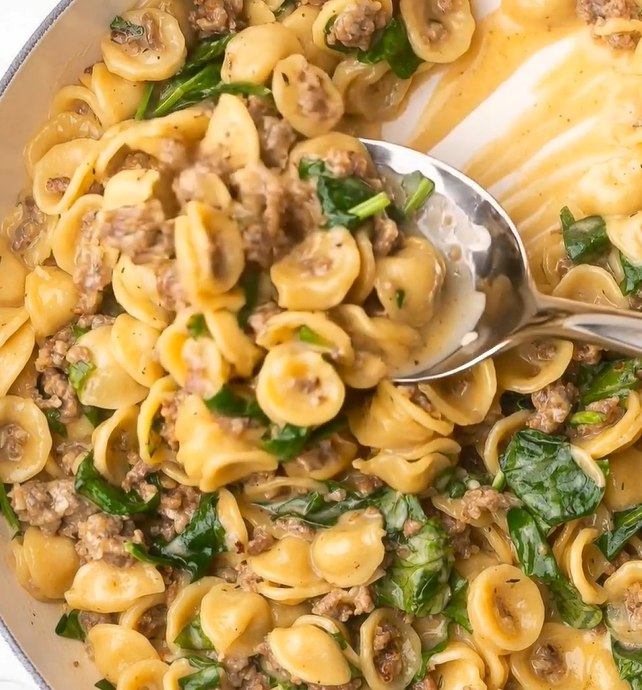
The chewy, cup-shaped orecchiette captures a rich, creamy sauce infused with seasoned sausage, while fresh spinach adds balance and freshness.
Simple yet deeply satisfying, this recipe feels both weeknight-friendly and special—like a cozy trattoria meal made right at home.
Why People Will Love This Orecchiette Pasta with Sausage and Spinach Recipe:
Perfect balance of comfort and freshness – The richness of Italian sausage and cream is beautifully balanced by fresh spinach, making the dish feel indulgent yet not heavy.
Orecchiette holds the sauce perfectly – The cup-shaped pasta catches creamy sauce, bits of sausage, and Parmesan in every bite, delivering consistent flavor throughout the dish.
One-pan simplicity with restaurant-level results – Everything cooks together in a single pan, allowing the flavors to meld deeply while keeping cleanup minimal.
Bold, savory depth from the sausage – Italian sausage brings built-in seasoning, richness, and umami that elevates the entire dish without complicated techniques.
Creamy without being overpowering – The combination of broth and cream creates a silky sauce that coats the pasta rather than drowning it.
Fast enough for weeknights, impressive enough for guests – Ready in under 30 minutes, yet elegant and satisfying enough to serve at a dinner gathering.
Comfort food that feels homemade and nourishing – It delivers warmth and familiarity while still including greens and balanced textures.
Highly adaptable – Easy to customize with spicy sausage, mushrooms, sun-dried tomatoes, or extra cheese to suit different tastes.
Family-friendly and crowd-pleasing – Familiar flavors make it appealing to kids and adults alike.
That “one more bite” factor – Creamy, savory, cheesy, and perfectly seasoned, this is the kind of dish people keep coming back to.
Key Ingredients:
Italian sausage – The heart of the dish, providing rich, savory flavor and built-in seasoning that infuses the sauce with depth and warmth as it cooks.
Orecchiette pasta – Its small, bowl-like shape is ideal for holding creamy sauce, sausage crumbles, and cheese, ensuring every bite is full of flavor and texture.
Heavy cream – Creates a smooth, luxurious sauce that brings everything together while softening the boldness of the sausage.
Chicken broth – Adds savory complexity and keeps the sauce balanced, preventing it from becoming overly rich.
Fresh spinach – Introduces freshness and color, cutting through the richness and adding a light, earthy contrast.
Onion and garlic – Form the aromatic base, slowly releasing sweetness and depth that anchor the entire dish.
Parmesan cheese – Finishes the pasta with nutty, salty richness, enhancing both texture and flavor without overpowering the sauce.
Italian seasoning – Brings a classic herb profile that ties the sausage, cream, and pasta together in a cohesive Italian-inspired flavor.
Expert Tips:
Choose the right sausage
Use high-quality Italian sausage with visible fat content. The fat renders as it cooks, forming the flavor base of the sauce. Mild sausage lets the cream shine; hot sausage adds gentle heat without extra spices.
Brown the sausage properly
Don’t rush this step. Let the sausage sit in the pan long enough to develop golden-brown bits before stirring. Those caramelized bits (fond) dissolve into the broth later and dramatically deepen the flavor.
Control the onion texture
Dice the onion evenly and cook it until soft but not browned. This ensures sweetness without bitterness and allows the onion to melt seamlessly into the sauce.
Bloom the garlic briefly
Add garlic after the sausage has browned and cook it for no more than 30–60 seconds. Overcooking garlic can turn it bitter and overpower the dish.
Deglaze the pan deliberately
When adding chicken broth, scrape the bottom of the pan thoroughly. This releases the fond and distributes flavor evenly throughout the sauce.
Add pasta directly to the sauce
Cooking the orecchiette in the sauce allows it to absorb flavor from the sausage, broth, and cream. Stir often to prevent sticking and ensure even cooking.
Monitor liquid levels
Keep the pan covered but check occasionally. If the sauce thickens too quickly, add a splash of broth or water to keep the pasta from drying out.
Add spinach at the very end
Spinach wilts quickly. Stir it in after the pasta is fully cooked to preserve its bright color and fresh flavor.
Finish with cheese off the heat
Remove the pan from heat before stirring in Parmesan. This prevents the cheese from clumping and keeps the sauce silky rather than grainy.
Taste before serving
Sausage and Parmesan both add salt. Always taste at the end and adjust seasoning carefully to avoid oversalting.
Orecchiette Pasta With Sausage And Spinach
Ingredients:
1 lb Ground Italian sausage (Or links, casings removed)
1 medium onion diced
1 teaspoon freshly minced garlic
1 teaspoon salt*
½ teaspoon Italian seasoning
2 cups low-sodium chicken broth
1 cup heavy whipping cream**
340 grams of uncooked Orecchiette pasta ¾ lb
2 cups chopped fresh spinach
¼ cup Parmesan cheese grated
Instructions:
Heat a large skillet or dutch oven over medium-high heat. Add sausage and onion and cook until sausage is browned and onion is softened about 4-5 minutes.
Add garlic, salt, and Italian seasoning and cook for 1 minute.
Add broth and scrape the bottom of the pan if there are any stuck bits, then add the cream. Bring to a simmer over medium-high heat.
Add uncooked pasta, stir, cover, and reduce heat to medium-low. Cook, stirring often, until al dente (about 10-15 minutes).
Stir in spinach and Parmesan and serve.
Notes
Ingredient substitutions:
Sausage: you can use mild or spicy sausage, or swap for cooked chicken, crumbled bacon, leftover chopped ham or turkey.
Pasta: obviously I use orecchiette in this recipe, but any short pasta will work!
Cream: heavy cream gives the richest flavor and thickest sauce. You can swap for a lighter cream or whole milk, but the sauce will be slightly thinner.
Vegetarian: make this recipe vegetarian by using vegetable broth, swapping the sausage for white beans, and using a vegetarian cheese.
Storage:
Store: Store this recipe in an airtight container in the refrigerator for 2-3 days. Allow it to cool to room temperature before putting it in the fridge.
Freezer: If you are going to freeze pasta, you should allow it to cool completely, then store in a freezer-safe container for up to 3 months.
Thaw completely before reheating on the stove top with a splash of broth or cream for best results.
Important Notes When Making Orecchiette Pasta with Sausage and Spinach Recipe:
This is a one-pan pasta, not a boiled-then-sauced dish
The pasta cooks directly in the broth and cream, which means it absorbs flavor as it softens. This also means liquid ratios matter—avoid walking away too long, and stir regularly.
The sauce thickens as it rests
Right off the stove, the sauce may seem slightly loose. As it cools for a few minutes, the starch from the pasta naturally thickens it to the perfect consistency. Avoid adding extra cheese or cream too early.
Fat is part of the flavor structure
The sausage fat and cream work together to create richness. Skimming all the fat or using ultra-lean sausage can result in a flat or watery sauce.
Spinach is a finishing ingredient
It should be added only at the end so it gently wilts without releasing excess water or turning dull in color.
Salt carefully and late
Sausage, broth, and Parmesan all contain salt. Season lightly during cooking and adjust only at the very end to avoid an overly salty dish.
Texture depends on stirring
Orecchiette can stick together if ignored. Gentle but frequent stirring ensures even cooking and keeps the sauce smooth.
Leftovers will be thicker
The pasta continues to absorb liquid as it sits. When reheating, add a splash of broth, milk, or cream to restore the sauce.
Best enjoyed fresh, but reheats well
While the dish is creamiest when freshly made, it reheats beautifully with gentle heat and added liquid—avoid microwaving on high.
Simple ingredients mean technique matters
Because the ingredient list is short, each step—browning, deglazing, simmering—has a noticeable impact on the final flavor.
How to Enjoy Orecchiette Pasta with Sausage and Spinach After Cooking
Let it rest briefly before serving
Allow the pasta to sit for 2–3 minutes off the heat. This resting time helps the sauce thicken naturally and lets the flavors fully settle and blend.
Stir gently before plating
Give the pasta a light stir to redistribute the sauce, sausage, and spinach evenly so every serving has a balanced mix of textures and flavors.
Serve warm, not piping hot
The flavors—especially the cream, sausage, and cheese—are best appreciated when the dish is warm rather than extremely hot. This prevents the sauce from breaking and allows the richness to shine.
Finish with a light topping
Add a small sprinkle of freshly grated Parmesan or cracked black pepper just before serving. This final touch enhances aroma and adds contrast without overwhelming the dish.
Pair with something crisp and fresh
Serve alongside a simple green salad with a lemon or vinegar-based dressing. The acidity helps cut through the richness of the cream sauce and refreshes the palate.
Choose the right bread
Crusty bread, focaccia, or garlic toast works beautifully for soaking up extra sauce. Avoid overly buttery bread, which can make the meal feel too heavy.
Enjoy slowly
This is a comfort dish meant to be savored. The layered flavors develop more as you eat—creamy, savory, herbal, and slightly sweet from the onion.
For leftovers
Reheat gently on the stovetop over low heat with a splash of broth, milk, or cream. Stir slowly to bring the sauce back to life without separating.
Elevate the experience
Pair with a light white wine (like Pinot Grigio or Sauvignon Blanc) or sparkling water with lemon to balance the richness.
Make it a cozy moment
This dish is perfect for relaxed dinners—serve it family-style, share from the pan, and enjoy the warmth and comfort it brings.
Nutrition Information
(Values are approximate and based on 1 serving, assuming the recipe serves 4.)
Calories: 620–680 kcal | Total Fat: 38–42 g | Saturated Fat: 17–19 g | Monounsaturated Fat: 13–15 g | Polyunsaturated Fat: 4–5 g | Cholesterol: 115–130 mg | Sodium: 900–1,050 mg (depending on sausage and added salt) | Total Carbohydrates: 44–48 g | Dietary Fiber: 3.5–4.5 g | Sugars: 4–6 g | Protein: 26–30 g
Frequently Asked Questions:
Can I use a different type of pasta if I don’t have orecchiette?
Yes. Short pasta shapes like penne, rigatoni, shells, or cavatappi work well because they hold the creamy sauce and sausage pieces. Long pasta like fettuccine can also be used, though the texture will be slightly different.
Should I use mild or spicy Italian sausage?
Either works beautifully. Mild sausage keeps the dish rich and balanced, while spicy sausage adds a gentle heat that contrasts nicely with the cream and spinach. Choose based on your heat preference.
Can I make this dish ahead of time?
You can prepare it a few hours ahead, but it’s best enjoyed fresh. If making in advance, store it in the refrigerator and reheat gently with a splash of broth or cream to restore the sauce’s texture.
Will the sauce thicken as it cools?
Yes. The sauce naturally thickens as it cools because of the cream and starch from the pasta. A quick stir and a little liquid during reheating will loosen it again.
Is this recipe freezer-friendly?
Freezing is not ideal due to the cream-based sauce, which may separate when thawed. For best texture and flavor, store leftovers in the refrigerator and consume within 2–3 days.
How do I prevent the pasta from sticking to the pan while cooking?
Stir the pasta every 1–2 minutes, especially during the first half of cooking. Keeping the heat at medium-low once the pasta is added and ensuring there is enough liquid in the pan will prevent sticking and uneven cooking.
What should I do if the sauce thickens too quickly before the pasta is done?
Simply add a splash of chicken broth or water and stir gently. The sauce is meant to be loose enough for the pasta to absorb liquid as it cooks.
Can I cook the pasta separately instead of in the sauce?
Yes, but cooking it directly in the sauce is recommended for best flavor. If boiling separately, reduce the broth by about half and add the cooked pasta at the end, stirring to coat.
When is the best time to add the spinach?
Spinach should be added only after the pasta is fully cooked and the sauce has thickened. It wilts in under a minute and keeps its bright color and fresh flavor when added last.
Why should Parmesan be added off the heat?
Adding Parmesan after removing the pan from heat prevents the cheese from clumping or becoming grainy. This keeps the sauce smooth, creamy, and well-emulsified.