Escarole and Cannellini Bean Soup with Ditalini and Asiago
Escarole and Cannellini Bean Soup with Ditalini and Asiago is a rustic Italian-inspired soup built around simple ingredients that become remarkably flavorful when cooked together slowly and gently. Tender escarole, creamy cannellini beans, aromatic onion, celery, garlic, small ditalini pasta, and a light chicken broth create a bowl that is nourishing without feeling excessively heavy.
One of the most interesting characteristics of this soup is the balance between slightly bitter escarole and mild, creamy white beans. Olive oil softens the vegetables and gives the broth richness, while thyme, red pepper flakes, parsley, and a subtle touch of lemon keep the flavor fresh and lively.
The final sprinkle of Asiago cheese adds a salty, nutty finish that melts slightly into the hot broth. Ditalini makes the soup substantial enough for a complete meal, while optional rotisserie chicken can add even more protein and heartiness.
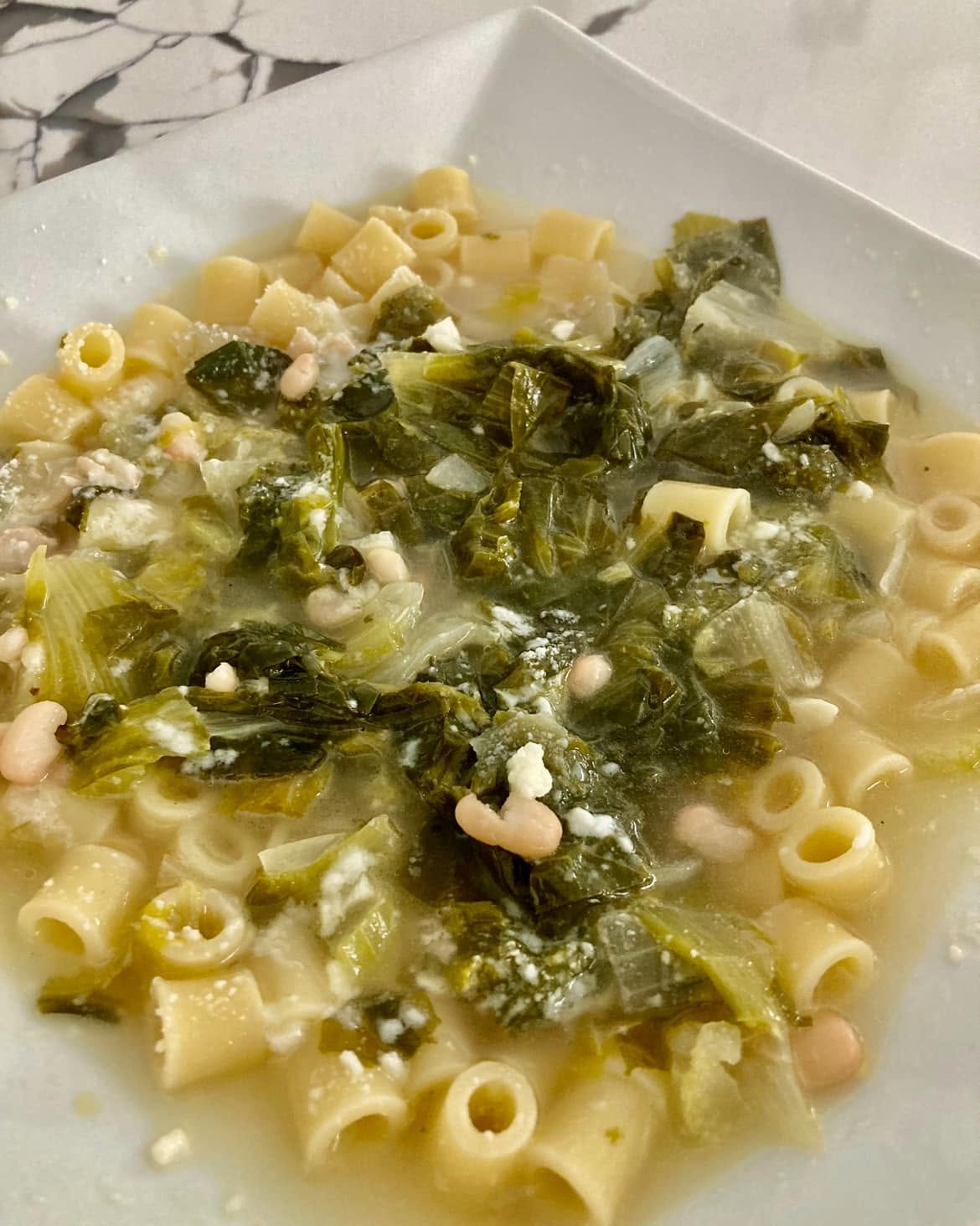
Why People Will Love Escarole and Cannellini Bean Soup with Ditalini and Asiago Recipe
Escarole gives the soup a distinctive slightly bitter, earthy flavor that becomes milder as it cooks.
Cannellini beans provide a soft, creamy texture without requiring actual cream.
Ditalini pasta turns a light vegetable-and-bean soup into a satisfying meal.
Extra-virgin olive oil creates richness while keeping the broth relatively light.
Garlic adds classic Italian savory flavor.
Slowly cooked onion and celery provide a naturally sweet aromatic foundation.
Chicken broth gives the soup a deep savory backbone.
A touch of lemon brightens the entire pot without making it taste strongly citrusy.
Red pepper flakes create gentle background heat.
Thyme adds earthy herbal complexity.
Fresh parsley gives the finished soup freshness and color.
Asiago contributes salty, nutty flavor and melts beautifully into the hot broth.
The recipe uses inexpensive pantry staples.
It is naturally hearty even without meat.
Rotisserie chicken can easily be added for extra protein.
Cooking the pasta separately prevents it from becoming mushy.
It makes excellent leftovers when pasta and soup are stored separately.
The soup is easy to customize with additional greens or vegetables.
It works equally well as a starter or a full dinner.
Crusty bread turns it into a wonderfully comforting Italian-style meal.
Key Ingredients
Escarole:
Escarole is the defining green in this soup. It has more character than spinach, with a gentle bitterness that mellows considerably after cooking. Its sturdy leaves also hold up well in hot broth.
Cannellini Beans:
These Italian white beans have a soft, creamy interior and mild flavor. They contribute fiber, plant protein, and natural starch that gives the broth more body.
Ditalini Pasta:
Ditalini means “little thimbles,” and its small tubular shape is ideal for soups. It captures tiny amounts of broth inside each piece and distributes easily throughout every spoonful.
Extra-Virgin Olive Oil:
A generous amount of olive oil forms the flavor foundation. It helps soften the aromatics and gives the otherwise light broth a rounder mouthfeel.
Onion and Celery:
These vegetables slowly release natural sweetness as they sauté, providing the aromatic foundation for the soup.
Garlic:
Thinly sliced garlic gives the broth a mellow savory aroma. Cooking it gently prevents bitterness.
Chicken Broth:
Chicken broth provides the soup’s main savory base. Low-sodium broth is particularly useful because beans and Asiago can also add salt.
Lemon:
Just a subtle amount of lemon helps cut through the olive oil and beans while balancing the natural bitterness of escarole.
Asiago Cheese:
Asiago provides a sharper, nuttier finish than many mild cheeses. A small amount is enough to give the soup additional complexity.
Expert Tips
Wash escarole extremely well because soil can remain trapped deep between the leaves.
Dry the escarole reasonably well before adding it to hot oil.
Cut larger leaves into manageable pieces so they fit comfortably on a spoon.
Sauté the onion and celery slowly instead of browning them aggressively.
Add garlic only after the onion and celery have softened.
Garlic usually needs only 1–2 minutes before the escarole is added.
Add escarole in batches if your pot appears too full; it will collapse dramatically as it cooks.
Use low-sodium chicken broth so you have better control of the seasoning.
Rinse canned cannellini beans to remove excess canning liquid and some sodium.
For a thicker broth, mash about ½ cup of the beans before adding them.
Simmer gently rather than boiling vigorously so the beans remain intact.
Keep the lemon slices relatively thin and remove them if the broth starts becoming bitter.
Cook ditalini separately if you expect leftovers.
Cook the pasta just to al dente because it softens slightly when hot soup is poured over it.
Add fresh parsley close to serving time.
Grate Asiago directly over each bowl for the best aroma and texture.
Escarole and Cannellini Bean Soup with Ditalini and Asiago
Ingredients
For the Soup
¼ cup extra-virgin olive oil
1 medium yellow onion, finely diced
4 celery stalks, diced
4 garlic cloves, thinly sliced
1 large bag chopped escarole, about 10–12 ounces, washed well
2 (15-ounce) cans cannellini beans, rinsed and drained
8 cups chicken broth, preferably low-sodium
½ teaspoon kosher salt, or to taste
½ teaspoon freshly ground black pepper
¼ teaspoon crushed red pepper flakes, or to taste
½ teaspoon dried thyme
2 thin lemon slices
½ cup fresh parsley, roughly chopped
For the Pasta
1 cup dry ditalini pasta, or enough to make about 2 cups cooked
Salt, for the pasta water
Optional Addition
2 cups shredded rotisserie chicken
For Serving
Freshly grated Asiago cheese
Extra-virgin olive oil, for drizzling
Freshly ground black pepper
Additional chopped parsley
Lemon wedges, optional
Instructions
Sauté the Aromatics
Heat the olive oil in a large Dutch oven or heavy soup pot over medium-low heat.
Add the diced onion and celery.
Cook for about 8–10 minutes, stirring occasionally, until the vegetables are soft and translucent but not deeply browned.
Add the sliced garlic and cook for another 1–2 minutes, just until fragrant. Avoid browning the garlic too much because it can become bitter.
Wilt the Escarole
Add the chopped escarole in batches if necessary.
Stir continuously as it wilts and reduces in volume.
Cook for about 4–6 minutes, until the escarole is tender and completely wilted.
Season the Soup
Add the salt, black pepper, red pepper flakes, and thyme.
Stir for about 30 seconds so the seasonings coat the vegetables.
Add the Beans and Broth
Stir in the rinsed cannellini beans.
Pour in the chicken broth and mix well.
Bring the soup to a gentle boil, then reduce the heat and simmer uncovered for about 15 minutes.
Add the Chicken and Lemon
If using rotisserie chicken, stir it into the soup.
Place the lemon slices on top and continue simmering gently for another 5–8 minutes, just until the chicken is warmed through and the lemon lightly perfumes the broth.
Remove the lemon slices before serving if you prefer a more delicate citrus flavor.
Cook the Ditalini Separately
While the soup simmers, bring a separate pot of salted water to a boil.
Cook the ditalini according to the package directions until al dente.
Drain well.
Cooking the pasta separately keeps it from absorbing too much broth and becoming overly soft, especially if you plan to store leftovers.
Assemble the Bowls
Place about ½ cup cooked ditalini into each serving bowl.
Ladle the hot escarole, bean, and broth mixture generously over the pasta.
Finish and Serve
Top each bowl with freshly grated Asiago cheese and chopped parsley.
Finish with freshly ground black pepper and, if desired, a light drizzle of extra-virgin olive oil.
Serve immediately with crusty Italian bread.
Flavor Profile
This soup should taste light but deeply savory, with creamy beans, slightly bitter escarole, tender pasta, fragrant garlic, and a gentle warmth from red pepper flakes.
The lemon brightens the broth and balances the richness of the olive oil and beans, while Asiago adds a salty, nutty finish that melts slightly into the hot soup.
Important Notes When Making Escarole and Cannellini Bean Soup with Ditalini and Asiago
Escarole naturally tastes slightly bitter, especially when raw.
Cooking significantly softens that bitterness.
The outer escarole leaves tend to be more strongly flavored than the pale inner leaves.
Lemon should enhance the soup rather than dominate it.
Leaving lemon peel simmering too long may introduce unwanted bitterness.
Cannellini beans are already cooked when canned, so they only need to heat through and absorb the broth flavors.
Avoid prolonged aggressive boiling after adding the beans.
Ditalini absorbs a surprising amount of liquid during storage.
For meal prep, keep cooked pasta and soup in separate containers.
Asiago is naturally salty, so taste the soup before adding extra salt.
Regular chicken broth may contain substantially more sodium than low-sodium broth.
Rotisserie chicken also contributes additional sodium if you use it.
If adding chicken, it only needs to be reheated, not simmered for a long period.
The soup becomes slightly thicker as it rests.
Add additional broth when reheating if necessary.
Refrigerate leftovers promptly and reheat gently until hot throughout.
How to Enjoy Escarole and Cannellini Bean Soup with Ditalini and Asiago After Cooking
Let the finished soup rest for about 5 minutes after turning off the heat. This short resting period allows the flavors of garlic, escarole, beans, herbs, and broth to settle together.
Place approximately ⅓–½ cup of cooked ditalini into each warm soup bowl.
Ladle plenty of the hot escarole and cannellini bean mixture over the pasta, making sure each bowl receives a good balance of beans, greens, celery, onion, and broth.
Immediately grate Asiago cheese over the top. The heat from the soup will soften some of the cheese while leaving other pieces visible.
Finish with fresh parsley, freshly ground black pepper, and a very light drizzle of extra-virgin olive oil if you want more richness.
For a brighter bowl, squeeze just a few drops of fresh lemon juice over the soup immediately before eating.
Serve with toasted Italian bread, focaccia, garlic bread, or rustic sourdough. The bread is especially useful for soaking up the flavorful broth left at the bottom of the bowl.
For a complete dinner, pair the soup with a simple green salad dressed with lemon and olive oil.
If using the optional rotisserie chicken, the soup becomes substantial enough to serve as a main course without additional sides.
When eating leftovers, heat the soup separately and add fresh or reheated ditalini to the bowl just before serving. This keeps the pasta from becoming excessively soft.
Nutrition Information
Approximate nutrition per serving, based on about 6 servings, using the soup, 1 cup dry ditalini, and excluding optional rotisserie chicken, additional olive oil drizzle, bread, and Asiago garnish:
Calories: 330 kcal | Total Fat: 11 g | Saturated Fat: 1.7 g | Monounsaturated Fat: 7.3 g | Polyunsaturated Fat: 1.4 g | Cholesterol: 0–5 mg | Sodium: 800–1,100 mg depending on the chicken broth, canned beans, and added salt | Total Carbohydrates: 45 g | Dietary Fiber: 8 g | Sugars: 5 g | Protein: 13 g
Additional estimate:
Potassium: 700–900 mg | Calcium: 130–180 mg | Iron: 3.5–5 mg | Magnesium: 65–90 mg | Vitamin A: 3,500–5,000 IU | Vitamin C: 15–25 mg | Folate: 140–190 mcg
With 2 cups shredded rotisserie chicken: approximately 400–415 calories and 25–27 g protein per serving, depending on the chicken used.
Frequently Asked Questions:
What does Escarole and Cannellini Bean Soup taste like?
It is savory, garlicky, gently earthy, slightly bitter, and creamy from the beans, with subtle lemon brightness and a nutty finish from Asiago.
Is escarole very bitter in soup?
No. Raw escarole can have noticeable bitterness, but simmering considerably softens its flavor. Beans, olive oil, broth, and cheese further balance it.
Can I make this soup without chicken?
Absolutely. The cannellini beans provide enough body and protein for a satisfying meatless-style soup, though you would also need vegetable broth if you want the dish fully vegetarian.
What cheese can I use instead of Asiago?
Parmigiano-Reggiano, Pecorino Romano, Grana Padano, or Parmesan can all work. Pecorino is saltier and sharper, while Parmesan is slightly milder and nuttier.
What should I serve with Escarole and Bean Soup?
Crusty Italian bread, focaccia, garlic bread, a simple salad, roasted vegetables, or an antipasto plate all pair beautifully with it.
Why should I cook the ditalini separately?
Pasta continues absorbing liquid long after cooking. Keeping it separate preserves both the broth and pasta texture, particularly when storing leftovers.
Can I cook the pasta directly in the soup instead?
Yes, especially if the entire pot will be eaten immediately. You may need additional broth because the pasta will absorb a significant amount while cooking.
How can I make the soup thicker and creamier without adding dairy?
Mash or blend about ½–1 cup of the cannellini beans with a small amount of broth, then stir the mixture back into the pot. The bean starch naturally thickens the soup.
Why should the garlic not cook for five minutes by itself?
Thinly sliced garlic can brown and become bitter fairly quickly. After the onion and celery have softened, about 1–2 minutes is generally enough to release the garlic aroma before adding the greens.
Can I make this soup ahead of time?
Yes. In fact, the broth and bean flavors develop nicely overnight. Prepare and refrigerate the soup separately from the ditalini, then combine them only when reheating individual servings.