Curry Coconut Soup With Chickpeas
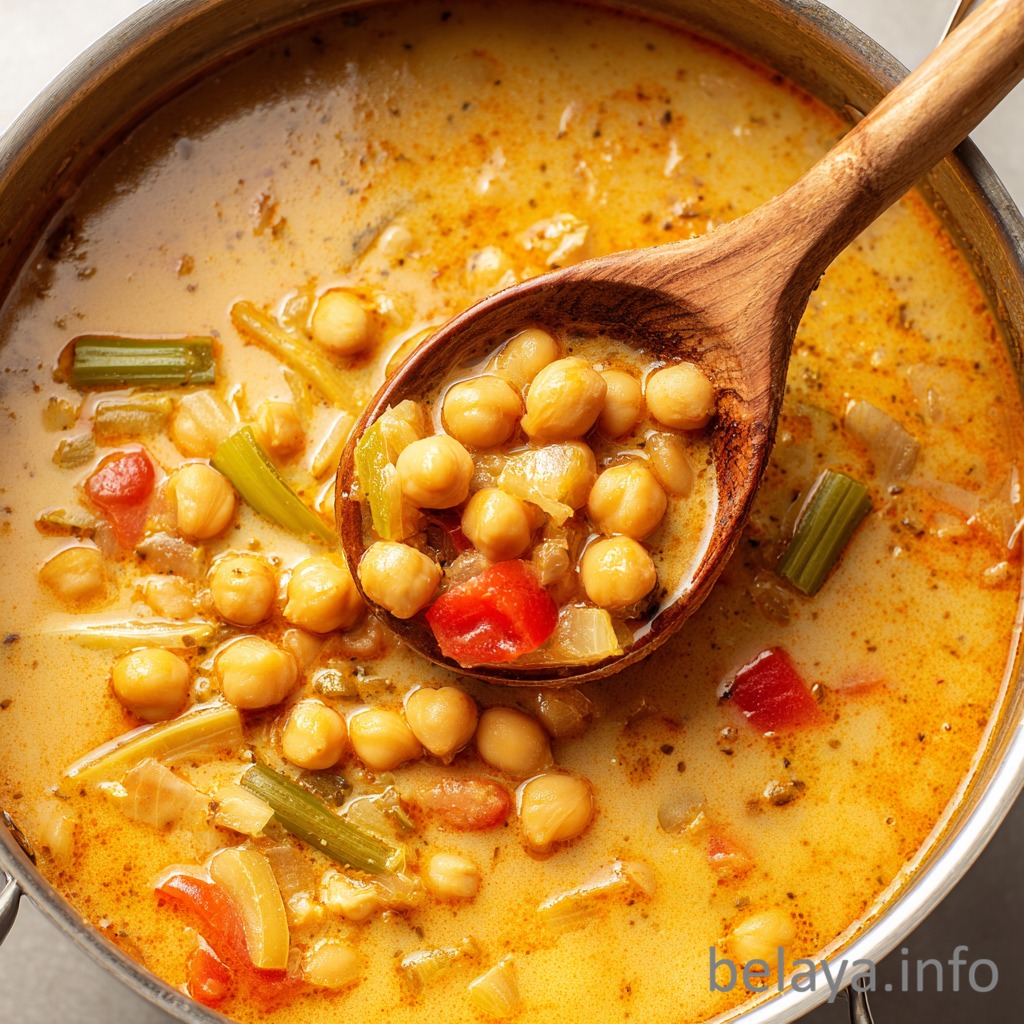
Curry Coconut Soup With Chickpeas is a warm, fragrant, and deeply comforting soup made with creamy coconut milk, tender chickpeas, aromatic spices, fresh ginger, tomatoes, and red curry paste. It has a beautiful balance of richness, warmth, gentle spice, and freshness.
This recipe is perfect when you want something cozy but still bright and flavorful. The coconut milk gives the soup a smooth, velvety body, while cumin, turmeric, ginger, jalapeño, cilantro, and curry paste build layers of earthy, spicy, and aromatic flavor.
It is also a nourishing, satisfying dish that feels both simple and special. With chickpeas for protein and texture, tomatoes for brightness, and broth to bring everything together, this soup works beautifully as a light dinner, lunch, or comforting bowl on a cool day.
Why People Will Love Curry Coconut Soup With Chickpeas Recipe
It is creamy without feeling too heavy.
Coconut milk gives the soup a rich, silky texture while still keeping it lighter than a cream-based soup.
It has bold curry flavor.
Red curry paste, cumin, turmeric, ginger, and jalapeño create a warm, fragrant flavor base.
It is comforting and nourishing.
Chickpeas make the soup hearty and filling, while the broth keeps it soothing and easy to enjoy.
It is full of plant-based goodness.
With chickpeas, tomatoes, onion, ginger, cilantro, and coconut milk, this soup is flavorful and naturally satisfying.
It is easy to make in one pot.
Everything cooks together in a stockpot, which makes preparation simple and cleanup easier.
It has a beautiful balance of flavors.
The soup is creamy, savory, slightly spicy, earthy, and lightly sweet from the coconut milk.
It is easy to adjust.
You can make it spicier with more curry paste or jalapeño, or make it milder by using less.
It works well for meal prep.
The flavors become even deeper after resting, making leftovers delicious the next day.
Key Ingredients
Coconut Oil or Extra-Virgin Olive Oil
The oil helps bloom the spices and sauté the aromatics. Coconut oil adds a subtle tropical note, while olive oil gives a clean, savory base.
Ground Cumin
Cumin adds earthy warmth and depth. It gives the soup a cozy, grounded flavor that pairs well with chickpeas and curry.
Ground Turmeric
Turmeric brings golden color and mild earthy flavor. It makes the soup visually beautiful and adds warmth to the spice base.
Onion
Onion creates the savory foundation of the soup. When sautéed, it becomes sweet and soft, helping balance the spices.
Jalapeño
Jalapeño adds gentle heat and freshness. You can adjust the amount depending on how spicy you want the soup.
Fresh Ginger Root
Ginger gives the soup brightness, warmth, and a fresh aromatic kick. It is one of the key ingredients that makes the flavor feel lively.
Fresh Cilantro
Cilantro adds herbal freshness and helps lift the richness of the coconut milk and curry paste.
Red Curry Paste
Red curry paste adds deep, complex flavor with spice, chili, garlic, and aromatic notes. It gives the soup its bold curry character.
Roma Tomatoes
Tomatoes bring acidity and brightness. They help balance the creamy coconut milk and make the soup taste fresher.
Chickpeas
Chickpeas add protein, texture, and heartiness. They absorb the curry-coconut broth and make the soup more filling.
Coconut Milk
Coconut milk gives the soup its creamy body and subtle sweetness. Regular coconut milk creates a richer texture than light coconut milk.
Vegetable Broth or Chicken Broth
Broth stretches the soup into a lighter, spoonable consistency and adds savory depth.
Expert Tips
Bloom the spices in hot oil first.
Letting cumin and turmeric sizzle in the oil helps release their aroma and gives the soup deeper flavor.
Do not rush the onion.
Sautéing the onion until soft and lightly golden builds sweetness and helps create a richer soup base.
Use fresh ginger if possible.
Fresh ginger gives a brighter, cleaner flavor than powdered ginger and works beautifully with coconut milk.
Adjust the curry paste to your taste.
Start with 1 tablespoon, then add more if you want a stronger or spicier curry flavor.
Simmer gently after adding coconut milk.
Avoid boiling the soup too hard after adding coconut milk because gentle simmering keeps the texture smooth.
Mash some chickpeas for a thicker soup.
If you want a creamier texture, lightly mash part of the chickpeas with a spoon while the soup simmers.
Finish with fresh herbs.
A little extra cilantro added right before serving makes the soup taste brighter and fresher.
Add lime juice before serving.
A squeeze of lime can make the flavors pop and balance the richness of the coconut milk.
Curry Coconut Soup With Chickpeas
Ingredients
3 tablespoons coconut oil or extra-virgin olive oil
1 teaspoon ground cumin
1 teaspoon ground turmeric
1 small onion, finely chopped
1 jalapeño, finely minced
1 heaping tablespoon fresh ginger root (1-inch piece), peeled and finely minced
2-3 tablespoons fresh cilantro, chopped
1 tablespoon red curry paste (add more for taste if desired)
3 Roma tomatoes, seeded and finely chopped
1 14-ounce can chickpeas, rinsed and drained
1 14-ounce can organic coconut milk (regular)
4 cups low sodium vegetable broth (or chicken broth)
Instructions
Heat the coconut oil (or olive oil) in a large stockpot over medium-high heat.
Add the cumin and turmeric to the hot oil and let them sizzle for about a minute until aromatic.
Stir in the finely chopped onion and minced jalapeño. Sauté for 4–5 minutes, until the onions become soft and lightly golden.
Mix in the minced ginger, chopped cilantro, and red curry paste. Cook for another minute, stirring constantly to release the flavors.
Add the chopped tomatoes, rinsed chickpeas, coconut milk, and vegetable broth.
Bring the soup to a gentle simmer, then reduce the heat and let it cook for 10–15 minutes, or until the chickpeas become tender and the flavors blend beautifully.
Important Notes When Making Curry Coconut Soup With Chickpeas
The spice level depends on the jalapeño and curry paste.
Some curry pastes are spicier than others. Taste as you cook and adjust carefully.
Use regular coconut milk for the creamiest result.
Light coconut milk can be used, but the soup will be thinner and less rich.
Low-sodium broth is helpful.
Curry paste can already contain salt, so low-sodium broth gives you more control over the final seasoning.
Rinse and drain the chickpeas.
This removes excess canned liquid and gives the soup a cleaner flavor.
Do not overcook the tomatoes.
Roma tomatoes add freshness. Simmering them briefly keeps the soup bright instead of flat.
The soup thickens slightly as it rests.
Chickpeas can absorb liquid, so add more broth when reheating if needed.
This recipe can be vegetarian or vegan.
Use vegetable broth and make sure the curry paste does not contain fish sauce or shrimp paste if you need it fully vegan.
How to Enjoy This Curry Coconut Soup With Chickpeas After Cooking
After the soup finishes simmering, let it rest for a few minutes so the flavors can settle. Taste the broth before serving and adjust with a little salt, extra curry paste, fresh cilantro, or lime juice if needed.
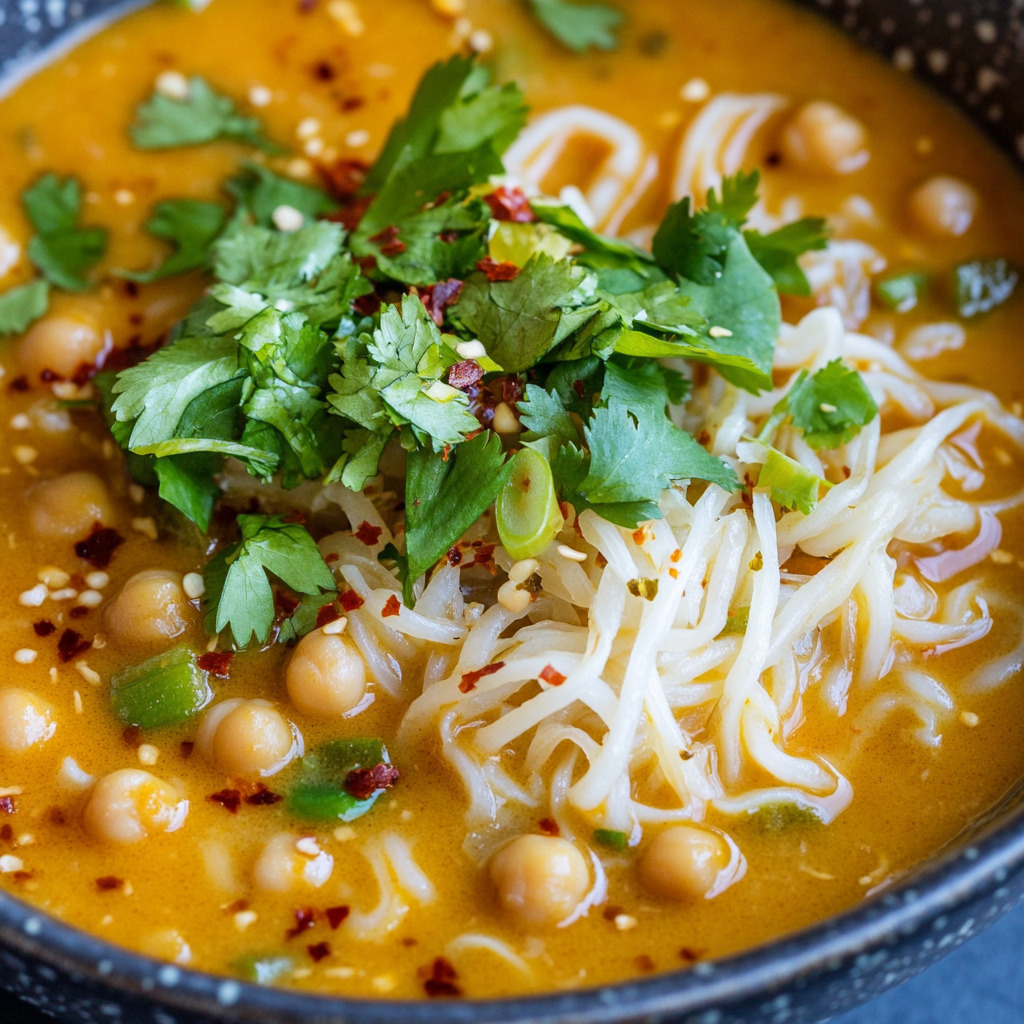
Serve the soup warm in deep bowls. Add a sprinkle of chopped cilantro on top for freshness. A squeeze of lime juice is especially delicious because it cuts through the creamy coconut broth and makes the curry flavor brighter.
This soup can be enjoyed on its own as a light but filling meal. For a heartier dinner, serve it with steamed jasmine rice, basmati rice, naan, flatbread, crusty bread, or roasted vegetables. The rice or bread helps soak up the creamy curry broth.
For extra texture, top the soup with toasted coconut flakes, sliced jalapeños, crispy chickpeas, chopped green onions, or a drizzle of chili oil. If you want more protein, add shredded chicken, tofu, shrimp, or extra chickpeas.
Leftovers store well in the refrigerator. Reheat gently on the stove over medium-low heat, stirring often. If the soup thickens too much, add a splash of broth or water until it reaches your preferred consistency.
Nutrition Information
Approximate nutrition per serving, based on about 6 servings:
Calories: 285 kcal | Total Fat: 20 g | Saturated Fat: 14 g | Monounsaturated Fat: 4 g | Polyunsaturated Fat: 1.5 g | Cholesterol: 0 mg if made with vegetable broth | Sodium: 420–680 mg depending on broth and curry paste | Total Carbohydrates: 23 g | Dietary Fiber: 6 g | Sugars: 5 g | Protein: 7 g
Frequently Asked Questions:
What does Curry Coconut Soup With Chickpeas taste like?
It tastes creamy, warm, savory, and lightly spicy. The coconut milk adds richness, the chickpeas add heartiness, and the curry paste, ginger, cumin, and turmeric bring deep aromatic flavor.
Is this soup spicy?
It can be mild or spicy depending on the jalapeño and red curry paste. For a milder soup, remove the jalapeño seeds and use less curry paste. For more heat, add extra curry paste or chili flakes.
Can this soup be vegan?
Yes. Use vegetable broth and check that your red curry paste is vegan. Some curry pastes may contain fish sauce or shrimp paste, so read the label if needed.
What can I serve with this soup?
This soup pairs well with jasmine rice, basmati rice, naan, flatbread, crusty bread, roasted vegetables, or a simple cucumber salad.
Is this soup good for meal prep?
Yes. The flavors become even richer after resting. Store it in the refrigerator for 3–4 days and reheat gently with a splash of broth if it thickens.
Why should I cook the cumin and turmeric in oil first?
Cooking the spices in hot oil helps release their aroma and flavor. This step makes the soup taste deeper and more fragrant.
Can I use dried ginger instead of fresh ginger?
Yes, but fresh ginger gives the best flavor. If using dried ginger, start with about 1/2 teaspoon and adjust to taste.
Can I use light coconut milk?
Yes. Light coconut milk will work, but the soup will be thinner and less creamy. Regular coconut milk gives a richer, smoother texture.
How can I make the soup thicker?
You can simmer it a little longer, mash some of the chickpeas, or blend a small portion of the soup and stir it back in.
Can I add more vegetables?
Yes. Spinach, kale, sweet potatoes, cauliflower, zucchini, carrots, or bell peppers would all work well. Add firmer vegetables earlier and leafy greens near the end.