Casserole Beans with Green Chile
Casserole Beans with Green Chile are a simple, slow-cooked Southwestern-style pinto bean dish built around dried beans, onion, butter, garlic, and roasted green chile. The ingredient list is modest, but the long cooking time allows the beans to develop a remarkably creamy interior while creating their own naturally thickened broth.
The roasted green chile is added during the final portion of cooking so its distinctive flavor stays noticeable rather than disappearing into the background. Onion slowly becomes sweet and mellow, garlic powder seasons the entire pot evenly, and butter adds just enough richness to round out the earthy flavor of the beans.
The finished dish is rustic and comforting rather than heavily seasoned. It can stand alone with warm tortillas or work as a versatile side for eggs, grilled meats, chile rellenos, enchiladas, or almost any Southwestern-inspired meal.
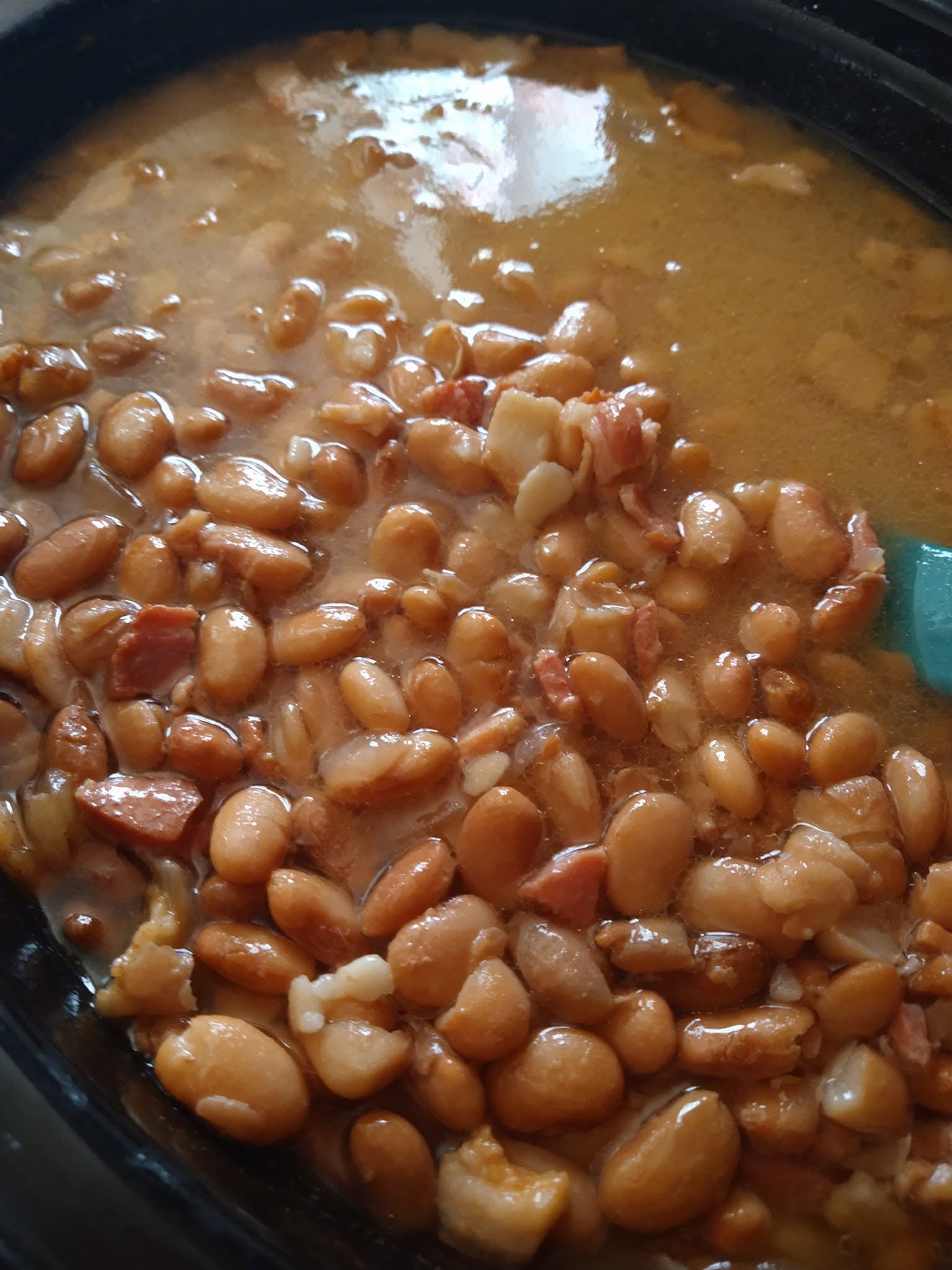
Why People Will Love Casserole Beans with Green Chile Recipe
– The beans become exceptionally soft and creamy through long, slow cooking.
– The ingredient list is short and inexpensive.
– Roasted green chile gives the beans a distinctive Southwestern character.
– Pinto beans develop their own naturally thickened broth.
– Butter adds richness without turning the dish heavy.
– Onion becomes sweet and mellow during the long cook.
– Garlic powder seasons the beans evenly from beginning to end.
– The recipe requires very little active preparation.
– There is no need to make a complicated sauce.
– The spice level can easily be adjusted.
– Mild Hatch chile makes the dish family-friendly.
– Hot Hatch chile can create a much bolder version.
– The beans work as either a main dish or side dish.
– They pair especially well with warm tortillas.
– They are naturally high in fiber and plant protein.
– A small portion of mashed beans can make the broth even creamier.
– The recipe scales easily for large gatherings.
– Leftovers often taste even better the following day.
– The beans can be used later in burritos, tacos, tostadas, or breakfast dishes.
– The long cooking process produces deep flavor without needing meat.
Key Ingredients
Dried Pinto Beans:
Pinto beans are the foundation of the dish. Slow cooking transforms their firm, earthy centers into a creamy texture while some of their starch escapes into the cooking liquid and naturally thickens the broth.
Roasted Green Chile:
Green chile gives the beans their defining flavor. Roasting adds smokiness and sweetness, while the chile itself contributes freshness and adjustable heat.
Yellow Onion:
Onion cooks slowly with the beans, becoming very soft and mellow while giving the broth subtle sweetness and savory depth.
Butter:
A modest amount of butter rounds out the earthy flavor of the pinto beans and gives the broth a slightly silkier mouthfeel.
Garlic Powder:
Garlic powder disperses evenly through the entire slow cooker and provides gentle garlic flavor without large pieces of fresh garlic.
Kosher Salt:
Salt brings the simple ingredients into balance. Because this recipe uses water rather than broth, the salt level can be controlled very precisely.
Black Pepper:
Optional black pepper provides a little warmth without competing with the roasted chile.
Expert Tips
– Sort dried beans carefully before washing them to remove stones or damaged beans.
– Rinse the beans thoroughly before cooking.
– Use relatively fresh dried beans whenever possible; very old beans can remain firm for a surprisingly long time.
– Make sure the beans stay covered with liquid throughout cooking.
– Add hot water rather than cold water if you need to replenish the slow cooker midway through cooking.
– Keep the slow cooker on LOW for the gentlest, creamiest texture.
– Avoid stirring excessively during the first several hours because softened beans can eventually break apart.
– Roasted Hatch green chile is especially flavorful in this recipe.
– Taste your chile before adding it because Hatch varieties range from mild to very hot.
– Add the green chile during the final 2 hours so its roasted flavor remains distinct.
– If you want a thicker broth, mash about ½ cup of beans and stir them back into the pot.
– For thinner beans, add warm water a little at a time.
– A final tablespoon of butter can make the finished broth richer and silkier.
– Taste near the end before increasing the salt.
– Let the beans rest for 10–15 minutes before serving; the broth will naturally become slightly thicker.
– For brighter flavor, add a squeeze of lime only at serving time.
– Fresh cilantro or chopped onion can be added as garnishes without changing the basic character of the recipe.
Casserole Beans with Green Chile
Ingredients
– 1 pound dried pinto beans, sorted and rinsed
– 7–8 cups water, plus more as needed
– 1 medium yellow onion, finely chopped
– 2 tablespoons butter
– 1 teaspoon garlic powder
– 1 teaspoon kosher salt, plus more to taste
– 1–1½ cups roasted green chile, peeled, seeded if desired, and chopped
– ½ teaspoon freshly ground black pepper, optional
Instructions
Prepare the Beans
Sort through the dried pinto beans and remove any stones or damaged beans.
Rinse the beans thoroughly under cool running water.
Place them in a large slow cooker.
Add the Onion and Seasonings
Add the chopped onion, butter, garlic powder, and black pepper if using.
Pour in about 7–8 cups of water, making sure the beans are covered by at least 1–2 inches of liquid.
Hold back most of the salt until the beans have started becoming tender, especially if your beans are older.
Slow Cook the Beans
Cover the slow cooker and cook on LOW for about 10 hours.
Check the beans occasionally if possible and add a little hot water if the liquid level drops too much.
The beans should gradually become plump, creamy, and tender.
Add the Green Chile
About 2 hours before the end of cooking, stir in the chopped roasted green chile.
Add the salt at this point, starting with about 1 teaspoon.
Stir gently so the chile is evenly distributed without breaking up the beans too much.
Finish Cooking
Continue cooking on LOW for another 2 hours, or until the pinto beans are completely tender and creamy inside.
If you want thicker beans, remove the lid during the final 20–30 minutes, or mash about ½ cup of beans against the side of the slow cooker and stir them back in.
If the beans become too thick, add a little warm water.
Taste and Adjust
Taste the beans and add additional salt, garlic powder, butter, or green chile if desired.
Let them rest for about 10–15 minutes before serving so the broth thickens slightly.
What the Finished Beans Should Be Like
The pinto beans should be very tender and creamy but still mostly intact.
The broth should be lightly thickened from the bean starch rather than watery.
The flavor should be simple and comforting: buttery beans, sweet cooked onion, mild garlic, and roasted green chile throughout.
The chile should flavor the broth without completely overpowering the natural flavor of the pinto beans.
Expert Tips
– If your dried beans are very old, they may take longer than 12 hours to soften.
– You can soak the beans overnight if you want a slightly shorter cooking time, but it is not essential.
– Roasted Hatch green chile works especially well.
– Add more chile if you want a stronger Southwestern flavor.
– Keep enough liquid in the slow cooker so the beans never dry out.
– For creamier beans, mash a small portion at the end instead of adding flour or cornstarch.
– A final tablespoon of butter stirred in just before serving makes the broth even richer.
– These beans are excellent with warm flour tortillas, cornbread, eggs, grilled meat, or chile rellenos.
Important Notes When Making Casserole Beans with Green Chile
– Dried bean cooking time can vary significantly depending on the age of the beans.
– Hard water can also make beans take longer to soften.
– A 12-hour slow-cooker time is reasonable for many batches, but tenderness—not the clock—should determine when they are finished.
– Contrary to an old kitchen myth, moderate salting itself does not necessarily keep beans hard; old beans and water chemistry are usually bigger factors. You can still add most of the salt later if you prefer more control over seasoning.
– Beans should remain submerged during cooking.
– If too much liquid evaporates, exposed beans can cook unevenly.
– Green chile should already be roasted and peeled before being added.
– The pale inner membranes of the chile contribute much of its heat.
– The beans will continue thickening after cooking.
– Refrigerated leftovers may become considerably thicker overnight.
– Add a splash of water when reheating if needed.
– Do not add flour or cornstarch unless absolutely necessary; mashed beans provide a more natural thickener.
– Butter adds richness but is not essential if you want a dairy-free version.
– Salt levels can vary depending on which kosher salt brand you use.
How to Enjoy Casserole Beans with Green Chile After Cooking
Serve the beans hot in bowls while the broth is still creamy and loose enough to spoon easily.
For a simple meal, pair them with warm flour tortillas or corn tortillas and use the tortillas to scoop up both beans and broth.
Add roasted green chile or chopped fresh cilantro over the top if you want a fresher chile flavor.
A spoonful of diced onion adds crunch and sharpness.
For breakfast, serve the beans alongside fried eggs, scrambled eggs, potatoes, or breakfast burritos.
For lunch or dinner, they are excellent next to carne asada, grilled chicken, pork chops, chile rellenos, enchiladas, or tacos.
Cornbread is another particularly good pairing because its slight sweetness complements the savory beans and green chile.
For a richer bowl, top with shredded Monterey Jack, cheddar, or a spoonful of sour cream.
For leftovers, add a little water and reheat gently over medium-low heat, stirring occasionally until the beans are hot and creamy again.
Nutrition Information
Approximate nutrition per serving, based on about 8 servings:
Calories: 230 kcal | Total Fat: 3.8 g | Saturated Fat: 2.0 g | Monounsaturated Fat: 1.0 g | Polyunsaturated Fat: 0.5 g | Cholesterol: 8 mg | Sodium: 180–300 mg depending on the salt used | Total Carbohydrates: 39 g | Dietary Fiber: 10 g | Sugars: 2.5 g | Protein: 12 g
Additional estimate:
Potassium: 750–900 mg | Calcium: 70–95 mg | Iron: 3.5–4.5 mg | Magnesium: 75–95 mg | Folate: 180–240 mcg | Vitamin C: 15–30 mg | Zinc: 1.5–2.2 mg
Frequently Asked Questions:
What do Casserole Beans with Green Chile taste like?
They are earthy, buttery, mildly garlicky, and savory, with a distinctive roasted green chile flavor running through the creamy pinto beans.
Are these beans spicy?
They can be mild or hot depending on the chile used. Mild Hatch green chile gives mostly flavor, while hotter varieties can make the dish noticeably spicy.
Can these beans be served as a main meal?
Yes. Pinto beans provide substantial fiber and plant protein, especially when served with tortillas, rice, avocado, or vegetables.
What foods pair best with them?
Warm tortillas, cornbread, eggs, chile rellenos, enchiladas, grilled beef, pork, or chicken all work especially well.
Do these beans taste better the next day?
Often yes. Overnight refrigeration allows the onion, garlic, green chile, and bean flavors to become even more integrated.
Why are my beans still hard after 12 hours?
The beans may be old, the water may be very hard, or the slow cooker may run cooler than expected. Continue cooking with enough liquid until the beans are completely tender.
Do I need to soak the beans first?
No, not necessarily. Soaking can shorten cooking time somewhat and help the beans cook more evenly, but this long slow-cooker method can work without soaking.
Why add the green chile near the end instead of at the beginning?
Adding it during the final 2 hours helps preserve more of its roasted aroma, fresh chile character, and identifiable texture.
How can I make the beans naturally thicker?
Mash about ½ cup of cooked beans against the side of the slow cooker, stir them back into the broth, and let everything cook for another 10–20 minutes.
What should I do if the beans become too thick?
Stir in warm water a little at a time until the broth reaches the consistency you prefer. Add liquid gradually so you do not accidentally make the beans watery.
Is this conversation helpful so far?