Slow Cooker Beef Vegetable Pasta Soup
Slow Cooker Beef Vegetable Pasta Soup is a hearty, deeply comforting meal built around tender chunks of slow-cooked beef, carrots, celery, onion, tomatoes, herbs, pasta, and sweet green peas in a rich beef broth. It combines the satisfying character of beef stew with the warmth and familiarity of a homemade pasta soup.
The slow cooker does most of the work. Several hours of gentle cooking transform stew meat or chuck roast into fork-tender pieces while allowing the beef juices, tomatoes, garlic, thyme, basil, and vegetables to season the broth naturally. Pasta is added only toward the end so it remains tender instead of dissolving into the soup.
A simple cornstarch or flour slurry can be added for a slightly thicker, more stew-like consistency, while frozen peas provide freshness and color just before serving. The result is a substantial one-pot dinner that is especially well suited to cold evenings, family meals, and make-ahead cooking.
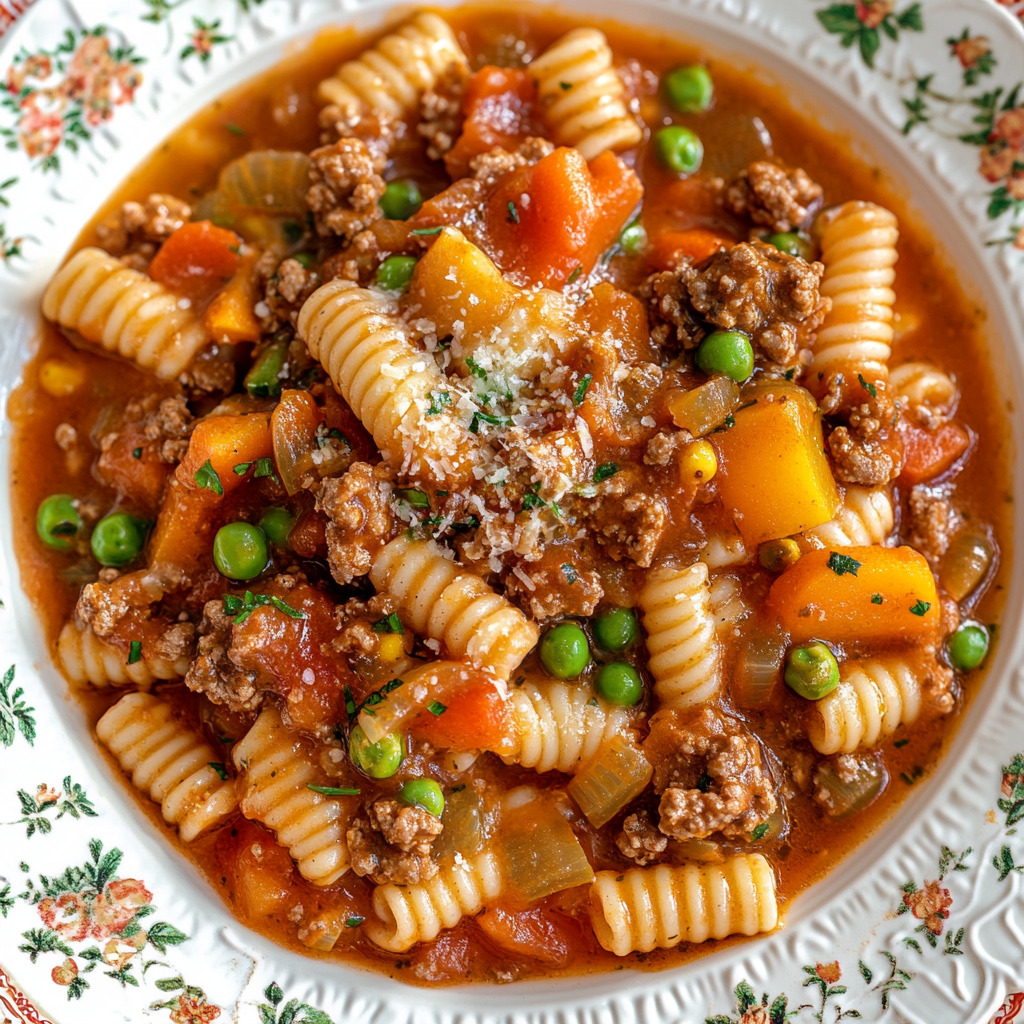
Why People Will Love Slow Cooker Beef Vegetable Pasta Soup Recipe
Slow cooking turns economical beef cuts into exceptionally tender pieces.
Beef broth creates a rich and deeply savory base.
Tomatoes add acidity, sweetness, and additional body.
Carrots contribute natural sweetness and color.
Celery provides a subtle aromatic, savory flavor.
Onion and garlic create a classic soup foundation.
Thyme and basil give the broth gentle herbal complexity.
A bay leaf adds subtle background fragrance during the long cook.
Wide pasta makes the soup especially satisfying.
Green peas add sweetness and freshness at the end.
The optional slurry allows you to choose between a brothy soup and a thicker stew-like consistency.
Most of the cooking is completely hands-off.
It is a practical way to feed a family from one large slow cooker.
The vegetables and beef cook together, allowing their flavors to mingle for hours.
Fire-roasted tomatoes can add another layer of smoky flavor.
The recipe is easy to customize with additional vegetables.
Leftovers make a substantial lunch the following day.
It offers protein, vegetables, pasta, and broth in a single bowl.
Key Ingredients
Stew Meat or Chuck Roast:
Chuck and similar slow-cooking beef cuts contain connective tissue that gradually softens during long cooking. This is what creates tender, flavorful beef rather than dry cubes of meat.
Beef Broth:
Beef broth provides the primary liquid base and reinforces the flavor released from the meat during slow cooking.
Diced Tomatoes:
Tomatoes bring acidity that balances the richness of the beef while adding sweetness and a deeper color to the broth. Fire-roasted tomatoes can provide additional complexity.
Carrots:
Carrots hold up well to long slow-cooker cooking and gradually release natural sweetness into the broth.
Celery and Onion:
Together, celery and onion form an aromatic vegetable base that gives the soup much more depth than beef and broth alone.
Wide Pasta:
Wide or extra-wide pasta turns the soup into a complete meal. Adding it near the end preserves the texture and prevents it from absorbing all the broth during the long cooking period.
Frozen Peas:
Peas need almost no cooking, so adding them at the end preserves their bright color and gentle sweetness.
Thyme, Basil, and Bay Leaf:
These herbs provide an understated savory aroma that complements beef and tomato without overpowering them.
Expert Tips
Chuck roast is an excellent choice because its marbling and connective tissue respond especially well to slow cooking.
Cut the beef into similarly sized cubes so the pieces become tender at roughly the same time.
Trim very large pieces of exterior fat but leave some marbling for flavor.
For additional depth, brown the beef in a skillet before putting it in the slow cooker.
Cut carrots into substantial pieces so they do not become mushy during the long cooking period.
Use low-sodium beef broth if possible so you can control the final seasoning.
Add the tomatoes with all their juices.
Keep the bay leaf whole so it is easy to remove later.
Do not add the pasta at the beginning of cooking.
Begin checking the pasta early because slow cookers vary significantly in temperature.
Stir gently after adding pasta so the tender beef does not break apart excessively.
If you expect several days of leftovers, consider cooking the pasta separately.
Use cornstarch for a clear, glossy thickening effect.
If using flour, whisk it very thoroughly into cool broth before adding it.
Add frozen peas only at the end so they stay bright and fresh.
Let the finished soup rest for several minutes before serving; the broth will thicken slightly
Slow Cooker Beef Vegetable Pasta Soup
Ingredients:
Soup:
2-3 pounds stew meat or chuck/arm roast, cubed
2 cups (340 g) diced carrots, about 2-3 medium carrots
1 cup (170 g) diced celery , about 3 mediums stalks
½ cup (85 g) small diced onion or shallot
1 teaspoon salt, I use coarse, kosher salt
½ teaspoon dried thyme
½ teaspoon dried basil
1 bay leaf
3 cloves garlic, finely minced (or 1 teaspoon garlic powder)
7 cups beef broth
1 (28-ounce) can undrained diced tomatoes, or fire-roasted diced tomatoes
4 cups uncooked wide or extra wide pasta
1 cup frozen peas
To Thicken:
2 tablespoons cornstarch OR 1/4 cup all-purpose flour
1 cup beef broth
Instructions:
Prepare the Base:
In an 8-quart slow cooker, combine the cubed beef, diced carrots, celery, onion, salt, thyme, basil, bay leaf, garlic, beef broth, and the entire can of diced tomatoes (including liquid).
Stir everything together.
Cook Until Tender:
Cover and cook on low for 7–8 hours or high for 4–5 hours, until the beef is fork-tender and the vegetables are soft.
Add Pasta:
Stir in the uncooked pasta.
Re-cover and cook on high for an additional 10–20 minutes, or until the pasta are fully cooked.
Cooking time may vary by slow cooker.
Optional – Thicken the Broth:
In a small bowl, whisk together the cornstarch (or flour) with 1 cup of beef broth until smooth.
Stir this slurry into the soup and cook on high for 4–5 more minutes to let it thicken slightly.
Finish and Serve:
Add in the frozen peas and stir until warmed through.
Taste and adjust seasoning with extra salt and pepper if needed. Serve warm and enjoy!
Important Notes When Making Slow Cooker Beef Vegetable Pasta Soup
Slow cookers can vary significantly in actual cooking temperature.
Beef is technically safe before it becomes fork-tender; slow-cooked chuck needs additional time for its connective tissue to soften properly.
Do not judge chuck roast only by temperature—texture is the more useful guide for this recipe.
Pasta continues absorbing broth even after the slow cooker is turned off.
Leftover soup may therefore become significantly thicker overnight.
Cooking pasta separately is the best option if you plan to freeze or store the soup.
Do not overcook the pasta or it may become mushy.
Frozen peas need only enough heat to warm through.
Commercial beef broth and canned tomatoes can contribute substantial sodium.
Taste before adding additional salt near the end.
Cornstarch and flour behave differently, so use only the amount specified for the thickening option you choose.
Cornstarch should first be mixed with cool liquid to avoid lumps.
Remove the bay leaf before serving.
If the soup becomes too thick, add additional warm beef broth.
If it is too thin, allow it to cook briefly uncovered on high after adding the slurry.
Refrigerate leftovers promptly once cooled sufficiently.
How to Enjoy Slow Cooker Beef Vegetable Pasta Soup After Cooking
Once the pasta and peas are ready, turn off the slow cooker and allow the soup to rest for approximately 5–10 minutes. This gives the thickened broth time to settle around the beef, pasta, and vegetables.
Remove the bay leaf before serving.
Ladle the soup into large, deep bowls, making sure every serving contains several pieces of tender beef, pasta, carrots, celery, peas, and tomato-rich broth.
Finish with freshly cracked black pepper for an additional savory bite.
Fresh parsley can be scattered over the top for color and freshness.
For extra richness, add a small amount of freshly grated Parmesan, although the soup is flavorful enough without cheese.
Serve with crusty sourdough, French bread, dinner rolls, or garlic bread for soaking up the broth.
A simple green salad or cabbage salad provides a crisp contrast to the slow-cooked beef and pasta.
For an especially comforting cold-weather meal, serve the soup with warm bread and butter.
When reheating leftovers, add a splash of beef broth because the pasta will likely have absorbed some of the original liquid.
Nutrition Information
Approximate nutrition per serving, based on about 8 generous servings, using approximately 2½ pounds of chuck or stew beef, 4 cups dry pasta, and the cornstarch thickening option:
Calories: 560 kcal | Total Fat: 22 g | Saturated Fat: 8 g | Monounsaturated Fat: 9 g | Polyunsaturated Fat: 2 g | Cholesterol: 105 mg | Sodium: 850–1,150 mg depending on the beef broth, canned tomatoes, and added salt | Total Carbohydrates: 48 g | Dietary Fiber: 5 g | Sugars: 8 g | Protein: 42 g
Additional estimate:
Potassium: 1,050–1,300 mg | Calcium: 90–130 mg | Iron: 5–6.5 mg | Magnesium: 65–90 mg | Vitamin A: 6,000–8,000 IU | Vitamin C: 15–25 mg | Vitamin B12: 3–4.5 mcg | Zinc: 7–9 mg
Frequently Asked Questions:
What does Slow Cooker Beef Vegetable Pasta Soup taste like?
It is rich, savory, tomato-forward, mildly herby, and deeply beefy, with tender vegetables and pasta making the broth especially comforting.
What is the best beef for this soup?
Chuck roast is one of the best choices because it contains enough fat and connective tissue to become tender and flavorful after several hours of slow cooking.
What pasta works best?
Wide egg noodles, extra-wide noodles, pappardelle broken into smaller pieces, rotini, shells, or other substantial pasta shapes all work well.
What should I serve with this soup?
Crusty bread, garlic bread, dinner rolls, green salad, roasted vegetables, or a simple cabbage salad are excellent accompaniments.
Does this soup taste good the next day?
Yes. The beef and vegetable flavors become even more integrated, although the pasta may absorb additional broth, so you may need to add more liquid when reheating.
Why should the pasta be added only near the end?
Pasta cooks much faster than beef and vegetables. If it spends seven or eight hours in the slow cooker, it will overcook, break apart, and absorb too much broth.
Can I cook the pasta separately instead?
Yes, and this is often the best choice for meal prep. Add cooked pasta to individual bowls and ladle the hot beef soup over it.
Why is my beef still tough after several hours?
Chuck often becomes tough before it becomes tender. If the pieces are still chewy, they usually need more slow-cooking time for the connective tissue to break down.
How do I thicken the soup without creating lumps?
Whisk cornstarch or flour thoroughly into cool beef broth first. Once completely smooth, stir the slurry gradually into the hot soup.
Can I freeze Slow Cooker Beef Vegetable Pasta Soup?
Yes, but it freezes best without the pasta. Freeze the beef, vegetables, and broth together, then cook fresh pasta when reheating so the noodles retain a better texture.