Eggplant Parm
Eggplant Parmesan is a deeply comforting Italian-American casserole built around tender eggplant, a crisp Parmesan-panko crust, slow-simmered tomato sauce, and generous layers of mozzarella, provolone, and Parmesan cheese. The dish combines several textures at once: a golden exterior on the eggplant, a soft and creamy center, silky tomato sauce, and bubbling melted cheese.
One of the most important parts of this recipe is salting and draining the eggplant before breading. Removing excess moisture helps the slices fry more evenly, improves their texture, and prevents the finished casserole from becoming watery. Frying the breaded eggplant also develops flavors that would be difficult to achieve through baking alone.
The homemade tomato sauce balances all of that richness with acidity, herbs, garlic, and the natural sweetness of San Marzano tomatoes. Once layered and baked together, the components become a hearty, cohesive dish that is satisfying enough to serve as the centerpiece of a meal.
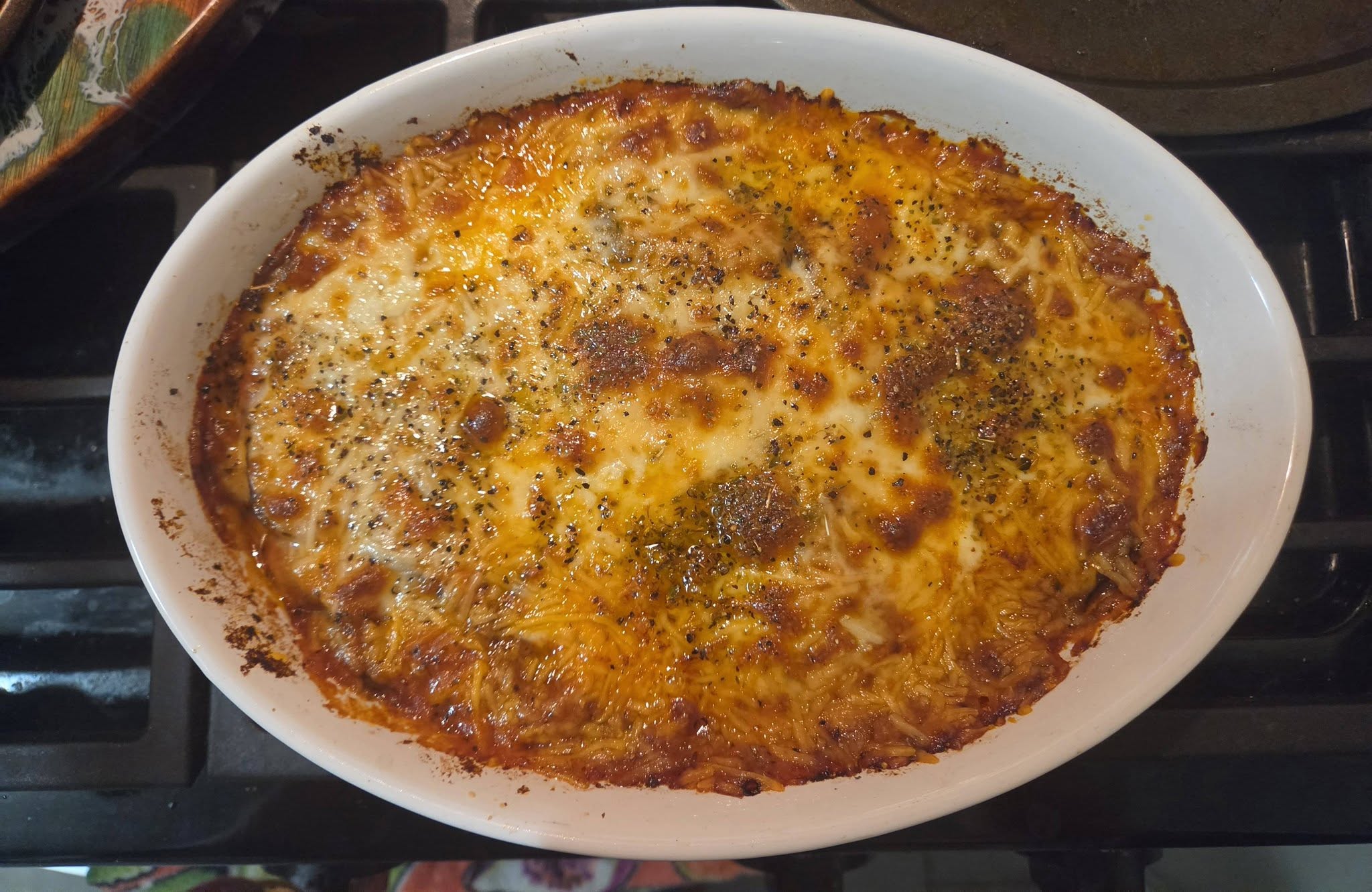
Why People Will Love Eggplant Parm Recipe
– The eggplant becomes tender and creamy inside while remaining structured enough to hold the layers.
– Salting the eggplant helps prevent a watery casserole.
– Panko breadcrumbs create a lighter, crunchier coating than fine breadcrumbs.
– Parmesan mixed directly into the breading gives every slice more savory flavor.
– Frying develops a deeply golden, crisp exterior before the casserole is assembled.
– San Marzano tomatoes create a rich, naturally sweet tomato sauce.
– Tomato paste intensifies the tomato flavor without making the sauce overly complicated.
– Garlic and onion create a strong savory foundation.
– Fresh basil gives the tomato sauce brightness and aroma.
– Fresh oregano provides an earthy herbal note.
– Mozzarella gives the casserole its classic stretchy melted-cheese texture.
– Provolone adds a deeper, sharper cheese flavor.
– Parmesan contributes nuttiness and umami throughout the dish.
– The pinch of sugar helps soften excessive tomato acidity without making the sauce sweet.
– Broiling at the end produces an appetizing browned, bubbling cheese crust.
– The casserole can be assembled ahead of time.
– It is hearty enough to serve without meat.
– Leftovers reheat very well.
– The flavor often becomes even more integrated after resting overnight.
– It is an excellent recipe for family meals, holidays, and casual entertaining.
Key Ingredients
Eggplant:
Eggplant is the foundation of the dish. Once salted, breaded, and fried, it becomes tender and almost creamy while still maintaining enough structure to form distinct casserole layers.
San Marzano Tomatoes:
These tomatoes provide the sauce with sweetness, acidity, and rich tomato flavor. Their relatively balanced acidity works especially well in a simple sauce.
Panko Breadcrumbs:
Panko creates a crisp, airy crust around the eggplant and helps protect the tender interior during frying.
Parmesan Cheese:
Parmesan appears both in the breading and cheese layers, contributing saltiness, nuttiness, and concentrated savory flavor.
Mozzarella:
Mozzarella provides moisture, creaminess, and the familiar stretchy cheese texture associated with Eggplant Parmesan.
Provolone:
Provolone brings more character than mozzarella alone, adding a slightly sharper and more complex dairy flavor.
Fresh Basil and Oregano:
These herbs brighten the tomato sauce and keep the casserole from tasting overly rich.
Extra-Virgin Olive Oil:
Olive oil is used both for the sauce and frying, giving the dish additional richness and Mediterranean character.
Expert Tips
– Choose eggplants that feel firm and heavy for their size.
– Slice them as evenly as possible so every piece cooks at the same rate.
– Keep the slices around ½ inch thick; very thin slices can collapse during frying.
– Salt both sides and allow plenty of draining time.
– After salting, pat the eggplant extremely dry before breading.
– Do not rinse unless necessary; if you rinse away excess salt, dry the slices very thoroughly afterward.
– Keep each component of the breading station separate and organized.
– Shake off excess flour before dipping in egg.
– Press the panko-Parmesan mixture gently onto the eggplant so it adheres well.
– Let breaded slices sit for several minutes before frying to help the coating set.
– Keep the frying oil hot enough to brown the coating quickly without burning it.
– Fry in batches so the oil temperature does not drop dramatically.
– Drain fried slices on a wire rack when possible to preserve crispness.
– Let the tomato sauce simmer until slightly concentrated before assembling.
– Remove the bay leaves before layering the casserole.
– Use freshly grated cheese for smoother melting.
– Avoid drowning each eggplant layer in sauce; too much sauce can soften the breading excessively.
– Let the baked casserole rest before slicing so the layers set.
– Broil only briefly and watch continuously because cheese can go from browned to burned very quickly.
Eggplant Parm
Ingredients
For the Eggplant
– 2 large eggplants, sliced into ½-inch-thick rounds or steaks
– ¼ cup kosher salt, for drawing out excess moisture
– Extra-virgin olive oil, for frying
For the Tomato Sauce
– 1 small yellow onion, finely chopped
– 4 garlic cloves, minced
– 2 tablespoons tomato paste
– 1 can (28 ounces) San Marzano tomatoes, crushed or mashed
– 14 ounces water
– Small handful fresh basil leaves, chopped
– 1 tablespoon fresh oregano, chopped
– 2 dried bay leaves
– Pinch of sugar, to balance the tomato acidity
– Salt and freshly ground black pepper, to taste
For the Breading
– 1 cup all-purpose flour
– ½ teaspoon sea salt
– ½ teaspoon freshly ground black pepper
– 3 large eggs
– ⅓ cup water
– 2 cups panko breadcrumbs
– 1 cup freshly grated Parmesan cheese
For the Cheese Layers
– 1 cup freshly grated Parmesan cheese
– 1 cup freshly grated provolone cheese
– 2 cups freshly grated mozzarella cheese
For Garnish
– Fresh basil, oregano, or parsley, chopped
Instructions
Salt and Drain the Eggplant
Place a wire cooling rack over a large sheet pan, or line a large plate with paper towels.
Arrange the eggplant slices in a single layer and sprinkle both sides generously with kosher salt.
If stacking the slices, place paper towels between each layer.
Cover the top with additional paper towels, then place another sheet pan or plate over the eggplant and add a little weight.
Let the eggplant rest for at least 2 hours to draw out excess moisture.
After resting, remove the damp paper towels and thoroughly pat each eggplant slice dry.
Prepare the Tomato Sauce
Heat 2 tablespoons olive oil in a saucepan over medium heat.
Add the chopped onion and cook until soft and translucent.
Stir in the minced garlic and cook for another 1–2 minutes, until fragrant.
Add the tomato paste, crushed or mashed San Marzano tomatoes, 14 ounces water, chopped basil, oregano, bay leaves, and a pinch of sugar.
Season with salt and freshly ground black pepper.
Stir well and bring the sauce to a gentle simmer.
Cook uncovered for 30–60 minutes, stirring occasionally, until the flavors develop and the sauce thickens slightly.
Remove the bay leaves before assembling the casserole.
Prepare the Breading Station
While the sauce simmers, arrange three shallow bowls.
In the first bowl, combine:
– 1 cup all-purpose flour
– ½ teaspoon sea salt
– ½ teaspoon black pepper
In the second bowl, whisk together:
– 3 large eggs
– ⅓ cup water
In the third bowl, combine:
– 2 cups panko breadcrumbs
– 1 cup grated Parmesan cheese
Bread the Eggplant
Working one slice at a time, coat the eggplant lightly in the seasoned flour.
Shake off any excess.
Dip the floured eggplant into the egg mixture, making sure both sides are coated.
Finally, press the slice into the Parmesan-panko mixture until completely covered.
Transfer the breaded slices to a tray and repeat with the remaining eggplant.
Fry the Eggplant
Pour enough olive oil into a large skillet to reach about ½ inch deep.
Heat over medium heat.
Working in batches, carefully add the breaded eggplant slices.
Fry for about 2 minutes per side, or until golden brown and crisp.
Transfer the fried eggplant to a paper towel-lined plate or wire rack to drain.
Avoid overcrowding the skillet so the oil temperature stays steady.
Prepare the Cheese Mixture
In a bowl, combine:
– Remaining 1 cup Parmesan cheese
– 1 cup grated provolone
– 2 cups grated mozzarella
Mix until evenly distributed.
Preheat the Oven
Preheat the oven to 350°F / 175°C.
Assemble the Eggplant Parmesan
Spread 1–2 ladlefuls of tomato sauce over the bottom of a 9 × 13-inch baking dish.
Arrange half of the fried eggplant slices over the sauce in an even layer.
Spoon half of the remaining tomato sauce over the eggplant.
Sprinkle about 1½ cups of the cheese mixture over the sauce.
Add the remaining eggplant slices in another layer.
Spread the rest of the tomato sauce over the top.
Finish with the remaining 2½ cups cheese mixture.
Bake
Cover the baking dish with aluminum foil.
Bake for 30 minutes.
Remove the foil and switch the oven to broil.
Broil for about 2–3 minutes, or until the cheese is melted, bubbly, and lightly browned.
Watch carefully during broiling so the cheese does not burn.
Rest and Serve
Remove the Eggplant Parmesan from the oven and let it rest for about 10–15 minutes before slicing.
Garnish with freshly chopped basil, oregano, or parsley.
Serve warm.
Important Notes When Making Eggplant Parm
– The ¼ cup kosher salt is primarily used for drawing moisture out of the eggplant and is not all consumed.
– Different brands of kosher salt have different crystal sizes, so the volume can represent different weights.
– Parmesan, provolone, and mozzarella already contain significant sodium.
– Taste the tomato sauce before adding much additional salt.
– Eggplant absorbs oil readily, so frying temperature strongly affects the final richness.
– Oil that is too cool can make the breading greasy.
– Olive oil used for frying does not all end up in the finished dish.
– The sauce should be thick enough to coat a spoon before layering.
– If the sauce is watery, simmer it longer before assembling.
– Fresh mozzarella contains more moisture than low-moisture mozzarella and may make the casserole wetter.
– If using fresh mozzarella, drain it very well first.
– Resting the casserole for 10–15 minutes is important for clean slices.
– Eggplant Parmesan will soften as it sits because the breading absorbs tomato sauce.
– This softening is normal and part of the character of the finished casserole.
– Refrigerate leftovers promptly once they have cooled enough to store.
How to Enjoy Eggplant Parm After Cooking
Let the Eggplant Parmesan rest for about 10–15 minutes after baking. Cutting it immediately can cause the hot cheese and sauce to run out of the layers.
Use a sharp knife or wide spatula to cut generous squares or rectangular portions.
Spoon a small amount of additional tomato sauce around the plate if you have extra, rather than covering the crispy cheese topping completely.
Add fresh basil immediately before serving to bring a bright contrast to the rich cheese and fried eggplant.
Freshly grated Parmesan can be added at the table for anyone who wants an even stronger savory finish.
Serve Eggplant Parmesan with crusty Italian bread or garlic bread to soak up the tomato sauce.
For balance, pair it with a simple green salad dressed with lemon juice or red wine vinegar.
Roasted broccoli, asparagus, or sautéed greens also work well because their slight bitterness contrasts with the rich cheese.
For a more substantial dinner, serve a smaller portion alongside spaghetti or another simple pasta tossed with tomato sauce.
Leftovers are best reheated in an oven or toaster oven at about 350°F / 175°C until hot. This restores more of the exterior texture than microwaving.
Nutrition Information
Approximate nutrition is based on 8 servings, using the listed cheeses, breading, tomato sauce, and a moderate amount of absorbed frying oil. Because fried eggplant can absorb very different amounts of oil, the actual values can vary considerably.
Calories: 560 kcal | Total Fat: 31 g | Saturated Fat: 12 g | Monounsaturated Fat: 13 g | Polyunsaturated Fat: 3.5 g | Cholesterol: 105–120 mg | Sodium: 1,000–1,300 mg depending on the cheeses, salt retained by the eggplant, and sauce seasoning | Total Carbohydrates: 48–52 g | Dietary Fiber: 7–8 g | Sugars: 9–11 g | Protein: 25–28 g
Additional estimate:
Potassium: 850–1,050 mg | Calcium: 550–700 mg | Iron: 3.5–5 mg | Magnesium: 70–95 mg | Vitamin A: 1,300–1,800 IU | Vitamin C: 12–20 mg | Vitamin B12: 1–1.5 mcg | Folate: 80–120 mcg
The biggest nutritional variables are the amount of frying oil absorbed, the exact cheeses used, and how much of the breading adheres to the eggplant.
Frequently Asked Questions:
What does Eggplant Parmesan taste like?
It is rich, savory, cheesy, and tomato-forward, with tender eggplant inside a crisp breadcrumb coating and layers of melted cheese.
Is Eggplant Parmesan supposed to be crispy?
The eggplant is crisp immediately after frying, but some of that crust softens once it is layered with tomato sauce and baked. The top and outer edges should retain more texture.
Is Eggplant Parmesan vegetarian?
This version is meat-free. However, strict vegetarians may want to check the Parmesan because traditional Parmesan is commonly made with animal-derived rennet.
What should I serve with Eggplant Parmesan?
A green salad, garlic bread, pasta, sautéed greens, or roasted vegetables all pair well with it.
Is Eggplant Parmesan better the next day?
The texture is softer the next day, but many people enjoy the flavor even more because the tomato, herbs, eggplant, and cheese have had time to blend.
Why do I need to salt the eggplant first?
Salting draws out moisture, seasons the flesh, and helps create a firmer texture that behaves better during breading, frying, and baking.
Why did my Eggplant Parmesan turn out watery?
Common causes include insufficiently drained eggplant, watery tomato sauce, high-moisture mozzarella, or slicing the casserole immediately after baking.
Why did the breading fall off while frying?
The eggplant may have been too wet, excess flour may not have been shaken off, or the oil may not have been hot enough. Pat the slices thoroughly dry and follow the flour-egg-panko order carefully.
Can I assemble Eggplant Parmesan ahead of time?
Yes. You can assemble it several hours ahead and refrigerate it covered. Because the breading absorbs sauce while sitting, assemble close to baking time if you want the most texture.
Can I bake the breaded eggplant instead of frying it?
Yes. Spray or brush the breaded slices lightly with oil and bake until golden before assembling. The result will be lighter, although the coating will taste and feel somewhat different from traditionally fried eggplant.