One Pot Lasagna Soup
There’s something deeply comforting about lasagna—the slow-built layers, the rich sauce, the warmth that lingers in every bite. This One Pot Lasagna Soup captures all of that essence and transforms it into something more immediate, more fluid, yet just as soulful. It’s the kind of dish that wraps you in familiarity while simplifying the process into a single pot.
Here, the bold flavors of seasoned meat, tomatoes, herbs, and tender pasta come together in a simmering broth that feels both hearty and comforting. The melted cheese on top brings that classic lasagna finish, stretching and blending into the soup like a final, indulgent touch.
This recipe is not just about convenience—it’s about preserving the depth and emotional comfort of a classic dish, while making it accessible for everyday cooking.
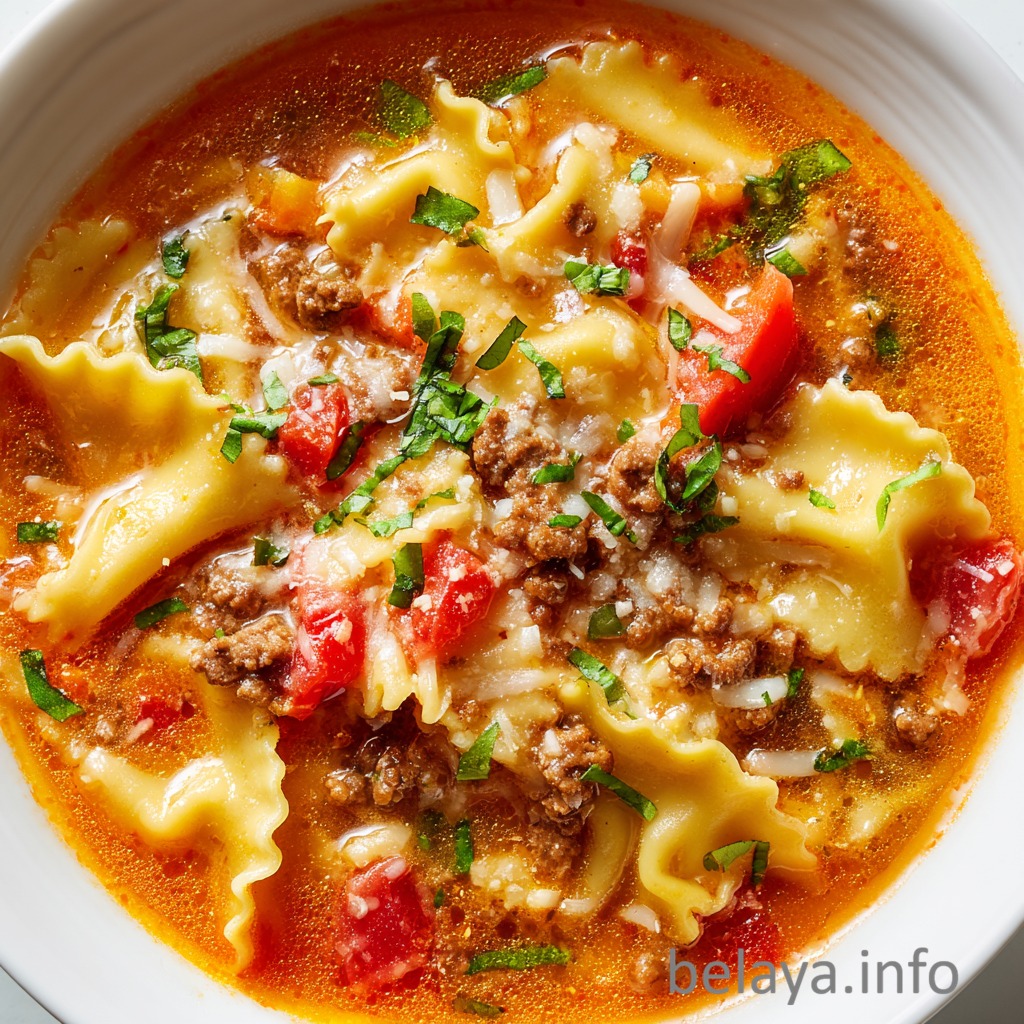
Why People Will Love This One Pot Lasagna Soup
All the soul of lasagna, without the effort
It delivers the same rich, layered flavors of traditional lasagna—savory meat, tomato sauce, herbs, and melted cheese—without the time-consuming layering and baking.
Deep, slow-developed flavor in a single pot
Browning the meats and simmering everything together allows the flavors to build naturally, creating a broth that feels complex, hearty, and comforting.
A perfect balance of richness and comfort
The combination of beef, sausage, and tomato creates a bold base, while the broth keeps it from feeling too heavy.
Hearty enough to be a complete meal
With protein, pasta, and sauce all in one bowl, it satisfies like a full dinner without needing multiple dishes.
The magic of melted cheese in every bite
Topped with mozzarella and parmesan, it captures that iconic lasagna finish—creamy, stretchy, and indulgent.
A cozy, warming experience
Ideal for cold days or when you crave comfort, this soup feels like a warm, familiar hug.
Less cleanup, more enjoyment
Everything cooks in one pot, making it practical without sacrificing flavor or depth.
Customizable to personal taste
Adjust the spice level, swap proteins, or add vegetables—this recipe adapts easily while staying true to its core.
Perfect for leftovers
The flavors deepen over time, making it even more delicious the next day.
A nostalgic yet modern twist
It honors a classic dish while reimagining it into something easier, faster, and just as satisfying.
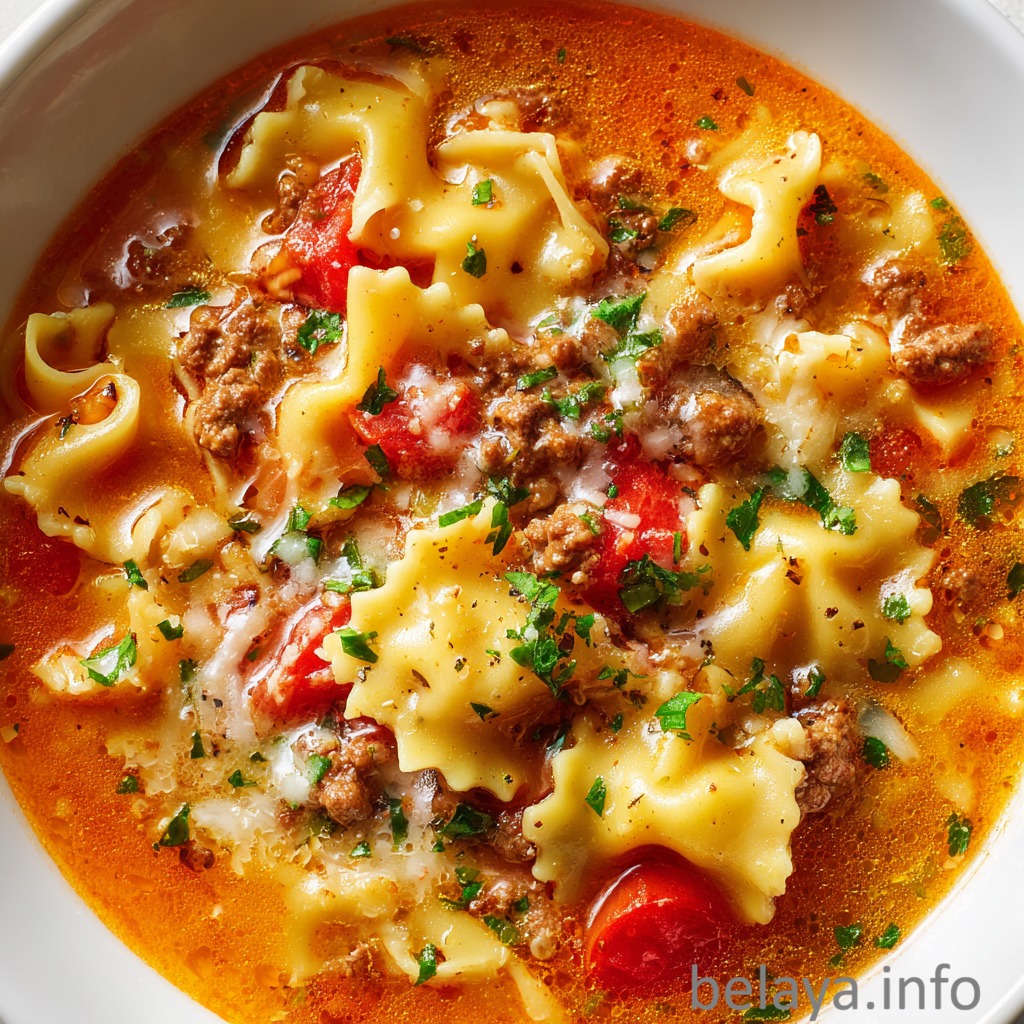
Key Ingredients
Ground Beef & Italian Sausage
The dual-meat base creates depth—beef brings richness, while sausage adds seasoning, fat, and a subtle spice that defines the character of the soup.
Onion & Garlic
The aromatic foundation—softened slowly, they release sweetness and warmth, building the first layer of flavor that everything else rests upon.
Tomato Paste & Diced Tomatoes
Concentrated and bright—tomato paste intensifies richness, while diced tomatoes add texture and a natural acidity that keeps the soup balanced.
Pasta Sauce
The body of the dish—smooth, seasoned, and already layered with flavor, it ties everything together into a cohesive, comforting base.
Chicken Broth
The element that transforms lasagna into soup—lightening the texture while allowing flavors to spread and deepen through slow simmering.
Basil & Oregano
Classic Italian herbs—earthy, slightly sweet, and aromatic, they bring familiarity and authenticity to every spoonful.
Lasagna Noodles
The defining touch—broken into pieces, they mimic traditional layers while absorbing the broth and becoming tender, yet satisfying.
Sugar (Optional)
A subtle balancer—just enough to soften the acidity of the tomatoes and round out the overall flavor.
Mozzarella & Parmesan
The finishing layer—melting into the soup, they recreate the signature lasagna experience with creamy richness and savory depth.
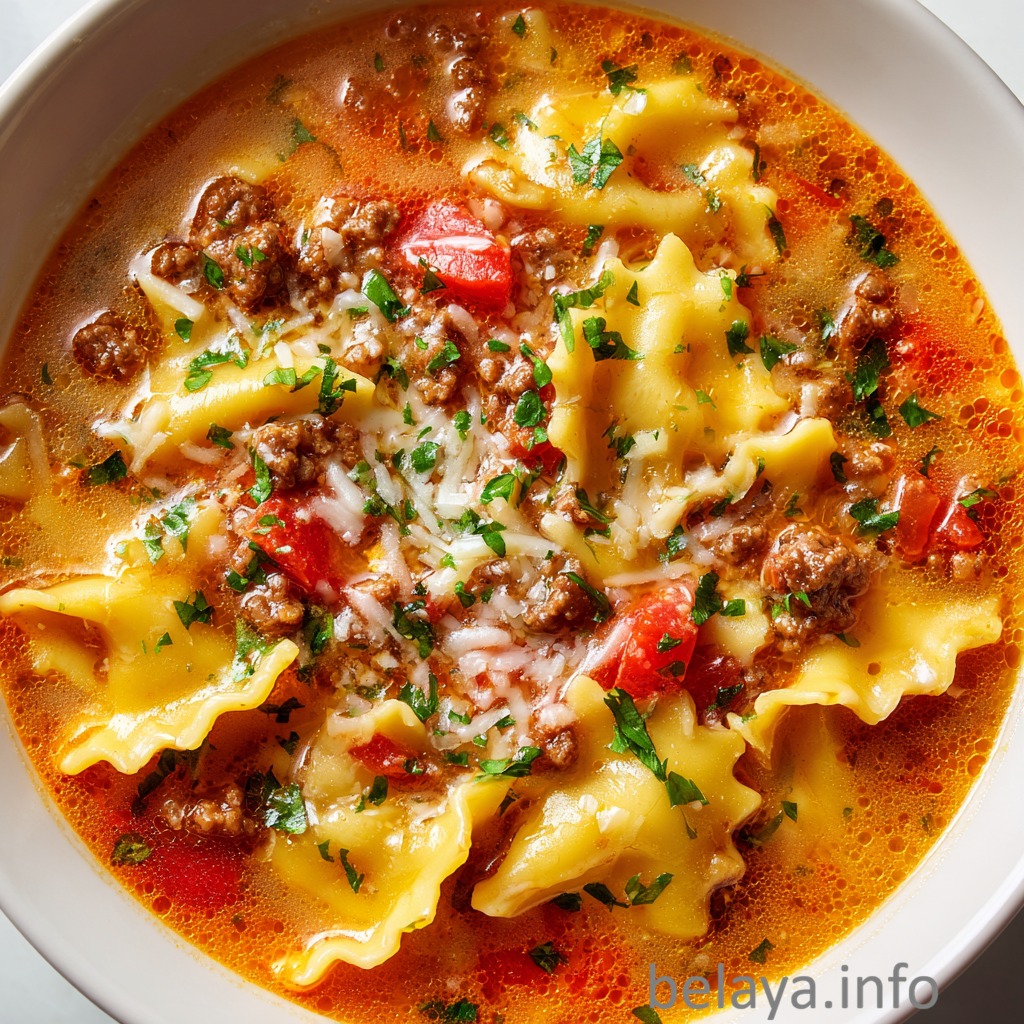
Expert Tips:
Brown the meats properly—don’t rush this step
Let the beef and sausage develop a deep, golden crust before stirring too much. This caramelization (fond) is what gives the soup its rich, layered flavor.
Build flavor in stages, not all at once
Add onions early to soften and sweeten, then garlic and herbs later so they don’t burn. This layering creates depth instead of a flat taste.
Use tomato paste strategically
Cook the tomato paste for 1–2 minutes before adding liquids. This removes its raw edge and intensifies its sweetness and richness.
Balance acidity with intention
Tomatoes can be sharp—adjust with a pinch of sugar or a splash of cream if needed, but always taste before adding.
Control noodle texture carefully
Add lasagna noodles only after the soup reaches a boil. Cook just until al dente to prevent them from becoming overly soft or breaking down.
Avoid overcooking the pasta
The noodles will continue to absorb liquid even after cooking. If making ahead, consider cooking pasta separately and adding it when serving.
Adjust broth for consistency
This soup thickens as it sits. Keep extra broth on hand to loosen it when reheating or if it becomes too dense.
Season gradually and taste often
Sausage, broth, and sauce already contain salt. Add additional salt in small amounts at the end to avoid over-seasoning.
Let the soup rest before serving
A short resting time allows flavors to settle and deepen, making the final result more cohesive.
Use cheese as a finishing element, not just a topping
Stir in a bit of mozzarella or parmesan for richness, then add more on top for that classic melted layer.
Finish with freshness for contrast
A sprinkle of fresh basil or parsley at the end brightens the dish and balances the heaviness.
Think of it as a fluid lasagna, not just soup
Every component should echo traditional lasagna—rich, layered, and comforting—just in a more relaxed, spoonable form.
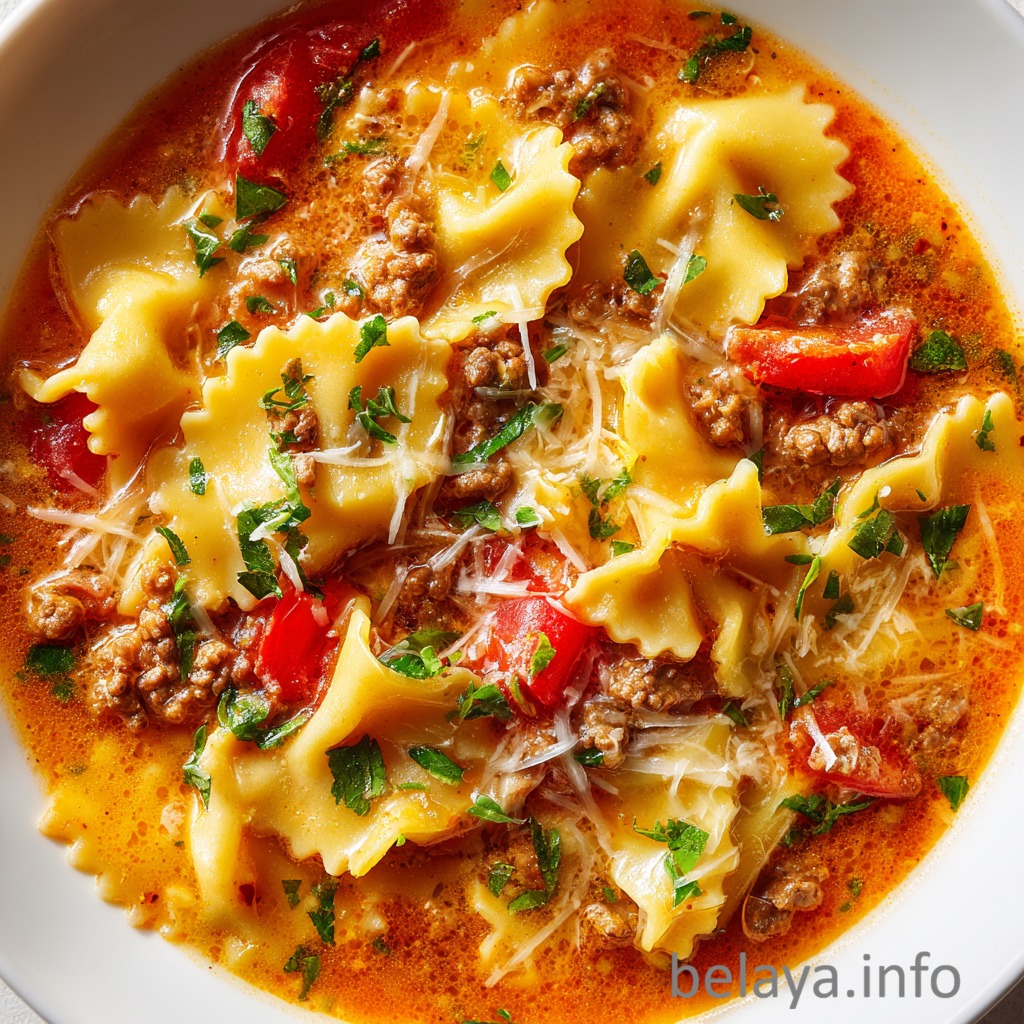
One Pot Lasagna Soup
Ingredients
1 pound lean ground beef
1 pound ground Italian sausage
1 white onion, chopped
3 tsp minced garlic
2 tbsp Tomato Paste
14 ounce can of diced tomatoes
2 tsp chopped basil
1 tsp oregano
Salt and pepper to taste
8 cups Chicken Broth
24 ounce jar of pasta sauce, your choice of flavor
10 or so lasagna noodles, broken into pieces
1 tsp sugar, optional
Instructions
In a large stock pot, brown the ground beef and the italian sausage
Chop the onion and combine it with the meat
When the meat is almost completely cooked, add in the minced garlic, oregano, basil and salt and pepper.
Drain the excess fat from the meat
Stir in the tomato paste and add the 8 cups of Chicken broth to the stock pot
Add the jar of Pasta sauce and stir to combine and mix well
Stir in the sugar, if using
Place a cover on the pot and bring the soup to a boil
Remove the cover and add in the broken up lasagna noodles to the pot
Boil until it is al dente. This is to the tenderness of the pasta you prefer
Once the noodles are fully cooked, top the soup with shredded mozzarella and grated parmesan. Allow the cheese to melt
Serve immediately.
Enjoy!
Important Notes When Making One Pot Lasagna Soup
This is a balance between soup and pasta, not purely one or the other
The dish should feel hearty but still spoonable. Too many noodles will make it thick like pasta; too much broth will dilute the flavor.
The quality of your sausage matters
Italian sausage carries much of the seasoning. A well-seasoned sausage can elevate the entire pot, while a bland one will leave the soup flat.
Tomato intensity builds over time
Between tomato paste, diced tomatoes, and pasta sauce, the tomato flavor is strong. Proper seasoning and slight sweetness help keep it balanced, not overwhelming.
Pasta absorbs liquid even after cooking
As the soup sits, noodles will continue soaking up broth. Expect the consistency to thicken, especially for leftovers.
Timing of noodles is critical
Adding noodles too early can cause them to overcook and break apart. Always add them once the soup is actively simmering.
Fat equals flavor—but control it
Draining excess grease keeps the soup rich but not heavy. Leaving too much fat can make the broth feel greasy instead of smooth.
Layered seasoning is more effective than adding at the end
Seasoning during cooking allows flavors to develop naturally, while last-minute seasoning only sits on top.
Cheese transforms the final texture
It’s not just garnish—melting cheese into the soup creates a creamy, cohesive finish reminiscent of baked lasagna.
Resting time improves depth
Letting the soup sit briefly before serving allows the flavors to settle and meld into a more unified taste.
Leftovers require adjustment
The soup will thicken significantly overnight. When reheating, add broth or water to restore its original consistency.
Fresh elements bring contrast
A final touch of herbs or a light acidic note can lift the dish and prevent it from feeling too heavy.
The soul of the dish is comfort with structure
It should feel indulgent and rich, but still balanced enough that each spoonful remains enjoyable, not overwhelming.
How to Enjoy One Pot Lasagna Soup After Cooking
Let it settle before serving
After turning off the heat, allow the soup to rest for about 5–10 minutes. This helps the broth slightly thicken and the flavors come together more cohesively.
Check and adjust the consistency
If the soup feels too thick, add a splash of warm broth or water. If it’s too thin, let it simmer uncovered for a few extra minutes. The ideal texture is rich but still spoonable.
Layer your bowl with intention
Ladle the soup into bowls, then top with shredded mozzarella and grated parmesan. Let the heat gently melt the cheese into the surface.
Create the classic “lasagna effect”
For a more authentic experience, add a small scoop of ricotta or extra mozzarella on top and let it soften into the soup, mimicking the creamy layers of traditional lasagna.
Finish with freshness
Sprinkle chopped basil or parsley over the top to add brightness and contrast to the rich base.
Serve it hot for maximum comfort
This dish is best enjoyed steaming hot, when the cheese is melty and the aroma is at its peak.
Pair thoughtfully if desired
Serve with crusty bread or garlic bread to soak up the flavorful broth and complete the meal.
Stir before each bite if needed
Cheese and noodles may settle—gently stir to redistribute everything and keep each spoonful balanced.
Customize your serving
Add chili flakes for heat, extra cheese for richness, or a drizzle of olive oil for depth—tailor each bowl to your taste.
Enjoy it slowly
This is a comfort dish meant to be savored. Take your time to enjoy the layers of flavor and texture in each bite.
Handle leftovers with care
When reheating, add a bit of broth to loosen the soup and bring it back to its original texture. Reheat gently to avoid overcooking the noodles.
Turn it into a cozy ritual
Whether it’s a quiet dinner or a shared meal, this soup is about warmth, comfort, and slowing down to enjoy something deeply satisfying.
Nutrition Information:
YIELD: 8 SERVING SIZE: 1
Amount Per Serving: CALORIES: 523 | TOTAL FAT: 25g| SATURATED FAT: 9g | TRANS FAT: 0g | UNSATURATED FAT: 16g | CHOLESTEROL: 90mg | SODIUM: 1925mg | CARBOHYDRATES: 38g | FIBER: 4g | SUGAR: 10g | PROTEIN: 35g
Frequently Asked Questions:
Can I use only one type of meat instead of both beef and sausage?
Yes. You can use all ground beef for a milder flavor or all Italian sausage for a richer, more seasoned taste. Using both, however, creates the best balance of depth and complexity.
How do I keep the noodles from becoming too soft or mushy?
Add the noodles only after the soup is boiling and cook them just until al dente. If you plan to store leftovers, consider cooking the noodles separately and adding them when serving.
Can I make this soup ahead of time?
Absolutely. The flavors actually deepen over time. For best results, store the soup without noodles or cook them separately to maintain texture when reheating.
How can I make this soup thicker or thinner?
For a thicker, more stew-like texture, use fewer noodles or let the soup simmer uncovered to reduce. For a thinner consistency, simply add more broth or water until desired.
What’s the best way to enhance the “lasagna” flavor?
Focus on the finishing touches—add a mix of mozzarella, parmesan, and even ricotta on top. Fresh basil or parsley and a drizzle of olive oil can elevate the dish and bring it closer to traditional lasagna.
Do I need to cook the meat in batches or all at once?
If your pot is large enough, you can cook it all at once—but avoid overcrowding. Giving the meat space allows it to brown properly instead of steaming, which builds deeper flavor.
When should I add the garlic and herbs for the best flavor?
Add garlic and dried herbs after the meat is mostly cooked. This prevents burning and helps release their aroma into the fat, creating a more layered base.
Should I drain the fat from the meat?
Yes, but not completely. Remove excess grease to avoid a heavy, oily soup, while leaving a small amount behind to carry flavor.
How do I prevent the noodles from sticking together in the pot?
Stir immediately after adding them and continue stirring occasionally as they cook. This keeps them separated and evenly cooked.
What’s the best way to control the soup’s final consistency while cooking?
Start with the recommended broth amount, then adjust near the end. If it’s too thick, add warm broth gradually. If too thin, let it simmer uncovered to reduce and concentrate the flavors.