Caldo de Res Bien Sabroso
Caldo de Res Bien Sabroso is a traditional-style Mexican beef and vegetable soup built around slow-simmered beef, marrow bones, corn, potatoes, carrots, cabbage, zucchini, green beans, onion, garlic, and fresh cilantro. It is rustic, nourishing, and designed to let the natural flavors of the meat and vegetables create the broth rather than relying on heavy sauces or complicated seasonings.
The heart of the dish is the long, gentle simmer. Beef shank, osso buco, or another collagen-rich cut slowly becomes tender while marrow bones contribute body and richness to the broth. The vegetables are added later so they remain recognizable and flavorful instead of dissolving into the soup.
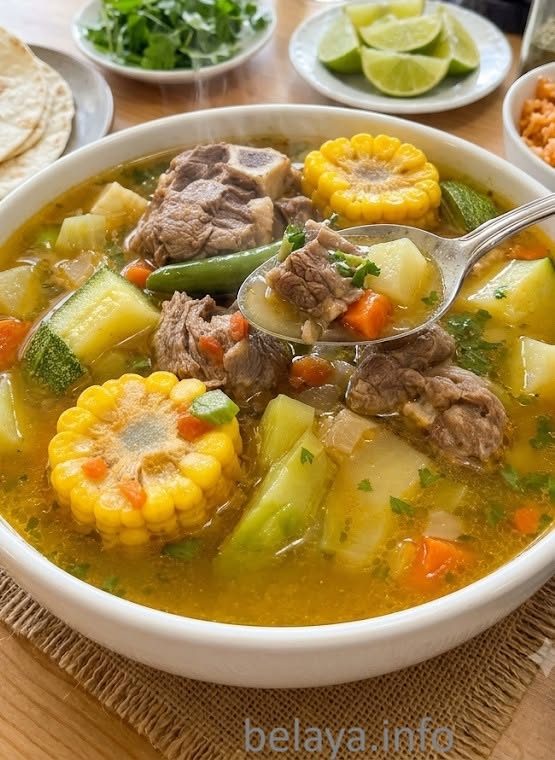
A good bowl of Caldo de Res should feel generous. You get tender beef, sweet corn, creamy potato, soft cabbage, carrots, zucchini, and a deeply savory broth in every serving. Finished with cilantro and served with tortillas, rice, lime, and salsa, it is the kind of comforting meal that can easily become the centerpiece of a family table.
Why People Will Love Caldo de Res Bien Sabroso Recipe
The broth develops naturally from slow-cooked beef and bones.
Marrow bones give the soup extra richness and body.
Beef shank becomes exceptionally tender after a long simmer.
Corn adds natural sweetness to the savory broth.
Potatoes make every serving hearty and satisfying.
Carrots contribute gentle sweetness and color.
Cabbage becomes tender while absorbing the beef broth.
Zucchini adds a lighter, fresher element.
Green beans provide additional texture.
Onion and garlic create a simple but flavorful aromatic foundation.
The soup is filling without requiring cream or cheese.
Large vegetable pieces make the dish feel rustic and homemade.
Each bowl contains protein, vegetables, broth, and starch.
The recipe is easy to scale for a large family.
It can be prepared ahead and reheats very well.
The broth often tastes even better the following day.
Warm tortillas make the meal especially comforting.
Salsa allows everyone to control the spice level individually.
Fresh lime can brighten the rich broth instantly.
The ingredients are simple, wholesome, and familiar.
Key Ingredients
Beef Shank, Osso Buco, or Stewing Beef:
The beef is the foundation of the soup. Cuts containing bone, connective tissue, and collagen are particularly good because long cooking transforms them into tender meat while enriching the broth.
Marrow Bones:
Marrow bones contribute fat, gelatin, and deep beef flavor. They help create a broth with more body and a richer mouthfeel than meat alone.
Corn on the Cob:
Corn adds subtle sweetness and its own distinctive flavor to the broth. Cutting each ear into thick pieces makes it easy to serve one section in each bowl.
Potatoes:
Potatoes absorb the seasoned broth while adding creaminess and substance.
Carrots:
Carrots contribute natural sweetness and hold their shape well during simmering when cut into large pieces.
Cabbage:
Cabbage becomes soft and sweet as it cooks and is especially good at absorbing the flavor of the beef broth.
Mexican Squash or Zucchini:
Zucchini cooks quickly and adds a fresh, tender contrast to the denser root vegetables.
Green Beans:
Green beans bring texture and a subtle vegetal flavor without making the soup heavy.
Onion and Garlic:
These aromatics quietly season the broth during the long beef simmer.
Fresh Cilantro:
Cilantro is best added at serving time, where its freshness contrasts with the long-cooked beef and vegetables.
Expert Tips
Choose beef cuts containing some bone and connective tissue for the richest broth.
Beef shank is especially suitable because it becomes tender while releasing collagen.
Use marrow bones in addition to the meat for additional body.
Rinse the beef well before cooking.
Skim the foam during the first 20–30 minutes for a cleaner-looking broth.
Keep the broth at a gentle simmer rather than a vigorous boil.
A hard boil can make the broth cloudy and emulsify excess fat.
Add hot water if the liquid level becomes too low.
Do not add all vegetables at the beginning.
Dense vegetables such as corn, carrots, and potatoes need longer cooking.
Add zucchini and cabbage later because they soften quickly.
Cut the vegetables into large, roughly uniform pieces.
Large pieces are less likely to fall apart.
Keep the corn pieces large enough to pick up easily.
Check the beef for tenderness rather than relying only on time.
The beef should pull apart easily when properly cooked.
Taste the broth before adding more salt.
If using tomato paste, use it lightly so the broth remains beef-forward.
Let the finished caldo rest briefly before serving.
Add cilantro at the table rather than boiling it for hours.
Serve salsa separately so everyone can choose their own heat level.
Caldo de Res Bien Sabroso
Ingredients
For the Beef Broth
2.2 pounds (1 kg) beef for stewing, such as beef shank, osso buco, or another bone-in stew cut
2 large marrow bones
1 medium onion, peeled and halved
2 garlic cloves, left whole
1 tablespoon salt, plus more to taste
Water, as needed to generously cover the meat
Vegetables
2 ears corn, each cut into 3 pieces
2 medium potatoes, peeled if desired and cut into large chunks
3 carrots, peeled and cut into large pieces
½ medium cabbage, cut into large wedges
4 Mexican squash or zucchini, cut into thick pieces
7 ounces (200 g) green beans, trimmed
1 tablespoon tomato paste, optional
For Serving
Fresh cilantro
Warm corn tortillas
Cooked rice, optional
Molcajete-style salsa or your favorite Mexican salsa
Lime wedges, optional
Instructions
Prepare the Beef
Rinse the beef thoroughly under cold water.
Place it in a large bowl, cover with fresh water, and let it soak for about 30 minutes.
Drain and discard the soaking water.
Start the Broth
Transfer the beef and marrow bones to a large stockpot.
Add enough fresh water to cover the meat by about 2 inches / 5 cm.
Add the onion, whole garlic cloves, and 1 tablespoon of salt.
Bring everything to a boil over high heat.
Skim the Broth
During the first 20–30 minutes, foam and impurities will rise to the surface.
Use a large spoon or skimmer to remove the foam as it appears.
This helps create a cleaner, clearer broth.
Slowly Cook the Beef
Reduce the heat to medium-low.
Partially cover the pot and simmer gently for about 1½ hours.
Check occasionally and add more hot water if the liquid level drops too much.
Continue cooking until the beef begins to become tender.
Depending on the cut, it may require additional time.
Prepare the Vegetables
While the beef cooks, prepare the vegetables.
Cut the corn, potatoes, carrots, cabbage, zucchini, and green beans into fairly large pieces.
Keeping the vegetables large helps them hold their shape during cooking.
Add the Firm Vegetables
Once the beef is nearly tender, add the corn, carrots, potatoes, and green beans.
If using tomato paste, stir it into the broth at this stage.
Simmer for about 10 minutes.
Add the Remaining Vegetables
Add the cabbage and zucchini.
Continue simmering for another 15–20 minutes, or until all the vegetables are tender but not falling apart.
The beef should be very tender and easily pull away from the bone.
Adjust the Seasoning
Taste the broth.
Add additional salt if needed.
Remove the onion and garlic if you prefer a cleaner broth, or leave them in for serving.
Rest the Soup
Turn off the heat and allow the caldo to rest for about 15–30 minutes before serving.
This short resting time allows the beef, vegetables, and broth flavors to settle together.
How to Serve Caldo de Res
Ladle the hot broth into large soup bowls.
Make sure each serving includes:
- Tender beef
- A piece of marrow bone if desired
- Corn
- Potato
- Carrot
- Cabbage
- Zucchini
- Green beans
- Plenty of flavorful broth
Finish with freshly chopped cilantro.
Serve with warm corn tortillas on the side.
Cooked Mexican rice can either be served separately or spooned directly into the bowl.
Offer salsa at the table so everyone can adjust the heat level to their preference.
A squeeze of fresh lime is also excellent for adding brightness to the rich beef broth.
What the Finished Caldo Should Be Like
The broth should be clear to lightly golden-brown, deeply beefy, and savory without being excessively heavy.
The beef should be extremely tender, while the marrow bones contribute richness and body to the broth.
The vegetables should remain large and recognizable rather than dissolving into the soup.
The corn adds subtle sweetness, potatoes make the caldo more filling, cabbage contributes mild sweetness, and zucchini provides a fresh, tender contrast.
The overall dish should feel rustic, nourishing, and comforting—the kind of soup designed to be served in a very generous bowl with warm tortillas and salsa on the side.
Important Notes When Making Caldo de Res Bien Sabroso
Different beef cuts require different cooking times.
Beef shank may take 2–3 hours to become completely tender.
Marrow bones can make the surface of the broth appear oily.
Skim some fat if you prefer a lighter soup, but leaving a little adds flavor.
The marrow itself can be eaten if desired, but doing so significantly increases the fat and calorie content.
Vegetables should be tender but still recognizable.
Zucchini can become mushy if added too early.
Cabbage also cooks much faster than beef.
Potato varieties differ in how well they hold their shape.
Waxy potatoes are less likely to fall apart.
Add extra water during cooking if needed, but use hot water so the simmer is not interrupted.
The tomato paste is optional and should not dominate the broth.
The soup should remain brothy rather than thick like stew.
Salt levels can increase as the broth reduces.
Taste again near the end before adjusting seasoning.
Refrigerated broth may become gelatinous because of collagen from the bones; this is normal.
It will return to liquid when reheated.
Refrigerate leftovers promptly after serving.
How to Enjoy Caldo de Res Bien Sabroso After Cooking
Allow the finished Caldo de Res to rest for about 15–20 minutes before serving. This lets the broth settle and helps the beef and vegetable flavors become more cohesive.
Use large, deep bowls because this soup is traditionally served generously.
Add a piece of tender beef first, then arrange corn, potato, carrot, cabbage, zucchini, and green beans around it.
Ladle plenty of hot broth over everything.
Finish with freshly chopped cilantro.
Squeeze fresh lime into the bowl if you like a brighter, more acidic flavor.
Serve warm corn tortillas alongside the soup. Tear them into pieces and dip them directly into the broth.
Cooked Mexican rice can be served separately or spooned directly into the bowl for an even more filling meal.
Offer salsa molcajeteada, salsa roja, or another Mexican salsa at the table so each person can control the heat.
If serving marrow bones, provide a small spoon so the soft marrow can be removed and eaten with tortillas if desired.
For leftovers, reheat the soup gently over medium-low heat. Add a small amount of water or broth if it has thickened during refrigeration.
Nutrition Information
Approximate nutrition is based on 6 servings, using 1 kg of beef, marrow bones for flavor, all listed vegetables, and moderate skimming of surface fat. Tortillas, rice, salsa, and eating all of the marrow are not included.
Calories: 430 kcal | Total Fat: 22 g | Saturated Fat: 8 g | Monounsaturated Fat: 9 g | Polyunsaturated Fat: 1.5 g | Cholesterol: 95–110 mg | Sodium: 800–1,100 mg depending on added salt and broth concentration | Total Carbohydrates: 29–32 g | Dietary Fiber: 6–7 g | Sugars: 8–10 g | Protein: 34–38 g
Additional estimate:
Potassium: 1,150–1,400 mg | Calcium: 90–130 mg | Iron: 4–5.5 mg | Magnesium: 70–95 mg | Vitamin A: 5,000–7,000 IU | Vitamin C: 45–70 mg | Vitamin B6: 0.7–1 mg | Vitamin B12: 2–3.5 mcg | Zinc: 5–7 mg | Phosphorus: 350–450 mg
Frequently Asked Questions:
What does Caldo de Res taste like?
It has a deeply savory beef flavor with gentle sweetness from corn, carrots, and cabbage. The broth is rich but usually lighter than a thick beef stew.
What is the best beef cut for Caldo de Res?
Beef shank, osso buco, short ribs, or other bone-in stew cuts work particularly well because they release collagen and flavor during long cooking.
Why are marrow bones added?
Marrow bones provide richness, gelatin, and deeper beef flavor. They give the broth more body without requiring flour or cream.
What should I serve with Caldo de Res?
Warm corn tortillas, Mexican rice, fresh lime, cilantro, and salsa are traditional-style accompaniments that work very well.
Is Caldo de Res spicy?
The basic soup is usually not very spicy. Salsa can be served separately so each person can make their own bowl as mild or hot as they prefer.
Why do I need to skim the foam from the broth?
The foam contains proteins and impurities released from the meat during the first stage of cooking. Removing it produces a cleaner broth with a more attractive appearance.
Why is my beef still tough after 1½ hours?
Collagen-rich beef cuts often simply need more time. Continue simmering gently until the meat becomes fork-tender rather than increasing the heat.
Why are my vegetables falling apart?
They were probably added too early or cut too small. Add the vegetables only after the beef is nearly tender and keep them in large pieces.
Can I make Caldo de Res a day ahead?
Yes. It often tastes even better the next day. Refrigeration also makes it easy to remove excess fat because the fat solidifies on the surface.
Can I make this soup in a pressure cooker?
Yes. Pressure-cook the beef and marrow bones first until tender, release the pressure safely, then add the vegetables and cook them separately for a much shorter time so they do not become mushy.