Ravioli with Asparagus and Cherry Tomatoes
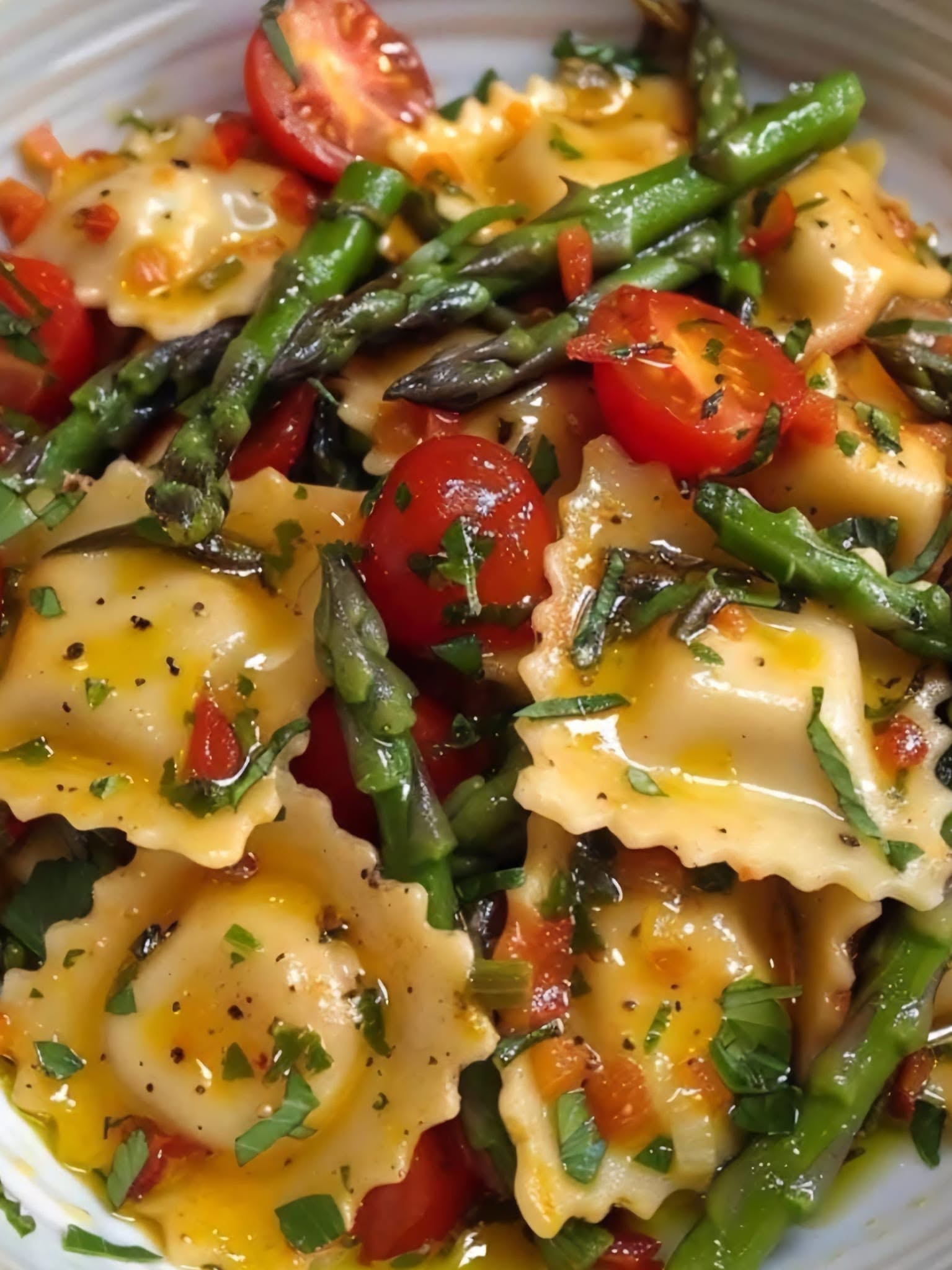
Ravioli with Asparagus and Cherry Tomatoes is a fresh, elegant pasta dish that brings together tender filled ravioli, crisp-tender asparagus, juicy cherry tomatoes, garlic, lemon, herbs, Parmesan, and extra-virgin olive oil in a light pan sauce.
Instead of covering the ravioli with a heavy cream or tomato sauce, this recipe lets the vegetables remain prominent. The cherry tomatoes soften just enough to release their sweet juices, while chicken broth and olive oil create a delicate sauce that coats the pasta without hiding the ravioli filling.
The combination is especially satisfying because of its contrasts: soft ravioli, slightly crisp asparagus, juicy tomatoes, savory garlic, bright lemon, and salty Parmesan. It feels refined enough for entertaining but is simple enough for a quick weeknight dinner.
Why People Will Love Ravioli with Asparagus and Cherry Tomatoes Recipe
– The sauce is light and fresh rather than heavy.
– Ravioli makes the meal feel rich and satisfying with very little preparation.
– Asparagus adds freshness and a pleasant crisp-tender texture.
– Cherry tomatoes become naturally sweet as they cook.
– Garlic adds savory depth without requiring a complicated sauce.
– Chicken broth creates flavor while keeping the dish relatively light.
– Extra-virgin olive oil gives the sauce a smooth, fruity richness.
– Lemon adds acidity and keeps the pasta tasting bright.
– Parmesan adds salty, nutty flavor at the end.
– Fresh parsley gives the finished dish color and freshness.
– Italian seasoning adds subtle herbal complexity.
– Finishing the ravioli in the skillet allows it to absorb more sauce.
– The ridges and folds of ravioli hold onto tomato juices beautifully.
– It can be made with cheese, spinach, mushroom, or meat ravioli.
– It requires relatively few ingredients.
– The vegetables and pasta cook quickly.
– It looks colorful and elegant on the plate.
– It is easy to adjust for different seasons.
– It works as either a main dish or a smaller first course.
– The recipe can be prepared in roughly 30 minutes.
Key Ingredients
Ravioli:
Ravioli provides the heart of the dish. Cheese ravioli gives a creamy contrast to the vegetables, while spinach, mushroom, or meat-filled varieties can create different flavor profiles.
Fresh Asparagus:
Asparagus brings freshness and texture. Brief blanching preserves its bright green color and prevents it from becoming overly soft when finished in the sauce.
Cherry Tomatoes:
Cherry tomatoes become sweet and juicy as they cook, creating much of the natural sauce without needing canned tomatoes.
Garlic:
Fresh garlic provides an aromatic savory base. Cooking it briefly prevents bitterness and keeps the flavor clean.
Chicken Broth:
Broth loosens the tomato juices and creates enough liquid to gently finish the ravioli in the skillet.
Extra-Virgin Olive Oil:
Olive oil forms the foundation of the sauce and provides richness without relying on butter or cream.
Fresh Lemon:
A small squeeze of lemon brightens the tomatoes and asparagus and balances the richness of the ravioli and Parmesan.
Parmesan:
Freshly grated Parmesan contributes saltiness, nuttiness, and umami just before serving.
Expert Tips
– Choose asparagus spears of similar thickness so they cook evenly.
– Trim the woody ends rather than simply cutting off the same amount from every stalk.
– Blanch the asparagus only until bright green and slightly tender.
– Immediately drain it so residual heat does not overcook it.
– Use ripe cherry tomatoes for the sweetest sauce.
– Let some tomatoes soften and collapse while keeping others partly intact.
– Keep the heat moderate when cooking garlic.
– Do not brown the garlic heavily; burned garlic will make the sauce bitter.
– Cook the ravioli only partially in the water because it finishes in the skillet.
– Handle fresh ravioli gently because it can tear easily.
– Reserve a little pasta water before draining if you want more control over the sauce.
– Add extra broth or pasta water gradually if the skillet becomes dry.
– Gently toss or spoon the sauce over the ravioli instead of stirring aggressively.
– Add parsley toward the end to preserve its fresh flavor.
– Use freshly grated Parmesan rather than shelf-stable powdered cheese for the best finish.
– Finish with extra-virgin olive oil only after cooking for its freshest aroma.
– Serve immediately because ravioli continues to soften as it sits.
Ravioli with Asparagus and Cherry Tomatoes
Ingredients
– 1 pound fresh asparagus, woody ends trimmed and cut into 2-inch pieces
– 2 cups cherry tomatoes, halved
– 3 garlic cloves, finely minced
– 1 cup chicken broth
– 2 tablespoons extra-virgin olive oil, plus more for finishing
– A squeeze of fresh lemon juice
– Italian seasoning, to taste
– Fresh parsley, chopped
– 12 ravioli
– Freshly grated Parmesan or your favorite Italian cheese, for serving
Instructions
Prepare the Asparagus
Bring a small pot of water to a boil.
Add the asparagus and blanch for about 2–3 minutes, just until bright green and slightly tender.
Drain and set aside.
Make the Tomato Sauce
Heat the olive oil in a large skillet over medium heat.
Add the minced garlic and cook for about 30 seconds, just until fragrant.
Add the halved cherry tomatoes, chicken broth, Italian seasoning, and a squeeze of fresh lemon juice.
Cook gently until the tomatoes begin to soften and release their juices while still keeping some of their shape.
Add the Asparagus
Stir the blanched asparagus into the tomato mixture.
Cook for another 1–2 minutes so the flavors begin to blend.
Partially Cook the Ravioli
Bring a pot of salted water to a boil.
Add the ravioli and cook for about half of the recommended package time.
Carefully drain the ravioli.
Finish the Ravioli in the Sauce
Transfer the partially cooked ravioli directly into the skillet with the asparagus and tomato sauce.
Gently toss and cook for about 3 more minutes, or until the ravioli are fully cooked and coated in the sauce.
Finish and Serve
Reduce the heat to low.
Sprinkle with fresh chopped parsley and gently toss once more.
Divide the ravioli among serving plates.
Finish with a light drizzle of extra-virgin olive oil and a generous sprinkle of freshly grated Parmesan.
Serve immediately and enjoy.
Important Notes When Making Ravioli with Asparagus and Cherry Tomatoes
– Ravioli cooking times vary considerably between fresh, refrigerated, frozen, and dried varieties.
– “Halfway cooked” should therefore be based on the package directions rather than a fixed number of minutes.
– Frozen ravioli may be more fragile when transferred to the skillet.
– Do not overcook the asparagus during blanching.
– The tomatoes should soften but do not need to completely break down.
– The sauce should remain light and glossy rather than thick.
– Chicken broth and Parmesan can contain significant sodium.
– Salt the pasta water moderately and taste the finished sauce before adding more salt.
– Lemon should remain a background flavor rather than dominate the sauce.
– Too much liquid can make the ravioli watery.
– Too little liquid can cause ravioli to stick or tear during finishing.
– Parmesan should generally be added after plating or over low heat.
– The finished dish is best served immediately.
– Refrigerate leftovers promptly.
– Reheat gently to avoid breaking the ravioli.
How to Enjoy Ravioli with Asparagus and Cherry Tomatoes After Cooking
Let the ravioli sit for only a minute or two after cooking, then serve while the pasta is still hot and tender.
Divide the ravioli among shallow bowls or plates, making sure each serving receives asparagus, tomatoes, and some of the light pan sauce.
Spoon the softened cherry tomatoes and garlic-infused broth over the ravioli.
Finish with freshly grated Parmesan and a light drizzle of extra-virgin olive oil.
Add fresh parsley just before serving for color and herbal freshness.
For more brightness, grate a small amount of fresh lemon zest over the top.
Freshly cracked black pepper works particularly well with asparagus and Parmesan.
Serve with a simple arugula salad, roasted vegetables, or crusty Italian bread.
For a larger meal, pair the ravioli with grilled chicken, shrimp, or salmon.
Nutrition Information
Approximate nutrition per serving, assuming 4 servings, 12 medium cheese ravioli, about ¼ cup Parmesan for finishing, and a light additional drizzle of olive oil:
Calories: 330 kcal | Total Fat: 16 g | Saturated Fat: 4.5 g | Monounsaturated Fat: 8 g | Polyunsaturated Fat: 1.8 g | Cholesterol: 35–45 mg | Sodium: 650–900 mg depending on the ravioli, chicken broth, Parmesan, and added salt | Total Carbohydrates: 35 g | Dietary Fiber: 5 g | Sugars: 6 g | Protein: 13–15 g
Additional estimate:
Potassium: 550–700 mg | Calcium: 180–240 mg | Iron: 3–4 mg | Magnesium: 45–60 mg | Vitamin A: 1,200–1,700 IU | Vitamin C: 20–30 mg | Folate: 90–130 mcg | Vitamin K: 50–75 mcg
Frequently Asked Questions:
What does Ravioli with Asparagus and Cherry Tomatoes taste like?
It is fresh, savory, slightly sweet, and bright, with juicy tomatoes, crisp-tender asparagus, aromatic garlic, lemon, olive oil, and salty Parmesan.
What kind of ravioli works best?
Cheese ravioli is especially versatile, but spinach, mushroom, ricotta, lobster, or meat-filled ravioli can all work well.
Is this considered a heavy pasta dish?
Not particularly. There is no cream-based sauce, and much of the flavor comes from vegetables, broth, olive oil, and lemon.
What protein can I add?
Grilled chicken, shrimp, scallops, salmon, or Italian sausage can all turn it into a more substantial meal.
What should I serve alongside it?
A green salad, arugula with lemon vinaigrette, roasted vegetables, or crusty Italian bread are excellent choices.
Why partially cook the ravioli before adding it to the skillet?
Finishing the ravioli in the sauce allows it to absorb some of the tomato, garlic, broth, and herb flavors while preventing excessive cooking in plain water.
How do I prevent the ravioli from breaking?
Do not overcook it in the boiling water, drain gently, and toss carefully with a wide spatula or spoon rather than stirring vigorously.
Why should I blanch the asparagus separately?
Blanching gives better control over its texture and color, ensuring that it remains bright green and slightly crisp rather than becoming soft in the sauce.
What should I do if the sauce becomes too dry?
Add a small amount of reserved pasta water or chicken broth and gently toss until the ravioli looks glossy again.
Can I prepare this dish ahead of time?
The vegetables can be prepped ahead, but the ravioli is best cooked immediately before serving. Fully assembled ravioli left sitting in sauce will continue absorbing liquid and can become overly soft.