Chicken and Pearl Couscous Soup
Chicken and Pearl Couscous Soup is a deeply comforting homemade soup built around slow-simmered chicken thighs, a naturally rich chicken broth, tender pearl couscous, onion, celery, fresh dill, parsley, and bright lemon. The bone-in chicken creates considerably more flavor than simply adding precooked chicken to packaged broth, giving the finished soup a homemade depth and silky mouthfeel.
Pearl couscous adds a particularly satisfying texture. Unlike tiny traditional couscous, the larger toasted pasta pearls remain pleasantly chewy and absorb the savory chicken broth as they cook. Briefly toasting them with the onion and celery gives them an additional nutty character.
The final combination of fresh dill and lemon transforms the rich chicken broth into something lighter and more aromatic. The soup is hearty enough for a complete meal but still feels clean and refreshing, especially when finished with extra herbs, a drizzle of extra-virgin olive oil, and crunchy dukkah or crackers.
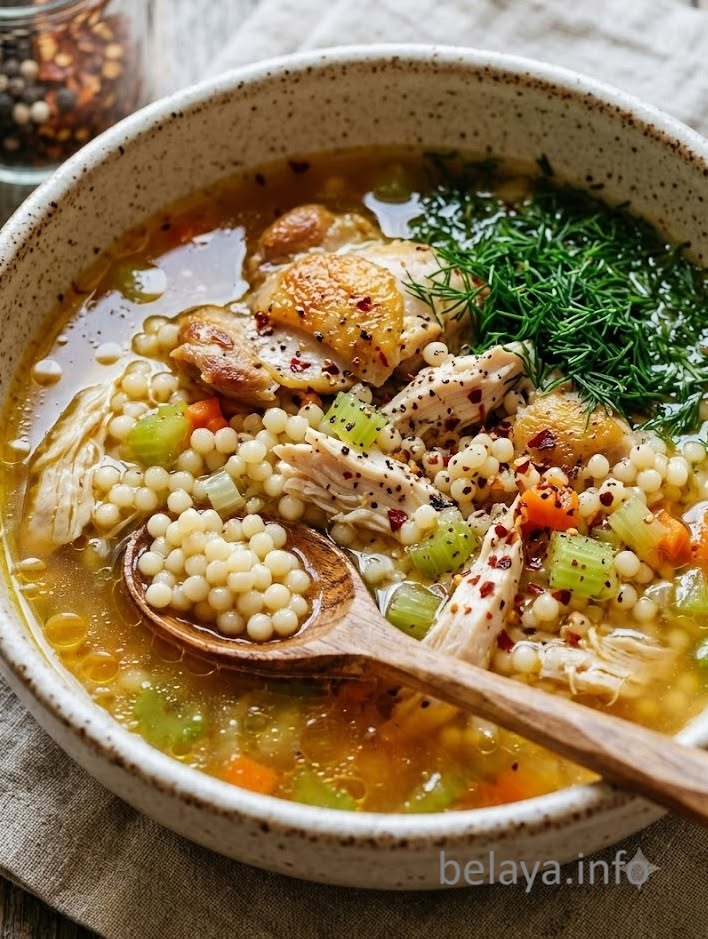
Why People Will Love Chicken and Pearl Couscous Soup Recipe
Bone-in chicken thighs create a deeply flavored homemade broth.
Slow simmering gives the soup more richness than using plain packaged stock.
Chicken thigh meat remains moist and flavorful after shredding.
Pearl couscous provides a pleasantly chewy texture.
Toasting the couscous adds subtle nutty flavor.
Onion provides mellow sweetness.
Celery adds classic chicken-soup aroma and freshness.
Celery leaves contribute even more herbal flavor.
Fresh parsley infuses the homemade broth while it cooks.
Fresh dill gives the soup a distinctive fragrant finish.
Lemon juice brightens the rich chicken broth.
The soup has a satisfying balance between richness and freshness.
Seasoning salt makes the flavor profile easy to customize.
Garlic pepper creates a savory version.
Lemon pepper reinforces the citrus notes.
Herbes de Provence gives the soup a more Mediterranean character.
Dukkah provides a crunchy, nutty contrast.
Oyster crackers or saltines make it especially comforting.
It works well for family dinners, meal preparation, or cold-weather meals.
The homemade stock and shredded chicken can be prepared ahead.
Key Ingredients
Bone-In, Skin-On Chicken Thighs:
Chicken thighs contain more connective tissue and flavor than very lean chicken breast. The bones contribute body to the broth, while the skin and meat provide richness during the long simmer.
Pearl Couscous:
Pearl couscous is actually a small toasted pasta rather than the tiny grains associated with traditional North African couscous. Its larger size gives the soup a pleasantly chewy, substantial texture.
Fresh Dill:
Dill gives this soup much of its distinctive personality. Its fresh, slightly grassy and citrus-like character pairs particularly well with chicken and lemon.
Fresh Lemon Juice:
Lemon cuts through the richness of the chicken broth and adds brightness. It is best added near the end so its fresh acidity remains noticeable.
Yellow Onion:
Onion provides sweetness and helps build the savory vegetable foundation of the soup.
Celery and Celery Leaves:
Celery contributes freshness and classic soup flavor. Keeping some of the leaves adds an additional herbaceous quality.
Fresh Parsley:
Parsley gently perfumes the homemade chicken stock during the long simmer without becoming a dominant flavor.
Olive Oil:
Olive oil is used to sauté the vegetables and toast the couscous, creating additional depth before the broth is returned to the pot.
Expert Tips
Start with cold water when making the chicken broth for gradual flavor extraction.
Use enough water to cover the chicken without excessively diluting the broth.
Once the liquid reaches a boil, reduce it immediately to a gentle simmer.
Avoid a vigorous boil, which can make homemade broth cloudy and emulsify excess fat into it.
Skim excessive foam or fat from the surface if desired.
Bone-in chicken thighs are especially suitable because they remain juicy during long cooking.
Strain the finished broth through a fine-mesh sieve for a cleaner soup.
Let the chicken cool slightly before removing the skin and bones.
Shred the meat into relatively large pieces so it does not disappear into the soup.
Sauté the onion and celery until softened but not heavily browned.
Toast the pearl couscous briefly before adding the broth.
Stir the couscous occasionally during simmering because it can settle and stick.
Begin checking the couscous before the full cooking time if you prefer a firmer texture.
Add lemon gradually and taste before adding more.
Add most of the dill near the end rather than cooking it for a long time.
Reserve some fresh dill for garnish.
Taste the soup only after adding the seasoning salt because different blends contain different amounts of sodium.
Keep additional hot broth or water nearby because pearl couscous continues absorbing liquid.
Chicken and Pearl Couscous Soup
Ingredients
For the Chicken and Broth
8 bone-in, skin-on chicken thighs
Water, enough to completely cover the chicken
1 small bunch fresh parsley
Kosher salt, as needed for seasoning
For the Soup
1 tablespoon olive oil
1 medium yellow onion, peeled and diced
4 celery stalks with leaves, trimmed and diced
Seasoning salt, to taste, such as garlic pepper, lemon pepper, or herbes de Provence seasoning
1 cup pearl couscous
⅓ cup fresh dill, roughly chopped, plus extra for garnish
Juice of 1 fresh lemon
Salt, to taste
Freshly ground black pepper, to taste
For Serving
Extra-virgin olive oil, for drizzling
Dukkah, oyster crackers, or saltine crackers, for serving
Instructions
Prepare the Chicken Stock
Place the chicken thighs in a large stockpot or Dutch oven.
Season generously with salt and arrange the fresh parsley sprigs over the chicken.
Pour in enough water to completely cover the chicken.
Bring the pot to a boil over medium-high heat, then immediately reduce the heat to low.
Cover and maintain a very gentle simmer for about 2 hours, allowing the chicken to become tender and the broth to develop a rich flavor.
Strain the Broth and Shred the Chicken
Carefully remove the chicken thighs from the pot and transfer them to a large bowl.
Pour the cooking liquid through a fine-mesh strainer into a clean bowl or large measuring container.
Discard the cooked parsley and any solids left in the strainer.
Rinse or wipe out the pot so it is ready for the soup.
Once the chicken is cool enough to handle, remove and discard the skin and bones.
Shred the meat into bite-sized pieces and set aside.
Sauté the Onion and Celery
Return the clean pot to the stove and heat the olive oil over medium heat.
Add the diced onion and celery.
Cook for about 5 minutes, stirring occasionally, until the vegetables begin to soften.
Season lightly with your preferred seasoning salt.
Toast the Pearl Couscous
Add the pearl couscous to the vegetables.
Cook for about 2 minutes, stirring frequently, until the couscous is lightly toasted and coated with the olive oil.
This short toasting step adds a subtle nutty flavor.
Simmer the Soup
Pour the strained chicken broth back into the pot.
Add the shredded chicken and stir well.
Bring the soup to a gentle boil, then reduce the heat to maintain a steady simmer.
Cook uncovered for about 12–15 minutes, or until the pearl couscous is tender.
Stir occasionally so the couscous does not settle on the bottom of the pot.
Taste the broth and adjust with additional salt and freshly ground black pepper as needed.
Finish with Dill and Lemon
Stir in the roughly chopped fresh dill and freshly squeezed lemon juice.
Continue simmering gently for another 3–5 minutes, just long enough for the dill flavor to infuse the broth.
Taste once more and adjust the lemon, salt, or pepper if necessary.
Serve
Ladle the hot soup into individual bowls.
Finish each serving with extra fresh dill and a light drizzle of extra-virgin olive oil.
Sprinkle with dukkah for a nutty, crunchy finish, or serve with oyster crackers or saltines on the side.
Serve warm while the couscous is tender and the lemon-dill broth is fresh and aromatic.
Important Notes When Making Chicken and Pearl Couscous Soup
Chicken should be cooked to a safe internal temperature of at least 165°F / 74°C.
A two-hour simmer will cook the chicken well beyond that temperature because the goal is also to develop broth.
The chicken skin is removed after simmering, but some rendered fat will remain in the broth.
For a lighter soup, chill the broth and remove solidified fat before finishing the recipe.
Pearl couscous absorbs considerable liquid during cooking.
It continues absorbing broth even after the soup is removed from the heat.
Leftovers will therefore become noticeably thicker.
Add broth or water when reheating if necessary.
Seasoning salts vary widely in salt content.
Garlic pepper, lemon pepper, and herb blends can produce very different flavor profiles.
Dukkah commonly contains nuts and sesame, so consider allergies before serving.
Fresh lemon juice should be added toward the end rather than during the long broth simmer.
Fresh dill loses some aroma when cooked for too long.
If preparing the soup for several days of leftovers, consider cooking the couscous separately and adding it to each bowl.
Refrigerate cooked chicken soup promptly after cooling sufficiently.
How to Enjoy Chicken and Pearl Couscous Soup After Cooking
Let the finished soup rest for about 5 minutes after the dill and lemon have been incorporated. This allows the flavors to settle while keeping the herbs fresh.
Ladle the soup into deep bowls, making sure each serving receives plenty of shredded chicken, pearl couscous, onion, celery, and broth.
Finish with additional fresh dill for a stronger herbal aroma.
Drizzle a small amount of good extra-virgin olive oil over each bowl. The fresh oil provides a fruity richness that contrasts beautifully with the lemon.
For texture, sprinkle a little dukkah over the top immediately before eating. Its toasted nuts, seeds, and spices create an excellent crunchy contrast with the soft chicken and couscous.
For a simpler presentation, serve oyster crackers or saltines alongside the soup.
A squeeze of additional lemon can be offered at the table for anyone who wants a brighter, more acidic broth.
Crusty bread, toasted sourdough, or warm pita can turn the soup into an even more substantial meal.
A simple cucumber salad, tomato salad, or green salad works well alongside because the fresh vegetables complement the dill and lemon.
When reheating leftovers, warm the soup slowly and add a splash of water or broth because the couscous will likely have absorbed some of the original liquid.
Nutrition Information
Approximate nutrition per serving, based on about 8 servings, with chicken skin discarded after cooking and excluding optional dukkah, crackers, and finishing olive oil:
Calories: 340 kcal | Total Fat: 15 g | Saturated Fat: 4 g | Monounsaturated Fat: 7 g | Polyunsaturated Fat: 3 g | Cholesterol: 90–105 mg | Sodium: 600–850 mg depending on the amount of kosher salt and seasoning salt used | Total Carbohydrates: 25 g | Dietary Fiber: 2 g | Sugars: 3 g | Protein: 27 g
Additional estimate:
Potassium: 500–650 mg | Calcium: 45–70 mg | Iron: 2–3 mg | Magnesium: 40–55 mg | Vitamin A: 400–700 IU | Vitamin C: 8–15 mg | Vitamin B6: 0.5–0.8 mg | Vitamin B12: 0.7–1.1 mcg | Zinc: 2.5–3.5 mg
Note: Nutrition can vary significantly depending on the size of the chicken thighs, how much rendered chicken fat remains in the broth, how much water is used, the specific seasoning salt, and serving size. Dukkah, crackers, and extra olive oil are not included.
Frequently Asked Questions:
1. What does Chicken and Pearl Couscous Soup taste like?
It has a rich homemade chicken flavor balanced by fresh dill and lemon, with mild sweetness from onion and a pleasantly chewy texture from pearl couscous.
2. What is pearl couscous?
Pearl couscous consists of small toasted pasta-like balls. It is larger and chewier than traditional fine couscous and works especially well in soups.
3. Why use chicken thighs instead of chicken breasts?
Thighs contain more fat and connective tissue, which gives both the meat and homemade broth more flavor. They also remain moist during longer cooking.
4. What is dukkah, and why serve it with the soup?
Dukkah is a Middle Eastern mixture typically made from toasted nuts, seeds, and spices. A small amount adds crunch and savory, nutty flavor to the soft soup.
5. What should I serve with this soup?
Crusty bread, pita, oyster crackers, saltines, a cucumber salad, or a simple green salad all pair beautifully.
1. Why does the chicken simmer for two hours?
The extended gentle simmer is primarily about creating a flavorful homemade stock. The bones, meat, skin, and parsley gradually contribute richness and flavor to the water.
2. Why toast the pearl couscous before adding the broth?
Briefly cooking it in olive oil develops a slightly nutty flavor and gives the finished soup more depth.
3. Why has my soup become very thick after sitting?
Pearl couscous continues absorbing broth after cooking. Simply add additional chicken broth or water when reheating until the desired consistency returns.
4. Can I make this soup ahead of time?
Yes. For the best make-ahead texture, prepare the chicken broth and shredded chicken in advance, then cook the pearl couscous when you are ready to serve. This prevents the couscous from absorbing too much broth overnight.
5. Can I substitute another grain or pasta for pearl couscous?
Yes. Orzo, ditalini, small pasta shells, rice, or farro can work, but each requires a different amount of liquid and cooking time.