New Mexico Green Chile Stew Recipe
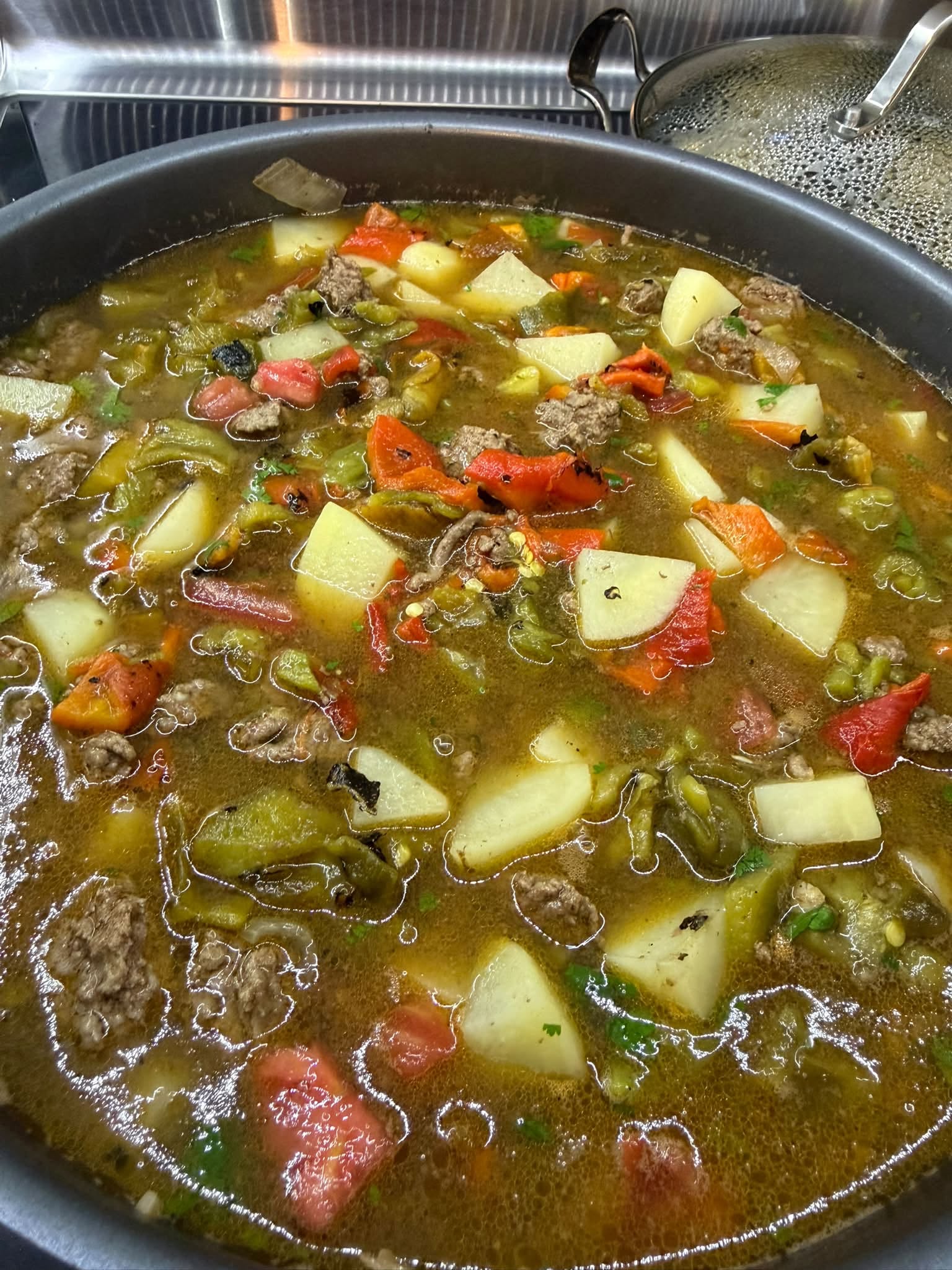
New Mexico Green Chile Stew is a deeply comforting Southwestern dish built around three essential ingredients: tender pork, roasted Hatch green chile, and potatoes. Unlike many Southwestern stews that rely on tomatoes, this version intentionally leaves them out so the earthy, smoky flavor of the green chile remains the center of the dish.
Pork shoulder is particularly well suited to the recipe because slow simmering gradually softens its connective tissue while releasing richness into the broth. Yukon Gold potatoes contribute a naturally buttery texture and enough starch to give the broth a little body without turning it into a thick gravy.
The seasoning is intentionally restrained—mostly onion, garlic, salt, and black pepper. That simplicity is part of the character of the stew: roasted Hatch chile should be recognizable in every spoonful rather than buried under excessive spices.
Why People Will Love New Mexico Green Chile Stew Recipe Recipe
Roasted Hatch green chile gives the stew a distinctive smoky, earthy flavor.
Pork shoulder becomes exceptionally tender during gentle simmering.
Yukon Gold potatoes have a creamy texture while still holding their shape.
There are no tomatoes to overpower the green chile.
Browned pork develops much deeper flavor than simply boiling the meat.
Onions cook in the pork drippings and absorb the browned flavors from the pot.
Garlic provides savory depth without competing with the Hatch chile.
Beef broth creates a richer background than plain water alone.
The potatoes naturally give the broth a little body.
The recipe uses straightforward ingredients rather than a long spice list.
Heat can be adjusted by choosing mild, medium, or hot Hatch chiles.
Extra roasted chile can easily be added at the table.
It is naturally hearty without cream or cheese.
It makes an excellent cold-weather meal.
The large batch is ideal for family gatherings or meal preparation.
The stew tastes even more developed the following day.
It pairs beautifully with flour tortillas or fresh bread.
The simple broth lets the quality of the pork and green chile shine.
Key Ingredients
Pork Shoulder or Pork Butt:
This cut contains enough marbling and connective tissue to remain juicy during longer cooking. Browning it first develops savory caramelized flavors, while simmering makes the cubes increasingly tender.
Hatch Green Chiles:
Hatch chiles are the defining flavor of the stew. Depending on the variety, they may range from relatively mild to intensely hot, but roasting brings out their earthy sweetness and smoky character.
Yukon Gold Potatoes:
Yukon Golds have a creamy, naturally buttery interior and hold together better than many floury potatoes. They also release just enough starch to give the broth substance.
Onions:
A generous amount of onion contributes sweetness and provides a savory foundation beneath the chile flavor.
Garlic:
Eight cloves sound substantial, but in such a large batch they produce background richness rather than overwhelming garlic flavor.
Beef Broth:
Beef broth reinforces the browned pork and gives the stew a deeper savory base. Low-sodium broth is particularly useful because such a large quantity can otherwise make the stew overly salty.
Expert Tips
Use pork shoulder rather than very lean pork loin; shoulder stays much more tender during simmering.
Cut the pork into similar-sized cubes so they cook evenly.
Pat the pork dry before browning to encourage a better crust.
Brown the meat in several batches instead of overcrowding the pot.
Leave the browned bits in the Dutch oven; they contribute valuable flavor.
Cook the onions directly in those pork drippings.
Add garlic only after the onions have softened so it does not burn.
Roast Hatch chiles until the skins are thoroughly blistered.
Steam the roasted chiles briefly so their skins peel away more easily.
Remove more inner membranes for milder heat; leave some for a hotter stew.
Add the potatoes only after the pork has had time to become tender.
Keep the simmer gentle rather than boiling aggressively.
Use Yukon Gold potatoes if you want cubes that remain intact.
Mash only a few potatoes if you want a thicker broth.
Add water gradually rather than immediately using the full amount.
Taste for salt only after the broth has reduced and the potatoes are cooked.
New Mexico Green Chile Stew
Ingredients
5 pounds boneless pork shoulder or pork butt, cut into ¾–1-inch cubes
5 pounds Yukon Gold potatoes, cut into ¾–1-inch cubes
4–6 large Hatch green chiles, roasted, peeled, seeded if desired, and chopped
Use 8–10 for a stronger green chile flavor
4 cups yellow or brown-skinned onions, diced
8 large garlic cloves, finely minced
3 tablespoons neutral oil or olive oil, as needed for browning
4 (32-ounce) cartons beef broth, about 16 cups
2–4 cups water, as needed
2 teaspoons kosher salt to start, plus more to taste
1 teaspoon freshly ground black pepper, plus more to taste
Instructions
Roast and Prepare the Hatch Chiles
If using fresh Hatch chiles, roast them under a hot broiler or directly over a gas flame until the skins are blistered and blackened on all sides.
Transfer them to a covered bowl and let them steam for about 10 minutes.
Peel away the loose skins, remove the stems, and remove some or all of the seeds and inner membranes depending on the heat level you prefer.
Roughly chop the roasted chiles and set aside.
Brown the Pork
Heat a very large Dutch oven or heavy stockpot over medium-high heat.
Add a little oil.
Working in batches, add the pork in a single layer and brown it well on several sides.
Do not overcrowd the pot, or the meat will steam instead of developing a browned crust.
Transfer each browned batch to a bowl while you finish the remaining pork.
Brown the Onions
Once the pork is browned, add the diced onions to the same pot.
Cook for about 7–10 minutes, scraping up the browned pork bits from the bottom, until the onions soften and develop a little golden color.
Add the minced garlic and cook for another 30–60 seconds, just until fragrant.
Start the Stew
Return all of the browned pork and accumulated juices to the pot.
Add the chopped roasted Hatch chiles.
Pour in enough beef broth to generously cover the pork.
Season initially with salt and black pepper.
Bring everything to a gentle boil, then reduce the heat to maintain a low simmer.
Cover partially and cook for approximately 45–60 minutes, or until the pork is becoming tender.
Add the Potatoes
Add the cubed Yukon Gold potatoes.
Pour in additional beef broth or water if needed so there is enough liquid for a proper stew.
Return to a gentle simmer and cook for another 15–20 minutes, or just until the potatoes are fork-tender.
Do not cook them until they begin falling apart unless you prefer a thicker, more rustic stew.
Adjust the Broth
If the stew is thicker than you want, add additional hot water or beef broth.
If you prefer it thicker, gently mash a few potato pieces against the side of the pot and stir them back into the broth.
Taste carefully and adjust with additional salt and black pepper.
Rest and Serve
Turn off the heat and allow the stew to rest for about 10–15 minutes before serving.
The broth will become slightly richer as the potatoes release some starch.
Ladle into deep bowls and serve very hot.
How It Should Taste
A good New Mexico Green Chile Stew should be deeply savory and porky, with roasted green chile as the dominant flavor. The broth should be relatively simple rather than heavily seasoned, with sweetness from the onions, richness from the pork, mild garlic, and soft Yukon Gold potatoes.
Leaving out tomatoes keeps the color pale golden-green and prevents tomato acidity from covering the characteristic flavor of the Hatch chiles.
Serving Ideas
Serve it with warm flour tortillas, freshly baked bread, or sopapillas for soaking up the broth.
For an even stronger New Mexico character, place extra roasted chopped Hatch chile on the table so everyone can increase the heat individually.
This large recipe makes roughly 16–20 hearty servings, depending on bowl size.
Important Notes When Making New Mexico Green Chile Stew Recipe
Hatch chile heat varies substantially, even among peppers from the same batch.
The pale inner membranes carry much of the chile’s capsaicin.
Gloves are useful when handling large quantities of hot chiles.
Pork shoulder becomes tender through time, not simply by reaching a safe temperature.
If the meat is still chewy after 45–60 minutes, continue simmering before adding the potatoes.
Potatoes should be added later so they do not fall apart while the pork tenderizes.
Standard beef broth can contain a lot of sodium.
Low-sodium or unsalted broth makes final seasoning easier.
The stew should remain brothier than a traditional thick beef stew.
Do not over-thicken it; the roasted chile broth is part of the appeal.
No tomatoes are needed for this version.
Adding tomatoes would noticeably change both the flavor and color.
The broth will thicken slightly as the stew cools.
Refrigerated leftovers may need a little water or broth when reheated.
Fat may solidify on top after chilling; remove some if you prefer a leaner reheated stew.
Refrigerate large batches in smaller shallow containers so they cool more safely and quickly.
How to Enjoy New Mexico Green Chile Stew Recipe After Cooking
After cooking, allow the stew to rest for about 10–15 minutes. The potatoes will release a little additional starch and the broth will become slightly more cohesive.
Ladle the stew into deep bowls, making sure each serving contains generous pieces of pork, potatoes, onions, and roasted green chile.
Serve it very hot with warm flour tortillas. Tear pieces of tortilla and use them to scoop up pork and potatoes or soak up the green chile broth.
Freshly baked bread or rustic rolls are another excellent option.
For additional heat, put chopped roasted Hatch chile on the table so everyone can adjust their own bowl.
A little chopped cilantro or sliced green onion can be added for freshness, although the stew is traditionally satisfying without elaborate garnishes.
If you prefer something creamy with spicy chile, add a small spoonful of sour cream to individual bowls rather than stirring dairy into the entire pot.
A squeeze of lime can brighten a rich bowl, but use it sparingly so it does not cover the roasted Hatch chile flavor.
The stew is especially good the next day. Reheat it gently and add a little broth or water if the potatoes have absorbed too much liquid overnight.
Nutrition Information
Approximate nutrition per serving, based on about 18 hearty servings from the full large-batch recipe:
Calories: 460 kcal | Total Fat: 21 g | Saturated Fat: 7 g | Monounsaturated Fat: 9 g | Polyunsaturated Fat: 2.5 g | Cholesterol: 85 mg | Sodium: 850–1,200 mg depending on the beef broth and added salt | Total Carbohydrates: 36 g | Dietary Fiber: 4.5 g | Sugars: 4 g | Protein: 29 g
Additional estimate:
Potassium: 1,050–1,300 mg | Calcium: 60–90 mg | Iron: 3–4.5 mg | Magnesium: 55–80 mg | Vitamin A: 350–650 IU | Vitamin C: 25–45 mg | Vitamin B12: 1.5–2.5 mcg | Zinc: 4–6 mg
Note: Nutrition will vary significantly depending on the fat content of the pork shoulder, how much rendered fat is removed, the exact amount of broth and water used, Hatch chile quantity, and final serving size.
Frequently Asked Questions
What does New Mexico Green Chile Stew taste like?
It is deeply savory, porky, mildly garlicky, and dominated by roasted green chile, with creamy potatoes and sweet onions balancing the heat.
Why are there no tomatoes in this version?
Leaving out tomatoes allows the roasted Hatch chile flavor to remain dominant. Tomatoes would add acidity, sweetness, and a redder color, changing the traditional character of this particular version.
Is New Mexico Green Chile Stew very spicy?
It depends entirely on the Hatch chiles. Mild Hatch peppers can make the stew gentle, while hot varieties can produce considerable heat.
What should I serve with Green Chile Stew?
Warm flour tortillas are one of the best accompaniments. Sopapillas, crusty bread, cornbread, or a simple salad also work well.
Is the stew better the next day?
Often, yes. Overnight refrigeration allows the pork, garlic, onion, and roasted chile flavors to become more integrated.
Why should I brown the pork before adding the broth?
Browning creates caramelized flavors through the Maillard reaction. Those browned bits dissolve into the broth and make the finished stew noticeably richer.
Why shouldn’t I add the potatoes at the beginning?
Pork shoulder may need close to an hour or more to become tender. Potatoes added at the beginning could break apart before the pork is ready.
What should I do if the pork is still tough after an hour?
Continue simmering it gently. Pork shoulder often becomes tender only after its connective tissue has had enough time to soften.
How can I thicken the stew without flour or cornstarch?
Mash several cooked potato cubes against the side of the Dutch oven and stir them into the broth. Their natural starch will thicken it gently.
Can I freeze New Mexico Green Chile Stew?
Yes. The pork and chile broth freeze very well. The potatoes may become slightly softer after thawing, but the overall stew remains flavorful. Cool it completely, freeze in suitable portions, and reheat gently with a little extra broth if needed.