Roasted Tomatillo Salsa with Avocado
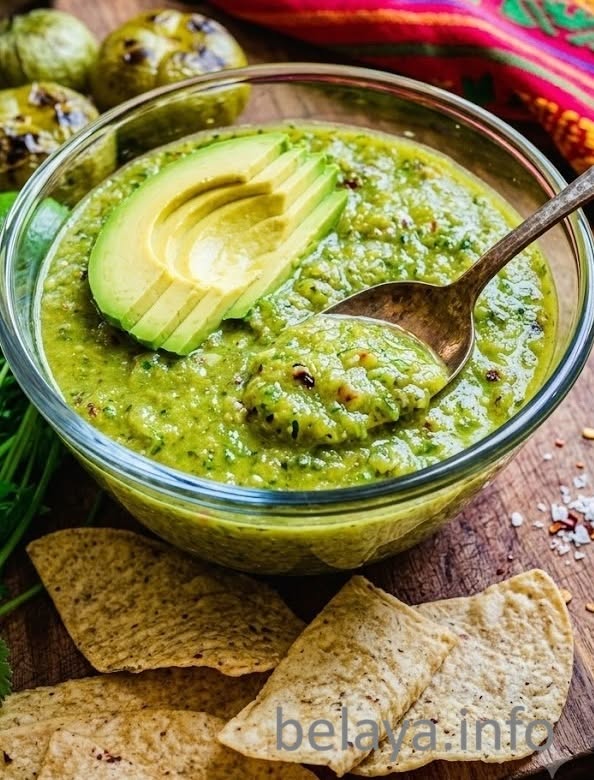
Roasted Tomatillo Salsa with Avocado is a creamy, vibrant Mexican-inspired salsa that combines the natural tartness of tomatillos with roasted serrano chile, garlic, onion, fresh cilantro, lime juice, cumin, olive oil, and ripe avocado. Roasting the vegetables first softens their sharper raw flavors while creating lightly caramelized edges and deeper savory notes.
The avocado changes the character of a traditional roasted tomatillo salsa by giving it a smooth, almost velvety body. Its mild richness balances the acidity of the tomatillos and lime while also softening the heat of the serrano.
The finished salsa is creamy yet fresh, tangy yet mellow, with layers of roasted vegetables, cilantro, citrus, cumin, and chile. It works equally well as a dip, taco salsa, condiment for grilled meats, or creamy sauce for bowls, quesadillas, and tostadas.
Why People Will Love Roasted Tomatillo Salsa with Avocado Recipe
Roasted tomatillos provide bright acidity with deeper caramelized flavor.
Avocado creates a naturally creamy texture without dairy.
Serrano chile gives the salsa fresh, lively heat.
Removing the serrano membranes allows the spice level to be easily controlled.
Roasted garlic becomes mellow, sweet, and aromatic.
Roasted onion adds natural sweetness and savory depth.
Cilantro keeps the salsa tasting fresh despite the roasted ingredients.
Lime juice sharpens and balances the richness of avocado and olive oil.
Ground cumin adds subtle earthy warmth.
Olive oil creates an especially silky consistency.
The salsa can be made rustic and slightly chunky or completely smooth.
It works beautifully with tacos, carne asada, chicken, shrimp, and quesadillas.
It is excellent as a dip for tortilla chips.
It contains no cream, sour cream, or mayonnaise.
The recipe uses simple ingredients but develops complex flavor through roasting.
It can double as a sauce for salads, grain bowls, or roasted vegetables.
The combination of green ingredients creates a beautiful fresh-looking salsa.
It is easy to adjust for more heat, acidity, or creaminess.
Key Ingredients
Tomatillos:
Tomatillos form the foundation of the salsa. Their tart, slightly citrus-like flavor provides the acidity needed to balance avocado and olive oil, while roasting develops greater sweetness and depth.
Avocado:
Avocado gives the finished salsa its creamy consistency. Its mild buttery flavor softens the sharper chile and tomatillo notes without hiding them.
Serrano Chile:
Serrano brings a clean, grassy heat that pairs naturally with tomatillo and cilantro. It is generally hotter than jalapeño, so one pepper can provide noticeable warmth.
Garlic:
Roasting transforms garlic from pungent and sharp into softer, sweeter, more complex flavors.
Yellow Onion:
The onion becomes sweeter during roasting and gives the salsa additional body and savory character.
Fresh Cilantro:
Both leaves and tender stems can be used. Cilantro adds a fresh, citrusy herbal quality that contrasts beautifully with the roasted vegetables.
Extra-Virgin Olive Oil:
Olive oil helps the vegetables roast while giving the blended salsa a smooth, emulsified texture.
Fresh Lime Juice:
Lime adds essential brightness and helps balance both the avocado and oil.
Ground Cumin:
Only a small amount is needed. It provides warmth and earthiness without taking over the fresh green flavors.
Expert Tips
Choose firm tomatillos with bright green flesh and intact papery husks.
Rinse tomatillos thoroughly after removing the husks to eliminate their sticky surface coating.
Dry the vegetables before adding oil so they roast rather than steam.
Arrange the tomatillos cut-side down for better browning.
Avoid crowding the baking sheet.
Roast until the tomatillos soften and show caramelized areas, but do not burn them completely.
Keep all juices released by the tomatillos; they contain considerable flavor.
Taste the serrano before deciding how much membrane to leave.
For mild salsa, remove most of the serrano’s pale inner membrane.
Use a fully ripe avocado for the smoothest result.
Add avocado only after the roasted vegetables have cooled slightly.
Pulse rather than continuously blend if you prefer a rustic consistency.
Start with slightly less salt and make the final adjustment after blending.
Add lime gradually because tomatillos already provide substantial acidity.
If the salsa becomes too thick, thin it with water one tablespoon at a time.
Allow the finished salsa to rest for about 10 minutes before making the final seasoning adjustment.
Roasted Tomatillo Salsa with Avocado
Ingredients
For the Roasted Tomatillo Avocado Salsa
1 pound tomatillos, husks removed, rinsed, and halved
1 medium serrano chile, seeded if a milder salsa is preferred
3 garlic cloves, peeled and lightly crushed
½ medium yellow onion, cut into large pieces
¾ cup fresh cilantro, including tender stems
¼ cup olive oil
1 medium ripe avocado, peeled, pitted, and quartered
2 teaspoons Diamond Crystal kosher salt, or adjust to taste
½ teaspoon ground cumin
1 tablespoon freshly squeezed lime juice
Instructions
Prepare the Oven
Preheat the oven to 425°F / 220°C.
Line a large baking sheet with parchment paper for easy cleanup.
Prepare the Vegetables
Remove the husks from the tomatillos, rinse away any sticky residue, and cut them in half.
Place the tomatillos, serrano chile, garlic, and onion on the prepared baking sheet.
Drizzle lightly with olive oil and toss until the vegetables are evenly coated.
Season with a small amount of salt.
Roast the Tomatillos and Aromatics
Transfer the baking sheet to the middle rack of the preheated oven.
Roast for about 20 minutes, or until the tomatillos are softened and the vegetables develop lightly browned, roasted edges.
Remove the tray from the oven and allow the vegetables to cool for a few minutes.
Transfer to the Food Processor
Place the roasted tomatillos, serrano, garlic, and onion into a food processor.
Be sure to add all of the flavorful juices released by the tomatillos during roasting.
Add the Avocado and Seasonings
Add the avocado, cilantro, ground cumin, fresh lime juice, and kosher salt.
Blend the Salsa
Pulse the mixture until it becomes creamy and well combined.
For a slightly rustic texture, stop while a little texture remains.
For a smoother salsa, continue processing until completely creamy.
Taste and Adjust
Taste the salsa and adjust with additional salt or lime juice as needed.
If the salsa is thicker than desired, blend in a small amount of water or additional lime juice until it reaches your preferred consistency.
Serve
Transfer the Roasted Tomatillo Salsa with Avocado to a serving bowl.
Serve immediately with tortilla chips, tacos, grilled chicken, carne asada, quesadillas, or your favorite Mexican dishes.
Important Notes When Making Roasted Tomatillo Salsa with Avocado
Serrano peppers vary considerably in heat.
Much of a chile’s capsaicin is concentrated in the pale inner membranes rather than the seeds themselves.
Wear gloves if your skin is sensitive to hot peppers.
Avoid touching your eyes after handling serranos.
Tomatillos naturally release a significant amount of liquid during roasting.
Do not discard the roasted juices.
Avocado causes this salsa to oxidize more quickly than a salsa made only from tomatillos.
Lime juice slows browning but does not completely prevent it.
Keep the salsa tightly covered and refrigerated when not serving.
Pressing plastic wrap directly against the surface can help reduce oxidation.
The ¼ cup olive oil makes this version especially rich and creamy; it can be reduced somewhat if a lighter salsa is preferred.
Two teaspoons of kosher salt may be too much depending on the brand used.
Diamond Crystal kosher salt is lighter by volume than many other kosher or table salts.
If using Morton kosher salt or table salt, reduce the amount and season gradually.
Do not over-blend if you want visible flecks of cilantro and roasted vegetables.
This fresh avocado salsa is not intended for shelf-stable canning.
How to Enjoy Roasted Tomatillo Salsa with Avocado After Making It
After blending, let the salsa rest for approximately 10–15 minutes. This gives the cumin, lime, cilantro, roasted vegetables, and avocado time to become more integrated.
Serve it with warm tortilla chips as a creamy alternative to ordinary salsa verde or guacamole.
For tacos, spoon it over carne asada, grilled chicken, carnitas, shrimp, fish, or roasted vegetables.
It works especially well with fatty meats because the acidity from the tomatillos and lime cuts through the richness.
Use it as a topping for quesadillas, tostadas, burritos, or nachos.
For breakfast, add it to scrambled eggs, huevos rancheros, breakfast tacos, or roasted potatoes.
It also makes an excellent sauce for grilled chicken or shrimp. Spoon it over the protein immediately before serving rather than cooking the avocado salsa for an extended period.
For a quick bowl, combine rice, black beans, grilled meat or vegetables, avocado salsa, chopped cilantro, and queso fresco.
You can even thin the salsa with a little water or lime juice and use it as a creamy dressing for taco salads or grain bowls.
For the fullest flavor, allow refrigerated salsa to sit at room temperature briefly before serving.
Nutrition Information
Approximate nutrition per 2-tablespoon serving, assuming a final yield of about 2 cups or approximately 16 servings:
Calories: 60 kcal | Total Fat: 4.8 g | Saturated Fat: 0.7 g | Monounsaturated Fat: 3.4 g | Polyunsaturated Fat: 0.7 g | Cholesterol: 0 mg | Sodium: 130–160 mg depending on the amount and type of kosher salt | Total Carbohydrates: 3.6 g | Dietary Fiber: 1.4 g | Sugars: 1.4 g | Protein: 0.7 g
Additional estimate:
Potassium: 150–190 mg | Calcium: 10–15 mg | Iron: 0.4–0.6 mg | Vitamin A: 150–250 IU | Vitamin C: 7–11 mg | Folate: 20–30 mcg | Vitamin E: 0.8–1.2 mg
Frequently Asked Questions:
What does Roasted Tomatillo Salsa with Avocado taste like?
It is creamy, tangy, herbaceous, slightly smoky, and moderately spicy, with a mild richness from avocado and olive oil.
Is this salsa more like guacamole or salsa verde?
It falls somewhere between the two. Tomatillos, serrano, cilantro, and lime give it salsa-verde character, while avocado gives it the creamy texture associated with guacamole.
What foods pair best with this salsa?
Tacos, carne asada, grilled chicken, shrimp, fish, carnitas, quesadillas, tostadas, eggs, and tortilla chips all work particularly well.
Is this salsa very spicy?
One serrano gives moderate heat, but the intensity varies. Removing the inner membranes creates a noticeably milder salsa.
Can I use this salsa as a sauce rather than a dip?
Yes. Thin it slightly with water or additional lime juice and use it over grilled meats, burrito bowls, taco salads, roasted vegetables, or seafood.
Why should I roast the tomatillos before blending them?
Roasting softens their sharp raw acidity while concentrating natural sweetness and adding lightly caramelized flavor.
How do I keep avocado salsa from turning brown?
Use fresh lime juice, keep the salsa refrigerated, and minimize exposure to air by storing it in a tightly sealed container with plastic wrap pressed directly against the surface when practical.
Why did my salsa become too thin?
Tomatillos can release a lot of liquid during roasting. Add their juices gradually if you prefer a thicker salsa, or blend in a little more avocado.
How can I make the salsa less spicy after it has already been blended?
Blend in additional roasted tomatillos or avocado. Both dilute the serrano heat while preserving the overall flavor profile.
Can I make this salsa ahead of time?
Yes, although it is best relatively fresh because of the avocado. Prepare it several hours ahead, refrigerate it tightly covered, and stir well before serving.