Rotisserie Chicken Noodle Soup
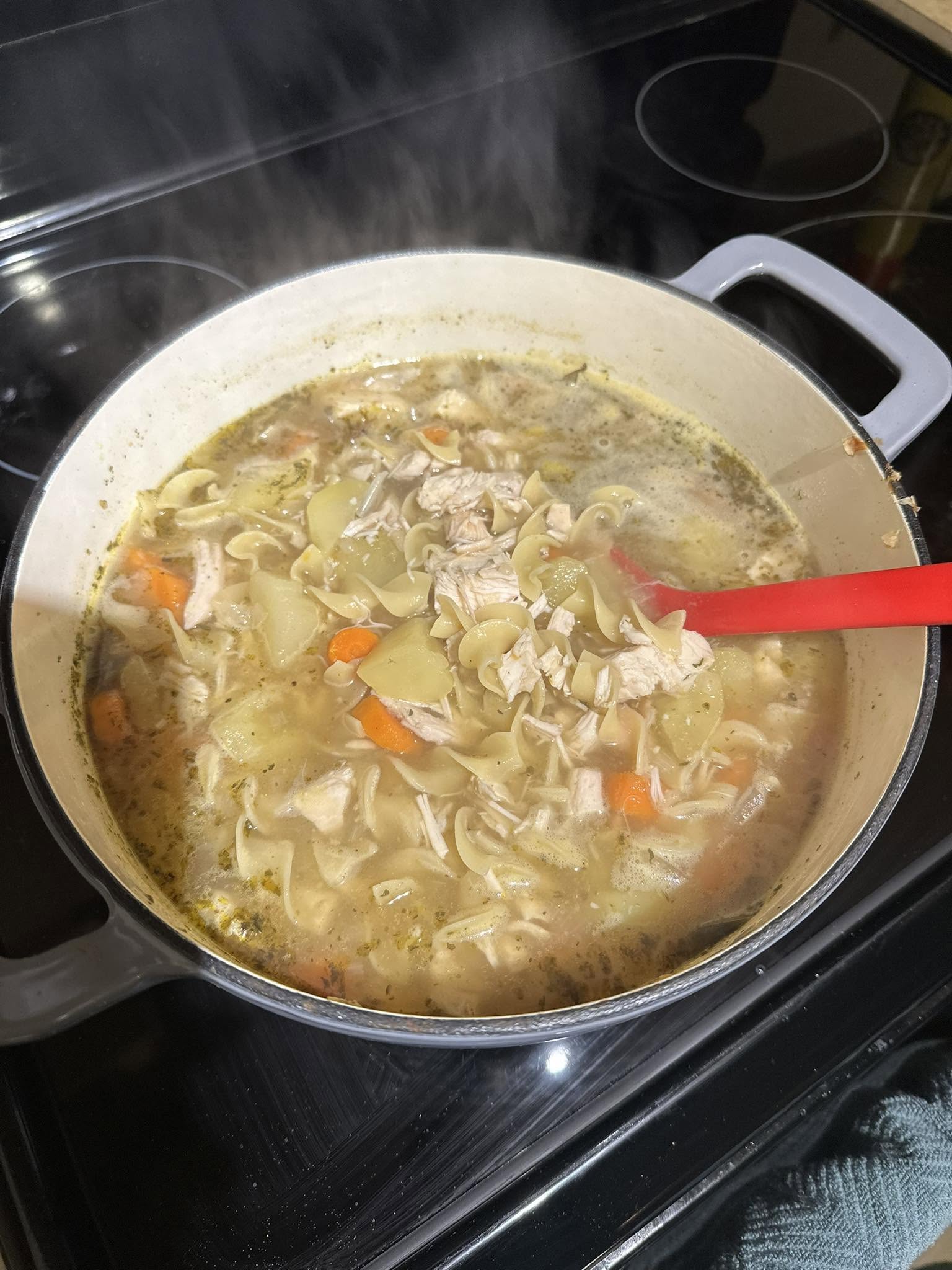
Rotisserie Chicken Noodle Soup is a deeply comforting, home-style soup that turns an already-cooked chicken into a flavorful, satisfying meal with very little fuss. Tender pieces of rotisserie chicken are simmered with onion, carrots, celery, garlic, herbs, egg noodles, and rich chicken stock to create a broth that tastes like it has been cooking much longer than it actually has.
What gives this version extra character is the layering of flavor. The vegetables are sautéed before the liquid is added, dried basil and oregano bring gentle herbal warmth, crushed red pepper adds a subtle background heat, and fresh lemon juice at the end wakes up the entire pot with brightness.
It is hearty enough for dinner but still light and brothy, making it especially good for cool evenings, family meals, meal prep, or anytime you want something warm, familiar, and restorative.
Why People Will Love Rotisserie Chicken Noodle Soup Recipe
Rotisserie chicken makes the soup quick and convenient.
The chicken is already seasoned and tender, adding instant depth.
Chicken stock gives the broth more body and richness than water alone.
Onion, carrot, and celery create a classic aromatic foundation.
Fresh garlic adds savory warmth.
Basil and oregano introduce gentle Italian-style herbal notes.
Bay leaves give the broth additional depth during simmering.
Crushed red pepper adds just enough heat to keep the soup interesting.
Egg noodles make the soup comforting and substantial.
Cooking the noodles separately helps prevent them from becoming mushy.
Fresh lemon juice brightens the broth at the very end.
The soup is easy to customize with extra chicken or vegetables.
It is ideal for using leftover rotisserie chicken.
The recipe makes a generous batch for family dinners.
It reheats well when the noodles are stored separately.
Croutons and a drizzle of olive oil make the finished bowl feel especially satisfying.
Key Ingredients
Rotisserie Chicken:
Using cooked rotisserie chicken saves considerable time while providing tender meat with plenty of savory flavor. One chicken produces a balanced soup, while two create a particularly meaty version.
Chicken Stock:
Stock forms the backbone of the soup. Compared with plain water, it contributes deeper poultry flavor and usually has more body from slowly extracted proteins and gelatin.
Onion:
Sautéed onion provides sweetness and savory depth. Cooking it until translucent allows its sharp raw flavor to soften before the stock is added.
Carrots and Celery:
These classic soup vegetables provide sweetness, freshness, color, and texture while building a familiar chicken-soup flavor.
Fresh Garlic:
Garlic adds aromatic intensity and works particularly well with the herbs and lemon.
Egg Noodles:
Egg noodles are tender, rich, and slightly chewy, making them an excellent match for a clear chicken broth.
Bay Leaves:
Bay leaves add subtle herbal complexity during simmering without dominating the other ingredients.
Basil, Oregano, and Parsley:
These herbs create a gentle Mediterranean character that gives the broth more dimension than plain chicken noodle soup.
Fresh Lemon:
Lemon is added at the very end so its acidity remains bright. It cuts through the richness of the chicken and makes the broth taste fresher.
Expert Tips
Remove the chicken meat while it is still slightly warm; it is easier to pull from the bones.
Use both white and dark meat for the best combination of tenderness and flavor.
Remove excess skin if you want a cleaner, less fatty broth.
Chop the carrots and celery relatively small so they cook evenly.
Sauté the onion before adding liquid to develop a sweeter, deeper flavor.
Add garlic only near the end of sautéing so it does not burn.
Bloom the crushed red pepper briefly with the garlic for better flavor.
Use low-sodium or unsalted chicken stock if possible.
Taste the soup before adding the full amount of salt because rotisserie chicken and stock can already be salty.
Cook egg noodles separately if you expect leftovers.
Slightly undercook the noodles because they continue softening after entering the hot broth.
Reserve noodles separately in the refrigerator for the best next-day texture.
Keep the soup at a gentle simmer instead of a hard boil.
Add lemon juice only after most cooking is finished.
Remove the bay leaves before serving.
Finish each bowl with a little high-quality extra-virgin olive oil for richness and aroma.
Rotisserie Chicken Noodle Soup
Ingredients:
– 1 plain cooked rotisserie chicken. If you like it really meaty you may use 2 chickens. All cooked meat pulled off.
– 2 quarts chicken stock (not broth)
– 1 yellow onion chopped
– 3 stalks celery chopped fine (quarter celery lengthwise then chop).
– 2 large carrots chopped fine
– 3 large cloves fresh garlic minced
– 3 large bay leaves
– 1/2 tsp dried basil
– 1/2 tsp dried oregano
– 1/4 tsp crushed red pepper flakes
– 1 TB kosher salt
– 1 tsp ground black pepper
– 1 tsp dried parsley
– 1 fresh lemon
– 3 cups egg noodles
Instructions:
Sauté chopped yellow onion on medium heat in EVOO until clear
Add carrot and celery and sauté eight minutes
Add minced garlic and crushed red pepper for one minute
Add 2 quarts chicken stock
Add basil, oregano, bay leaves, parsley, salt, black pepper
Add pulled chicken to soup
Add 6 cups cold water
Bring to a low boil then simmer
Cook 3 cups egg noodles in boiling water with 1 TB salt for five minutes; drain and add to soup.
Simmer 20 minutes
– finish with juice of one FRESH lemon.
– taste for salt and adjust if necessary. Who am I kidding? It’s perfect.
Serve with croutons and a drizzle of EVOO.
I have NEVER… ever… had chicken noodle soup that was better than this.
Important Notes When Making Rotisserie Chicken Noodle Soup
Rotisserie chicken is already fully cooked and only needs to be heated through in the soup.
Store-bought rotisserie chicken can contain substantial sodium.
Chicken stock can also be high in sodium.
The recipe includes additional kosher salt, so seasoning should ideally be adjusted gradually to taste.
Most of the salt used in the noodle water is discarded with the water, but some remains on the noodles.
If sodium is a concern, use unsalted stock and reduce added salt.
Egg noodles absorb liquid rapidly after cooking.
Cooking noodles directly in the soup creates a thicker broth but makes leftovers softer.
Cooking them separately is better for meal prep.
Bay leaves should be removed before eating.
Lemon juice should be fresh rather than bottled for the cleanest flavor.
Too much lemon can overpower the chicken stock, so add gradually if your lemon is especially large.
The soup will become more concentrated as it simmers.
Add water or stock if it becomes stronger or saltier than desired.
Leftovers should be refrigerated promptly in an airtight container.
How to Enjoy Rotisserie Chicken Noodle Soup After Cooking
Once the soup has finished simmering, remove the bay leaves and let the pot rest for about 5 minutes.
Taste the broth before serving and adjust the salt, pepper, and lemon if necessary. The final flavor should be savory and chicken-rich but noticeably brighter after the lemon is added.
Ladle the soup into deep bowls, making sure each serving contains plenty of chicken, carrots, celery, and noodles.
If the noodles were stored separately, place them in each bowl first and ladle the piping-hot soup over them.
Finish each serving with a small drizzle of extra-virgin olive oil. It adds a fresh, slightly fruity richness to the surface of the broth.
Add crunchy croutons immediately before eating so they remain crisp around the edges while absorbing some broth.
Fresh parsley is also a great finishing touch if you want extra color and herbal freshness.
Serve the soup with crusty bread, garlic bread, breadsticks, or a toasted sandwich for a more substantial meal.
A simple salad or roasted vegetables work well alongside it if you want something lighter.
For the best spoonful, include a little chicken, egg noodle, carrot, celery, and broth together so you experience the savory meat, tender pasta, vegetables, herbs, and lemon in one bite.
Nutrition Information
Approximate nutrition per serving, based on about 8 servings, using one rotisserie chicken and excluding optional croutons and finishing olive oil:
Calories: 310 kcal | Total Fat: 10 g | Saturated Fat: 2.7 g | Monounsaturated Fat: 4 g | Polyunsaturated Fat: 2 g | Cholesterol: 85 mg | Sodium: 1,300–1,800 mg depending on the rotisserie chicken, chicken stock, and amount of added salt | Total Carbohydrates: 27 g | Dietary Fiber: 2.5 g | Sugars: 4 g | Protein: 29 g
Additional estimate:
Potassium: 650–850 mg | Calcium: 60–90 mg | Iron: 2–3 mg | Vitamin A: 4,500–6,500 IU | Vitamin C: 10–18 mg | Vitamin B12: 0.8–1.3 mcg
Frequently Asked Questions:
Can I use homemade chicken stock instead of store-bought?
Absolutely! Homemade chicken stock will add a rich flavor to your soup.
Just make sure it’s well-seasoned, as this will impact the overall taste of the dish.
How can I make this soup gluten-free?
To make it gluten-free, simply substitute the egg noodles with gluten-free pasta.
Additionally, ensure that the chicken stock you use is gluten-free.
Can I add more vegetables to this recipe?
Yes! Feel free to add any vegetables you like, such as peas, green beans, or spinach.
Just adjust the cooking time to ensure everything is tender.
How do I store leftovers?
Store any leftover soup in an airtight container in the refrigerator for up to 3-4 days.
For longer storage, freeze the soup without the noodles, as they may become mushy when reheated.
Can I make this soup in advance?
Yes, you can make it ahead of time.
Just reheat gently on the stove.
If you plan to add noodles, consider cooking them separately and adding them just before serving to maintain their texture.
Do I need to remove the skin from the rotisserie chicken?
It’s up to your preference! Leaving the skin on adds flavor and richness, but if you prefer a lighter soup, you can remove it before adding the chicken to the pot.
How long does it take to prepare this soup?
The total time is about 45 minutes to 1 hour, including prep and cooking.
If you’re using a pre-cooked rotisserie chicken, the preparation time is minimal!
What if I don’t have fresh garlic? Can I use garlic powder?
Yes, you can use garlic powder as a substitute.
Use about 1/4 teaspoon of garlic powder for each clove of fresh garlic, but fresh garlic adds a more vibrant flavor.
Can I make this soup in a slow cooker?
Yes! You can sauté the vegetables in a skillet first, then transfer everything to a slow cooker.
Cook on low for 6-8 hours or on high for 3-4 hours.
Add the noodles during the last 30 minutes of cooking.
What can I serve with the soup?
This soup pairs wonderfully with crusty bread, grilled cheese sandwiches, or a fresh salad.
You can also top it with croutons and a drizzle of olive oil for added texture and flavor!