Rigatoni Meatball Soup
Rigatoni Meatball Stew is the kind of dish that blurs the line between a hearty pasta and a deeply comforting soup, bringing together the best of both worlds. Tender, herb-infused meatballs simmer gently in a rich, slow-developed tomato broth, creating layers of flavor that feel both rustic and refined.
What sets this recipe apart is its depth—the stew base is not just a simple sauce, but a carefully built foundation of aromatics, wine, and tomatoes, blended into a velvety consistency that cradles each meatball. The addition of rigatoni adds substance and texture, turning the dish into a complete, satisfying meal.
This is comfort food with soul—warm, nourishing, and deeply satisfying. It’s the kind of recipe that feels timeless, perfect for cozy evenings, family gatherings, or anytime you want a dish that delivers both heartiness and elegance in every spoonful.
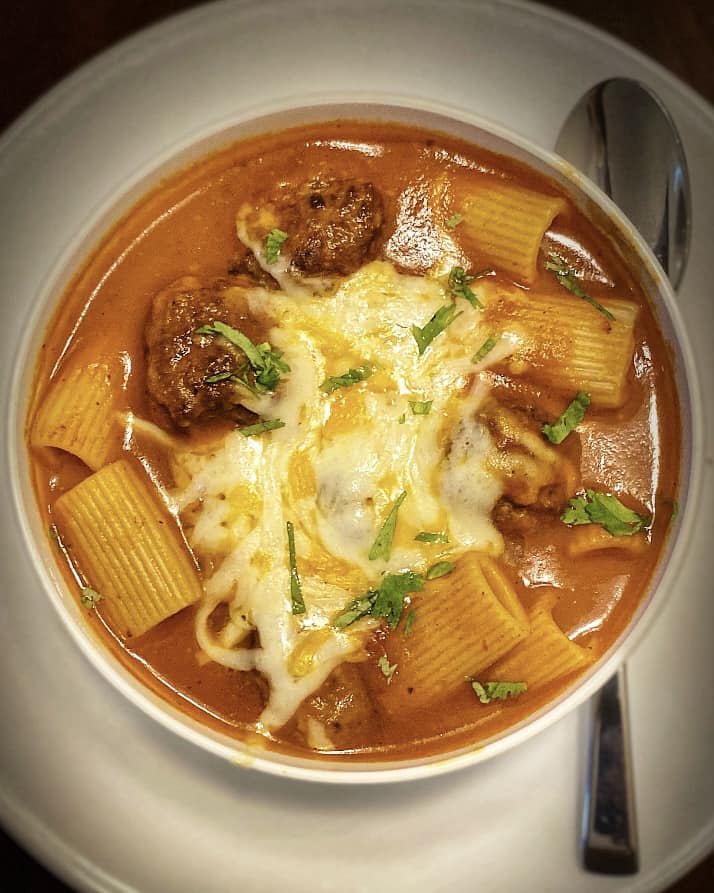
Why People Will Love Rigatoni Meatball Soup Recipe
Deep, slow-developed flavor
The stew builds layers from browned meatballs, aromatics, tomato paste, and stock, creating a rich, complex taste that feels like it simmered all day.
Perfect fusion of pasta and stew
It combines the comfort of a hearty soup with the satisfaction of a pasta dish, making it both filling and deeply comforting.
Tender, juicy homemade meatballs
The meatballs are soft, flavorful, and infused with herbs, cheese, and garlic—each bite is rich, savory, and incredibly satisfying.
Velvety, restaurant-quality broth
Blending the tomato base creates a smooth, luxurious texture that coats every ingredient and elevates the entire dish.
Hearty and nourishing
Packed with protein, pasta, and a flavorful broth, it’s a complete meal that feels both indulgent and sustaining.
Comfort food with a refined touch
While it has the warmth of classic home cooking, the use of wine, herbs, and technique gives it a more elevated, gourmet feel.
Great for sharing and gatherings
This dish is perfect for family dinners or entertaining—it’s generous, satisfying, and easy to serve in comforting portions.
Customizable to taste
You can adjust the spice level, swap proteins, or vary the herbs, making it adaptable while still maintaining its core richness.
Incredible texture in every bite
Soft meatballs, tender pasta, and smooth broth create a balanced, multi-layered eating experience.
Even better over time
Like many stews, the flavors deepen as it rests, making leftovers even more delicious the next day.
Key Ingredients
Ground Beef (the heart of the meatballs)
Using an 85/15 ratio provides the perfect balance of flavor and juiciness. The fat content keeps the meatballs tender while adding richness to the stew as they simmer.
Fresh Breadcrumbs from French Roll (the texture builder)
Unlike dry breadcrumbs, fresh crumbs create a softer, more delicate meatball. They absorb moisture and help maintain a light, almost melt-in-your-mouth texture.
Egg & Milk (the binding and moisture agents)
The egg holds the meatball mixture together, while a splash of milk or half & half adds moisture, ensuring the meatballs stay tender instead of dense.
Parmesan Cheese (the umami enhancer)
Adds a salty, nutty depth to the meatballs, enhancing overall flavor while also contributing to a richer, more complex profile.
Garlic & Herbs (the aromatic backbone)
A generous amount of garlic combined with basil, oregano, and parsley builds layers of classic Italian flavor, infusing both the meatballs and the stew with warmth and depth.
Tomato Paste & Whole Tomatoes (the stew foundation)
Tomato paste provides concentrated richness and depth, while whole peeled tomatoes bring brightness and natural sweetness. Blending them creates a smooth, velvety base.
Chicken Stock (the body of the stew)
Adds depth and balance, turning the tomato base into a full-bodied stew rather than a simple sauce.
Red Wine (optional but transformative)
A small amount of wine adds acidity and complexity, enhancing the savory notes and rounding out the richness of the dish.
Rigatoni Pasta (the hearty element)
Its large, ridged shape holds onto the stew beautifully, adding substance and making each bite more satisfying.
Mozzarella Cheese (the finishing layer)
Melted on top, it adds a creamy, stretchy texture that contrasts with the rich stew, creating that final comforting, indulgent touch.
Expert Tips:
Mix meatballs gently—less is more
Overmixing compresses the meat and leads to dense, tough meatballs. Combine just until the ingredients come together to keep them tender and light.
Let breadcrumbs fully hydrate
After adding the milk and egg, give the mixture a minute to absorb moisture. This ensures the meatballs stay soft and juicy instead of dry.
Brown in batches for real flavor
Avoid overcrowding the pot when browning meatballs. Proper spacing allows caramelization (not steaming), creating a rich, savory crust that deepens the stew.
Build fond, then use it
The browned bits left in the pot after searing meatballs are pure flavor. Deglaze with wine (or a splash of stock) to lift those bits and infuse them into the base.
Cook tomato paste until it darkens slightly
Give the tomato paste 30–60 seconds in the pan before adding liquids. This step caramelizes it, removing raw acidity and boosting depth.
Layer aromatics thoughtfully
Add onions first to soften and sweeten, then garlic later to avoid burning. Timing preserves clarity and balance in the flavor profile.
Control acidity and sweetness
If the tomatoes taste too sharp, balance with a pinch of sugar or a knob of butter. If too rich, add a splash of vinegar or lemon to brighten.
Blend for a velvety base (optional but powerful)
Pureeing the stew creates a smooth, restaurant-style texture that coats the meatballs and pasta evenly. For a rustic feel, blend only partially.
Simmer gently—don’t boil
A low, steady simmer keeps meatballs tender and prevents the sauce from becoming harsh or over-reduced.
Cook pasta separately and combine at the end
This prevents the pasta from overcooking and soaking up too much liquid. Add it just before serving for the best texture.
Season in stages, finish with precision
Season lightly at each step, then fine-tune at the end once flavors have developed. This avoids over-salting and creates a more balanced result.
Rest briefly before serving
Let the stew sit for a few minutes off heat. It allows flavors to settle and the texture to thicken slightly for a more cohesive dish.
Rigatoni Meatball Stew
Meatball Ingredients:
1 pound ground beef (85/15 ratio, organic if possible)
1 French roll (2-3 ounces), processed for 20-30 seconds in a food processor to make breadcrumbs
1 egg, beaten
1 teaspoon salt
1 teaspoon dried basil
1 teaspoon dried oregano
1 teaspoon dried parsley
½ teaspoon black pepper
4 cloves garlic, minced
¼ cup grated parmesan cheese
Splash of milk or half & half (about 2 tablespoons)
Stew Ingredients:
Olive oil (about 2 tablespoons)
1 onion, roughly chopped
1 teaspoon dried basil
1 teaspoon dried oregano
1 teaspoon dried parsley
Pinch of salt
Pinch of black pepper
Pinch of red pepper flakes (optional)
8 cloves garlic, thinly sliced
2 tablespoons tomato paste
¼ cup red wine (optional)
1 (28 ounce/793 gram) can organic whole, peeled tomatoes
6 cups warm chicken stock (I like Better Than Bouillon to make my stock)
1 tablespoon chopped flat-leaf parsley
8 ounces uncooked rigatoni, cooked according to package instructions
Grated mozzarella cheese (about ¼ cup per serving, so about 2 cups total)
Instructions:
Prepare the Meatballs: In a large bowl, combine the ground beef with the remaining meatball ingredients. Mix gently until just combined. Use a tablespoon to scoop portions of the mixture and roll them into meatballs.
Brown the Meatballs: Heat a large soup pot over medium-high heat and drizzle in about 2 tablespoons of olive oil. Once hot, add the meatballs, cooking in batches if necessary. If using a non-stick pot, allow the meatballs to brown undisturbed for about 2-3 minutes. If your pot isn’t non-stick, stir them for about 30 seconds to prevent sticking.
Cook the Meatballs: Once browned on all sides (about 4 minutes total per batch), transfer them to a plate and set aside. Drizzle in a bit more olive oil if needed, then add the chopped onion.
Sauté the Onion: Cook the onion, scraping up the flavorful bits from the meatballs. Add the dried basil, oregano, and parsley, plus a pinch of salt, pepper, and red pepper flakes (if using). Stir for a couple of minutes until softened.
Add Garlic and Tomato Paste: Stir in the sliced garlic and cook until fragrant, then mix in the tomato paste for about 30 seconds. If using, pour in the red wine to deglaze the pot, cooking for about 20 seconds before adding the whole tomatoes and chicken stock.
Simmer the Stew: Let the stew simmer for about 15 minutes. Use a blender or immersion blender to purée the mixture until smooth.
Return Meatballs to the Pot: Add the meatballs back into the stew and bring to a gentle simmer. Cook uncovered for another 15 minutes until the meatballs are tender, then stir in the chopped parsley.
Serve: In a bowl, add ½ cup of the cooked rigatoni, ladle in about 1 ½ cups of the stew with 4 meatballs, and top with about ¼ cup grated mozzarella cheese. Enjoy immediately, or place under the broiler for a minute to melt and slightly brown the cheese.
Enjoy your delicious Rigatoni Meatball Stew!
Important Notes When Making Rigatoni Meatball Stew
Texture of the meatballs is everything
The success of this dish heavily depends on tender meatballs. Avoid packing them too tightly when shaping—looser meatballs will stay soft and absorb the stew’s flavor more effectively.
Balance between broth and sauce consistency
This dish sits between a soup and a pasta sauce. Adjust the liquid carefully—too much stock makes it thin like soup, too little turns it into a heavy sauce. Aim for a rich, spoonable consistency.
Blending changes the entire character
Fully blending the stew creates a smooth, elegant base, while leaving it slightly chunky gives a more rustic, homemade feel. Choose based on the experience you want.
Tomato acidity needs control
Depending on the brand of tomatoes, acidity can vary. Taste and adjust—if too sharp, add a pinch of sugar or a small knob of butter to round it out.
Don’t skip browning the meatballs
This step is essential. Browning adds depth and locks in flavor. Skipping it will result in a flatter, less complex stew.
Pasta absorbs liquid over time
Rigatoni will continue soaking up the broth as it sits. For best results, store pasta separately or be prepared to add extra stock when reheating.
Use a large, heavy pot
A wide, heavy-bottomed pot allows even browning and better heat distribution, which is key for developing flavor without burning.
Wine is optional but impactful
Even a small amount of wine adds noticeable depth and complexity. If omitted, consider adding a splash of vinegar or lemon juice later for balance.
Flavor develops over time
Like many stews, this dish tastes even better after resting. The ingredients have time to meld, creating a deeper, more unified flavor profile.
Cheese should be added thoughtfully
Adding mozzarella at serving (or briefly broiling) gives the best texture. Mixing it directly into the stew can make it overly thick or stringy.
How to Enjoy Rigatoni Meatball Stew After Cooking
Let it rest briefly before serving
Allow the stew to sit for about 5–10 minutes after cooking. This helps the flavors settle and the broth thicken slightly, creating a more cohesive and satisfying texture.
Serve hot for the best experience
This dish shines when served warm, with tender meatballs and a rich, velvety broth. The warmth enhances both aroma and depth of flavor.
Assemble thoughtfully in the bowl
Start with a portion of rigatoni, then ladle the stew and meatballs over the top. This keeps the pasta from becoming overly soft and ensures a balanced bite.
Finish with cheese and herbs
Sprinkle freshly grated mozzarella (or a mix of mozzarella and Parmesan) over the top. For an extra touch, briefly broil to melt and lightly brown the cheese. Add fresh parsley for brightness and color.
Add a touch of richness or brightness
A drizzle of olive oil can enhance richness, while a small squeeze of lemon or a splash of vinegar can brighten the flavors and balance the tomato base.
Pair with complementary sides
Serve with crusty bread to soak up the flavorful broth, or a light salad to contrast the richness of the stew.
Control texture to your preference
If you prefer a thicker dish, use less broth when serving. For a more soup-like experience, add extra warm stock to loosen the consistency.
Enjoy slowly and mindfully
This is a layered, comforting dish—taking time to enjoy each bite allows you to fully experience the balance of tender meatballs, pasta, and rich broth.
Handle leftovers with care
Store the stew and pasta separately if possible. When reheating, add a bit of stock or water to restore the original consistency and prevent it from becoming too thick.
Reimagine leftovers creatively
Leftover stew can be transformed into a baked pasta dish with extra cheese, or served over mashed potatoes or polenta for a new, equally comforting meal.
Nutrition Information
For Rigatoni Meatball Stew (based on ~1 serving, assuming 6 servings total):
Calories: 520 kcal | Total Fat: 24 g | Saturated Fat: 9 g | Monounsaturated Fat: 10 g | Polyunsaturated Fat: 2.5 g | Cholesterol: 95 mg | Sodium: 750–900 mg (depending on stock and added salt) | Total Carbohydrates: 38 g | Dietary Fiber: 4 g | Sugars: 7 g | Protein: 32 g
Frequently Asked Questions:
Can I use frozen meatballs?
Yes, you can use frozen meatballs. Just add them directly to the stew while it simmers; you may need to increase the cooking time to ensure they’re heated through.
What can I substitute for ground beef?
You can substitute ground turkey, chicken, or even plant-based ground meat for a lighter or vegetarian option.
How do I prevent the meatballs from falling apart?
Ensure you mix the meatball ingredients just until combined and don’t overwork the mixture.
Chilling the formed meatballs for 30 minutes before cooking can also help them hold together better.
Can I make the stew ahead of time?
Yes, the stew can be made a day in advance and stored in the refrigerator.
Reheat gently before serving, adding a little broth if it thickens too much.
Is it possible to make this dish gluten-free?
Yes, use gluten-free breadcrumbs for the meatballs and gluten-free pasta.
Ensure your chicken broth is also gluten-free.
What can I add to the stew for more flavor?
You can add chopped vegetables like bell peppers, carrots, or spinach.
Fresh herbs like thyme or bay leaves can also enhance the flavor.
How should I store leftovers?
Store leftovers in an airtight container in the refrigerator for up to 3 days.
Reheat on the stove over low heat.
Can I freeze this stew?
Yes, the stew can be frozen without the pasta.
When ready to eat, reheat and add freshly cooked rigatoni.
What can I use instead of red wine?
If you prefer not to use wine, you can replace it with additional chicken broth or a splash of balsamic vinegar for acidity.
How can I make this dish spicier?
Increase the amount of red pepper flakes, or add diced jalapeños or a dash of hot sauce to the stew for added heat.