My Grandma’s Version of Pasta Fagioli Soup
My Grandma’s Version of Pasta Fagioli is a rich, deeply layered take on the classic Italian-American pasta-and-bean soup. Instead of relying only on beans, tomatoes, and pasta, this version builds extraordinary depth from homemade ham stock, smoky bacon, ground pork, soppressata, Parmigiano Reggiano rind, aromatics, herbs, Calabrian chile, and a splash of dry white wine.
The long cooking process is what gives this soup its character. The ham bone creates a savory stock, bacon and pork contribute richness, tomato paste is cooked until concentrated, and the wine lifts the browned flavors from the bottom of the pot. Beans provide creaminess, ditalini makes every bowl substantial, and the Parmesan rind slowly releases salty, nutty flavor into the broth.
This is not a light, delicate Pasta e Fagioli—it is a hearty, old-fashioned family-style version designed to simmer slowly, fill the kitchen with incredible aromas, and be served in generous bowls with grated Parmigiano Reggiano and crusty bread.
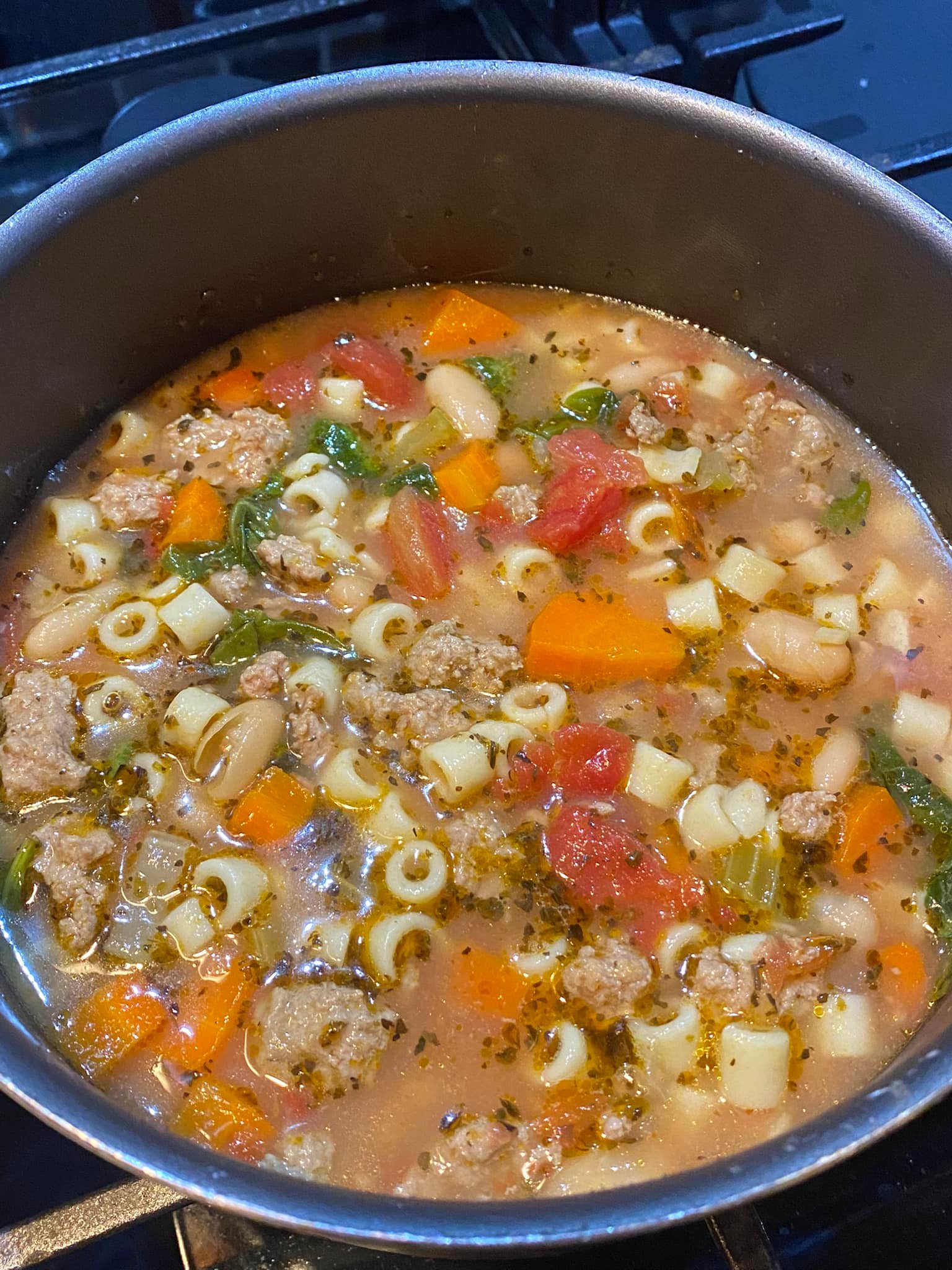
Why People Will Love My Grandma’s Version of Pasta Fagioli Soup Recipe
Homemade ham stock gives the soup much deeper flavor than ordinary packaged broth.
A meaty ham bone adds smokiness and savory complexity.
Bacon contributes richness and a familiar cured-pork flavor.
Ground pork makes the soup especially hearty and satisfying.
Soppressata adds another layer of cured-meat flavor.
Pinto-style rustic richness is replaced here with creamy great northern and kidney beans.
Tomato paste adds concentrated sweetness and umami.
Diced and crushed tomatoes create both texture and body.
Calabrian chile gives the soup a warm, slightly fruity heat.
Brown sugar rounds out the acidity of the tomatoes.
White wine adds brightness and helps deglaze the flavorful browned bits.
Parmesan rind slowly enriches the broth as the soup simmers.
Ditalini is the perfect small pasta for catching beans and meat in every spoonful.
Fresh thyme and parsley keep the long-cooked soup from tasting flat.
The recipe is highly adaptable to whatever beans or small pasta you have.
The soup becomes even more flavorful after resting overnight.
It is hearty enough to serve as a complete meal with only bread on the side.
Key Ingredients
Ham Bone and Homemade Ham Stock:
The ham bone is one of the defining ingredients. Long simmering extracts smoky pork flavor, gelatin, and savory richness, creating a stock with far more character than plain water.
Bacon, Pancetta, or Guanciale:
Bacon is practical and flavorful, contributing rendered fat, saltiness, and smoke. Pancetta or guanciale can be substituted for a more traditionally Italian cured-pork character.
Ground Pork:
Ground pork adds substantial body and makes this version of Pasta Fagioli much heartier than a simple bean-and-pasta soup.
Soppressata:
A few pieces simmered in the soup infuse the broth with cured-meat spices and pork flavor without needing to dominate each spoonful.
Great Northern and Kidney Beans:
Using more than one bean creates visual and textural variety. Great northern beans are mild and creamy, while kidney beans remain firmer and slightly meatier.
Tomato Paste, Diced Tomatoes, and Crushed Tomatoes:
Using tomatoes in several forms builds layers of flavor. Tomato paste brings concentration, diced tomatoes add texture, and crushed tomatoes give the broth body.
Calabrian Chiles:
Calabrian chile adds spicy, slightly smoky-fruity character and works especially well with tomatoes, pork, and Parmesan.
Parmigiano Reggiano Rind:
The rind slowly softens and releases savory, nutty flavor into the soup. It is an excellent way to add complexity without adding large quantities of grated cheese directly to the pot.
Ditalini Pasta:
Small tubular ditalini is ideal because it fits naturally onto a spoon with beans, vegetables, and small pieces of meat.
Dry White Wine:
Wine deglazes the pot after the vegetables and tomato paste have cooked, lifting concentrated browned flavors into the soup.
Expert Tips
Make the ham stock ahead if possible; chilling it makes it easier to remove excess surface fat.
Keep the ham bone gently simmering rather than aggressively boiling.
Add more water while making the stock if evaporation becomes excessive.
Render the bacon slowly so its fat becomes part of the flavor base.
Dice carrots, celery, and onion to similar sizes for even cooking.
Cook the tomato paste for several minutes until it becomes darker and more aromatic.
Do not burn the garlic; add it after the vegetables have softened.
Deglaze thoroughly with white wine and scrape the browned bits from the bottom of the pot.
Break the ground pork into relatively small pieces so it distributes evenly.
Drain excessive pork fat if the soup base becomes overly greasy.
Rinse canned beans if you want better control over sodium.
Add Calabrian chile gradually because different brands vary in heat.
Keep the Parmesan rind in large pieces so it is easy to remove later.
Simmer slowly for maximum flavor development.
Cook the ditalini separately if you expect several days of leftovers.
Reserve extra ham stock because pasta and beans continue absorbing liquid after cooking.
My Grandma’s Version of Pasta Fagioli Soup
Ingredients:
1 spiral ham bone with some meat still left on
4 tablespoons olive oil
1 knorr ham bouillon cube
6 cups ham stock from the ham bone
1 cup diced bacon, you can use pancetta or guanciale instead, my nonni was frugal and bacon was cheaper.
1 and 1/2 cups diced carrots
1 and 1/2 cups diced Celery
as many cloves of fresh diced garlic as you like!
1 medium yellow onion diced
about 2 tablespoons cento extra concentrated tomato paste
14.5 oz can cento petite diced tomatos
1/2 cup cento crushed tomatos
1 tablespoon crushed Calabrian chili’s in oil
1 can great northern beans
1 can Kidney beans and whatever other beans you like!
1 and 1/2 tablespoon brown sugar
1 tablespoon oregano
1/2 tablespoon Dried basil
1 tablespoon fresh thyme
2 tablespoons fresh parsley, chopped
1 and 1/2 cups ditalini pasta or whatever pasta you have on hand.
1 block parm reggiano (has to be reggiano!)
1 rind off the parm reggiano block
Kosher salt and freshly ground pepper to taste
1 pound ground pork
a few hunks of Soparosetta (cooked in the soup just for flavor)
1/4 cup dry white wine (we used that cheap gross glass jug of wine I think it was Carlo rossi 😂
Instructions:
Bring 10 cups of water to a boil, add the ham bone and the pork bouillon cube. Let boil for 3 hours, you can add water along the way if you need to, there’s your stock.
Heat olive oil in big pot on medium heat, add carrots, bacon,Celery and onions and cook until they’re looking done.
Reduce heat a bit and add garlic and tomato paste. Stir it around for about 4 or 5 minutes until it’s looking good.
Bring heat up to medium again and add wine, this should deglaze everything nicely.
Now add your meat and cook while mixing around making sure to break up the pieces of meat. Once the meat is damn near cooked through add the crushed tomatoes and diced tomatoes, then throw in your oregano, basil, thyme, parsley, calabrian chili, brown sugar, beans and salt and pepper, cook for about 2 minutes then add your home made ham stock! Reduce heat to a tad bit higher then Low heat and throw in your chunks of Soparosetta and your parm rind.
Let this all cook for around 2 hours while stirring occasionally, and if you need to you can add ham stock throughout the cook or even a little water, you’ll know just by looking at it and tasting if it needs either of the 2.
When the soup is close to done, boil your pasta and throw it in the soup once its cooked and let it simmer in the soup for about 15 minutes.
I like mine with freshly grated parm reggiano on top, some Crusty seeded bread and a chilled glass of sambuca! Enjoy!
Important Notes When Making My Grandma’s Version of Pasta Fagioli Soup
Ham bones, bacon, soppressata, bouillon, beans, and Parmesan can all contribute substantial sodium.
Taste the soup before adding additional salt.
Ham bouillon cubes are especially concentrated, so additional salt may not be needed early in cooking.
Ground pork should be thoroughly cooked before serving.
Ground pork should reach at least 160°F / 71°C.
The Parmesan rind is for flavoring the broth and should be removed before serving if it remains firm.
Soppressata pieces can also be removed after simmering if they were added only to flavor the broth.
The soup thickens considerably as pasta absorbs liquid.
Cooking pasta separately is the best option for leftovers.
Brown sugar should only soften the tomato acidity, not make the soup noticeably sweet.
Calabrian chile can become quite spicy; adjust according to your preference.
White wine should be allowed to cook briefly after deglazing so its harsh raw alcohol aroma mellows.
The soup benefits from a long, low simmer rather than a hard boil.
If the soup becomes too thick, add extra ham stock or water.
Fresh Parmesan should be added when serving rather than heavily boiled into the soup.
How to Enjoy My Grandma’s Version of Pasta Fagioli Soup After Cooking
After the soup has finished simmering, let it rest for about 10 minutes. This gives the flavors time to settle and allows the broth to develop a slightly fuller texture.
Remove the Parmesan rind, bay-like herb stems if any remain, and any large soppressata pieces that were used only for flavoring.
Ladle the soup into deep bowls, making sure every portion contains pasta, beans, pork, vegetables, and plenty of the rich tomato-ham broth.
Grate Parmigiano Reggiano generously over the hot soup. The cheese will soften immediately and add a sharp, nutty finish.
Add a drizzle of good extra-virgin olive oil if you want another layer of richness and aroma.
Crusty seeded Italian bread is particularly good with this soup because it can soak up the intensely flavored broth.
Garlic bread, focaccia, or toasted ciabatta are also excellent choices.
For freshness, finish with chopped parsley or a small amount of fresh basil.
If you enjoy more heat, add another tiny spoonful of crushed Calabrian chile at the table.
For the best bite, combine a bean, ditalini, a little ground pork, some vegetables, and plenty of broth, followed by a piece of Parmesan-topped crusty bread.
Nutrition Information
Approximate nutrition per serving, based on about 8 generous servings, including the soup but excluding additional Parmesan and bread served at the table:
Calories: 625 kcal | Total Fat: 29 g | Saturated Fat: 9 g | Monounsaturated Fat: 13 g | Polyunsaturated Fat: 4 g | Cholesterol: 75 mg | Sodium: 1,500–2,100 mg depending on the ham bone, bouillon, bacon, soppressata, beans, and added salt | Total Carbohydrates: 54 g | Dietary Fiber: 9 g | Sugars: 10 g | Protein: 34 g
Additional estimate:
Potassium: 950–1,200 mg | Calcium: 130–180 mg | Iron: 4–5.5 mg | Vitamin A: 4,000–5,500 IU | Vitamin C: 18–28 mg | Magnesium: 75–100 mg | Zinc: 4–6 mg
Frequently Asked Questions:
Can I substitute pancetta or guanciale for bacon?
Yes, you can substitute pancetta or guanciale for bacon if you prefer.
They will add a slightly different flavor profile but will still complement the soup well.
Can I use canned ham stock instead of making it from a ham bone?
While homemade ham stock adds rich flavor, you can use canned or packaged ham stock as a convenient alternative.
Just adjust the seasoning accordingly to taste.
What if I don’t have Calabrian chilis?
If you don’t have Calabrian chilis, you can substitute with crushed red pepper flakes or your preferred chili pepper for a similar kick of heat.
Can I omit the wine from the recipe?
Yes, you can omit the wine if you prefer. It adds depth to the flavor profile, but the soup will still be delicious without it.
How long should I cook the soup if I’m using canned beans instead of dried?
If using canned beans, you can reduce the cooking time of the soup by about an hour since the beans are already cooked.
Adjust the simmering time accordingly to allow the flavors to meld.
Is there a substitute for ditalini pasta?
Yes, you can use any small pasta shape you have on hand, such as elbow macaroni, small shells, or orzo.
Can I freeze leftovers of this soup?
Yes, this soup freezes well.
Allow it to cool completely before transferring to freezer-safe containers or bags.
It can be stored in the freezer for up to 3 months.
What can I use instead of parm reggiano rind?
If you don’t have parm reggiano rind, you can omit it or use a piece of parmesan cheese rind instead.
It adds a rich umami flavor to the soup.
How can I adjust the spice level of the soup?
To adjust the spice level, you can increase or decrease the amount of Calabrian chilis or omit them altogether if you prefer a milder flavor.
Can I make this soup vegetarian?
Yes, you can make a vegetarian version of this soup by omitting the bacon and ground pork.
Increase the amount of vegetables or add plant-based protein sources like tofu or tempeh for a hearty vegetarian option.