Pasta alla Genovese
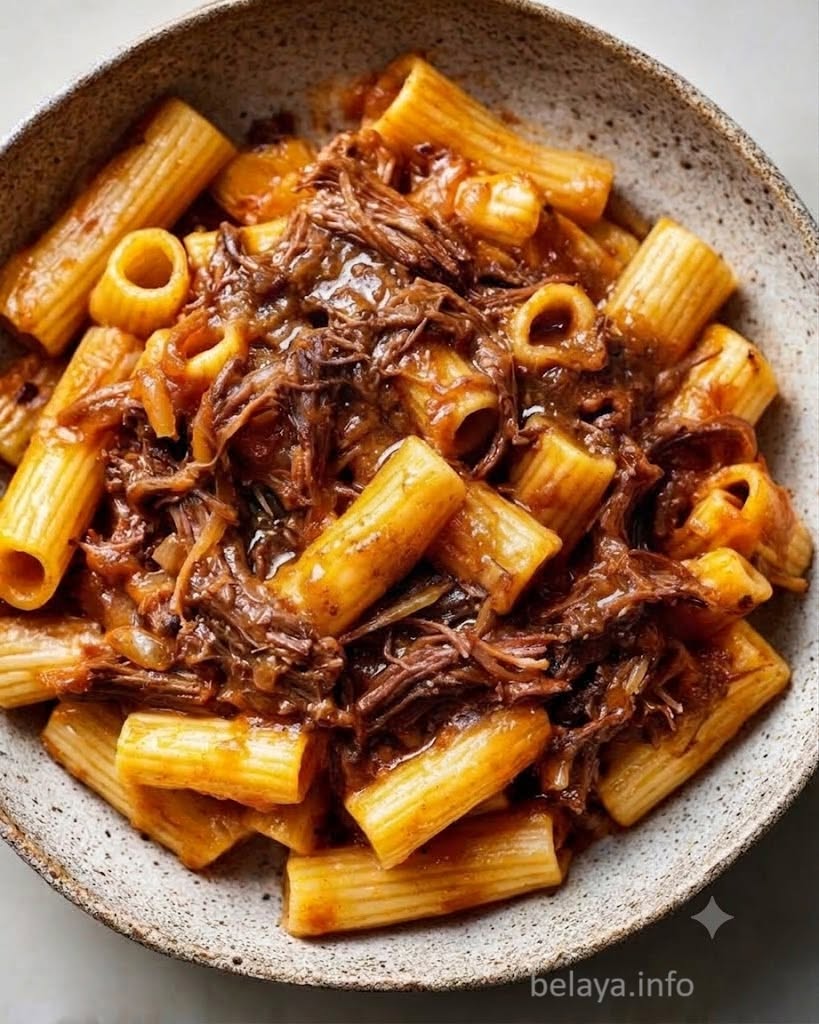
Pasta alla Genovese is a quiet masterpiece of Italian slow cooking—rich not from tomatoes, but from patience, onions, and time.
As pounds of onions gently melt down with beef over hours, they transform into a naturally sweet, deeply savory sauce that feels both rustic and luxurious.
This dish is a celebration of restraint and tradition, where simple ingredients yield extraordinary depth, offering comfort, warmth, and a true taste of Southern Italian soul in every bite.
Why People Will Love Pasta alla Genovese:
Unforgettable depth from simple ingredients
The long, slow cooking transforms onions into a naturally sweet, silky sauce that feels rich without relying on tomatoes or cream.
Authentic Italian comfort food
This recipe follows traditional technique, delivering a genuine taste of Italian home cooking rooted in patience and care.
Remarkably tender meat
Hours of gentle simmering break down the beef until it becomes melt-in-your-mouth tender, seamlessly integrated into the sauce.
Naturally balanced flavor
Sweet onions, savory beef, aromatic herbs, and a touch of white wine create harmony without heaviness or acidity.
Aroma that builds anticipation
As it cooks, the kitchen fills with warm, savory scents that make the meal feel special long before it’s served.
Perfect sauce-to-pasta relationship
The thick, clinging sauce coats every piece of pasta, ensuring full flavor in every bite.
Comforting yet refined
It feels both rustic and elegant—equally suited for a cozy family meal or a thoughtful dinner with guests.
Even better the next day
Like all great slow-cooked dishes, the flavors deepen and improve after resting, making leftovers especially rewarding.
Key Ingredients:
Yellow onions
The true heart of the dish. Slowly cooked until they collapse into a sweet, jammy sauce that provides richness and body without cream or tomatoes.
Beef (blade, eye round, or silverside)
A cut chosen for endurance rather than speed—its collagen slowly breaks down during the long simmer, enriching the sauce and becoming exceptionally tender.
Extra virgin olive oil
Used generously but intentionally, olive oil carries flavor and helps coax sweetness from the onions while rounding out the final texture.
Celery and carrots
Added in small amounts, they contribute subtle aromatic depth and natural sweetness without distracting from the onions.
White wine
Introduces gentle acidity and brightness, lifting the sweetness of the onions and adding complexity as it reduces.
Bouquet garni (parsley, bay leaf, celery tuft)
Infuses the sauce with quiet herbal notes during cooking, enhancing aroma while remaining background elements.
Ziti pasta
Its sturdy shape and hollow center are ideal for holding the thick, onion-rich sauce, ensuring each bite is fully coated.
Expert Tips:
Slice the onions thin and evenly
Uniform slices ensure they melt at the same rate, creating a smooth, cohesive sauce rather than uneven pieces.
Resist the urge to rush the onions
The sweetness comes from slow breakdown, not browning. Keep the heat low and let time do the work.
Use a heavy, wide pot
This allows even heat distribution and gentle evaporation, preventing scorching during the long cook.
Let the meat sit undisturbed at first
Allowing the beef to sear lightly before stirring adds depth without overpowering the onions.
Do not add water or stock
The onions release enough liquid on their own. Adding liquid too early dilutes the sauce and slows caramelization.
Stir regularly but gently
Check every 10–15 minutes once the onions soften to prevent sticking while preserving texture.
Add wine gradually
Introducing wine in stages allows better control over acidity and helps build layered flavor.
Remove the bouquet garni on time
Leaving it in too long can introduce bitterness. Take it out as soon as the long simmer is complete.
Finish pasta in the sauce
Tossing drained pasta directly into the sauce allows it to absorb flavor and improves cohesion.
Rest before serving
Let the dish sit for a few minutes off heat to allow flavors to settle and the sauce to thicken naturally.
Pasta alla Genovese
Ingredients:
Ziti pasta 0.75 lb (320 g)
Beef 1 lb (600 g) – (blade/eye round/silverside)
Yellow onions 2 lbs ( kg)
Celery 2 oz (75 g)
Carrots 2 oz (75 g)
Parsley 1 sprig
Bay leaves 1 leaf
White wine ⅔ cup (150 g)
Extra virgin olive oil to taste
Fine salt to taste
Instructions:
Step 1:
To make pasta alla genovese, start by peeling and thinly slicing the onion.
Peel and finely chop the carrots.
Finely chop the celery too, leave the tuft to one side.
Step 2:
Tie the celery tuft, parsley and laurel leave together with cooking twine for a bouquet garni.
Lastly, prepare the meat by removing any excess fat and cutting it into 5 pieces.
Step 3:
Add a generous amount of oil to a large saucepan, followed by the onions, the celery and the carrot.
Leave to flavor on a low flame for a few minutes, then add the meat.
Step 4:
Add the bouquet garni and a pinch of salt, stir and leave to flavor for a few minutes.
Lower the flame, cover with the lid and cook for around 3 hours.
There is no need to add water or squash because the onions will release enough liquid into the cooking sauce so that it does not dry out.
However, it is important to check and occasionally stir it.
Remove the bouquet garni once the 3 hours are up.
Step 5:
Now add part of the wine and simmer on a high flame.
Stir and continue to cook for another hour without the lid, gradually add the remaining wine as the sauce thickens.
Once the cooking time is up, cook the ziti in boiling salted water.
Step 6:
Drain the pasta when firm to the bite and place it back in the saucepan.
Stir well to amalgamate the sauce, then serve your pasta alla genovese, sprinkled with some pepper and grated Parmigiano if you wish!
Important Notes When Making Pasta alla Genovese:
This dish is onion-driven, not meat-driven
Although beef is present, onions are the true star. Their slow breakdown creates the sauce’s body, sweetness, and richness.
Color should remain pale and golden, not brown
If the onions darken too quickly, the heat is too high. Proper Genovese is mellow and golden, never caramelized or roasted.
Patience defines success
The long cooking time isn’t optional—it’s essential. Shortening it will result in harsh onion flavor and tough meat.
Liquid management is critical
The onions release enough moisture on their own. Adding water or stock early will dilute flavor and prevent proper reduction.
Meat is traditionally served separately or shredded
In classic versions, the beef is sometimes removed, sliced, and served alongside the pasta rather than mixed in.
Wine should support, not dominate
White wine adds brightness but must be cooked off fully. Raw wine flavor indicates insufficient simmering.
Season gently and late
Salt concentrates as the sauce reduces. Final seasoning should always be adjusted near the end of cooking.
Texture should be spoon-coating and cohesive
The finished sauce should cling to pasta without pooling liquid at the bottom of the plate.
This is a sauce that improves with rest
Like many slow-cooked dishes, Genovese tastes deeper and more harmonious after sitting or reheating the next day.
Respect simplicity
Avoid adding garlic, tomatoes, or extra herbs—doing so changes the dish’s identity and balance.
How to Enjoy Pasta alla Genovese After Cooking
Let the dish rest briefly
Allow the pasta and sauce to sit for 5–10 minutes off the heat. This resting time helps the sauce thicken naturally and fully coat the pasta.
Serve warm, not piping hot
Genovese reveals its sweetness and savory depth best when warm. Extremely high heat can mute the delicate onion-driven flavors.
Toss gently before plating
Give the pasta a final, gentle toss to ensure the sauce is evenly distributed and clings to every piece.
Use shallow bowls or warm plates
Wide bowls allow the sauce to spread evenly and keep the pasta warm without steaming it excessively.
Add cheese sparingly
Grated Parmigiano Reggiano or Pecorino Romano should be used lightly, enhancing umami without overwhelming the sauce’s natural sweetness.
Finish with restraint
A light drizzle of extra virgin olive oil adds aroma and richness, but avoid heavy garnishing—simplicity is part of the dish’s soul.
Pair thoughtfully
Serve with a crisp green salad, lightly dressed vegetables, or crusty bread to balance the richness without competing for attention.
Enjoy slowly and intentionally
This dish is meant to be savored. Take time to appreciate how the onions, beef, and wine have transformed through patience.
Experience it again the next day
Reheated gently, Pasta alla Genovese often tastes even deeper and more harmonious after resting overnight.
Respect tradition while personalizing gently
If you customize, do so subtly—small changes preserve the integrity of this classic dish.
Nutrition Information:
Approximate values per 1 serving, assuming the recipe serves 6, including pasta.
Calories: 620 kcal | Total Fat: 24.8 g | Saturated Fat: 7.9 g | Monounsaturated Fat: 11.6 g | Polyunsaturated Fat: 3.1 g | Cholesterol: 95 mg | Sodium: 520–680 mg (depending on added salt and cheese) | Total Carbohydrates: 62.4 g | Dietary Fiber: 5.8 g | Sugars: 12.9 g | Protein: 31.6 g
Frequently Asked Questions:
Why doesn’t Pasta alla Genovese use tomatoes?
This dish relies on slow-cooked onions as the primary sauce base. Over hours of cooking, the onions melt into a naturally sweet, rich sauce that doesn’t need tomatoes for body or flavor.
Is this dish actually from Genoa?
Despite the name, Pasta alla Genovese originates from Naples, not Genoa. The term “Genovese” refers to a historical culinary influence rather than the Ligurian pesto most people associate with Genoa.
Can I eat the beef mixed into the pasta, or should it be served separately?
Both are traditional. Some versions shred the beef into the sauce, while others serve the tender meat sliced on the side as a second course.
Does this dish get better the next day?
Yes. Like many slow-cooked recipes, the flavors deepen and become more harmonious after resting overnight, making leftovers especially delicious.
What pasta shapes work best if I don’t have ziti?
Short, sturdy pasta shapes like rigatoni, paccheri, or mezze maniche are excellent substitutes because they hold the thick onion-based sauce well.
How thin should the onions be sliced for best results?
They should be sliced thin and evenly. Thin slices break down more uniformly, allowing the onions to melt into a smooth, cohesive sauce during the long cooking process.
What’s the biggest mistake to avoid when cooking Genovese?
Using heat that’s too high. The onions should soften and collapse slowly, not brown or caramelize. High heat leads to bitterness and uneven texture.
Do I really not need to add water or broth while cooking?
Correct. The onions release a large amount of natural liquid as they cook. Adding extra liquid early will dilute flavor and slow proper reduction.
When should I add the wine, and why is it added gradually?
Wine is added after the onions and meat have softened, then gradually during the uncovered phase. This allows alcohol to cook off and acidity to integrate gently without overpowering the sauce.
How do I know the sauce is truly finished before adding the pasta?
The sauce should be thick, glossy, and spoon-coating, with no excess liquid pooling. The onions should be fully broken down, and the meat extremely tender.