Homemade Sicilian Pizza
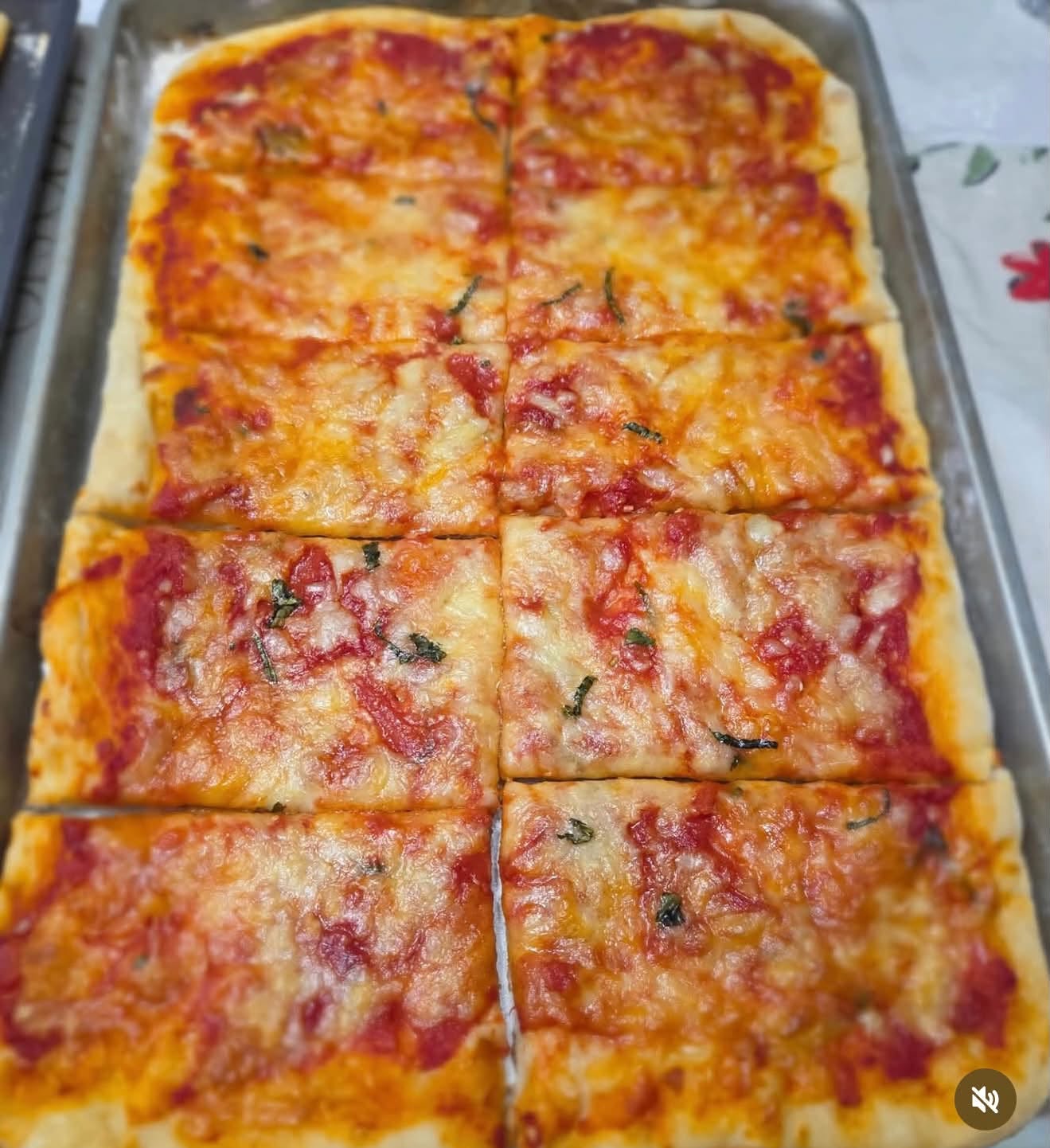
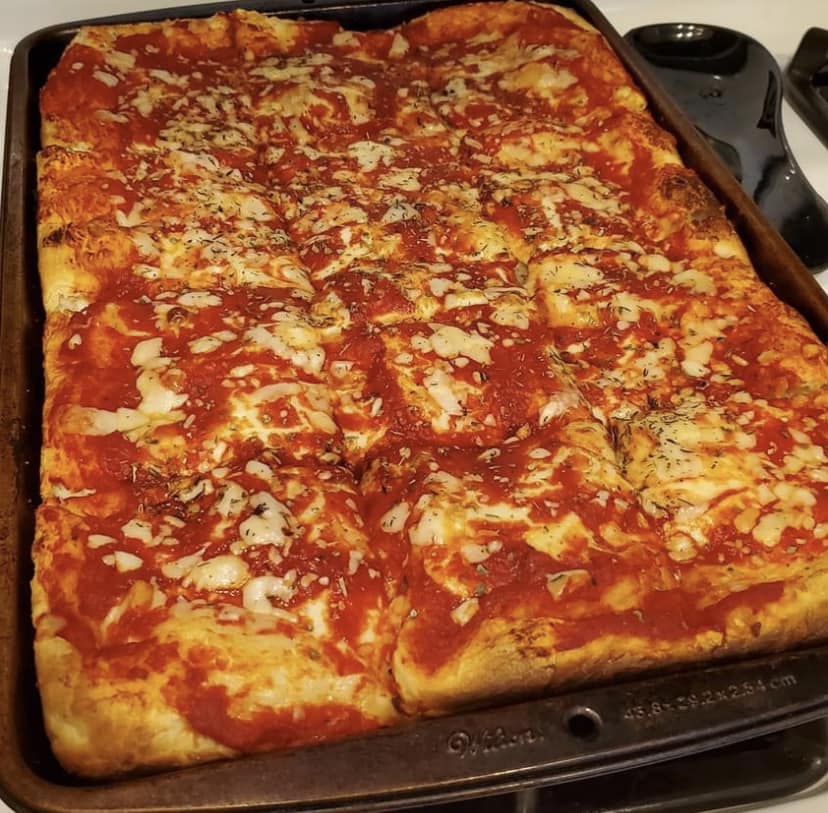
Homemade Sicilian Pizza is a thick, airy, golden pan pizza made with slow-fermented dough, olive oil, crushed plum tomatoes, mozzarella cheese, Pecorino Romano, and fragrant oregano.
This pizza is all about patience and texture. The long cold fermentation gives the dough flavor and structure, while the olive oil in the pan creates a crisp, golden bottom and tender, bread-like interior.
Every slice feels rustic, rich, and deeply satisfying — crisp on the edges, soft in the center, cheesy on top, and finished with bright tomato sauce, salty Pecorino, and aromatic Sicilian oregano.
Why People Will Love Homemade Sicilian Pizza Recipe
It has a thick, airy, bakery-style crust.
The long fermentation gives the dough deeper flavor.
Olive oil creates a crispy golden bottom.
Crushed plum tomatoes give the sauce a bright, natural tomato taste.
Whole milk mozzarella melts beautifully and gives a creamy cheese layer.
Pecorino Romano adds salty, sharp flavor.
Sicilian oregano gives the pizza a classic old-world aroma.
The dough is soft inside but crisp around the edges.
It is perfect for family pizza nights, weekends, and gatherings.
It feels homemade, rustic, and deeply comforting.
It can be served as a main dish, snack, or party food.
Every bite has crisp crust, soft dough, melted cheese, tomato, herbs, and olive oil richness.
Key Ingredients
Bread Flour:
Bread flour gives the dough strength, chew, and structure. It helps create the tall, airy Sicilian-style crust.
Instant Dry Yeast:
A small amount of yeast allows the dough to ferment slowly, developing flavor over time.
Cold Water:
Cold water slows fermentation and helps the dough develop better texture during the long refrigerator rest.
Olive Oil:
Olive oil adds flavor, softness, and richness to the dough. It also helps crisp the bottom of the pizza in the pan.
Crushed Plum Tomatoes:
Crushed plum tomatoes create a bright, simple sauce that does not overpower the crust and cheese.
Low Moisture Whole Milk Mozzarella:
This cheese melts smoothly and gives the pizza a creamy, classic topping without making it too watery.
Pecorino Romano:
Pecorino adds a salty, sharp, savory finish that makes the pizza taste more complex.
Sicilian Oregano:
Oregano gives the pizza its warm, aromatic, traditional flavor.
Expert Tips
Use bread flour for the best chewy and airy crust.
Let the dough ferment for at least 24 hours if possible.
Do not rush the stretching process; let the dough relax between attempts.
Use plenty of olive oil in the pan for a crisp bottom.
Press the dough gently into the corners instead of forcing it.
Add only a thin layer of sauce before proofing.
Par-bake the crust before adding the main toppings.
Use low moisture mozzarella to prevent a soggy pizza.
Leave a small border around the edge without cheese for a defined crust.
Add the sauce on top of the cheese in diagonal lines for a classic look.
Watch carefully if broiling because the top can brown very quickly.
Let the pizza rest briefly before slicing so the cheese settles.
Homemade Sicilian Pizza
Ingredients:
For the dough
497 grams bread flour or 4 cups
2 grams instant dry yeast or 1/2 teaspoon, SAF brand recommended
10 grams fine sea salt or 1 3/4 teaspoons
6 grams granulated sugar or 1 1/2 teaspoons
318 grams cold water or 1 1/2 cups
17 grams olive oil or 1 1/2 tablespoons, plus more for proofing container
For the Sicilian pizza
1 30 ounce dough ball from above recipe
1/4 cup olive oil
1 28 ounce can crushed plum tomatoes drained
1/2 teaspoon kosher salt
1 teaspoon Sicilian dried oregano or Italian oregano
3 tablespoons Pecorino Romano grated
12 ounces low moisture whole milk mozzarella shredded
Instructions
For the dough
Step 1:
Place water into a bowl large enough to hold both the water and all the dry ingredients and still have room to spare.
Mix together dry ingredients in another bowl.
Step 2:
Add dry ingredients to water a bit at a time and mix thoroughly to form a dry rough mass.
Pour the oil over the dough, mix again, and place the rough shaggy dough onto a work surface.
Step 3:
Knead the dough for 5-7 minutes.
If the dough is too sticky, place a clean bowl inverted over the dough and wait for 30-45 minutes before resuming.
Return to kneading (just make sure to knead for at least a total of 5-7 minutes).
Step 4:
Place the bowl over the dough once more and let sit for 30-40 minutes to warm up before forming the dough ball.
Step 5:
After 40 minutes pull the dough toward its end repeatedly to form a smooth ball.
Pinch the seam side and place the dough ball seam side down into an oiled bowl (about 2 teaspoons olive oil) and cover tightly with plastic wrap.
Refrigerate for at least 12 hours but preferably 24 -72 hours before using.
For the Sicilian Pizza
Take the dough out of the fridge for 60 minutes prior to use.
Do not uncover the bowl.
Step 6:
Pour and spread the olive oil into a 14-inch square pan and drop the dough ball into it.
Try to stretch with your fingers to fill the pan for a couple of minutes.
The dough will not be able to be stretched on the first try.
Cover the pan with plastic wrap and let the dough warm up for 30-45 minutes and try to stretch again.
If unsuccessful, cover one more time and wait another 30-45 minutes.
Press the dough into the corners to form a crust.
Step 7:
Mix the salt into the tomatoes.
Spread 4-6 ounces of the tomato sauce onto the dough (just a very thin layer) then cover with plastic wrap.
Place the pan on top of the oven or a sunny windowsill to warm and rise for 3 hours.
Step 8:
Preheat the oven to 430f and set one rack to the lowest level and the other to the top 1/3 of the oven.
Once the oven is to temp and the dough has risen enough par-bake the pizza on the lowest rack for 12 minutes or until the bottom of the pizza is lightly golden and the dough has firmed up.
Step 9:
Remove the pizza and top with the mozzarella cheese, leaving 1/2-inch of the perimeter without any cheese.
Spoon the sauce on top of the pizza in diagonal lines (you might not need all of the sauce) and cook on the higher set rack for 12 minutes more.
Step 10:
Remove from the oven and sprinkle with grated Pecorino Romano and Sicilian oregano.
Cook for 1 minute more.
You can broil the top for 30 seconds or so for more color but watch very carefully!
Enjoy!
Important Notes When Making Homemade Sicilian Pizza
The dough needs time to ferment for the best flavor and texture.
The first stretch may not fill the pan, and that is normal.
Resting the dough helps the gluten relax.
Do not uncover the dough too early, or the surface may dry out.
The pan should be well-oiled to prevent sticking and create crispness.
Draining the tomatoes helps keep the pizza from becoming watery.
You may not need all of the sauce.
Par-baking helps the crust stay firm under the cheese and sauce.
Oven temperatures and pan types can affect baking time.
Sicilian pizza is best sliced after resting for a few minutes.
How to Enjoy Homemade Sicilian Pizza After Cooking
After the Homemade Sicilian Pizza comes out of the oven, let it rest in the pan for about 5 minutes. This helps the cheese settle and allows the crust to finish crisping against the hot pan.
Use a thin spatula to loosen the edges, then carefully transfer the pizza to a cutting board. Slice it into squares or rectangles for the classic Sicilian-style presentation.
Serve the pizza warm while the crust is crisp, the cheese is melted, and the tomato sauce is bright and fragrant. Finish each slice with extra Pecorino Romano, a pinch of oregano, crushed red pepper flakes, or a drizzle of olive oil.
This pizza pairs beautifully with a simple green salad, Caesar salad, roasted vegetables, garlic knots, marinated olives, or antipasto. For a cozy meal, serve it with cold soda, sparkling water, iced tea, or a light Italian-style drink.
Leftovers can be reheated in a skillet or oven to bring back the crispy bottom. Avoid microwaving if possible, because it can make the crust soft.
Nutrition Information
Approximate nutrition per serving, based on 8 slices:
Calories: 455 kcal | Total Fat: 19 g | Saturated Fat: 7 g | Monounsaturated Fat: 9 g | Polyunsaturated Fat: 1.5 g | Cholesterol: 38 mg | Sodium: 760–1,150 mg depending on cheese, tomatoes, added salt, Pecorino Romano, and final slice size | Total Carbohydrates: 53 g | Dietary Fiber: 3 g | Sugars: 4 g | Protein: 18 g
Additional estimate:
Calcium: 260–420 mg | Potassium: 280–520 mg | Iron: 3–5 mg | Vitamin A: 500–1,000 IU | Vitamin C: 8–18 mg
Frequently Asked Questions:
Can I use active dry yeast instead of instant dry yeast?
Yes, you can substitute active dry yeast for instant dry yeast in this recipe.
However, you’ll need to activate the active dry yeast by dissolving it in warm water with a pinch of sugar before adding it to the flour mixture.
Can I use fresh tomatoes instead of canned tomatoes?
Absolutely! If you prefer fresh tomatoes, you can use them instead of canned tomatoes.
Simply peel, seed, and crush fresh tomatoes to use as a topping for your Sicilian pizza.
Can I use a different type of cheese instead of mozzarella?
While mozzarella is traditional for pizza, you can experiment with other cheeses such as provolone, cheddar, or even goat cheese for a unique flavor profile.
Do I have to refrigerate the dough for 24-72 hours?
While the longer fermentation time improves the flavor and texture of the dough, you can still make delicious pizza with a shorter fermentation period.
However, for the best results, it’s recommended to refrigerate the dough for at least 12 hours.
Can I freeze the pizza dough?
Yes, you can freeze the pizza dough after it has been refrigerated and allowed to ferment.
Wrap the dough tightly in plastic wrap and place it in a freezer-safe bag or container.
Thaw in the refrigerator overnight before using.
Can I use all-purpose flour instead of bread flour for the dough?
Yes, you can substitute all-purpose flour for bread flour in this recipe, but the texture of the dough may vary slightly.
Bread flour typically produces a chewier crust, while all-purpose flour may result in a softer crust.
Can I make the dough without refrigerating it for 12-72 hours?
While refrigerating the dough improves its flavor and texture, you can still make the pizza dough without refrigeration.
However, the longer fermentation time enhances the dough’s qualities, so it’s recommended for the best results.
Can I freeze the pizza dough for later use?
Yes, you can freeze the pizza dough after it has been refrigerated and allowed to ferment.
Wrap the dough tightly in plastic wrap and place it in a freezer-safe bag or container.
Thaw in the refrigerator overnight before using.
How thin should I spread the tomato sauce on the pizza dough?
Aim for a very thin layer of tomato sauce on the pizza dough, as too much sauce can make the crust soggy.
Spread 4-6 ounces of the tomato sauce evenly over the dough for optimal flavor balance.
Can I use fresh herbs instead of dried oregano?
Yes, you can use fresh oregano or other herbs instead of dried oregano for a fresher flavor.
Simply finely chop the fresh herbs and sprinkle them over the pizza before baking.
How long should I let the dough rise before baking the pizza?
Allow the dough to rise for about 3 hours in a warm place, covered with plastic wrap, before baking the pizza.
This gives the dough time to ferment and develop flavor.
What can I use if I don’t have a 14-inch square pan for the pizza?
If you don’t have a 14-inch square pan, you can use a similar-sized baking sheet or even a rectangular pan.
Just make sure to adjust the dough accordingly to fit the pan.
Can I use different cheeses for the pizza topping?
While mozzarella is traditional for pizza, you can experiment with different cheeses such as provolone, cheddar, or fontina for added flavor and variety.
How can I reheat leftover Sicilian pizza?
Leftover pizza can be reheated in a preheated oven at 350°F on a baking sheet until hot, which usually takes about 10 minutes.
Ensure the pizza is heated through before serving.