French Onion Beef and Noodles
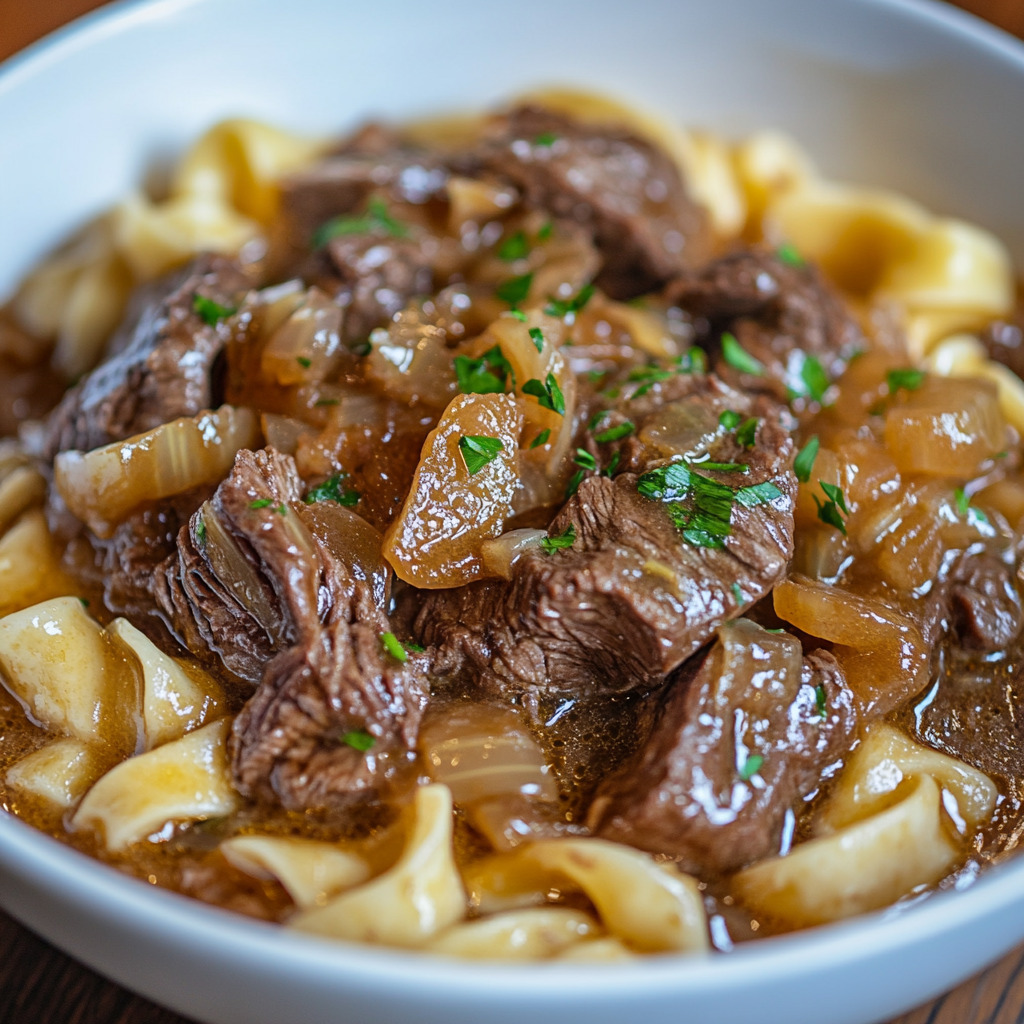
French Onion Beef and Noodles is a rich, comforting dish inspired by the deep flavors of classic French onion soup combined with the heartiness of a rustic beef and pasta skillet.
Slowly caramelized onions create a naturally sweet and savory base, while tender strips of beef simmer in a flavorful broth infused with garlic, thyme, and Worcestershire sauce. The result is a dish layered with deep, slow-developed flavor that feels both cozy and satisfying.
As the egg noodles absorb the savory broth, they become coated in the rich onion-infused sauce, creating a silky, comforting texture in every bite. Finished with melted Swiss cheese, the dish captures the spirit of French onion soup—warm, savory, and slightly cheesy—while transforming it into a hearty, family-friendly meal perfect for weeknight dinners or cold evenings when you crave something deeply comforting.
Why People Will Love French Onion Beef and Noodles
Deep, Slow-Built Flavor from Caramelized Onions
The foundation of this dish lies in beautifully caramelized onions. As they slowly cook, their natural sugars develop into rich, sweet, and savory notes that create an incredibly flavorful base for the entire meal.
Inspired by the Classic Comfort of French Onion Soup
This recipe captures the beloved flavor profile of French onion soup—savory broth, caramelized onions, herbs, and melted cheese—but transforms it into a hearty, satisfying main dish that feels even more comforting.
Tender Beef in a Rich, Savory Sauce
Thin strips of beef sear quickly and absorb the flavors of the broth, garlic, thyme, and Worcestershire sauce. The result is tender, juicy meat infused with deep umami flavor.
Cozy, Hearty, and Perfect for Comfort Food Cravings
Egg noodles soak up the flavorful broth and sauce, creating a dish that feels warm, filling, and deeply satisfying—exactly the kind of meal people crave on cool evenings or busy weeknights.
Balanced Layers of Flavor
The recipe combines sweet caramelized onions, savory beef, aromatic herbs, and a hint of tang from Worcestershire sauce. This layering creates a complex flavor profile that tastes much more sophisticated than the simple ingredients suggest.
Creamy, Melted Cheese Finish
Swiss cheese melts into the hot noodles and beef mixture, adding a creamy richness that complements the savory broth and enhances the overall comfort-food appeal.
Simple Ingredients with Restaurant-Quality Results
Despite its deep flavor, the recipe uses everyday ingredients that are easy to find. With just a few cooking techniques—caramelizing onions and searing beef—you can create a dish that tastes like something from a cozy bistro.
Perfect One-Pan Comfort Meal
Much of the cooking happens in a single skillet or Dutch oven, making it convenient to prepare while still delivering a full, satisfying meal.
Family-Friendly and Crowd-Pleasing
The combination of tender beef, savory noodles, and melted cheese appeals to a wide range of tastes, making it a dish that both adults and kids tend to enjoy.
Versatile and Easy to Customize
This recipe can easily be adapted with different cheeses, cuts of beef, or even added vegetables. It’s a flexible comfort meal that can be adjusted to suit different preferences while still delivering rich flavor.
Key Ingredients
Beef Sirloin or Stew Meat
The beef provides the hearty backbone of this dish. When sliced thin and seared, it develops a rich, savory flavor that complements the sweetness of the caramelized onions. Sirloin offers a tender bite, while stew meat brings deeper, beefier flavor when simmered gently in the broth.
Yellow Onion
Onions are the soul of this recipe. Slowly caramelizing them transforms their sharp raw flavor into a deep, sweet, and savory richness. This process creates the signature taste inspired by classic French onion soup and forms the foundation of the sauce.
Butter
Butter helps caramelize the onions while adding a smooth, rich base to the dish. It enhances the natural sweetness of the onions and contributes to the comforting, velvety character of the overall sauce.
Garlic
Fresh garlic adds aromatic depth and warmth to the dish. When briefly sautéed after the beef is seared, it releases a fragrant, savory layer that ties together the beef, broth, and onions.
Beef Broth
Beef broth forms the flavorful cooking liquid that binds the ingredients together. It absorbs the caramelized onion flavor and beef drippings, creating a savory, soup-like base that coats the noodles beautifully.
Egg Noodles
Egg noodles bring a soft, comforting texture and are perfect for soaking up the rich broth and sauce. Their slightly tender yet hearty structure makes them ideal for holding the deep flavors of the dish.
Swiss Cheese
Swiss cheese adds a creamy, melty finish that echoes the traditional topping of French onion soup. Its mild nuttiness balances the richness of the beef and caramelized onions without overpowering the dish.
Worcestershire Sauce
This small but powerful ingredient adds umami depth and complexity. With notes of vinegar, molasses, and spices, Worcestershire sauce intensifies the savory character of the broth.
Dried Thyme
Thyme introduces a subtle earthy and herbal note that complements both beef and onions. It brings a classic French-inspired flavor that enhances the overall aroma of the dish.
Soy Sauce (Optional)
A small amount of soy sauce deepens the umami flavor of the broth. It strengthens the savory profile of the dish and gives the sauce a richer, more layered taste.
Expert Tips:
Take Your Time with the Onions
The depth of flavor in this dish depends heavily on properly caramelized onions. Cook them slowly over medium heat for at least 15–20 minutes, stirring occasionally. As they soften and turn golden brown, their natural sugars develop a rich sweetness that forms the signature flavor base of the dish.
Slice the Beef Thinly Against the Grain
Cutting the beef into thin strips against the grain helps break down muscle fibers, resulting in more tender bites. Thin slices also cook quickly and absorb the savory broth more effectively.
Sear the Beef for Maximum Flavor
Allow the beef to sear undisturbed for a minute or two before stirring. This helps develop a golden crust through the Maillard reaction, which adds deeper, richer flavor to the overall dish.
Deglaze the Pan for Extra Depth
After searing the beef and caramelizing the onions, the pan will contain flavorful browned bits (fond). When you add the beef broth, gently scrape the bottom of the pan to dissolve these bits into the liquid. This step greatly enhances the sauce’s richness.
Use a Good Quality Beef Broth
Since the broth forms the base of the sauce, using a high-quality broth or stock makes a noticeable difference. A richer broth creates a fuller, more complex flavor that complements the caramelized onions and beef.
Balance the Umami Flavors Carefully
Worcestershire sauce and soy sauce both add savory depth. Use them thoughtfully so they enhance the dish without overpowering it. The goal is to create layered flavor, not excessive saltiness.
Cook the Noodles Just Until Al Dente
Slightly undercook the egg noodles when boiling them. They will continue absorbing liquid when mixed with the beef and onion sauce, allowing them to soak up flavor without becoming overly soft.
Add Cheese at the Right Moment
Sprinkle the Swiss cheese over the finished noodles and beef mixture while it is still hot. Cover the pan briefly so the cheese melts gently into the dish without turning oily or separating.
Adjust the Sauce Thickness to Your Preference
If you prefer a thicker, more gravy-like sauce, whisk a small amount of flour into the broth and simmer for a few extra minutes. If you like a lighter consistency, simply allow the broth to reduce naturally.
Finish with Fresh Herbs for Brightness
A sprinkle of chopped parsley just before serving adds freshness and color. This final touch balances the richness of the beef, butter, and cheese while making the dish look more vibrant and inviting.
French Onion Beef and Noodles
Ingredients:
1 lb beef sirloin or stew meat, cut into thin strips
1 large onion, thinly sliced
3 tablespoons butter
3 cloves garlic, minced
4 cups beef broth
2 cups egg noodles
1 teaspoon dried thyme
1 teaspoon Worcestershire sauce
1 tablespoon soy sauce (optional for extra depth)
Salt and black pepper, to taste
1 cup shredded Swiss cheese
2 tablespoons flour (optional, for thickening)
Chopped parsley, for garnish
Instructions:
Step 1: Caramelize the Onions
In a large skillet or Dutch oven, melt 2 tablespoons of butter over medium heat.
Add the thinly sliced onions and cook, stirring occasionally, for 15–20 minutes or until they’re soft, golden, and caramelized.
This builds the rich, sweet onion flavor that makes this dish shine.
Step 2: Sear the Beef
Push the caramelized onions to one side of the pan.
Add the remaining 1 tablespoon of butter, then place the beef strips in the open space.
Turn up the heat slightly and brown the beef for about 5–7 minutes, stirring occasionally until evenly seared.
Step 3: Add Garlic and Seasonings
Stir in the minced garlic and cook for 1–2 minutes, just until fragrant.
Season with thyme, Worcestershire sauce, soy sauce (if using), salt, and pepper.
Mix well to coat the beef and onions in the seasoning blend.
Step 4: Pour in the Broth
Add the beef broth to the skillet and stir to combine.
Bring it to a low simmer and let it cook for 5–7 minutes, allowing all the flavors to come together. If you prefer a thicker sauce, whisk in the optional flour and simmer an extra minute or two until slightly thickened.
Step 5: Cook and Combine the Noodles
While the sauce simmers, boil the egg noodles in a separate pot according to the package directions.
Drain and then stir them into the beef and onion mixture, tossing to coat them in the rich broth.
Optional Finish – Cheesy Style
For a gooey finish, sprinkle in shredded Swiss cheese (or another cheese like mozzarella).
Cover the skillet for a few minutes until the cheese melts into the noodles.
Garnish
Finish with a sprinkle of chopped parsley, and serve warm for the ultimate comfort meal.
Important Notes When Making French Onion Beef and Noodles
Caramelizing the Onions Is the Most Important Step
The success of this dish depends largely on properly caramelized onions. They should cook slowly until soft, golden brown, and slightly sweet. Rushing this step or cooking them at too high a temperature can cause them to burn rather than develop the deep, rich flavor that defines the recipe.
Choose the Right Cut of Beef
Tender cuts such as sirloin work well because they cook quickly and remain juicy. If using stew meat or a tougher cut, slicing the meat thinly and allowing it to simmer a little longer in the broth will help ensure it becomes tender and flavorful.
Thin Beef Strips Cook More Evenly
Cutting the beef into thin strips helps it cook quickly without becoming tough. Thick pieces may take longer to cook and could become chewy if overcooked.
The Broth Is the Flavor Base
Because the noodles absorb the broth during cooking, the broth should be well-seasoned and flavorful. Taste the broth before adding the noodles and adjust with salt, pepper, or additional Worcestershire sauce if needed.
Egg Noodles Work Best for This Dish
Egg noodles are ideal because their soft yet sturdy texture holds up well in the broth. They also absorb the savory sauce beautifully without falling apart.
Optional Flour Controls Sauce Thickness
Adding flour can slightly thicken the broth, creating a sauce-like consistency that coats the noodles and beef more evenly. If you prefer a lighter, more soup-like texture, you can skip this step.
Swiss Cheese Adds a Classic French Onion Flavor
Swiss cheese melts smoothly and provides a mild, nutty taste that complements the caramelized onions. While other cheeses can be used, Swiss most closely captures the flavor profile inspired by French onion soup.
Be Careful Not to Overcook the Noodles
Since the noodles will continue absorbing liquid after being mixed into the dish, they should be cooked just until tender. Overcooking them initially can lead to overly soft noodles later.
Adjust Seasoning After Combining Everything
Once the noodles are mixed with the beef and sauce, taste the dish again. Because noodles absorb seasoning, a final adjustment with salt or pepper may be needed to balance the flavors.
Serve the Dish While It Is Warm and Fresh
This meal is best enjoyed right after cooking when the noodles are coated in the rich sauce and the cheese is freshly melted. Allowing it to sit too long may cause the noodles to absorb too much liquid and become overly soft.
How to Enjoy French Onion Beef and Noodles After Cooking
Let the Dish Rest Briefly Before Serving
After cooking, allow the dish to rest for about 2–3 minutes. This short resting time allows the noodles to absorb the flavorful broth slightly and helps the sauce settle, creating a more cohesive and satisfying texture.
Stir Gently to Distribute the Sauce and Cheese
Before serving, give the dish a gentle stir so the noodles, beef, onions, and melted cheese are evenly combined. This ensures that every portion contains the rich caramelized onions and savory sauce that define the dish.
Serve While the Dish Is Warm and Comforting
French Onion Beef and Noodles tastes best when served hot, right after the cheese has melted. At this stage, the noodles are perfectly coated in the broth, the beef is tender, and the cheese adds a creamy layer that enhances every bite.
Add Fresh Garnishes for Balance
Sprinkle chopped parsley over the top just before serving. The fresh herbs add brightness and color, balancing the richness of the beef, butter, and cheese while making the dish visually appealing.
Pair with Simple, Light Side Dishes
Because this meal is hearty and rich, it pairs best with lighter sides. A crisp green salad, roasted vegetables, or steamed broccoli can add freshness and contrast to the deep savory flavors of the dish.
Enhance the Flavor with a Final Seasoning Touch
Some people enjoy adding a small pinch of freshly ground black pepper or a few drops of Worcestershire sauce just before eating. This can enhance the savory aroma and deepen the flavor.
Serve in Warm Bowls for Maximum Comfort
Serving the dish in warm bowls helps maintain the temperature and keeps the cheese soft and creamy longer. This small step enhances the overall eating experience, especially on colder days.
Transform Leftovers into a New Meal
If you have leftovers, they can be repurposed creatively. Reheat the mixture and add a little extra broth to refresh the sauce, or place it in a baking dish with extra cheese on top and bake briefly to create a comforting casserole-style dish.
Enjoy the Dish Slowly
This recipe is designed to be a comforting, satisfying meal with deep flavors that develop through slow cooking. Taking the time to savor each bite allows you to appreciate the sweet caramelized onions, tender beef, and rich broth that define the dish.
Make It a Cozy Dining Experience
This dish naturally fits a relaxed, comforting meal setting. Whether served at a family dinner or a quiet evening meal, presenting it with warm bread or a simple side salad can turn it into a memorable comfort-food experience.
Nutrition Information
Yields: 4 servings
Serving Size / Portion: about 1¼ cups French Onion Beef and Noodles per serving
Calories: 540 kcal | Total Fat: 26 g | Saturated Fat: 12 g | Monounsaturated Fat: 9 g | Polyunsaturated Fat: 1.8 g | Cholesterol: 120 mg | Sodium: 780–920 mg (depending on broth, soy sauce, and added salt) | Total Carbohydrates: 36 g | Dietary Fiber: 2 g | Sugars: 4 g | Protein: 39 g
Frequently Asked Questions:
Can I use a different type of beef for this recipe?
Yes, several cuts of beef work well. Sirloin is a great option because it cooks quickly and stays tender, but flank steak, strip steak, or even thinly sliced chuck roast can also be used. The key is to slice the beef thinly against the grain so it remains tender when cooked.
What type of onions are best for this dish?
Yellow onions are the most commonly used because they caramelize beautifully and develop a balanced sweet and savory flavor. Sweet onions can also work if you prefer a milder taste, while white onions will produce a slightly sharper flavor.
Can I make this recipe without cheese?
Yes. While Swiss cheese adds a creamy finish and echoes the flavor of French onion soup, the dish is still delicious without it. If you prefer a lighter version, simply omit the cheese or replace it with a small sprinkle of Parmesan for added flavor.
Can this recipe be made in one pot?
Yes, it can easily become a one-pot meal. Instead of cooking the noodles separately, you can add uncooked egg noodles directly to the simmering broth and cook them until tender. This method allows the noodles to absorb even more of the rich onion and beef flavors.
How do I store and reheat leftovers?
Store leftovers in an airtight container in the refrigerator for up to 3–4 days. When reheating, add a small splash of beef broth or water to loosen the sauce, since the noodles tend to absorb liquid over time. Warm gently on the stovetop or in the microwave until heated through.
Why do the onions need to be caramelized slowly?
Caramelizing onions slowly allows their natural sugars to develop, transforming their sharp raw flavor into a deep, sweet, and savory richness. Cooking them too quickly or over high heat can cause them to burn rather than caramelize, which will prevent the dish from developing its signature French onion flavor.
How can I keep the beef tender while cooking?
The key is to slice the beef thinly against the grain and cook it quickly over medium-high heat. Overcooking can make the meat tough, so sear it just until browned and then allow it to finish cooking gently in the broth.
Should I cook the noodles separately or in the same pot?
Cooking the noodles separately gives you better control over their texture and prevents them from absorbing too much liquid. However, if you want a stronger flavor and a one-pot meal, you can cook the noodles directly in the broth so they soak up the rich onion and beef flavors.
How do I prevent the sauce from becoming too thin or too thick?
If the sauce seems too thin, whisk in a small amount of flour and let it simmer for a few minutes to thicken. If it becomes too thick, simply add a little extra beef broth to loosen it until the desired consistency is reached.
When is the best time to add the cheese?
Cheese should be added at the very end of cooking. Once the noodles and beef are fully combined and the dish is hot, sprinkle the Swiss cheese over the top and cover the pan briefly. This allows the cheese to melt smoothly without overcooking or separating.