Chili Verde Recipe
Chili Verde is a deeply savory, vibrant green chile stew built around roasted tomatillos, poblano peppers, Anaheim peppers, garlic, onion, toasted cumin, tender pork, and a flavorful combination of chicken and beef broth. Its character comes from roasting the vegetables before blending them, which transforms their raw sharpness into something sweeter, smokier, and more complex.
Unlike a heavy tomato-based chili, Chili Verde has a fresher, brighter flavor. Tomatillos provide natural acidity, poblanos add earthy depth, Anaheim peppers contribute gentle chile flavor, and toasted cumin brings a warm, nutty aroma that ties the sauce together.
Using pork tenderloin keeps this version relatively lean while still giving the stew plenty of protein. Served steaming hot with warm tortillas, it is rustic, comforting, and flavorful enough to feel special without requiring complicated ingredients.
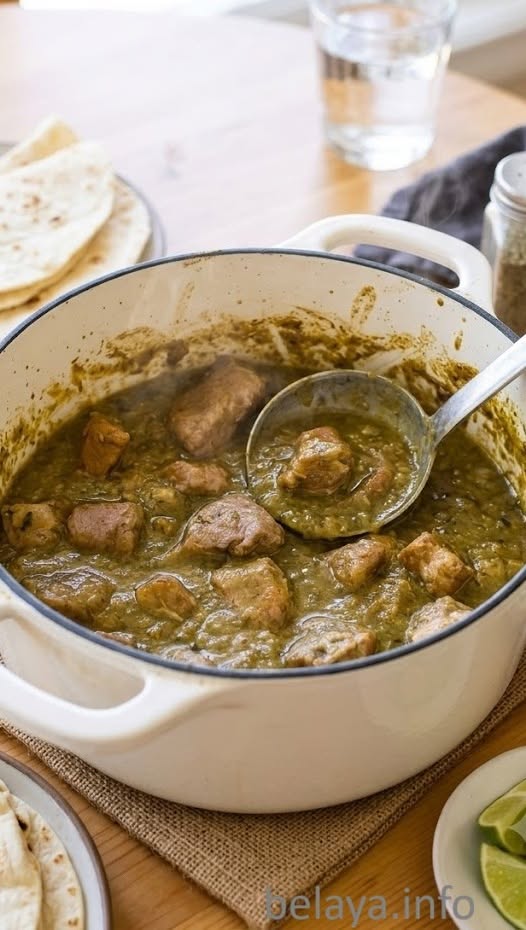
Why People Will Love Chili Verde Recipe
Roasting the vegetables creates deeper flavor than simply boiling them.
Tomatillos give the sauce a naturally bright, tangy character.
Poblanos provide earthy chile flavor without overwhelming heat.
Anaheim peppers add mild sweetness and gentle warmth.
Charred edges from roasting introduce subtle smokiness.
Whole cumin seeds provide a fresher aroma than pre-ground cumin.
Toasting the cumin releases its natural oils and intensifies its flavor.
Garlic becomes mellow and slightly sweet after roasting.
Roasted onion contributes natural sweetness and body to the sauce.
Blending the vegetables creates a smooth, cohesive green sauce.
Pork tenderloin keeps the dish hearty without making it excessively fatty.
Browning the pork creates additional savory flavor.
Chicken broth adds body without overpowering the roasted vegetables.
Beef broth adds deeper savory notes in the background.
The chile heat is flavorful rather than aggressively spicy.
The recipe is easy to customize with hotter peppers if desired.
It can be served as a stew, taco filling, or over rice.
Warm tortillas make it especially satisfying.
The sauce tastes even more integrated after resting.
It is naturally colorful and visually appealing without artificial ingredients.
Key Ingredients
Tomatillos:
Tomatillos form the acidic backbone of the sauce. Their bright, citrus-like tartness keeps the stew lively and prevents the pork and broth from tasting heavy.
Poblano Peppers:
Poblanos contribute a deep, earthy chile flavor with relatively moderate heat. Roasting them intensifies their sweetness and gives the sauce more complexity.
Anaheim Peppers:
Anaheims are generally milder and slightly sweeter than many green chiles. They broaden the chile flavor without making the stew excessively hot.
Pork Tenderloin:
Pork tenderloin is lean, tender, and mild enough to absorb the roasted chile sauce. Because it contains little fat, careful cooking is important to prevent dryness.
Whole Cumin Seeds:
Whole cumin seeds become especially aromatic when toasted. Their warm, earthy flavor pairs naturally with pork and roasted green chiles.
Chicken and Beef Broth:
Chicken broth keeps the base relatively light, while a smaller amount of beef broth provides deeper savory notes.
Roasted Garlic:
Roasting removes much of garlic’s raw sharpness and transforms it into a sweeter, mellower flavor that blends naturally into the sauce.
Onion:
The roasted onion contributes sweetness and helps give the blended sauce more body.
Expert Tips
Choose firm tomatillos with dry, intact husks.
Rinse tomatillos thoroughly after removing their sticky husks.
Arrange vegetables in a single layer so they roast rather than steam.
Do not be afraid of some dark blistering on the peppers.
Charred spots contribute valuable roasted flavor.
Avoid completely burning the vegetables, which can create bitterness.
Turn the peppers during roasting if one side is browning much faster.
Let roasted peppers cool slightly before handling them.
For a milder sauce, remove the seeds and pale membranes from the peppers.
For more heat, leave some membranes intact.
Peel the roasted garlic before blending.
Blend while the vegetables are still slightly warm for a smoother sauce.
Toast cumin seeds only until fragrant.
Stir them frequently because whole spices can burn quickly.
Brown pork in batches if necessary.
Crowding the skillet causes steaming instead of browning.
Pat pork dry before searing for better caramelization.
Do not fully cook the tenderloin during browning.
Let it finish gently in the sauce.
Because tenderloin is very lean, avoid prolonged aggressive simmering.
Start checking the pork earlier than 40 minutes if the pieces are small.
Keep the stew at a gentle simmer rather than a rolling boil.
Taste before adding extra salt because both broths may already contain significant sodium.
Let the finished Chili Verde rest for 5–10 minutes before serving.
Chili Verde Recipe
Ingredients:
For the Sauce:
1 pound tomatillos, husked and rinsed
2-3 poblano peppers
2-3 Anaheim peppers
4 cloves garlic, unpeeled
1 onion, quartered

For the Chili:
2 tablespoons whole cumin seeds
4 cups chicken broth
1 cup beef broth
1 pound pork tenderloin, cut into bite-sized pieces

Salt and pepper, to taste
Olive oil, for browning the pork
Instructions:
Step 1: Roast the Vegetables
Preheat your oven to 425°F (220°C).
Place tomatillos, poblano peppers, Anaheim peppers, unpeeled garlic cloves, and onion on a baking sheet. Roast in the oven for about 20-25 minutes, or until the vegetables are charred and soft.
Step 2: Blend the Sauce
Once roasted, allow the vegetables to cool slightly. Peel the garlic cloves.
In a blender, combine the roasted tomatillos, poblanos, Anaheims, garlic, and onion. Blend until smooth. Set aside.
Step 3: Toast the Cumin
In a large pot, toast the whole cumin seeds over medium heat for about 2 minutes, or until fragrant.
Step 4: Combine Ingredients
Add the blended sauce to the pot with the toasted cumin. Stir to combine.
Pour in the chicken and beef broth, and bring the mixture to a simmer.
Step 5: Cook the Pork
In a skillet, heat a bit of olive oil over medium-high heat. Season the pork tenderloin pieces with salt and pepper, then brown them in the skillet for about 5 minutes.
Once browned, add the pork to the pot with the sauce. Stir to combine and allow it to simmer for about 30-40 minutes, or until the pork is tender.
Step 6: Adjust Seasoning
Taste and adjust the seasoning with more salt and pepper as needed.
Step 7: Serve
Serve hot, ideally with homemade or store-bought tortillas on the side for dipping.
Enjoy your flavorful Chili Verde!
Important Notes When Making Chili Verde Recipe
Chili Verde can vary considerably in heat because individual peppers differ naturally.
Poblanos are usually mild, but occasionally one can be surprisingly spicy.
Anaheim peppers can also vary in intensity.
Roasting softens the vegetables and concentrates their flavor.
The blackened pepper skin is not dangerous, although heavily burned areas may taste bitter.
You may peel the peppers after roasting for an especially smooth sauce, but it is not essential.
Pork tenderloin is much leaner than pork shoulder.
Unlike pork shoulder, tenderloin does not benefit from several hours of cooking.
Excessive simmering can make tenderloin dry despite being submerged in sauce.
Pork whole-muscle cuts are considered safe at 145°F / 63°C followed by a 3-minute rest, although the pieces in this stew will generally cook beyond that.
Broth is one of the major sources of sodium in this recipe.
Low-sodium broth is useful if you want more control over seasoning.
The finished sauce may thicken slightly as it rests.
If it becomes too thick, add additional broth.
If it is too thin, simmer uncovered briefly before serving.
Refrigerate leftovers promptly once cooled enough for storage.
How to Enjoy Chili Verde Recipe After Cooking
Allow the Chili Verde to rest for about 5–10 minutes after cooking. This gives the sauce time to settle and allows the roasted chile, cumin, broth, and pork flavors to become more cohesive.
Ladle the stew into deep bowls, making sure each serving contains plenty of pork and green sauce.
Warm flour or corn tortillas immediately before serving. Tear them into pieces and use them to scoop up the pork or soak up the chile broth.
A squeeze of fresh lime can brighten the tomatillo flavor, although it is optional because tomatillos already provide natural acidity.
Fresh cilantro can also be added at the table if you want a more herbal finish.
For additional richness, serve the Chili Verde with warm rice or pinto beans.
It can also be spooned over roasted potatoes or used as a filling for tacos and burritos.
If you enjoy more heat, serve roasted jalapeños, serranos, or a spicy green salsa separately rather than making the entire pot hotter.
Leftovers are excellent the following day because the cumin, tomatillo, chile, and pork flavors have additional time to blend.
Reheat gently over medium-low heat and add a little broth if the sauce has become too thick.
Nutrition Information
Approximate nutrition is based on 6 servings, using 1 pound pork tenderloin, the listed vegetables, approximately 1 tablespoon olive oil for browning, and standard chicken and beef broth. Tortillas and additional toppings are not included.
Calories: 205 kcal | Total Fat: 7.5 g | Saturated Fat: 1.8 g | Monounsaturated Fat: 3.8 g | Polyunsaturated Fat: 1.2 g | Cholesterol: 50–60 mg | Sodium: 850–1,200 mg depending on the broth and added salt | Total Carbohydrates: 14–16 g | Dietary Fiber: 3.5–4.5 g | Sugars: 6–8 g | Protein: 20–22 g
Additional estimate:
Potassium: 700–850 mg | Calcium: 45–65 mg | Iron: 2–3 mg | Magnesium: 45–60 mg | Vitamin A: 700–1,100 IU | Vitamin C: 70–100 mg | Vitamin B6: 0.6–0.9 mg | Vitamin B12: 0.5–0.8 mcg | Zinc: 2–3 mg | Phosphorus: 220–280 mg
Frequently Asked Questions:
What does Chili Verde taste like?
It is savory, tangy, earthy, and slightly smoky, with roasted green chile flavor and a bright acidity from the tomatillos.
Is Chili Verde very spicy?
This version is generally mild to moderately spicy because poblanos and Anaheim peppers are relatively gentle. However, individual peppers vary, so the final heat level is never completely predictable.
What is the difference between Chili Verde and red chili?
Chili Verde uses tomatillos and green chiles as its main sauce ingredients, giving it a brighter and more acidic flavor. Red chili typically relies more heavily on dried or fresh red chiles and often has a deeper, earthier character.
What should I serve with Chili Verde?
Warm flour or corn tortillas are classic accompaniments. Rice, pinto beans, refried beans, or a simple salad also work very well.
Can Chili Verde be used for something other than soup or stew?
Yes. It makes an excellent filling for tacos, burritos, enchiladas, rice bowls, or even breakfast eggs.
Why should I roast the tomatillos and peppers first?
Roasting concentrates their flavor, softens their texture, reduces some raw acidity, and introduces subtle caramelized and smoky notes.
Why toast whole cumin seeds instead of using ground cumin?
Whole seeds retain their aromatic oils longer. Briefly toasting them immediately before cooking produces a fresher, more intense cumin flavor.
Why did my Chili Verde turn out bitter?
The vegetables or cumin may have burned. Some char is desirable, but heavily blackened vegetable flesh or scorched cumin can introduce bitterness.
Can I substitute pork shoulder for pork tenderloin?
Yes. Pork shoulder produces a richer stew and benefits from a much longer cooking time. Unlike tenderloin, it contains enough connective tissue and fat to become more tender during extended simmering.
Can I make Chili Verde ahead of time?
Yes. The sauce can be prepared in advance, and the complete stew generally tastes even better the following day. If using tenderloin, reheat gently to avoid overcooking the lean pork.