Spaghetti and Crabs
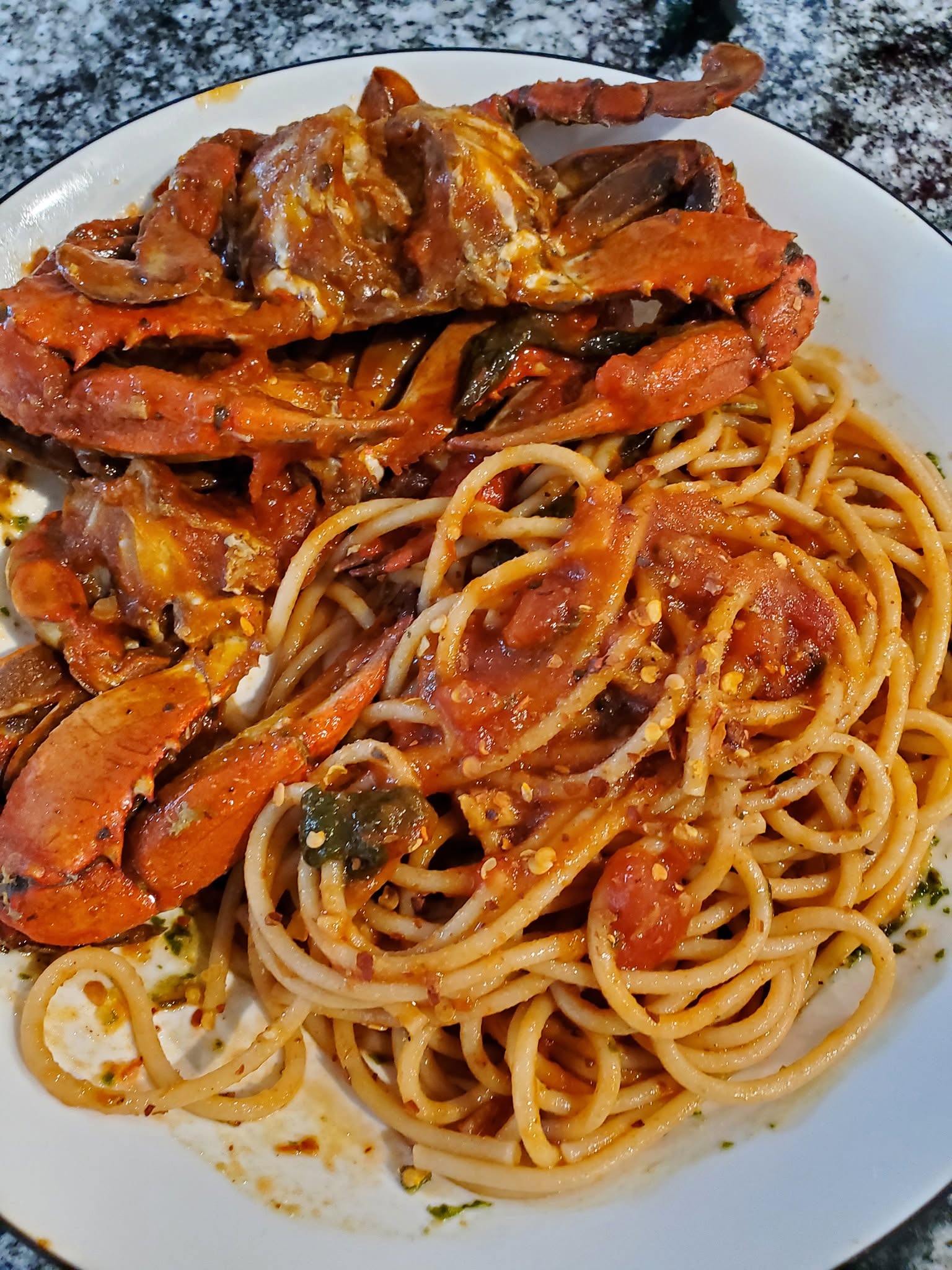
Spaghetti and Crabs is a deeply flavorful Italian-American seafood pasta built around blue crabs slowly simmered in a rich tomato sauce with olive oil, garlic, onion, anchovies, basil, and red pepper. The long cooking time allows the shells and crab juices to season the tomatoes, creating a sauce with a depth that ordinary marinara cannot achieve.
What makes this dish special is that the crabs are not simply served with the pasta—they are an essential part of the sauce-making process. As they simmer, their sweet seafood flavor gradually infuses the tomato gravy, while anchovies quietly dissolve into the olive oil and add another layer of savory umami without making the sauce taste strongly fishy.
Finishing the spaghetti directly in the crab sauce allows the pasta to absorb those flavors rather than simply having sauce spooned over it. Served with the whole cooked crabs alongside, this is a generous, hands-on meal that feels celebratory, nostalgic, and perfect for a long family dinner.
Why People Will Love Spaghetti and Crabs Recipe
Blue crabs give the tomato sauce a naturally sweet seafood character.
Slow simmering extracts flavor from both the crab meat and shells.
The finished sauce has much more depth than ordinary tomato sauce.
Extra-virgin olive oil gives the sauce richness and a silky mouthfeel.
Anchovies melt completely into the base and create powerful umami.
Garlic provides a bold aromatic backbone.
Slowly cooked onion contributes natural sweetness.
Fresh basil keeps the long-cooked sauce vibrant and aromatic.
Crushed red pepper adds gentle warmth without overpowering the crab.
Hand-crushed whole tomatoes create a rustic texture.
Finishing the spaghetti in the sauce allows it to absorb flavor.
Starchy pasta water helps the sauce cling beautifully to the noodles.
The crabs can be enjoyed separately after the pasta, creating almost two courses in one meal.
The recipe is ideal for a large family gathering.
It produces plenty of extra sauce for future meals.
The leftover crab gravy freezes exceptionally well.
The dish feels festive without needing expensive or complicated garnishes.
It combines sweet seafood, acidity, garlic, basil, and chile in one balanced dish.
Eating the crabs by hand makes the meal interactive and memorable.
The aroma of crab, tomato, garlic, and basil simmering together is extraordinary.
Key Ingredients
Blue Crabs:
Blue crabs are the defining ingredient. Their shells, juices, and meat slowly release flavor into the tomato sauce, creating a subtle seafood sweetness and mineral depth that cannot be reproduced by simply adding crab meat at the end.
Whole Peeled Tomatoes:
High-quality canned whole tomatoes provide the foundation of the sauce. Crushing them by hand creates a slightly rustic texture while preserving more natural tomato character.
Extra-Virgin Olive Oil:
The generous amount of olive oil carries the flavors of garlic, onion, anchovy, chile, and basil while giving the sauce its rich, glossy finish.
Anchovies:
Anchovies disappear almost completely during cooking. Rather than making the sauce taste fishy, they contribute saltiness and concentrated umami that strengthens both the tomato and crab flavors.
Garlic:
Six tablespoons of garlic make this a boldly aromatic sauce. Gentle cooking is important so the garlic becomes sweet and fragrant rather than bitter.
Fresh Basil:
Adding basil in two stages gives the sauce both deep cooked-herb flavor and fresh aroma at the end.
Crushed Red Pepper:
A small amount of red pepper adds warmth and balance without masking the delicate sweetness of the crab.
Spaghetti:
Long pasta works especially well because it becomes coated with the crab-infused tomato sauce while still maintaining enough structure to stand up to such a rich preparation.
Expert Tips
Ask your fishmonger to clean and halve the blue crabs if you are unfamiliar with preparing them.
Use the freshest crabs possible because their flavor becomes concentrated in the sauce.
Make sure the gills and unwanted internal parts are completely removed before cooking.
Use a very large, heavy-bottomed pot so the crabs can sit comfortably in the sauce.
Cook the onion and garlic over medium-low heat rather than high heat.
Do not rush the aromatic base; gentle cooking produces sweeter flavor.
Allow the anchovies to dissolve completely into the olive oil.
Add their packing oil as well because it contributes additional flavor.
Use good-quality whole peeled tomatoes rather than thin tomato sauce.
Crush the tomatoes by hand for a rustic consistency.
Bring the tomato mixture only briefly to a boil before reducing it to a simmer.
Maintain a gentle simmer during the long cooking process.
Stir carefully so you do not unnecessarily break apart the crabs.
Keep as many crabs submerged as possible.
Rotate the crabs occasionally if some remain above the sauce.
Partially covering the pot prevents excessive evaporation while still allowing some concentration.
Taste the sauce only near the end before adding extra salt.
Anchovies and crab already contribute natural salinity.
Reserve plenty of pasta water before draining the spaghetti.
Stop boiling the pasta about two minutes before it reaches al dente.
Finish those final minutes directly in the crab gravy.
Toss the spaghetti continuously so the sauce emulsifies with the pasta water.
Add fresh basil only after the long simmer is finished to preserve its aroma.
Spaghetti and Crabs
Ingredients
For the Crab Tomato Sauce
½ cup extra-virgin olive oil
1 cup yellow onion, finely chopped
6 tablespoons garlic, finely minced
2 ounces anchovies, including their oil
¼ teaspoon crushed red pepper flakes
2 large handfuls fresh basil, whole or roughly torn, divided
4 cans (28 ounces each) high-quality whole peeled tomatoes, crushed by hand
1 cup water
1 teaspoon salt, plus additional salt for the pasta water
½ teaspoon freshly ground black pepper
About 15 raw whole blue crabs, fully cleaned, top shells and gills removed, then cut in half
For the Pasta
1 pound spaghetti or another long pasta
Instructions
Prepare the Crab Tomato Sauce
Heat the olive oil in a large, heavy-bottomed pot or Dutch oven over medium-low heat.
Add the chopped onion, garlic, anchovies with their oil, and crushed red pepper flakes.
Cook gently, stirring occasionally, until the onion and garlic become soft and lightly golden.
As the mixture cooks, the anchovies will melt completely into the oil and create a deeply savory base for the sauce.
Add the Basil
Add half of the fresh basil to the pot.
Cook for about 2 minutes, stirring gently, to release its aroma and flavor into the oil.
Add the Tomatoes
Pour in the hand-crushed tomatoes and water.
Season with the salt and black pepper.
Stir well and bring the mixture to a gentle boil.
As soon as it begins to boil, reduce the heat to low.
Add the Crabs
Carefully place the cleaned crab halves into the tomato sauce, making sure as many as possible are submerged.
Partially cover the pot.
Simmer gently for about 2½ hours, stirring carefully from time to time so the sauce does not stick to the bottom.
The crabs will release their flavor into the sauce as they cook, creating a rich seafood tomato gravy.
Remove the Crabs
After the sauce has simmered, carefully transfer the crabs to a baking dish or tray.
Cover and keep them warm in a 200°F / 95°C oven while preparing the pasta.
Taste the sauce and adjust the salt, pepper, or crushed red pepper if necessary.
Stir in the remaining fresh basil.
Prepare the Pasta Sauce
Bring a large pot of generously salted water to a boil.
Meanwhile, transfer about 3 cups of the crab tomato sauce to a large skillet and keep it warm over low heat.
Cook the Spaghetti
Add the spaghetti to the boiling water.
Cook until approximately 2 minutes before al dente, following the package directions as a guide.
Before draining, reserve at least ½ cup of pasta cooking water.
Finish the Pasta in the Sauce
Transfer the partially cooked spaghetti directly to the skillet containing the crab sauce.
Add about ½ cup reserved pasta water.
Toss continuously over medium-low heat until the pasta finishes cooking and absorbs the flavor of the sauce.
Add more crab sauce or pasta water as needed until the spaghetti is glossy and evenly coated.
Serve
Transfer the spaghetti to a large serving bowl or individual plates.
Spoon additional crab tomato sauce over the pasta if desired.
Serve the cooked crabs alongside the spaghetti, either at the same time or after the pasta course.
Enjoy while everything is hot.
Important Yield Note
This recipe produces approximately 1 gallon of crab tomato sauce, which is much more than needed for 1 pound of spaghetti.
You can reduce the ingredient quantities if desired, or freeze the extra sauce in airtight containers for future meals.
Important Notes When Making Spaghetti and Crabs
The recipe makes approximately 1 gallon of crab gravy, far more sauce than is required for 1 pound of spaghetti.
Only about 3 cups of sauce are needed initially for the pasta.
Extra sauce can be portioned and frozen.
Blue crabs must be thoroughly cleaned before cooking.
Shell fragments can occasionally break into the sauce, so eat carefully.
The crabs will be fully cooked long before the 2½-hour simmer ends; the extended time is primarily about developing the sauce.
Crab meat can become quite firm after prolonged cooking, but the shells contribute significant flavor to the gravy.
Do not aggressively boil the sauce because vigorous boiling can break apart the crabs and make the sauce messy.
Anchovies are intended as a seasoning ingredient and should disappear into the sauce.
Do not omit pasta water when finishing the spaghetti if you want a glossy, cohesive sauce.
Avoid rinsing the cooked pasta.
The starch remaining on the spaghetti helps the sauce adhere.
Fresh basil added at the end provides an important contrast to the long-cooked flavors.
Crab is a shellfish allergen.
Anchovies are also a fish allergen.
Cooked seafood and sauce should be refrigerated promptly after serving.
How to Enjoy Spaghetti and Crabs After Cooking
Serve the spaghetti first while it is piping hot and freshly coated with the crab gravy.
Twirl generous portions into wide pasta bowls and spoon a little additional sauce over the top.
Finish with torn fresh basil and a small drizzle of extra-virgin olive oil if desired.
Enjoy the pasta slowly so you can appreciate how the tomato, garlic, anchovy, basil, and crab flavors have blended together.
Serve the cooked crabs either alongside the pasta or immediately afterward as a second course.
Cracking and eating the crabs is naturally messy, so provide plenty of napkins, shell bowls, crab crackers, or small seafood forks.
Crusty Italian bread is excellent for soaking up the remaining crab gravy.
A simple green salad dressed with lemon or red wine vinegar provides a refreshing contrast to the rich tomato sauce.
A dry Italian white wine or light-bodied red can pair well with the tomato and seafood flavors.
If reheating leftovers, warm the sauce gently rather than boiling aggressively. Cook fresh pasta separately and finish it in the reheated sauce for the best texture.
Nutrition Information
Approximate nutrition is based on 6 servings, using 1 pound of spaghetti, approximately 3 cups of the prepared crab gravy, and the edible crab meat served with the meal. The large quantity of leftover sauce produced by the recipe is not included in each serving estimate.
Calories: 430 kcal | Total Fat: 13 g | Saturated Fat: 2 g | Monounsaturated Fat: 7.5 g | Polyunsaturated Fat: 2.2 g | Cholesterol: 65–85 mg | Sodium: 850–1,150 mg depending on the tomatoes, anchovies, crab, pasta water, and added salt | Total Carbohydrates: 58–62 g | Dietary Fiber: 5–6 g | Sugars: 8–10 g | Protein: 23–27 g
Additional estimate:
Potassium: 750–950 mg | Calcium: 120–170 mg | Iron: 4–5.5 mg | Magnesium: 70–95 mg | Vitamin A: 900–1,300 IU | Vitamin C: 20–30 mg | Vitamin B12: 3–5 mcg | Zinc: 3–5 mg | Phosphorus: 300–400 mg | Selenium: 35–55 mcg
The nutritional values can vary substantially because the amount of edible meat obtained from 15 blue crabs differs by crab size, and only a portion of the approximately one gallon of sauce is used with the pound of spaghetti.
Frequently Asked Questions:
Why cook whole crabs in the tomato sauce instead of adding picked crab meat?
The shells contain flavor compounds that gradually infuse the tomato sauce during simmering. Using whole cleaned crabs creates a much deeper seafood flavor than adding crab meat alone.
Does the anchovy make the sauce taste fishy?
No. When cooked properly, the anchovies dissolve into the olive oil and become almost impossible to identify individually. Their main contribution is savory umami and deeper seasoning.
Why is the tomato sauce sometimes called “crab gravy”?
In many Italian-American families, especially in parts of the northeastern United States, a long-simmered tomato sauce may traditionally be called gravy. In this recipe, the term refers to the crab-infused tomato sauce.
What should I serve with Spaghetti and Crabs?
Crusty Italian bread, a simple green salad, roasted vegetables, and a dry white or light red wine all work well without competing with the seafood.
Can the leftover crab gravy be frozen?
Yes. Cool the sauce completely, portion it into airtight freezer-safe containers, and freeze it. Reheat gently and use it with freshly cooked pasta.
Why do I need to simmer the crabs for 2½ hours?
The long simmer is primarily about extracting crab flavor into the tomato sauce and allowing the tomatoes, olive oil, aromatics, and seafood to develop into one cohesive gravy.
Why should I cook the spaghetti two minutes less than al dente?
The pasta finishes cooking in the crab sauce. During those final minutes, it absorbs flavor while releasing starch that helps thicken and emulsify the sauce.
What should I do if the crab sauce becomes too thick while simmering?
Add a small amount of water and stir gently. The sauce should be rich and concentrated but still loose enough to coat the spaghetti.
Can I reduce the recipe if I do not need a gallon of sauce?
Yes. The ingredient quantities can be reduced proportionally. Just make sure you use a pot large enough for the number of crabs and enough tomato sauce to surround them.
Why does my sauce taste too salty?
Anchovies, blue crabs, canned tomatoes, and salted pasta water all contribute sodium. Add salt cautiously at the beginning and make the final seasoning adjustment only after the sauce has finished simmering.