Seafood Gumbo Recipe
Seafood Gumbo is a soulful, slow-built dish that represents the heart of Louisiana cooking—where patience, technique, and bold flavors come together in one deeply comforting bowl.
Built on a dark, aromatic roux and layered with spices, vegetables, and a generous mix of meats and seafood, this gumbo is rich without being heavy and complex without being overwhelming.
Every spoonful tells a story of tradition, balance, and warmth, making it a meal meant to be savored slowly and shared generously.
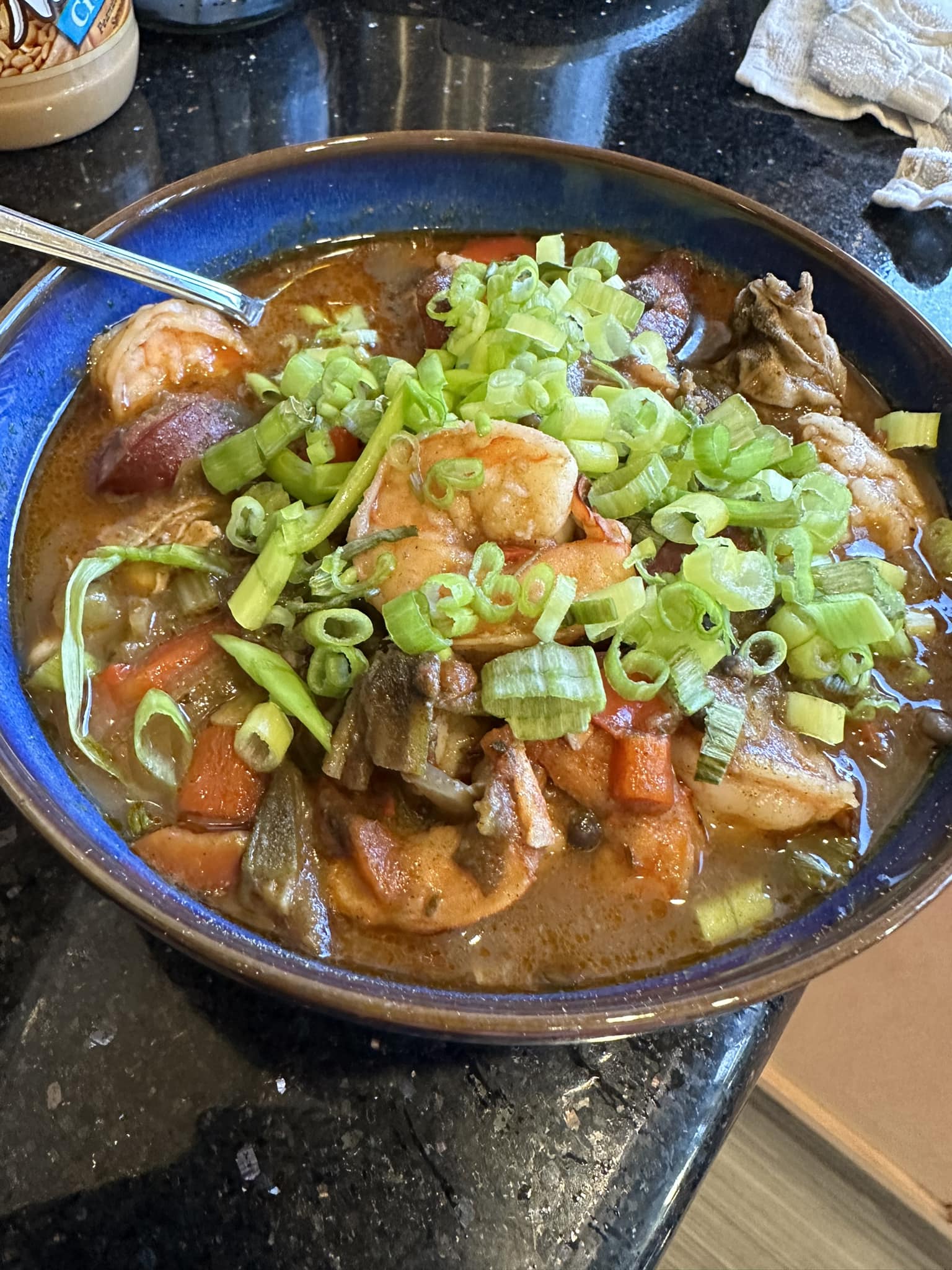
Why People Will Love This Seafood Gumbo Recipe
Deep, Authentic Flavor Foundation:
The dark, carefully cooked roux creates a rich, nutty backbone that gives the gumbo its unmistakable depth and Louisiana character.
Perfect Balance of Land and Sea:
Tender chicken, smoky andouille, sweet crab, and juicy shrimp come together in harmony, offering layers of flavor and texture in every bite.
Bold Yet Well-Controlled Spice:
Cayenne, paprika, thyme, and aromatics deliver warmth and complexity without overwhelming the natural sweetness of the seafood.
Silky, Luxurious Texture:
The slow simmer and proper finishing with filé powder create a smooth, velvety broth that coats the palate beautifully.
Traditional Technique, Restaurant-Quality Results:
From the roux to roasting the okra, this recipe uses classic methods that elevate the final dish to a professional level.
Comforting and Satisfying:
Served over rice with cornbread on the side, this gumbo is hearty, filling, and deeply comforting—perfect for family meals or gatherings.
Customizable to Taste:
Heat level, seafood mix, and thickness can be adjusted easily, making the recipe adaptable without losing its soul.
Even Better the Next Day:
Like all great gumbos, the flavors deepen overnight, making leftovers arguably even more delicious.
A Dish Meant to Be Shared:
Gumbo is communal by nature—this recipe invites people to gather, slow down, and enjoy food together.
A True Taste of Tradition:
Each bowl reflects cultural heritage, patience, and respect for ingredients—qualities that resonate deeply with food lovers.
Key Ingredients:
Dark Roux (Canola Oil + Flour):
The soul of gumbo. Cooked to a deep chocolate brown, the roux delivers nutty complexity, body, and the signature Louisiana depth that defines the dish.
The Holy Trinity (Onion, Celery, Bell Pepper):
This classic aromatic base builds sweetness and savory balance, forming the backbone of flavor before any spices or proteins are added.
Andouille Sausage:
Smoky and boldly seasoned, andouille infuses the gumbo with spice and richness that anchors the seafood and chicken.
Okra:
Adds subtle earthiness and natural thickening. Roasting it first reduces sliminess while preserving its essential role in traditional gumbo.
Blue Crabs:
Bring sweet, briny complexity and release flavor into the broth, elevating the gumbo with unmistakable Gulf Coast character.
Shrimp:
Added at the end for tenderness and sweetness, shrimp provide freshness and contrast to the long-simmered base.
Chicken Stock:
Serves as the canvas for all flavors, carrying spices, roux, and proteins into a cohesive, deeply savory broth.
Filé Powder:
Used sparingly at the finish, filé adds a subtle herbal note and silky texture, completing the gumbo with traditional finesse.
Parsley and Scallions:
Fresh herbs brighten the final dish, cutting through richness and adding a clean, aromatic finish.
Expert Tips:
Commit to the Roux:
Take your time when cooking the roux—this is non-negotiable. A deep chocolate-brown color develops nutty complexity without bitterness. Stir constantly and never walk away; a scorched roux means starting over.
Control the Heat, Not the Clock:
The roux should darken slowly over medium heat. Too high and it burns; too low and it never develops depth. Watch color and aroma, not minutes.
Bloom the Trinity in the Roux:
Adding the onion, celery, and bell pepper directly into the hot roux stops it from darkening further and allows the vegetables to release their sweetness while absorbing the roux’s flavor.
Roast the Okra for Better Texture:
Roasting okra before adding it minimizes slime while concentrating flavor—this step makes a noticeable difference in mouthfeel.
Layer Proteins Strategically:
Add chicken and sausage early to build depth, but add seafood later so it stays tender and sweet rather than overcooked.
Simmer, Don’t Boil:
A gentle simmer allows flavors to meld without breaking the roux or making the broth greasy.
Skim Thoughtfully:
Skim excess oil during simmering, but don’t remove it all—some fat is essential for richness and authentic flavor.
Use Filé Powder Carefully:
Always add filé off the heat and stir quickly to prevent clumping. It should thicken slightly, not turn gummy.
Taste Near the End:
Seasoning evolves as the gumbo cooks. Adjust salt, heat, and hot sauce only toward the end to avoid overshooting balance.
Let It Rest Before Serving:
Allow the gumbo to stand for 10–15 minutes after cooking. This resting period improves texture and deepens flavor, just like a good stew.
Seafood Gumbo Recipe
Ingredients
Canola oil – ¾ cup
All-purpose flour – 1 cup (about 4¼ ounces)
Vegetables & Aromatics
Yellow onion – 1 large, chopped (about 2 cups)
Celery stalks – 2 large, chopped (about 1 cup)
Green bell pepper – 1, chopped (about 1 cup)
Garlic cloves – 4, finely minced (about 4 teaspoons)
Seasonings
Tomato purée – 1 cup (from one 15-ounce can)
Kosher salt – 2 tablespoons
Black pepper – 1 tablespoon
Cayenne pepper – 1½ teaspoons
Onion powder – 1½ teaspoons
Garlic powder – 1 teaspoon
Paprika – 1 teaspoon
Thyme leaves – 1 teaspoon, dried or fresh
Bay leaves – 3, dried
Liquids & Grains
Chicken stock – 4 quarts
Proteins & Seafood
Okra – 1 pound, fresh or thawed frozen, sliced into ¼-inch rounds (about 4 cups)
Olive oil – 2 tablespoons
Cooked chicken breasts and thighs – 1½ pounds, boneless and skinless, cut into 1-inch pieces (about 4 cups)
Andouille sausage – 8 ounces, halved lengthwise and sliced into ¼-inch rounds
Blue crabs – 2 (6-ounce each), cleaned and quartered
Large shrimp – 1 pound, raw, peeled and deveined
Finishing & Garnish
Hot sauce – 6 dashes (about 1½ teaspoons), plus more for serving
Filé powder – 2 tablespoons, plus extra for garnish
Fresh flat-leaf parsley – 1 cup, chopped
Scallions – 3, thinly sliced, plus more for garnish
For Serving
Cooked jasmine rice
Cornbread
Instructions
Step 1: Make the Roux
Preheat the oven to 375°F (190°C).
In a large stockpot, heat the canola oil over medium heat until shimmering, about 5 minutes.
Gradually whisk in the flour, stirring constantly with a wooden spoon until fully incorporated.
Continue cooking, stirring frequently and scraping the bottom of the pot, until the roux becomes smooth and a deep chocolate-brown color, about 15 minutes.
Take care not to let it scorch.
Step 2: Build the Flavor Base
Add the onion, celery, bell pepper, and garlic to the roux.
Cook, stirring occasionally, until the vegetables soften and release their aroma, about 10 minutes.
Step 3: Season and Simmer
Stir in the tomato purée, salt, black pepper, cayenne, onion powder, garlic powder, paprika, thyme, and bay leaves.
Gradually pour in the chicken stock, stirring until smooth.
Bring the mixture to a gentle boil, then reduce the heat to medium-low and simmer uncovered for 20 minutes, stirring occasionally and skimming off excess oil or foam from the surface.
Step 4: Roast the Okra
While the gumbo simmers, toss the sliced okra with olive oil on a rimmed baking sheet until evenly coated.
Spread into a single layer and roast in the oven for 15–20 minutes, until the okra is lightly dried and firm. This step helps reduce sliminess.
Step 5: Add Meats
Stir the roasted okra, chicken, and andouille sausage into the pot.
Simmer over medium-low heat for about 25 minutes, stirring occasionally, until everything is heated through and flavors meld.
Step 6: Add Seafood and Finish
Add the blue crabs and hot sauce, cooking until the crabs turn bright red, about 5 minutes.
Quickly stir in the filé powder to avoid clumping.
Add the shrimp, parsley, and scallions, then turn off the heat.
Let the gumbo stand uncovered for 5–7 minutes, until the shrimp are pink and just cooked through.
Remove and discard the bay leaves.
Step 7: Serve
Ladle the gumbo into shallow bowls and top each serving with a generous spoonful of cooked rice.
Garnish with additional scallions and a light sprinkle of filé powder.
Serve hot with cornbread and extra hot sauce on the side.
Important Notes When Making This Seafood Gumbo Recipe
Roux Determines Everything:
The final flavor, color, and body of the gumbo depend almost entirely on the roux. If the roux is rushed or burned, the dish cannot be saved. Patience here defines success.
Gumbo Is About Balance, Not Thickness:
This is not meant to be a stew or gravy. The broth should be rich, silky, and spoonable—not heavy or pasty.
Heat Builds Gradually:
Gumbo should warm the palate, not overwhelm it. Cayenne and hot sauce can always be added later, but cannot be removed once overdone.
Seafood Timing Is Critical:
Shrimp and crab cook very quickly. Adding them too early results in tough, rubbery texture and muted flavor.
Filé Powder Is a Finishing Ingredient:
Never boil gumbo after adding filé. Heat breaks down its thickening properties and can make the texture stringy or unpleasant.
Fat Is Flavor—but Must Be Managed:
Some surface oil is expected and traditional, but excessive grease should be skimmed for balance and mouthfeel.
Flavor Improves with Resting:
Gumbo always tastes better after sitting. Even a short rest before serving allows flavors to settle and integrate.
Next-Day Gumbo Is Superior:
This dish is famously better the following day. Overnight rest deepens complexity and improves texture.
Authenticity Over Speed:
Gumbo rewards technique, not shortcuts. Each step—from roux to finishing—exists for a reason.
Serve Simply and Traditionally:
Rice, cornbread, and hot sauce are all you need. Over-garnishing distracts from the soul of the dish.
How to Enjoy Seafood Gumbo After Cooking
1. Let the Gumbo Rest Before Serving
Once cooking is complete, allow the gumbo to rest off the heat for 10–15 minutes. This brief pause helps the roux settle, the flavors harmonize, and the texture become smoother and more cohesive.
2. Prepare the Rice Fresh
Cook jasmine rice just before serving. The rice should be fluffy and hot, acting as a neutral base that absorbs the rich gumbo without becoming mushy.
3. Assemble the Bowl Properly
Spoon a small mound of rice into a shallow bowl first, then ladle the gumbo around and partially over the rice. This traditional method keeps the rice distinct while allowing it to soak up the broth gradually.
4. Finish with Light Garnishes
Top each bowl sparingly with sliced scallions, chopped parsley, and a pinch of filé powder if desired. Garnishes should brighten the dish, not dominate it.
5. Customize Heat at the Table
Serve hot sauce on the side so each person can adjust spice to taste. Gumbo is meant to be adaptable and personal.
6. Pair with Classic Sides
Enjoy with:
- Warm cornbread for sweetness and texture contrast
- Crusty French bread for soaking up the broth
- Simple green salad if you want balance and freshness
7. Eat Slowly and While Hot
Gumbo reveals layers of flavor as you eat. The combination of roux, spices, meats, and seafood becomes more expressive with each bite, especially while hot.
8. Enjoy the Next-Day Transformation
Refrigerated gumbo improves overnight. Reheat gently over low heat, stirring occasionally. Add a splash of stock or water if needed to loosen the texture.
9. Respect the Tradition
Gumbo is best enjoyed communally. Serve it family-style, encourage conversation, and let the meal unfold slowly—it’s as much about connection as it is about flavor.
10. Savor the Experience
This dish is the result of time, technique, and care. Take a moment to appreciate its depth, warmth, and cultural roots before the last spoonful is gone.
Nutrition Information (per serving)
Based on ~8 servings; values are approximate and will vary depending on seafood mix, roux color, and seasoning
Calories: 520–580 kcal | Total Fat: 30–36 g | Saturated Fat: 7–9 g | Monounsaturated Fat: 15–18 g |
Polyunsaturated Fat: 6–8 g | Cholesterol: 135–165 mg | Sodium: 1,200–1,500 mg (depending on stock, sausage, and added salt) | Total Carbohydrates: 28–34 g | Dietary Fiber: 4–6 g | Sugars: 5–7 g | Protein: 32–38 g
Frequently Asked Questions
Can I make this gumbo ahead of time?
Yes. Seafood gumbo actually improves with time. Making it a day in advance allows the flavors to deepen and meld. Add shrimp and filé powder only when reheating to keep texture ideal.
Is okra required, or can I leave it out?
Okra is traditional and adds flavor and body, but it can be omitted if necessary. In that case, rely more on roux and filé powder for thickness.
What’s the best way to prevent a burnt roux?
Use medium heat, stir constantly, and scrape the bottom of the pot. If you smell bitterness or see black flecks, discard and start over—burnt roux cannot be fixed.
Can I substitute the seafood?
Yes. Shrimp, crab, oysters, or even firm white fish can be used. Just add delicate seafood toward the end so it stays tender.
Why is filé powder added at the end instead of earlier?
Filé loses its thickening ability when boiled. Adding it off heat preserves its silky texture and subtle herbal flavor.
How dark should the roux be for the best flavor?
The roux should reach a deep chocolate-brown color—dark but not burnt. This level provides maximum nutty flavor without bitterness and is key to authentic gumbo.
Why do the vegetables go into the roux instead of being sautéed separately?
Adding the vegetables directly to the hot roux stops it from cooking further and allows them to absorb its flavor while releasing their natural sweetness into the base.
When should I add seafood to avoid overcooking?
Seafood should be added near the end of cooking. Shrimp and crab need only a few minutes to cook through, preserving their tenderness and sweetness.
How do I adjust the thickness of the gumbo?
If the gumbo is too thick, add warm stock a little at a time. If too thin, let it simmer uncovered longer or add a small amount of filé powder off heat.
Can gumbo be made without filé powder?
Yes. Filé powder is traditional but optional. The gumbo will still be flavorful thanks to the roux and okra, though the final texture will be slightly lighter.