Poblano-Serrano Taqueria Salsa
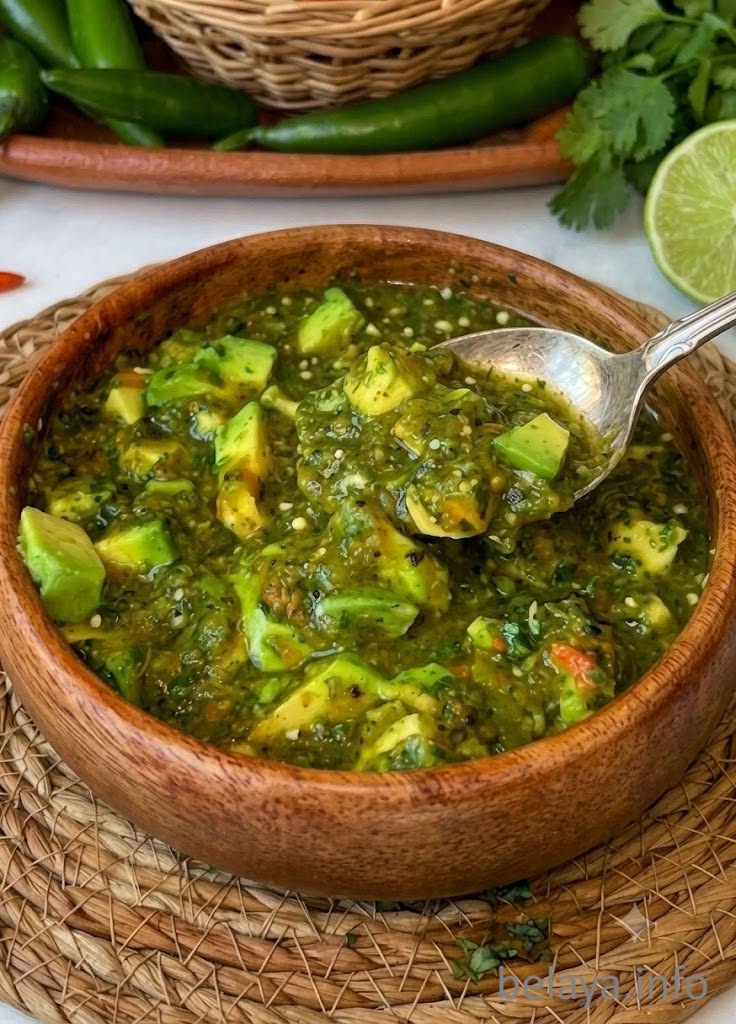
Poblano-Serrano Taqueria Salsa is a bold, roasted green salsa built around smoky poblano peppers, tangy tomatillos, fiery serranos, charred onion and garlic, fresh cilantro, and a touch of oregano. Rather than relying on raw vegetables, this recipe roasts nearly every major ingredient first, giving the salsa a deeper, more complex flavor.
The poblanos provide mellow roasted chile character, while serranos bring the sharper heat associated with many taqueria-style salsas. Tomatillos supply the bright acidity needed to keep the roasted peppers from tasting heavy, and fresh cilantro restores freshness after all that charring.
The final texture is intentionally rustic rather than completely smooth. That slight coarseness allows you to taste the individual roasted ingredients and makes the salsa especially satisfying spooned over tacos, grilled meat, quesadillas, burritos, eggs, or simply eaten with tortilla chips.
Why People Will Love Poblano-Serrano Taqueria Salsa Recipe
– Roasted poblanos provide deep, smoky chile flavor without overwhelming heat.
– Serrano peppers add a brighter and more assertive spiciness.
– Tomatillos give the salsa refreshing tartness.
– Charring the vegetables creates more complexity than a completely raw salsa.
– Roasted onion develops mild natural sweetness.
– Garlic adds savory depth without requiring many additional seasonings.
– Fresh cilantro brightens the entire salsa.
– Oregano provides a subtle earthy herbal note.
– The texture can be kept rustic or blended smoother.
– It contains no heavy cream or added sugar.
– The heat level is easy to customize.
– It is naturally fresh and vegetable-forward.
– It works as both a salsa and a sauce.
– It is excellent with beef, chicken, pork, seafood, or vegetables.
– It can transform simple tacos into something much more flavorful.
– The optional avocado creates an entirely different creamy variation.
– The recipe uses relatively inexpensive ingredients.
– It can be prepared ahead for quick meals.
– A small amount delivers a lot of flavor.
– It has the smoky, tangy, chile-forward character people often associate with taqueria salsa.
Key Ingredients
Poblano Peppers:
Poblanos form the mellow roasted foundation of the salsa. They have an earthy, slightly sweet chile flavor and are generally much less fiery than serranos.
Serrano Peppers:
Serranos provide most of the heat. Their flavor is fresh, grassy, and direct, giving the salsa a lively chile bite.
Tomatillos:
Tomatillos are essential for acidity. Their naturally tart flavor balances the smokiness of the roasted peppers and keeps the salsa tasting bright.
White Onion:
Roasting the onion softens its sharpness and develops sweetness while retaining enough savory flavor to support the chiles.
Garlic:
A small amount of roasted garlic adds considerable depth. Because burned garlic becomes bitter, it should be charred more gently than the peppers.
Fresh Cilantro:
Cilantro adds a fresh herbal quality after the vegetables have been roasted, helping lift the heavier smoky notes.
Dried Oregano:
Only a small amount is necessary. It adds a warm, earthy background note without competing with the chile flavor.
Avocado, Optional:
Avocado changes the salsa from sharp and rustic to smoother, creamier, and slightly milder.
Expert Tips
– Remove the sticky coating from the tomatillos by rinsing them well after removing the husks.
– Use firm, fresh tomatillos for the brightest flavor.
– Roast vegetables over high heat to develop blistering rather than slowly steaming them.
– Turn the poblanos regularly so the skins blister on all sides.
– Let roasted poblanos steam for about 10 minutes before peeling.
– You do not need to remove every tiny piece of blackened poblano skin; a little can add roasted flavor.
– Remove the pale membranes from the serranos if you want less heat.
– Use fewer serranos for a noticeably milder salsa.
– Roast garlic for less time than the peppers because it burns quickly.
– Add only a small amount of water at first.
– It is much easier to thin salsa than to fix salsa that has become watery.
– Pulse rather than continuously blend if you want a traditional coarse texture.
– Add cilantro toward the end of blending to preserve more of its fresh aroma.
– Taste before adding additional salt.
– Allow the salsa to sit for 15–20 minutes before serving so the flavors can settle.
– Chill it briefly if you prefer a refreshing contrast with hot tacos.
– If adding avocado, blend only briefly to preserve some texture.
– A squeeze of lime can be added if your tomatillos are unusually mild or sweet.
Poblano-Serrano Taqueria Salsa
Ingredients
– 2 large poblano peppers
– 5 tomatillos, husks removed and rinsed
– 5 serrano peppers
– ¼ medium white onion
– 1 garlic clove
– ½ teaspoon coarse salt, or to taste
– ¼ teaspoon dried oregano
– ¼ cup fresh cilantro
– 2–4 tablespoons water, as needed
– ¼ avocado, diced, optional
Instructions
Roast the Vegetables
Heat a dry skillet, comal, grill, or broiler over high heat.
Roast the poblano peppers, tomatillos, serranos, onion, and garlic until softened and lightly charred, turning occasionally so they cook evenly.
Prepare the Poblanos
Transfer the roasted poblano peppers to a covered bowl and let them steam for about 10 minutes.
Peel away the loose skin, remove the stems and seeds, and cut the peppers into large pieces.
Blend the Salsa
Place the roasted poblanos, tomatillos, serranos, onion, and garlic in a blender.
Add the coarse salt, oregano, cilantro, and a small splash of water.
Pulse several times until the salsa is well combined but still has a slightly coarse, rustic texture.
Add more water only if needed to reach your preferred consistency.
Optional Avocado Finish
For a creamier version, gently stir in small pieces of avocado after blending, or briefly pulse them into the salsa.
Taste and adjust the salt before serving.
Serve with tacos, grilled meats, quesadillas, burritos, or tortilla chips.
Important Notes When Making Poblano-Serrano Taqueria Salsa
– Five serrano peppers can produce a fairly hot salsa, depending on the individual peppers.
– Serranos are generally hotter than poblanos.
– Chile heat varies naturally, even among peppers from the same package.
– The pale inner membranes contain much of the capsaicin responsible for heat.
– Wear gloves when handling a large quantity of hot peppers if your skin is sensitive.
– Avoid touching your eyes or face after cutting serranos.
– Tomatillos are naturally acidic; that tartness is intentional.
– Do not heavily burn the garlic because it can make the entire salsa bitter.
– Water should be added gradually.
– The salsa should remain spoonable rather than watery.
– Salt becomes more noticeable after the salsa rests, so season gradually.
– The avocado version will brown faster than the version without avocado.
– If using avocado, refrigerate the salsa promptly.
– The salsa without avocado generally keeps better than the creamy version.
– Store leftovers in a tightly covered container in the refrigerator.
How to Enjoy Poblano-Serrano Taqueria Salsa After Cooking
Let the salsa rest for about 15–20 minutes after blending. This gives the salt, roasted chile, garlic, onion, and tomatillo flavors time to become more cohesive.
For tacos, spoon a small amount directly over carne asada, carnitas, chicken, al pastor, barbacoa, or grilled vegetables.
With quesadillas, serve it on the side rather than pouring it over the entire tortilla so the exterior remains crisp.
It is also excellent spooned over scrambled eggs, huevos rancheros, breakfast burritos, or roasted potatoes.
For grilled meats, use it almost like a finishing sauce. The tomatillo acidity helps cut through fatty beef and pork especially well.
With tortilla chips, serve the salsa slightly chilled or at room temperature.
If you make the avocado variation, pair it with particularly spicy or smoky foods because its creamy texture softens the heat.
You can also spoon the salsa over rice bowls, beans, tostadas, nachos, or grilled corn.
For maximum fresh flavor, garnish the serving bowl with a little chopped cilantro immediately before serving.
Nutrition Information
Approximate nutrition per ¼ cup, based on about 12 servings and without the optional avocado:
Calories: 20–25 kcal | Total Fat: 0.5 g | Saturated Fat: 0.1 g | Monounsaturated Fat: 0.1 g | Polyunsaturated Fat: 0.2 g | Cholesterol: 0 mg | Sodium: 90–120 mg depending on added salt | Total Carbohydrates: 4.2 g | Dietary Fiber: 1.4 g | Sugars: 2.4 g | Protein: 0.8 g
Additional estimate:
Potassium: 180–230 mg | Calcium: 10–20 mg | Iron: 0.4–0.7 mg | Magnesium: 12–18 mg | Vitamin A: 250–450 IU | Vitamin C: 25–40 mg | Folate: 15–25 mcg
With the optional ¼ avocado: approximately 25–30 calories and 1–1.2 g total fat per ¼-cup serving.
Frequently Asked Questions:
What does Poblano-Serrano Taqueria Salsa taste like?
It is smoky, tangy, herbaceous, and spicy. Poblanos provide the roasted depth, tomatillos contribute tartness, and serranos supply the sharper chile heat.
How spicy is this salsa?
With five serranos, it can be quite spicy. The exact heat depends on the peppers, but reducing the number of serranos is the easiest way to make it milder.
What foods pair best with this salsa?
It is especially good with carne asada tacos, carnitas, grilled chicken, quesadillas, burritos, eggs, tostadas, and roasted potatoes.
What does avocado do to the salsa?
Avocado makes the salsa creamier, slightly thicker, and milder while adding a buttery richness.
Is this salsa better warm or cold?
Both work. Freshly blended salsa has a warm roasted character, while chilled salsa tastes brighter and can be especially refreshing with hot grilled meats.
Why should I roast the vegetables first?
Roasting softens the vegetables, concentrates their flavors, reduces some raw sharpness, and creates the smoky character that distinguishes this salsa from a raw salsa verde.
Why is my salsa too watery?
Too much water was probably added during blending. Start with only 2 tablespoons and add more only when necessary.
How can I make the salsa less spicy without changing its flavor too much?
Use 2–3 serranos instead of five and remove their inner membranes. Keep the two poblanos so the roasted chile flavor remains strong.
Why did my salsa turn bitter?
The garlic or vegetables may have been burned rather than simply charred. Blackened spots are useful, but heavily burned garlic and chile flesh can create bitterness.
How can I make the salsa creamier?
Add about ¼ ripe avocado and briefly pulse it into the finished salsa. For a thicker texture, use less water when blending.