Caramelized Wild Mushroom Pappardelle Pasta
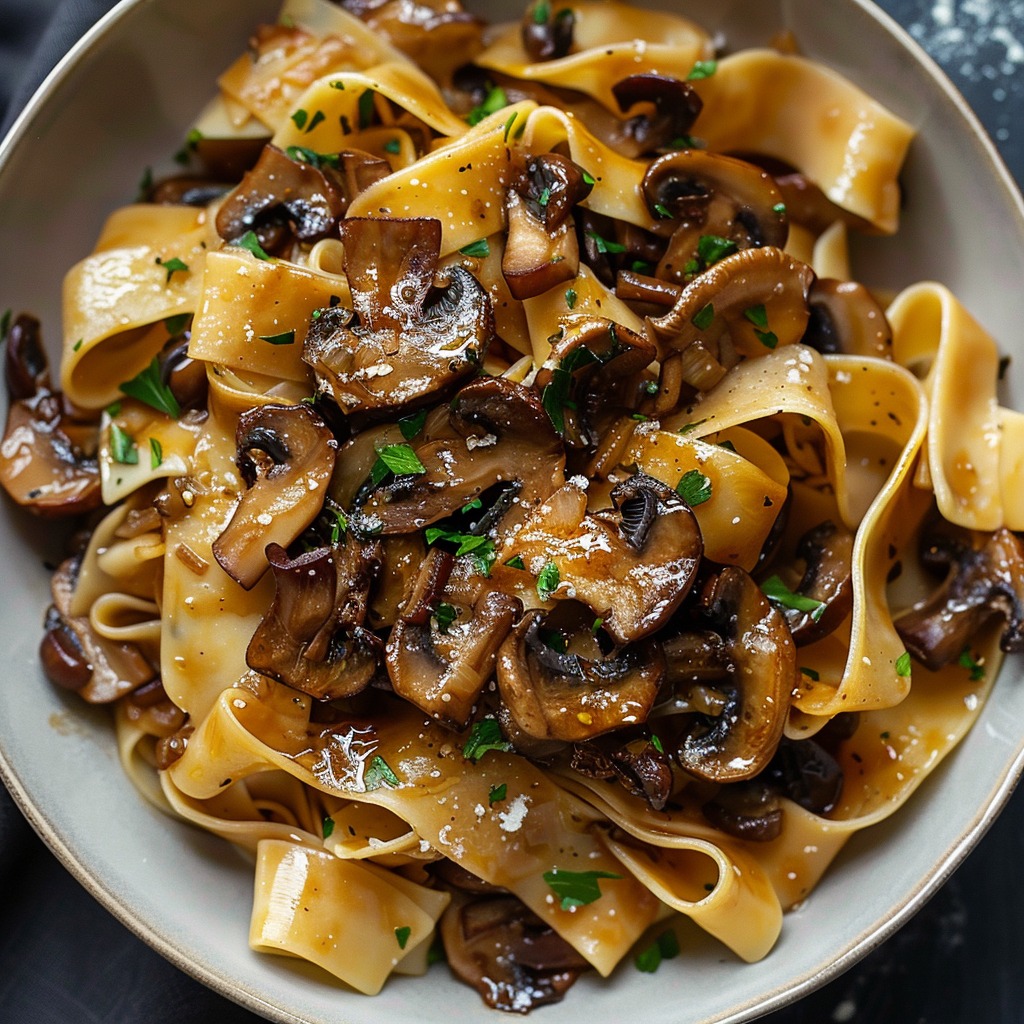
Caramelized Wild Mushroom Pappardelle is a rich, earthy pasta built around golden mushrooms, sweet onion and shallot, fresh thyme, garlic, butter, white wine, and a silky pan sauce that clings beautifully to wide ribbons of pappardelle.
The real character of this dish comes from allowing the mushrooms to brown properly. As their moisture evaporates, their flavor becomes deeper, nuttier, and more concentrated. White wine then lifts the caramelized bits from the bottom of the pan, while butter, flour, broth, and starchy pasta water transform those flavors into a smooth sauce without relying on heavy cream.
Wide pappardelle is particularly well suited to this preparation because its broad surface carries plenty of sauce and mushroom pieces in every bite. The finished dish feels luxurious and restaurant-worthy while still allowing the natural flavor of the mushrooms to remain the star.
Why People Will Love Caramelized Wild Mushroom Pappardelle Pasta Recipe
The combination of several mushroom varieties creates much more depth than using only one type.
Baby bella mushrooms provide a familiar, meaty foundation.
Wild mushrooms contribute distinctive earthy, nutty, and woodsy flavors.
Proper caramelization gives the mushrooms concentrated savory flavor.
Butter provides richness without requiring heavy cream.
Olive oil helps the mushrooms and aromatics brown beautifully.
Onion brings gentle sweetness to balance the earthy mushrooms.
Shallots add a more delicate, slightly sweet aromatic flavor.
Garlic strengthens the savory character of the dish.
Fresh thyme pairs naturally with mushrooms and butter.
White wine provides acidity that keeps the sauce from becoming too rich.
Deglazing captures all of the flavorful browned bits from the skillet.
Pasta water helps create a silky sauce that coats the noodles instead of pooling underneath them.
Pappardelle’s broad ribbons are ideal for carrying chunky mushrooms.
The sauce feels creamy even though it contains no actual cream.
It can easily be made vegetarian by using vegetable broth.
Different mushroom varieties can be used depending on availability.
The dish is elegant enough for entertaining but simple enough for a weeknight dinner.
It works beautifully as either a main course or a sophisticated side dish.
The leftovers can be refreshed easily with a splash of broth or pasta water.
Key Ingredients
Wild Mushrooms:
Wild mushrooms are what give the pasta its complex personality. Shiitake, oyster, maitake, chanterelle, porcini, or mixed specialty mushrooms can contribute different combinations of earthiness, nuttiness, and meaty texture.
Baby Bella Mushrooms:
Also known as cremini mushrooms, baby bellas provide a reliable savory base and hold their shape well during sautéing.
Pappardelle:
The broad, flat ribbons are substantial enough to stand up to the mushroom mixture and provide plenty of surface area for the sauce.
Butter:
Butter contributes richness and helps create a glossy, luxurious sauce. It also encourages the characteristic nutty flavor that works so well with mushrooms.
White Wine:
Dry white wine adds brightness and dissolves the caramelized bits from the pan, incorporating them back into the sauce.
Fresh Thyme:
Thyme’s warm, slightly floral flavor enhances mushrooms without overpowering them.
Onion and Shallots:
Using both gives the sauce layered sweetness. Onion is deeper and more robust, while shallot is more delicate.
Garlic:
Garlic provides an aromatic savory note that supports the mushrooms and butter.
Pasta Water:
The starch in reserved pasta water helps emulsify the fat and broth into a sauce that actually clings to the pappardelle.
Expert Tips
Use several types of mushrooms whenever possible.
Avoid rinsing mushrooms under running water for a long time because they can absorb excess moisture.
Brush away dirt or wipe mushrooms with a slightly damp towel.
Slice mushrooms into similar sizes so they cook evenly.
Use a wide skillet so moisture can evaporate quickly.
Do not overcrowd the pan.
Overcrowded mushrooms steam instead of caramelize.
If necessary, cook the mushrooms in two batches.
Let mushrooms sit undisturbed for short periods to develop golden edges.
Do not add too much salt at the beginning because salt encourages mushrooms to release water.
Add garlic only after the onions and shallots have softened.
Garlic can become bitter if browned excessively.
Add the butter only after the first mushrooms have started cooking so it does not burn.
Toast the thyme briefly in the butter to release its aroma.
Cook the flour for about one minute to remove its raw taste.
Use a dry white wine rather than a sweet wine.
Scrape the bottom of the skillet after adding wine to release the flavorful browned bits.
Allow the wine to reduce before adding broth.
Cook the pappardelle just until al dente.
Reserve at least one cup of pasta water even if the recipe initially needs only ½ cup.
Add pasta water gradually until the sauce becomes glossy.
Finish tossing the pasta in the skillet rather than simply pouring sauce over it.
Add fresh thyme at the end for a brighter herbal aroma.
Caramelized Wild Mushroom Pappardelle Pasta
Ingredients:
2 tbsp extra virgin olive oil
1/2 cup diced yellow onion
1/4 cup diced shallots
3 grated or pressed cloves of garlic
1 1/2 cups sliced baby bella mushrooms
1 1/2 cups wild mushrooms or another mushroom mix
5 Tbsp butter
6 sprigs fresh thyme divided
1/4 cup flour
3/4 cup white wine
1/2 cup broth (chicken or vegetable)
1/2 cup salty pasta water
1/2 tsp sea salt
1/4 tsp fresh cracked pepper
Instructions:
Step 1:
Add a large pot of water to the stove and add 1/2 tsp sea salt.
When boiling add the Pappardelle and cook according to package directions.
Step 2:
Add extra virgin olive oil to a heated saute pan over medium heat.
When it shimmers, add the onions and shallots.
Cook for 4 minutes until they begin to soften.
Step 3:
Add the garlic and the baby bella mushrooms and cook for about 2 minutes.
Step 4:
Then add the butter and stir continuously until it melts.
Then add the rest of the mushroom mix and half of the thyme sprigs.
Cook for 3-5 minutes.
The mushrooms will start to take on a caramelization brown color and soften up nicely.
Step 5:
Add the flour in and mix well.
Cook for about 1 minute and then add the white wine and scrape the brown bits on the bottom of the pan.
Step 6:
Let the mix simmer for about 2 minutes and let some of the white wine cook off.
Then then add the broth and simmer for 3-5 minutes.
Step 7:
Add the salty pasta water and mix well.
Turn off the heat and add the pappardelle.
Step 8:
Serve with additional salt and pepper to taste and more fresh thyme leaves.
Important Notes When Making Caramelized Wild Mushroom Pappardelle Pasta
True mushroom caramelization requires enough heat and space in the pan.
Mushrooms initially release a considerable amount of water.
Let that moisture evaporate before expecting strong browning.
The 3–5 minute mushroom cooking time in the original recipe may need to be longer depending on skillet size and mushroom moisture.
Flour gives the sauce body, so it should be thoroughly mixed into the fat before adding liquid.
White wine should simmer briefly so its raw flavor softens.
A brief simmer does not necessarily remove all of the alcohol.
Vegetable broth is the best choice for a fully vegetarian version.
Pasta water can be quite salty, so add additional salt only after tasting.
The sauce will thicken further as it cools.
Do not make it excessively thick in the skillet.
Pappardelle is delicate when very hot, so toss rather than aggressively stir.
Fresh mushrooms shrink considerably during cooking.
Dried porcini can also be added for deeper flavor, but they should be rehydrated first.
If using dried mushrooms, strain their soaking liquid carefully before adding it to avoid grit.
The dish is best served immediately while the sauce remains silky.
How to Enjoy Caramelized Wild Mushroom Pappardelle Pasta After Cooking
Serve the pappardelle immediately after tossing it with the mushroom sauce.
Use warm shallow pasta bowls so the noodles remain hot without continuing to steam heavily.
Twirl or loosely fold the wide ribbons into each bowl rather than compacting them.
Spoon the caramelized mushrooms generously over the top so each serving contains a good mixture of varieties.
Finish with fresh thyme leaves and freshly cracked black pepper.
A little grated Parmigiano-Reggiano or Pecorino can be added if you want extra salty, savory depth, although the pasta is flavorful enough without cheese.
For a brighter finish, add a small squeeze of lemon just before serving.
Crusty bread is excellent for soaking up any mushroom sauce left in the bowl.
A simple arugula, radicchio, or mixed-green salad provides a fresh, slightly bitter contrast to the buttery mushrooms.
For wine, serve a dry white such as Chardonnay, Pinot Grigio, or Sauvignon Blanc, or a light earthy red such as Pinot Noir.
Nutrition Information
Because the original ingredient list does not specify the amount of pappardelle, the estimate below assumes 12 ounces (340 g) dry pappardelle and 6 servings.
Calories: 395 kcal | Total Fat: 19 g | Saturated Fat: 8 g | Monounsaturated Fat: 8 g | Polyunsaturated Fat: 1.8 g | Cholesterol: 32–38 mg | Sodium: 350–500 mg depending on the broth, pasta water, butter, and added salt | Total Carbohydrates: 46–49 g | Dietary Fiber: 3–4 g | Sugars: 4–5 g | Protein: 9–11 g
Additional estimate:
Potassium: 450–600 mg | Calcium: 35–55 mg | Iron: 2–3 mg | Magnesium: 35–50 mg | Vitamin D: 1–3 mcg depending on the mushrooms | Vitamin B6: 0.2–0.4 mg | Folate: 70–100 mcg | Phosphorus: 180–240 mg | Selenium: 20–30 mcg
The largest nutritional variables are the amount of pasta used, how much butter remains in the finished sauce, the mushroom varieties, and whether chicken or vegetable broth is used.
Frequently Asked Questions:
What mushrooms are best for this pasta?
A combination works best. Baby bella, shiitake, oyster, maitake, chanterelle, porcini, or other wild mushrooms create more complexity than relying on one variety.
Is the sauce actually creamy even though there is no cream?
Yes. Butter, flour, broth, and starchy pasta water combine into a smooth, rich sauce with a creamy mouthfeel without needing heavy cream.
What type of wine works best?
Use a dry white wine such as Pinot Grigio, Sauvignon Blanc, or an unoaked Chardonnay. Avoid sweet wines because they can make the mushroom sauce taste unbalanced.
Can I use another pasta instead of pappardelle?
Yes. Tagliatelle, fettuccine, mafaldine, rigatoni, or another substantial pasta shape can work well.
Can this be served as a main course?
Absolutely. It is satisfying enough for a vegetarian main dish, especially when paired with salad, roasted vegetables, or bread.
Why aren’t my mushrooms turning brown?
The skillet may be overcrowded or not hot enough. Mushrooms release water first, and they cannot caramelize properly until that moisture evaporates.
Why did my mushroom sauce become too thick?
The flour may have thickened more than expected or the sauce may have reduced too far. Add reserved pasta water or broth a little at a time until it becomes silky again.
Why should I reserve pasta water?
Its starch helps bind the butter, broth, wine, and mushroom juices into a glossy sauce that adheres to the pasta.
Can I prepare the mushroom sauce ahead of time?
Yes. Prepare the sauce in advance and refrigerate it, but cook the pasta fresh. Reheat the sauce gently with a splash of broth before tossing with the pasta.
Can I make this recipe vegan?
Yes. Use vegetable broth, replace butter with vegan butter or additional olive oil, and avoid dairy cheese at serving. The mushroom-forward flavor will remain rich and satisfying.