Bean and Ham Hock Soup
Bean and Ham Hock Soup is the kind of slow-simmered comfort food that speaks to tradition, patience, and deep, honest flavor.
Built on humble pantry staples, this soup transforms dried beans and smoky ham hocks into a rich, velvety broth that’s both nourishing and deeply satisfying.
As it cooks low and slow, the beans absorb the savory essence of the ham, creating a rustic, soul-warming dish that feels like it came straight from a family kitchen, passed down through generations.
Why People Will Love Bean and Ham Hock Soup Recipe
Deep, slow-cooked flavor: Long, gentle cooking allows the beans to soak up the smoky richness of the ham hocks, creating a broth that’s full-bodied and comforting.
True comfort food: This soup delivers warmth and familiarity, evoking home-style cooking and time-honored traditions.
Simple, honest ingredients: Made from pantry staples, the recipe proves that great flavor doesn’t require complexity.
Hearty and filling: Protein-rich beans and meaty ham make this a satisfying, stick-to-your-ribs meal.
Balanced sweet and savory notes: A touch of brown sugar softens the saltiness of the ham and rounds out the flavors beautifully.
Hands-off cooking: The slow cooker does most of the work, making it ideal for relaxed, no-rush meals.
Gets better with time: Like many bean-based soups, the flavor deepens after resting, making leftovers especially delicious.
Key Ingredients:
Dry Northern Beans: These mild, creamy beans are the foundation of the soup. As they slowly cook, they soften beautifully and absorb the smoky, savory flavors of the broth, giving the soup its hearty body.
Meaty Ham Hocks or Ham Bone: This is the soul of the dish. Ham hocks release rich collagen and deep smokiness as they simmer, creating a naturally thick, flavorful broth and tender bits of meat throughout.
White Onion: The onion gently melts into the soup during cooking, adding subtle sweetness and aromatic depth that balances the saltiness of the ham.
Light Brown Sugar: Just a small amount transforms the soup, rounding out sharp edges and enhancing the natural sweetness of the beans while complementing the smoky meat.
Salt and Black Pepper: Simple seasoning that brings everything together, allowing the natural flavors of the beans and ham to shine without overpowering them.
Expert Tips:
Soak for Even Cooking (Optional but Helpful):
While not required, soaking the beans overnight (or using a quick soak) helps them cook more evenly and reduces overall cooking time. It also results in a creamier texture with fewer split skins.
Build Flavor from the Start:
Add the ham hocks to the slow cooker at the very beginning. Long, slow cooking allows the collagen, marrow, and smoky flavor to fully infuse the beans and broth.
Control the Salt Carefully:
Ham hocks can be quite salty. Season lightly at the start, then adjust salt at the end once the soup has fully developed to avoid over-seasoning.
Skim for a Cleaner Broth:
If excess fat rises to the surface during cooking, skim it off with a spoon. This keeps the soup rich but not greasy and lets the bean flavor shine.
Customize the Texture:
For a thicker soup, lightly mash a cup of beans against the side of the slow cooker and stir them back in. For a thinner soup, add a bit of hot water or broth near the end.
Balance with Sweetness at the End:
Add the brown sugar only after the beans are fully tender. This ensures the sweetness enhances the dish rather than interfering with the beans’ cooking process.
Let It Rest Before Serving:
Allow the soup to sit for 15–20 minutes after cooking. This resting time helps flavors meld and gives the broth a fuller, more rounded taste.
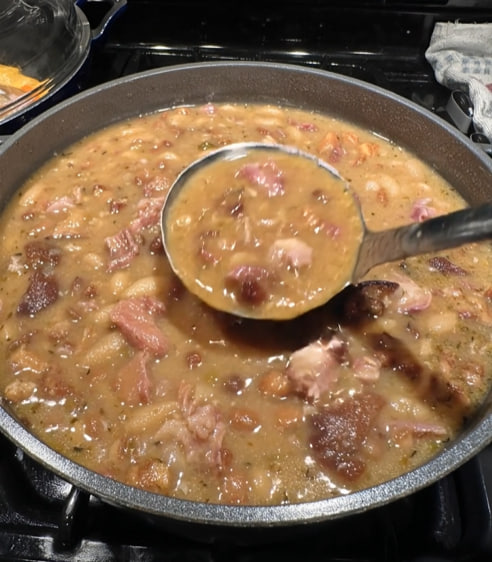
Bean and Ham Hock Soup
Ingredients:
1 (16 oz) package dry northern beans
3 to 5 Meaty-ham hock shank, sometimes, I used also meaty ham bone about
1 white onion, diced
Enough water to cover beans by about 2 inches
Salt and pepper, to taste
1/3 cup light brown sugar
Instructions:
Sort and Rinse Beans: Start by sorting through the beans to remove any stones or debris. Rinse the beans under cold water.
Prepare in Slow Cooker: Add the rinsed beans to the slow cooker along with the diced onion, salt, and pepper. If using ham hocks or a meaty ham bone, cut it into large chunks and add it to the slow cooker as well.
Add Water: Pour in enough water to cover the beans by about 2 inches.
Cook the Beans: Cover and cook on low for 2 hours, then reduce the heat and continue cooking on low for an additional 4-5 hours, or until the beans are tender.
Remove Meat: Once the beans are done, remove the ham hocks or ham bone from the slow cooker. Take the meat off the bone and shred or chop it into bite-sized pieces. Return the meat to the soup.
Add Brown Sugar: If the soup is too thick, strain out about 1 cup of the broth (you can discard or save this for later). Stir the shredded meat back into the soup and add the 1/3 cup of light brown sugar. Mix gently to combine.
Serve: Ladle the soup into individual bowls and serve hot. Enjoy!
Important Notes When Making Bean and Ham Hock Soup
Patience Is Key:
This soup is all about slow cooking. Rushing the process can leave beans unevenly cooked and prevent the ham hocks from releasing their full depth of flavor.
Bean Texture Matters:
Beans should be fully tender before adding sweetness. If they’re even slightly firm, continue cooking—undercooked beans will never soften properly once sugar is added.
Ham Hock Variations:
Different ham hocks vary in saltiness, smokiness, and meat content. Taste and adjust seasoning near the end, especially if switching brands or using a ham bone instead.
Natural Thickening:
The soup thickens naturally as the beans break down and collagen melts from the ham. Avoid adding flour or cornstarch—time does the work better.
Fat Is Flavor—but in Balance:
A bit of rendered fat adds richness, but too much can overpower the dish. Skimming excess fat improves mouthfeel without sacrificing flavor.
Sweetness Is Optional but Transformative:
Brown sugar is not meant to make the soup sweet. It subtly rounds out smoky and salty notes. Start with less if unsure and adjust gradually.
Resting Improves Flavor:
Like many bean-based soups, this one tastes even better after resting or the next day, as the flavors continue to meld and deepen.
Storage Changes Texture:
The soup will thicken significantly when refrigerated. When reheating, add a splash of water or broth to restore the desired consistency.
Simple Ingredients, Honest Flavor:
This recipe relies on a few humble ingredients. Quality beans and good ham hocks make a noticeable difference—there’s nothing here to hide behind.
How to Enjoy Bean and Ham Hock Soup After Cooking
1. Let the Soup Rest Before Serving
Once the soup is finished, allow it to rest for 10–15 minutes with the heat off. This brief pause lets the beans settle, the broth thicken slightly, and the smoky ham flavor fully integrate. The soup will taste deeper and more balanced after resting.
2. Adjust Texture to Your Preference
Bean and ham hock soup naturally thickens as it sits.
- If you enjoy a thicker, stew-like consistency, serve it as is.
- If you prefer it more brothy, stir in a little hot water or broth just before serving.
3. Serve It Hot, Simple, and Rustic
Ladle the soup into deep bowls while it’s piping hot. This is a rustic, comfort-style dish—no need for fancy plating. The visible beans and tender ham pieces are part of its charm.
4. Add Classic Pairings
Enhance the experience with traditional sides:
- Warm cornbread or crusty bread for dipping and soaking up the rich broth
- Buttermilk biscuits for a Southern-style meal
- Steamed rice if you want to stretch the soup into an even heartier dinner
5. Optional Finishing Touches
Keep additions minimal to respect the soup’s simplicity:
- A light crack of fresh black pepper for warmth
- A splash of hot sauce or vinegar if you enjoy a subtle tang
- A small pat of butter stirred into the bowl for extra richness
6. Make It a Next-Day Favorite
This soup shines even more the next day. Reheat gently over low heat, stirring occasionally, and add a splash of water if needed. The beans become creamier, and the ham flavor deepens overnight.
7. Turn Leftovers Into New Meals
- Serve over rice for a thick, comforting bowl
- Use as a base for greens, stirring in collards or kale while reheating
- Mash some beans into the broth for an ultra-creamy texture without dairy
8. Enjoy the Comfort Factor
This is a soul-warming, slow-cooked dish meant to be enjoyed slowly. Best served on cool days, shared with family, and paired with simple sides that let the deep, smoky flavor take center stage.
Nutrition Information:
Based on ~6 servings; values are approximate and will vary depending on ham hock size, fat content, and seasoning
Calories: 380–420 kcal | Total Fat: 14–18 g | Saturated Fat: 4–6 g | Monounsaturated Fat: 6–8 g | Polyunsaturated Fat: 2–3 g | Cholesterol: 65–85 mg | Sodium: 900–1,200 mg (depending on ham hock and added salt) | Total Carbohydrates: 38–42 g | Dietary Fiber: 10–12 g | Sugars: 7–9 g (includes natural sugars + brown sugar) | Protein: 24–28 g
Frequently Asked Questions:
Do I need to soak the beans before cooking?
No soaking is required for this recipe. The long, slow cooking time allows dry northern beans to soften fully while absorbing the smoky ham flavor. However, soaking overnight can slightly reduce cooking time if preferred.
Can I substitute ham hocks with another cut of meat?
Yes. A meaty ham bone, smoked pork shank, or even smoked turkey legs can be used. Each option brings a different level of smokiness and saltiness, so seasoning should be adjusted near the end.
Why is my soup too thick or too thin?
The soup naturally thickens as beans break down and collagen releases from the ham. If it’s too thick, add warm water or broth. If it’s too thin, simmer uncovered a bit longer to reduce and concentrate the flavors.
Is the brown sugar necessary?
The brown sugar is optional but recommended. It doesn’t make the soup sweet—it balances salt and smoke while enhancing the beans’ natural flavor. You can reduce the amount or omit it entirely based on preference.
Can I make this soup ahead of time?
Absolutely. This soup tastes even better the next day. The flavors deepen overnight, and the texture becomes creamier. Just reheat gently and add liquid if needed.
How do I know when the beans are fully cooked?
Beans should be tender and creamy inside with no chalky center. If they still feel firm after the suggested time, continue cooking—beans soften at their own pace depending on age and variety.
Should I skim the fat during cooking?
Yes, if excess fat rises to the surface, skim some off for a cleaner flavor. Leaving a small amount adds richness, but removing too much grease improves balance.
When should I season with salt?
Add light seasoning at the beginning, but always adjust salt at the end. Ham hocks release salt gradually, and seasoning too early can result in an overly salty soup.
Why remove the ham hocks before finishing?
Removing them allows you to shred the meat properly and discard excess fat or gristle. Returning just the meat gives better texture and a cleaner eating experience.
Can this recipe be made on the stovetop instead of a slow cooker?
Yes. Simmer gently on low heat for 2½–3 hours, stirring occasionally and adding water as needed. Keep the heat low to prevent scorching and allow flavors to develop slowly.