Shrimp with Broccoli Rabe and Cannellini Beans
Shrimp with Broccoli Rabe and Cannellini Beans is a rustic Italian-inspired dish that brings together sweet, tender shrimp, creamy white beans, pleasantly bitter broccoli rabe, plenty of garlic, extra-virgin olive oil, and a touch of red pepper heat. The ingredient list is simple, but the contrast between flavors and textures makes the finished dish surprisingly sophisticated.
Broccoli rabe is briefly boiled before sautéing, which softens its stems and reduces some of its characteristic bitterness. Cannellini beans then absorb the garlic-infused olive oil and become creamy around the edges, while the shrimp are added only at the end so they remain juicy and tender.
The result is satisfying without feeling overly heavy. It has protein from both shrimp and beans, plenty of greens, and a savory olive-oil sauce that is perfect for soaking up with crusty Italian bread.
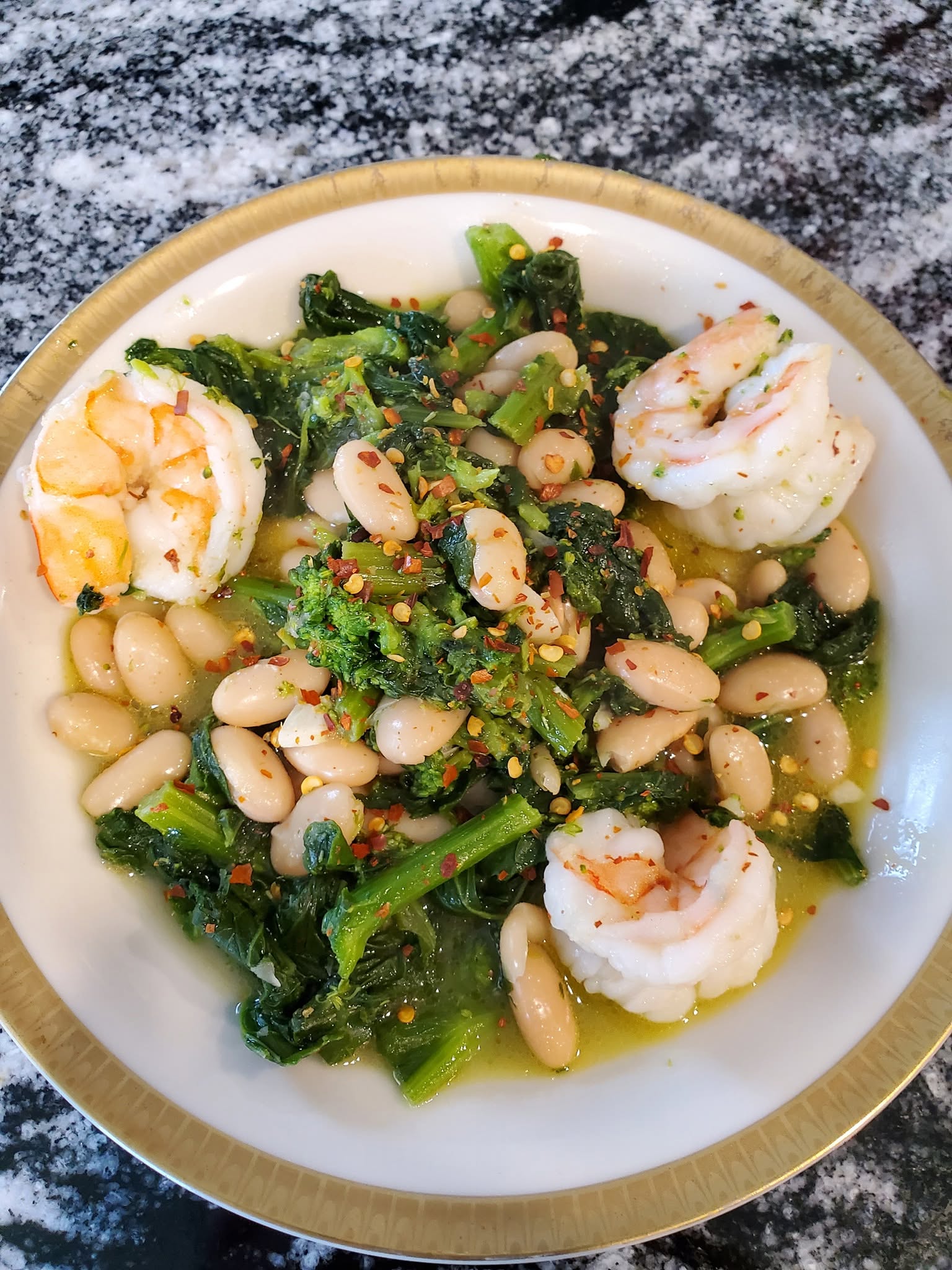
Why People Will Love Shrimp with Broccoli Rabe and Cannellini Beans Recipe
Sweet shrimp balance the natural bitterness of broccoli rabe.
Cannellini beans add a creamy texture without requiring cream.
Garlic gives the dish a bold Italian-style foundation.
Extra-virgin olive oil creates richness while keeping the dish relatively light.
Red pepper flakes provide gentle heat and warmth.
Broccoli rabe adds a distinctive earthy, slightly bitter flavor.
Blanching the broccoli rabe makes its bitterness more approachable.
Cannellini beans absorb the garlic, chile, and olive-oil flavors beautifully.
The shrimp cook quickly, making the recipe suitable for a weeknight dinner.
The recipe uses only a small number of ingredients.
It combines seafood, vegetables, and legumes in one skillet.
The beans make the dish filling enough to serve as a main course.
It does not rely on heavy sauces.
The flavors are bold without being complicated.
Fresh lemon can brighten the entire dish instantly.
The recipe pairs perfectly with crusty bread.
It can also be served over pasta, rice, or polenta.
The chile level is easy to adjust.
The dish looks colorful and rustic on the plate.
It provides an excellent balance between sweet, bitter, creamy, garlicky, and spicy flavors.
Key Ingredients
Shrimp:
Shrimp provide a naturally sweet seafood flavor that contrasts beautifully with the slightly bitter broccoli rabe. They should be added near the end because they need only a few minutes to cook.
Broccoli Rabe:
Also known as rapini, broccoli rabe has a distinct bitter, earthy flavor. Briefly boiling it before sautéing makes the greens more tender and mellows some of that bitterness without eliminating their character.
Cannellini Beans:
Cannellini beans are mild, creamy, and especially good at absorbing surrounding flavors. They also make the dish more substantial and contribute fiber and plant-based protein.
Extra-Virgin Olive Oil:
Olive oil acts almost like the sauce in this recipe. It carries the flavors of garlic and chile while coating the beans, greens, and shrimp.
Garlic:
Garlic provides the main aromatic flavor. Thinly sliced garlic gives little bursts of flavor throughout the dish, while minced garlic creates a more uniform intensity.
Crushed Red Pepper Flakes:
Red pepper flakes bring warmth and a subtle spicy edge that works particularly well with garlic and broccoli rabe.
Lemon:
Although optional, lemon is highly recommended. Its acidity cuts through the olive oil and brightens both the shrimp and bitter greens.
Expert Tips
Choose broccoli rabe with bright green leaves and firm stems.
Remove very thick or woody stem ends before cooking.
Cut the greens into similar-sized pieces so they cook evenly.
Salt the blanching water lightly to season the broccoli rabe from within.
Do not boil the broccoli rabe excessively.
About 4–5 minutes is enough to soften it while preserving texture.
Drain the greens thoroughly before adding them to hot oil.
Excess water can cause splattering and dilute the sauce.
Rinse canned cannellini beans well to remove excess sodium and canning liquid.
Let the beans drain before adding them to the skillet.
Use good-quality extra-virgin olive oil because its flavor is noticeable.
Cook garlic gently rather than aggressively browning it.
Darkly browned garlic can become bitter.
Add red pepper flakes to the warm oil so their flavor blooms.
Pat shrimp completely dry before cooking.
Add shrimp only after the beans and greens are hot.
Keep the shrimp in a single layer when possible.
Avoid repeatedly stirring them while they cook.
Remove the pan from the heat as soon as the shrimp are opaque.
Finish with fresh lemon juice just before serving.
Reserve a little good olive oil for a final drizzle if desired.
Serve immediately for the best shrimp texture.
Shrimp with Broccoli Rabe and Cannellini Beans
Ingredients
1 pound (450 g) large shrimp, peeled and deveined
1 large bunch broccoli rabe, trimmed and cut into 2-inch pieces
1 can (15 ounces) cannellini beans, drained and rinsed
3 tablespoons extra-virgin olive oil
4 cloves garlic, thinly sliced or finely chopped
¼–½ teaspoon crushed red pepper flakes, or to taste
½ teaspoon salt, plus more for the cooking water
¼ teaspoon freshly ground black pepper
¼ cup water or chicken broth, if needed
1 tablespoon fresh lemon juice, optional
Lemon wedges, for serving, optional
Instructions
Prepare the Broccoli Rabe
Bring a large pot of salted water to a boil.
Add the chopped broccoli rabe and cook for about 5 minutes, or until it begins to soften and loses some of its natural bitterness.
Drain well and set aside.
Sauté the Garlic
Heat the olive oil in a large skillet over medium heat.
Add the sliced garlic and crushed red pepper flakes.
Cook for about 30–60 seconds, stirring frequently, until the garlic becomes fragrant.
Do not let the garlic brown too deeply, as it can become bitter.
Add the Cannellini Beans
Stir the drained cannellini beans into the skillet.
Cook for about 2–3 minutes, allowing the beans to warm through and absorb the garlic-infused olive oil.
Add the Broccoli Rabe
Add the drained broccoli rabe to the skillet.
Season with salt and black pepper.
Toss everything together so the broccoli rabe and beans are evenly coated with the olive oil and garlic.
If the skillet seems dry, add a few tablespoons of water or chicken broth.
Simmer gently for about 3–4 minutes.
Add the Shrimp
Pat the shrimp dry and season lightly with salt and black pepper.
Add them to the skillet in a single layer.
Cook for about 2–3 minutes per side, or until the shrimp are pink, opaque, and just firm.
The shrimp should reach approximately 145°F / 63°C internally.
Avoid overcooking, as shrimp can become rubbery very quickly.
Finish the Dish
Taste and adjust the salt, black pepper, and red pepper flakes.
If desired, squeeze in a little fresh lemon juice to brighten the beans, shrimp, and broccoli rabe.
Serve
Serve hot in shallow bowls or on plates.
Spoon the garlicky olive oil and any juices from the skillet over the top.
This dish is especially good with:
Crusty Italian bread
Toasted baguette
Pasta
Polenta
Rice
A simple green salad
What the Finished Dish Should Be Like
The finished dish should have tender shrimp, creamy cannellini beans, and slightly bitter broccoli rabe coated in garlicky olive oil with a gentle chile heat.
The beans should remain mostly intact but become creamy around the edges, while the broccoli rabe should be tender without turning mushy.
The shrimp should stay juicy and delicate, and the red pepper flakes should add warmth without overpowering the savory garlic and olive oil.
It is a simple Italian-style combination where the contrast between sweet shrimp, creamy beans, bitter greens, garlic, and chile is what makes the dish especially satisfying.
Important Notes When Making Shrimp with Broccoli Rabe and Cannellini Beans
Broccoli rabe is naturally bitter; that bitterness is part of its appeal.
Blanching reduces bitterness but does not remove it completely.
If you strongly dislike bitter greens, broccolini or regular broccoli can be substituted, but the flavor will be different.
Shrimp cook extremely quickly.
Overcooking will make them firm and rubbery.
Shrimp should reach approximately 145°F / 63°C internally.
Garlic can burn quickly once sliced or minced.
Keep the heat moderate when sautéing it.
Cannellini beans are already cooked and only need to be warmed through.
Stir beans gently to avoid breaking them apart.
A few mashed beans are fine and can actually help thicken the pan juices.
Canned beans vary considerably in sodium.
Rinsing them can reduce some of the surface sodium.
Add additional salt only after tasting the complete dish.
Red pepper flakes become hotter as they sit in the oil.
Start with less if you are sensitive to spice.
The dish is best served immediately rather than repeatedly reheated.
How to Enjoy Shrimp with Broccoli Rabe and Cannellini Beans After Cooking
Serve the dish immediately after the shrimp are fully cooked.
Use shallow bowls or wide plates so the beans, greens, and shrimp can be distributed evenly.
Spoon the cannellini beans and broccoli rabe onto the plate first.
Arrange several shrimp over the top so they remain visible and do not become buried beneath the greens.
Spoon the garlicky olive oil and pan juices over each serving.
Finish with a small squeeze of fresh lemon juice.
Add additional crushed red pepper flakes at the table if you prefer more heat.
A drizzle of high-quality extra-virgin olive oil just before serving can enhance the aroma.
Serve with thick slices of crusty Italian bread to soak up the garlicky juices and creamy bits of cannellini bean.
For a more substantial meal, spoon the mixture over pasta, creamy polenta, or rice.
A crisp dry white wine such as Pinot Grigio, Vermentino, or Sauvignon Blanc pairs beautifully with the shrimp and bitter greens.
Nutrition Information
Approximate nutrition is based on 4 servings, using 1 pound shrimp, one 15-ounce can cannellini beans, one large bunch broccoli rabe, 3 tablespoons olive oil, garlic, and seasonings. Bread, pasta, polenta, rice, and extra olive oil are not included.
Calories: 320 kcal | Total Fat: 12 g | Saturated Fat: 1.8 g | Monounsaturated Fat: 7.5 g | Polyunsaturated Fat: 1.5 g | Cholesterol: 180–200 mg | Sodium: 550–750 mg depending on the beans, shrimp, and added salt | Total Carbohydrates: 20–23 g | Dietary Fiber: 6–7 g | Sugars: 2–3 g | Protein: 32–35 g
Additional estimate:
Potassium: 750–950 mg | Calcium: 150–200 mg | Iron: 3–4 mg | Magnesium: 70–90 mg | Vitamin A: 3,000–4,500 IU | Vitamin C: 40–60 mg | Vitamin B12: 1.5–2.5 mcg | Folate: 120–170 mcg | Selenium: 35–50 mcg | Phosphorus: 300–400 mg
The largest nutritional variables are the sodium content of the canned beans and shrimp, the amount of olive oil retained in each serving, and whether additional bread, pasta, or other sides are served.
Frequently Asked Questions:
What does broccoli rabe taste like?
Broccoli rabe has an earthy, slightly nutty, distinctly bitter flavor. Blanching it before sautéing makes the bitterness gentler while preserving its character.
Why do cannellini beans work so well with shrimp?
Their mild, creamy flavor does not compete with seafood, while their soft texture absorbs garlic, olive oil, and chile beautifully.
Is this dish very spicy?
Not necessarily. The only significant heat comes from crushed red pepper flakes, so you can easily increase, decrease, or omit them.
What should I serve with this dish?
Crusty Italian bread is particularly good, but pasta, polenta, rice, roasted potatoes, or a simple salad can also turn it into a larger meal.
Can I use a different type of white bean?
Yes. Great Northern beans or navy beans can work, although cannellini beans have an especially creamy texture that suits this recipe well.
Why boil the broccoli rabe before sautéing it?
Blanching begins tenderizing the stems and leaves while reducing some of the vegetable’s natural bitterness. It also shortens the final skillet cooking time.
Why are my shrimp rubbery?
They were most likely overcooked. Add them only at the end and cook just until they become opaque and firm.
Why is my dish watery?
The broccoli rabe may not have been drained thoroughly. After blanching, let it drain well before transferring it to the skillet.
Can I make this recipe ahead of time?
You can blanch the broccoli rabe and prepare the beans ahead, but cook the shrimp immediately before serving for the best texture.
How can I make the dish more saucy?
Add ¼–½ cup chicken broth, vegetable broth, or reserved pasta water when the beans and broccoli rabe are simmering. Let it reduce slightly before adding the shrimp.